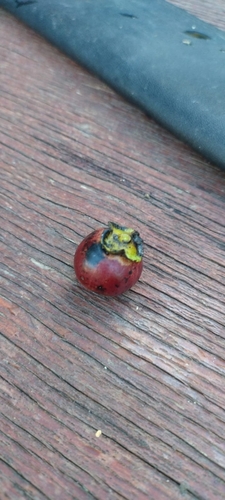
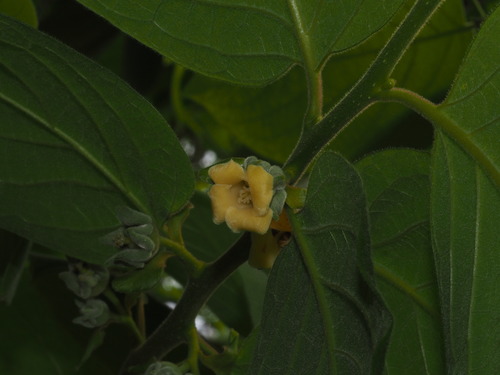
Diospyros lanceifolia
Roxb.
Goolul
iNaturalist· cc-by-nc
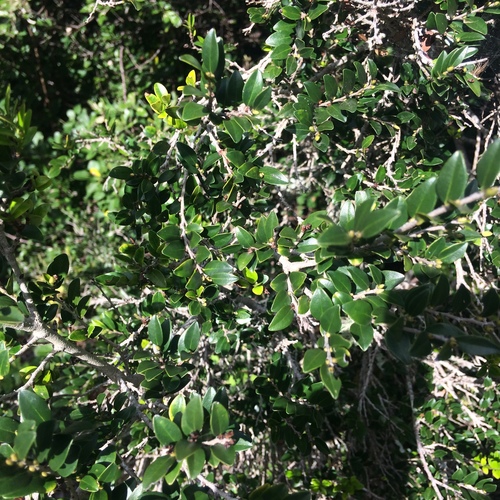
(c) SunGW, some rights reserved (CC BY-NC), uploaded by SunGW
iNaturalist· cc-by-nc
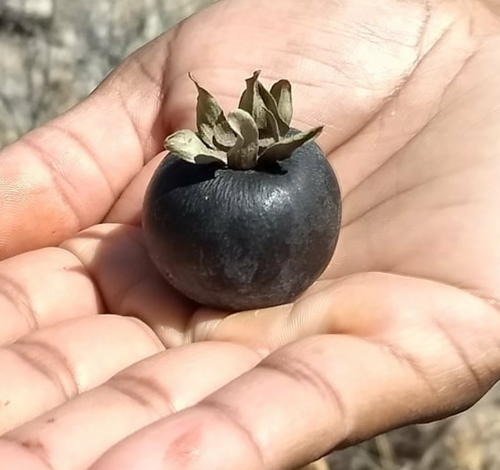
(c) Muhd Nasry, some rights reserved (CC BY-NC)
Summary
Source: WikipediaDiospyros lanceifolia is a tree in the family Ebenaceae. The specific epithet lanceifolia means 'lance-shaped leaves'.
Description
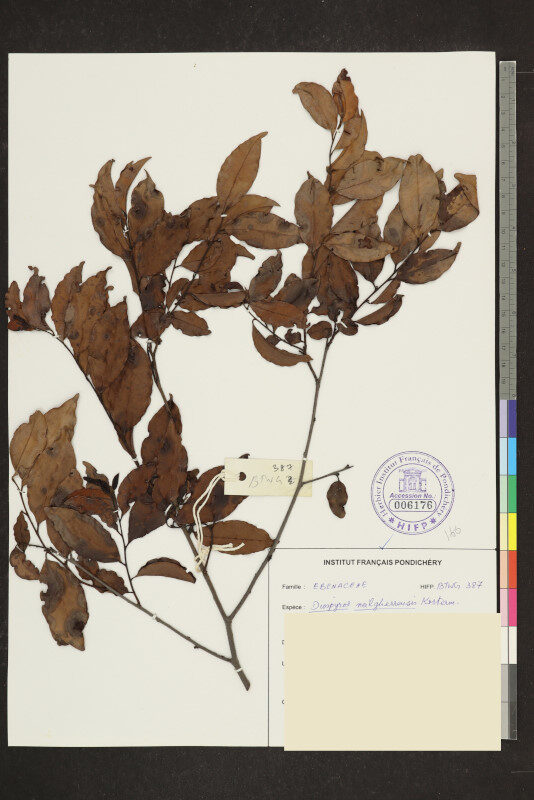
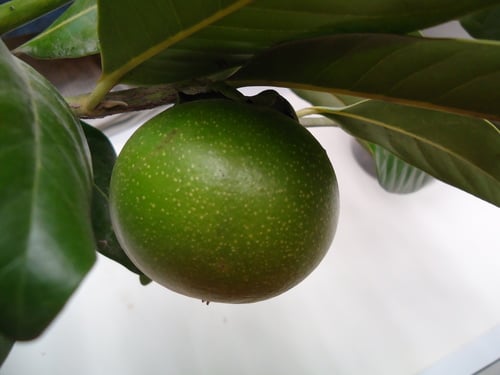
An evergreen tree. The young shoots are softly hairy. The bark has a smell. The bark is dark or blank and has fine cracks along it. The leaves are in two rows. They are narrowly sword shaped and taper to the tip. The male flowers are in clusters and without stalks. The female flowers occur singly. The fruit are flattened round or oval. They are 2.5 cm across. They are softly hairy.
Edible Uses
Fruit - raw. The globose fruit is 10 - 25mm in diameter. In general, fruits in this genus are rich in tannins and very astringent unless fully ripe, when many of them become sweet, some even delicious.
Traditional Uses
The ripe fruit are eaten raw. They are sour or salty.
This uses section is brief — help expand it
Known Hazards
The seeds are used as a fish poison. The principles involved here might be their content of naphthoquinone derivatives such as biplumbagin and chitranone, which are known to be ichthyotoxic.
Distribution
A tropical plant. It grows in East India.
Where It Grows
Asia, India, Indochina, Laos, Myanmar, Northeastern India, SE Asia, Vietnam,
Cultivation
We have seen no individual confirmation for this species, but in general Diospyros species are dioecious and require both male and female forms to be grown if fruit and seed are required.
Propagation
Seed - it has a very short viability and so should be sown as soon as possible. The flesh should be removed since this contains germination inhibitors. Sow the seed in a shady position in a nursery seedbed. The sowing media for ebony uses soil and fine sand at the ratio 3:1. The seed is planted horizontally or vertically with the radicle end down, with a sowing depth of 1 - 1½ times the thickness of seed. Distance between the seeds is 3 - 5cm. Seeds are very sensitive to desiccation during germination and early growth, so must be regularly watered at this time. Normally the seed will germinate after one week. In one trial, fresh seed, sown one day after collection, showed 85% germination rate within 17 - 65 days. As a rule fresh seeds have a high percentage of fertility. The seedlings develop long taproots at an early stage, often before any appreciable elongation of the shoot takes place. The growth of the seedling is decidedly slow .
Other Uses
The wood is grey, clouded with irregular dark patches. It is hard and durable. It is used in house building.
Production
In NE India plants flowers and fruit April to February.
Notes
There are about 485 species of Diospyros mostly in the tropics.
Synonyms
Also Known As
Chauchi, Dieng-thang, Phaktel, Rujaa, Shiteishi, Siiteishi
References (13)
- Ambasta, S.P. (Ed.), 2000, The Useful Plants of India. CSIR India. p 177
- Gouldstone, S., 1983, Growing your own Food-bearing Plants in Australia. Macmillan p 122
- Hedrick, U.P., 1919, (Ed.), Sturtevant's edible plants of the world. p 277
- Jayaraman, U., & Singh, V., 1987, A Census of Edible Species of Diospyros L. in India. J. Econ. Tax. Bot. Vol. 10 No. 2 pp 416-419
- Jeeva, S., 2009, Horticultural potential of wild edible fruits used by the Khasi tribes of Meghalaya. Journal or Horticulture and Forestry Vol. 1(9) pp. 182-192
Show all 13 references Hide references
- Medhi, P. & Borthakur, S. K., 2012, Phytoresources from North Cachur Hills of Assam -3: Edible plants sold at Hflong market. Indian Journal of Natural Products and Resources. 3(1) pp 84-109
- Medhi, P., Sarma, A and Borthakur, S. K., 2014, Wild edible plants from the Dima Hasao district of Assam, India. Pleione 8(1): 133-148
- Patiri, B. & Borah, A., 2007, Wild Edible Plants of Assam. Geethaki Publishers. p 80
- Pfoze, N. L., et al, 2012, Survey and assessment of floral diversity on wild edible plants from Senapati district of Manipur, Northeast India. Journal of Biodiversity and Environmental Sciences. 1(6):50-52
- Sarma, H., et al, 2010, Updated Estimates of Wild Edible and Threatened Plants of Assam: A Meta-analysis. International Journal of Botany 6(4): 414-423
- Sawian, J. T., et al, 2007, Wild edible plants of Meghalaya, North-east India. Natural Product Radiance Vol. 6(5): p 415
- Singh, H.B., Arora R.K.,1978, Wild edible Plants of India. Indian Council of Agricultural Research, New Delhi. p 55
- Singh, V. B., et al, (Ed.) Horticulture for Sustainable Income and Environmental Protection. Vol. 1 p 215