Diospyros chloroxylon
Roxb.
Green ebony persimmon
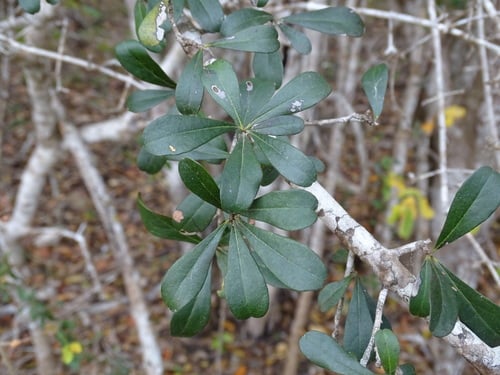
iNaturalist· cc-by-nc
(c) vamshiraj, some rights reserved (CC BY-NC)
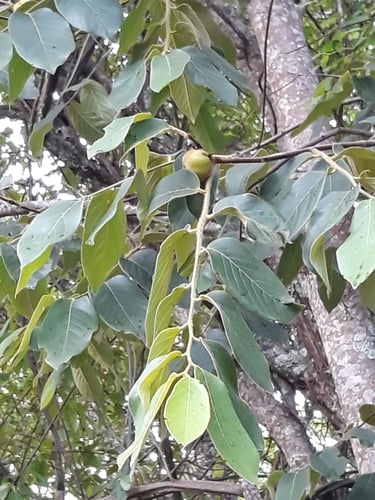
iNaturalist· cc-by-nc
(c) Kobita Dass Kolli, some rights reserved (CC BY-NC)
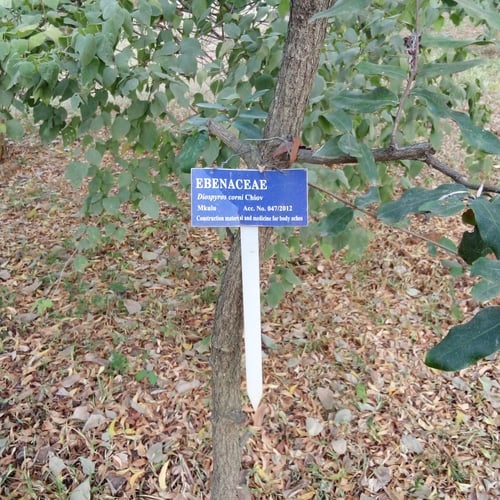
iNaturalist· cc-by-nc
(c) V.Arun, some rights reserved (CC BY-NC)
Summary
Source: WikipediaDiospyros chloroxylon, the green ebony persimmon, is a wild fruit-bearing plant in the family Ebenaceae. It is the indigenous fruit of the Indian subcontinent, and both unripe and ripe fruits are eaten by tribal people.
Description
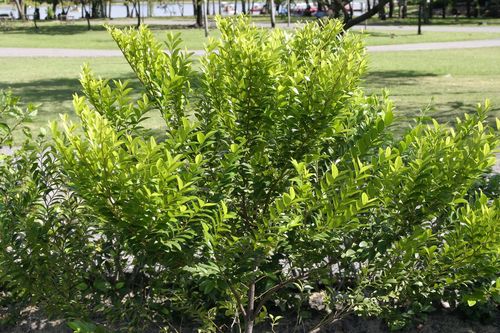
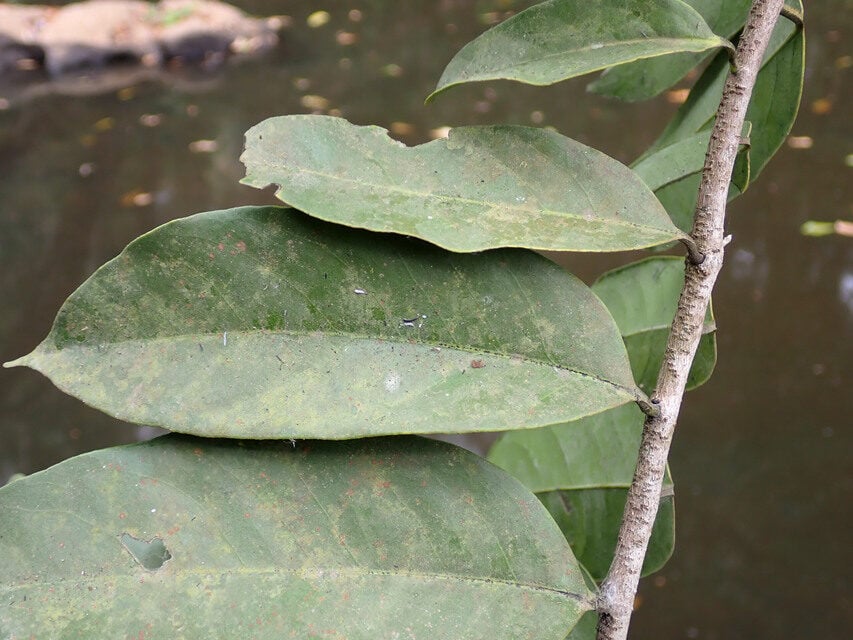
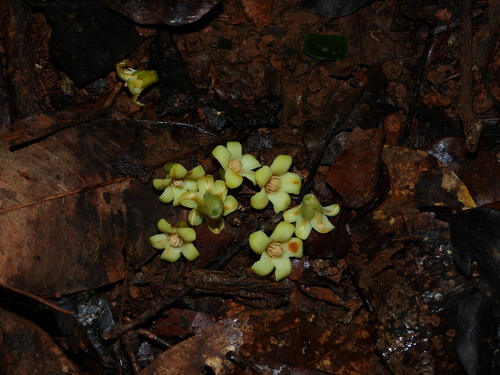
A small tree. The small branches can have rusty hairs. The bark is dark brown and with cracks along it and peeling off in flakes. The leaves are rough and with hairs on both sides but rusty coloured underneath. The leaves are oval and 3-5 cm long. The flowers are small and white. The fruit are round and the size of a large cherry. They are about 1 cm across. There are 2-3 seeds.
Edible Uses
The ripe fruit are eaten raw and are sweet.
Traditional Uses
The ripe fruit are eaten raw. They are sweet.
This uses section is brief — help expand it
Distribution
A tropical plant. It does best in black cotton soils.
Where It Grows
Asia, Australia, India, Myanmar, Northeastern India, SE Asia,
Production
In India fruit are produced June to December.
Notes
There are about 485 species of Diospyros mostly in the tropics.
Synonyms
Also Known As
Andol, Bun Gaub, Gaurakasa, Illentha, Illinda, Illintha, Karuvakkanai, Kavakimanu, Kendu, Koshavo, Nallawoolymera, Nensi, Ninai, Ondodi, Periyulinci, Tend
References (14)
- Ambasta, S.P. (Ed.), 2000, The Useful Plants of India. CSIR India. p 176
- Basha, S. K. M., Ethnobotanical Trees of Sri Lanka Malleswara Wildlife Sanctuary; Eastern Ghats, Andhra Pradesh.
- Chandrashekara, U. M., 2009, Tree species yielding edible fruit in the coffee-based homegardens of Kerala, India: their diversity, uses and management. Food Sec. 1:361-370
- Dey, A. & Mukhererjee, A., 2015, Living and Survival Amidst Hunger: Wild Edible Botanicals as a Prime Forest Productivity in the Rural Purulia District, West Bengal, India from Colonial to Present. Research Journal of Forestry 9(3): 71-86 (As Diospyros tomentosa)
- Gouldstone, S., 1983, Growing your own Food-bearing Plants in Australia. Macmillan p 122
Show all 14 references Hide references
- Hedrick, U.P., 1919, (Ed.), Sturtevant's edible plants of the world. p 276
- Jayaraman, U., & Singh, V., 1987, A Census of Edible Species of Diospyros L. in India. J. Econ. Tax. Bot. Vol. 10 No. 2 pp 416-419
- Kuhnlein, H. V., et al, 2009, Indigenous Peoples' food systems. FAO Rome p 195
- Misra S. & Misra M., 2016, Ethnobotanical and Nutritional Evaluation of Some Edible Fruit Plants of Southern Odisha, India. International Journal of Advances in Agricultural Science and Technology, Vol.3 Issue.1, March- 2016, pg. 1-30
- Misra, S., 2020, Survey of edible plants for human consumption in south Odisha, India. Journal of Emerging Technologies and Innovative Research (JETIR) Vol. 7, Issue 12 p 278
- Reddy, K. N. et al, 2007, Traditional knowledge on wild food plants in Andhra Pradesh. Indian Journal of Traditional Knowledge. Vol. 6(1): 223-229
- Saidulu, P. et al, 2015, Ethnobotanical Knowledge Studied in Pocharam Wildlife Sanctuary, Telangana, India. Not Sci Biol, 2015, 7(2):164 -170
- Singh, H.B., Arora R.K.,1978, Wild edible Plants of India. Indian Council of Agricultural Research, New Delhi. p 55
- Singh, V. B., et al, (Ed.) Horticulture for Sustainable Income and Environmental Protection. Vol. 1 p 215