Diospyros cayennensis
A. DC.
Cayenne persimmon
gbif· cc-by-nc
Rapid Reference Collection (RRC) | Field Museum of Natural History - Keller Science Action Center
Description
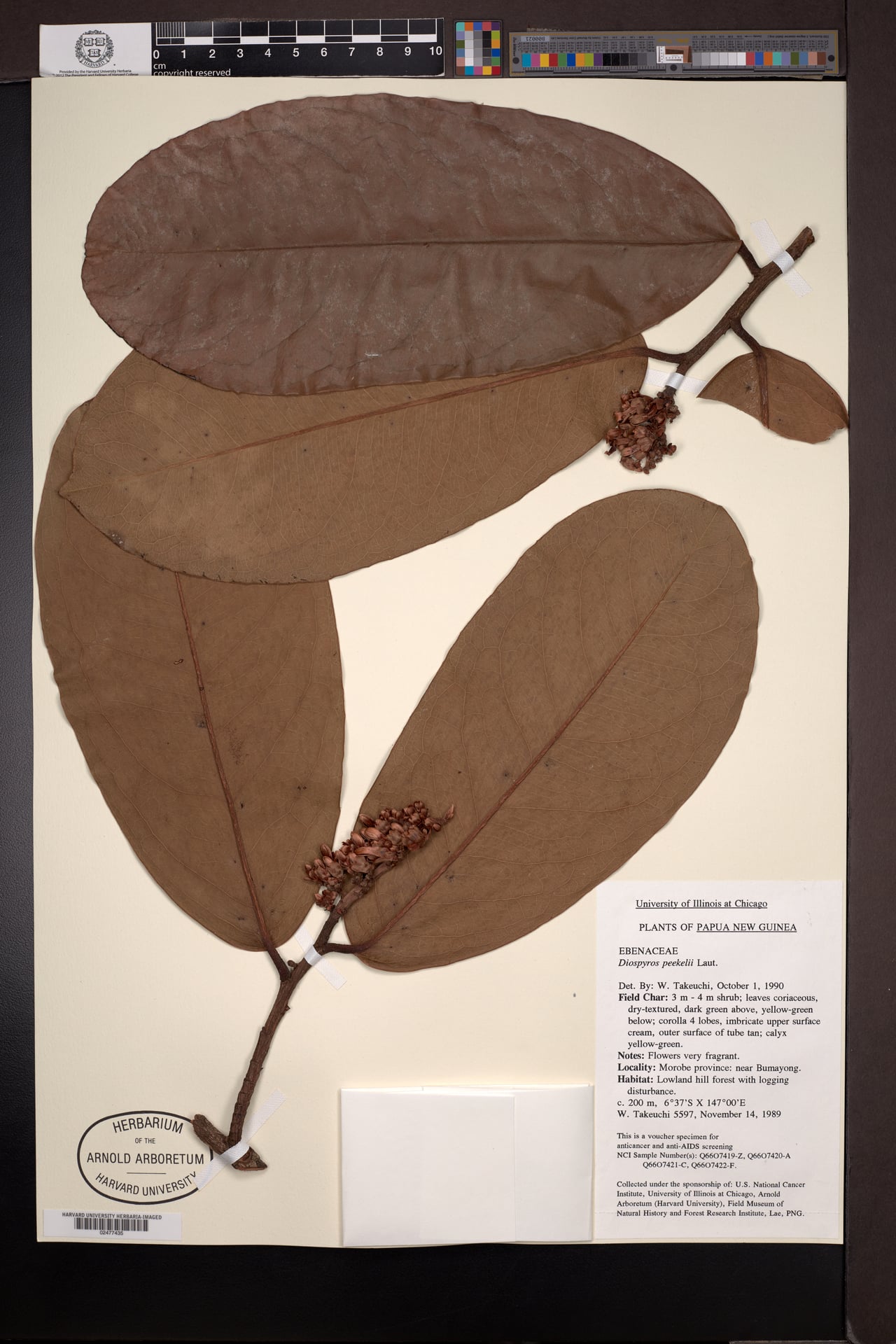
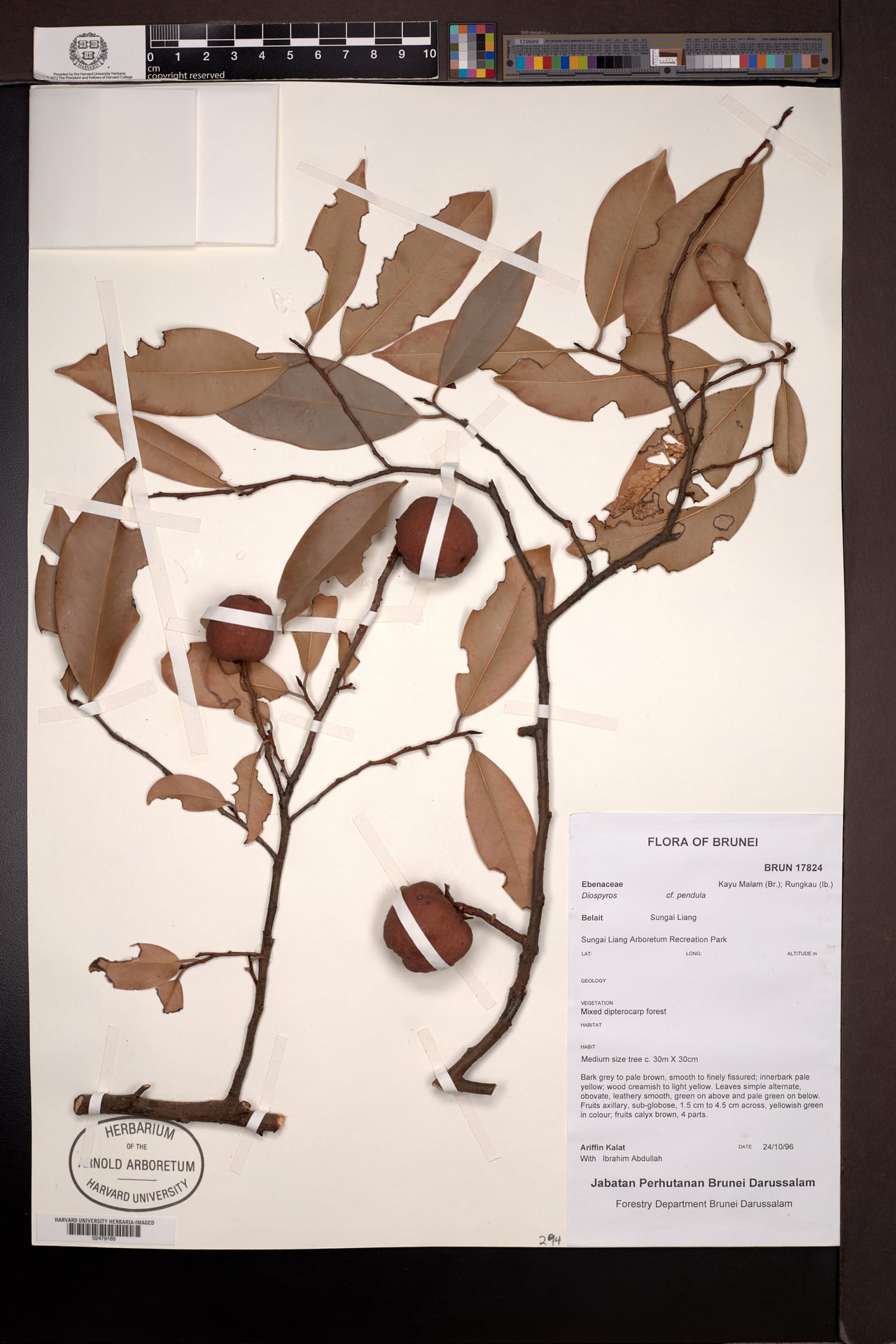
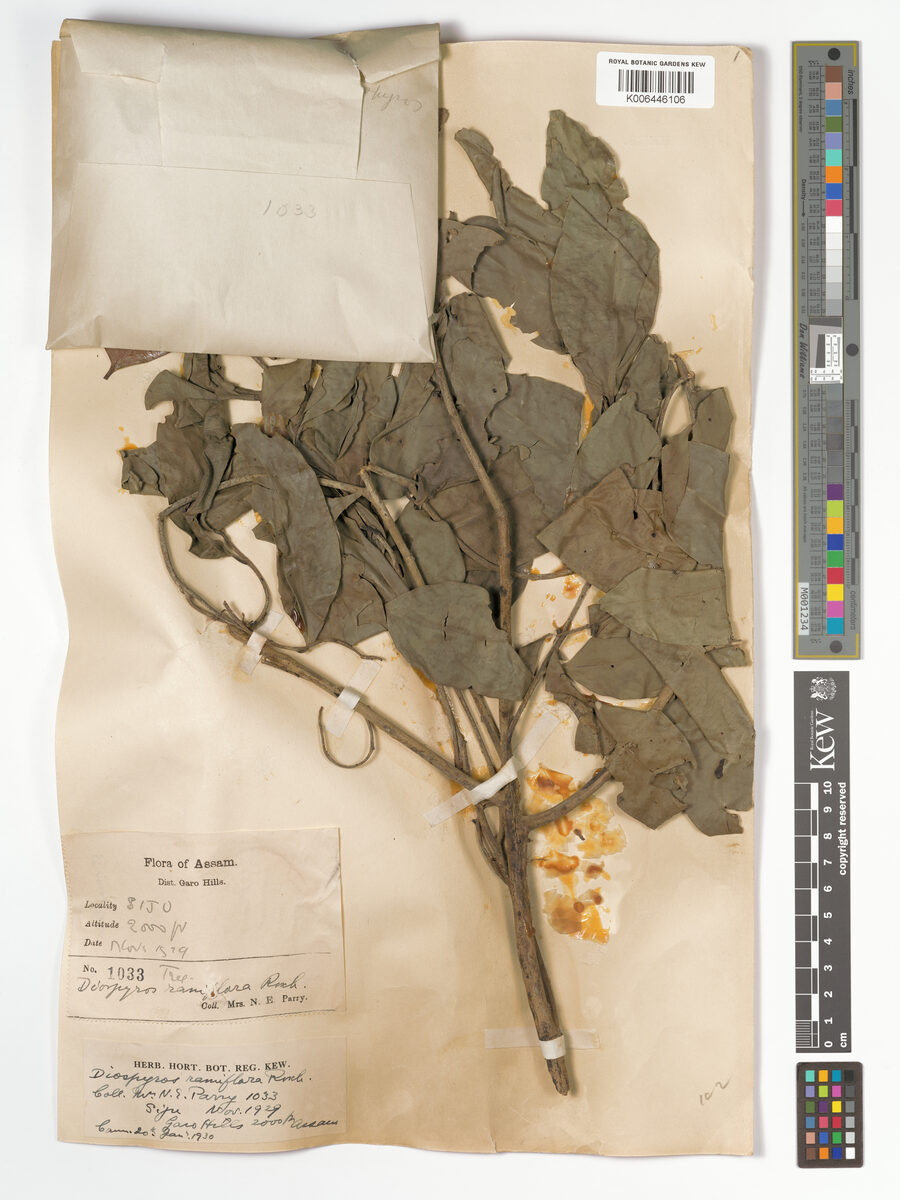
A medium sized tree. It grows 12-40 m high. The trunk is 45 cm across. The bark is thin and black. The leaves are oblong and taper to the base and have a blunt tip at the end. The flowers are 1.5 cm across and there are 2-3 flowers in a cluster. The fruit are round berries 4-5 cm across. They are green but yellow when ripe. They contain about 7 seeds. These are brown.
Edible Uses
The fruit is peeled and the pulp around the seed eaten.
Traditional Uses
The fruit is peeled and the pulp around the seed eaten.
This uses section is brief — help expand it
Distribution
A tropical plant. It grows in tropical moist broadleaf forest. It grows in the lowlands. It has been recorded up to 400 m above sea level
Where It Grows
Bolivia, Brazil, Central America, Guiana, Guyana, South America, Trinidad, Venezuela,
Cultivation
Plants are grown from seeds. They can be transplanted. They can be grown from stem cuttings.
Notes
There are about 485 species of Diospyros mostly in the tropics.
Synonyms
Also Known As
Aracho, Barabi, Barrabarra, Boise charbon, Carbon, Concho de pedra, Graterwood, Simyari epi, Tarara
References (4)
- Bull. Torrey Bot. Club 48:366. 1922
- Grandtner, M. M. & Chevrette, J., 2013, Dictionary of Trees, Volume 2: South America: Nomenclature, Taxonomy and Ecology. Academic Press p 202
- Maas, P.J. M., Non-Timber Forest Products of the North-West District of Guyana Part 2. The 85 most important NTFP species. p 82 (As Diospyros ierensis)
- Smith, N., Mori, S.A., et al, 2004, Flowering Plants of the Neotropics. Princeton. p 136 (As Diospyros ierensis)