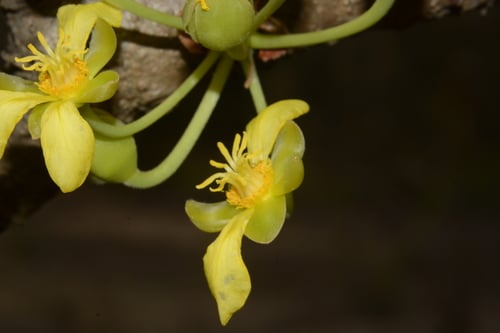
Dillenia aurea
Sm.
iNaturalist· cc-by-nc
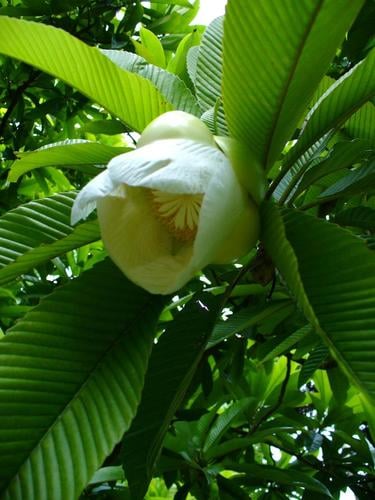
(c) ashishbais, some rights reserved (CC BY-NC)
iNaturalist· cc-by-nc
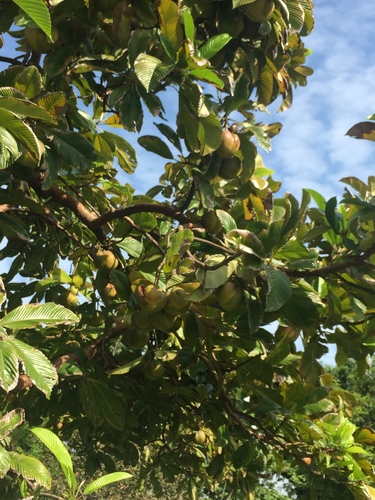
(c) lordworm_cryptopsy, some rights reserved (CC BY-NC)
iNaturalist· cc-by-nc
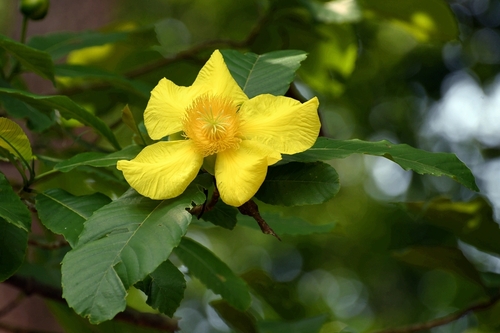
(c) lordworm_cryptopsy, some rights reserved (CC BY-NC)
Description
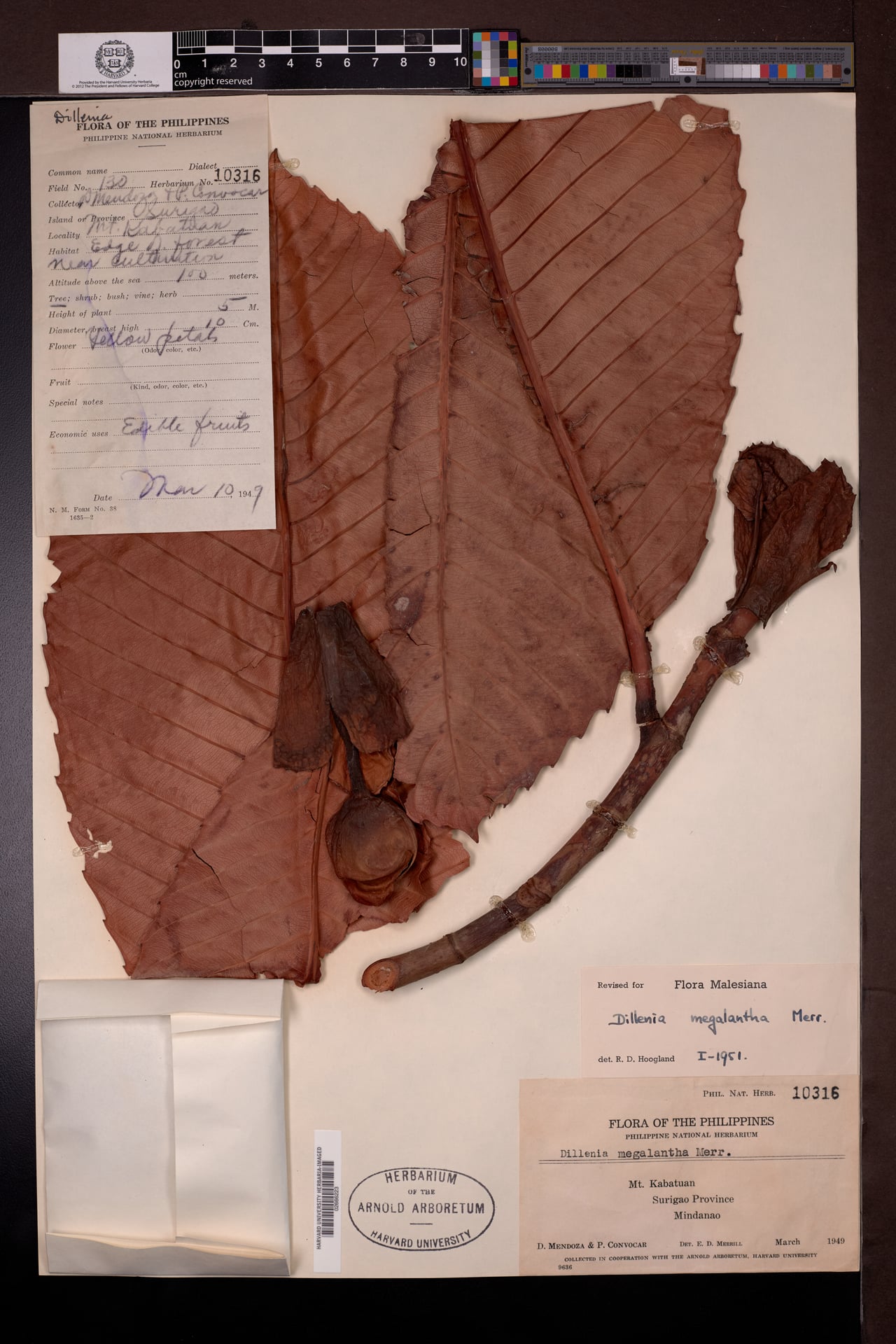
An evergreen tree. It grows 20 m high and spreads 5 m wide. The stem is erect and stout. The leaves are large and dark green. They are narrowly oval and have easy to see veins. There are fine teeth around the edge. The flowers are golden yellow. They have 5 petals. They are open and 15 cm across. They are in small clusters at the ends of branches. The fruit are oval berries. They are orange and 5 cm across.
Edible Uses
The fruit is used as a flavouring.
Traditional Uses
The fruit are used as a flavouring.
This uses section is brief — help expand it
Distribution
It is a tropical plant. It is best in rich, moist, well-drained soil. It needs a protected shaded position. It is damaged by drought of frost.
Where It Grows
Asia, Australia, Himalayas, India*, Indochina, Laos, Malaysia, Myanmar, Nepal, Northeastern India, SE Asia, Thailand,
Cultivation
Plants can be grown by seeds.
Notes
There are about 60 Dillenia species.
Synonyms
Also Known As
Awoo, Byu, Chamaggai, Dheugr, Masang, Metkauk, Mik-kyin-nu, Oao
References (6)
- Ambasta, S.P. (Ed.), 2000, The Useful Plants of India. CSIR India. p 172
- Behera K. K., et al, 2008, Wild Edible Plants of Mayurbhanj District, Orissa, India. J. Econ. Taxon. Bot. Vol. 32 (Suppl.) pp 305-314
- Bodkin, F., 1991, Encyclopedia Botanica. Cornstalk publishing, p 343
- Gardner, S., et al, 2000, A Field Guide to Forest Trees of Northern Thailand, Kobfai Publishing Project. p 32
- Singh, H.B., Arora R.K.,1978, Wild edible Plants of India. Indian Council of Agricultural Research, New Delhi. p 54
Show all 6 references Hide references
- Singh, V. B., et al, (Ed.) Horticulture for Sustainable Income and Environmental Protection. Vol. 1 p 215