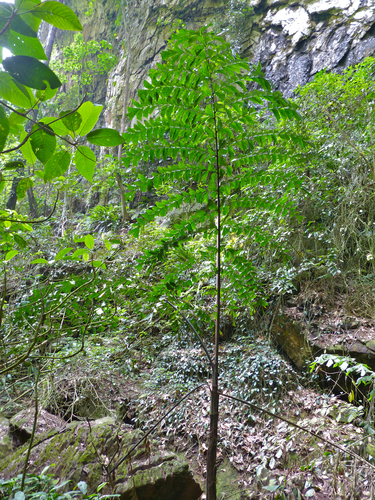
Syagrus oleracea
(Mart.) Becc.
Catole
iNaturalist· cc-by
(c) André Ambrozio, some rights reserved (CC BY)
iNaturalist· cc-by-nc
(c) Rosa Cartagenes, some rights reserved (CC BY-NC)
iNaturalist· cc-by-nc
(c) Rosa Cartagenes, some rights reserved (CC BY-NC)
Summary
Source: WikipediaSyagrus oleracea, the guariroba or palmito amargo, is a species of palm native to Brazil.
Description
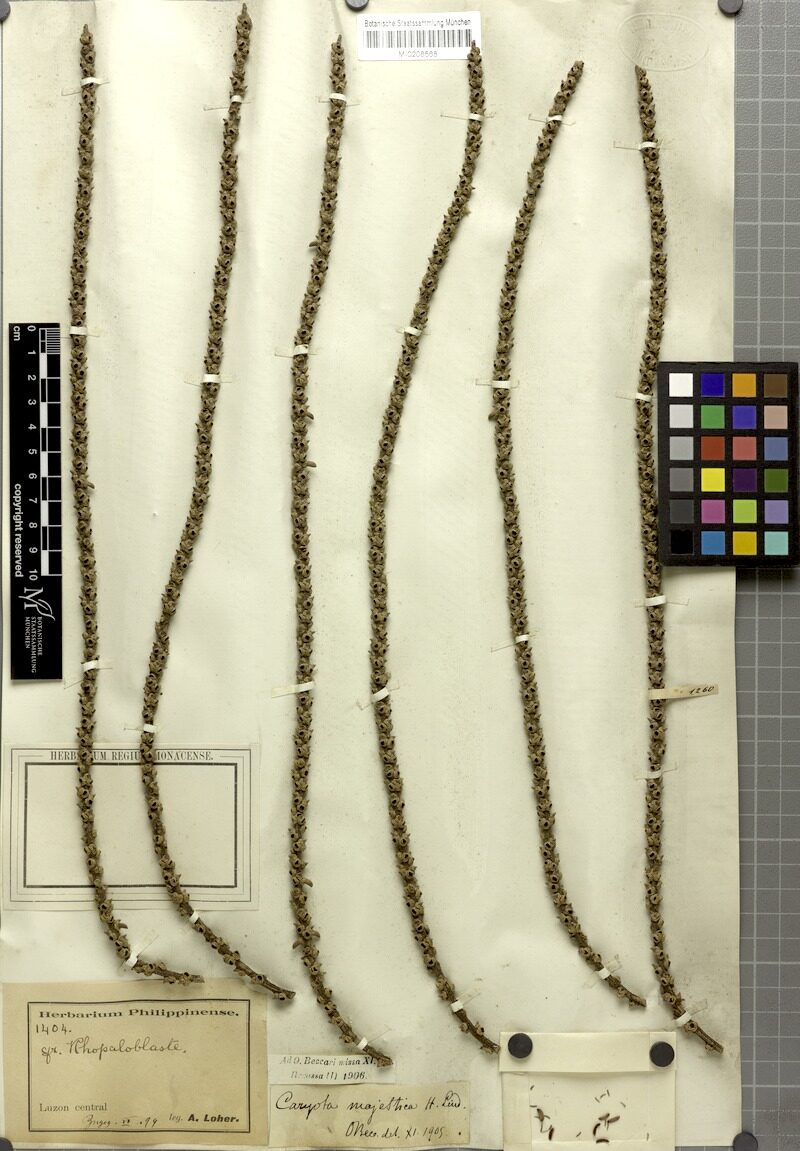
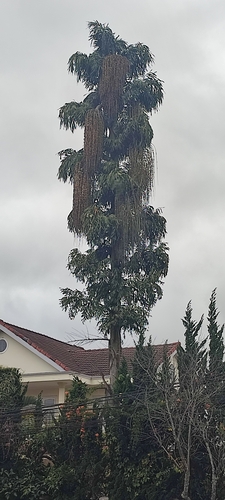
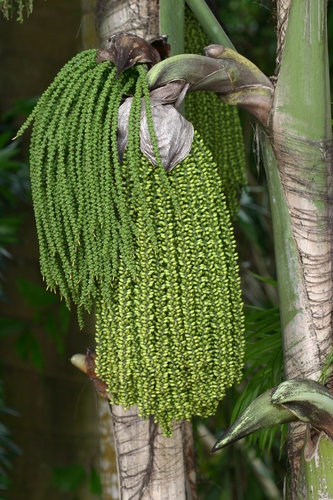
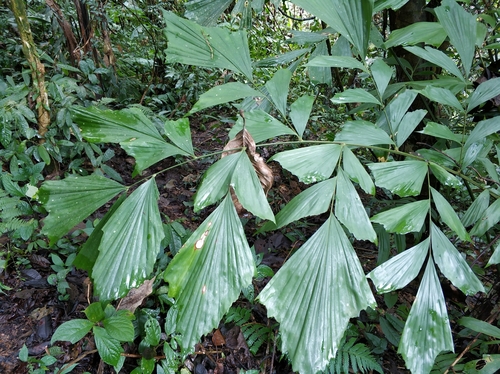
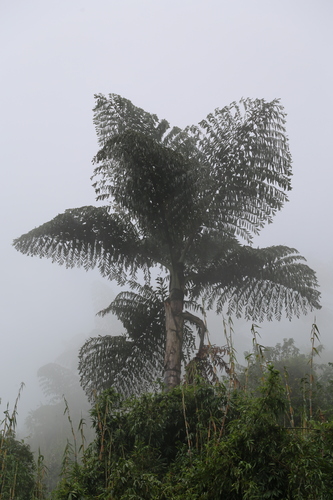
A tall palm. The trunk is 15-30 m tall. It is 30 cm across. The trunks are straight and almost white. The crown has arching fronds. It is full and round. The leaves are 3 m long. The leaflets occur in clusters. They have long pointed tips. They are 30 cm long. They grow at angles giving a V shape or feather shape. The fruit occur in clusters and are round. They are orange and 4.5 cm across.
Edible Uses
Among its products, the palm heart or terminal bud stands out. Considered by many as a bitter-flavored vegetable — which in fact is when compared to sweet hearts of Atlantic Forest species — the guariroba heart of palm is a delicacy of wide culinary use in some states, including some regions of Goiás and Minas Gerais. In the good recipes of empadão goiano, for example, it is essential to include good pieces of guariroba bitter heart of palm. Substantial food and very strong seasoning, the filling of this pie, together with guariroba, must contain pieces of chicken, preferably thighs, sausages, potatoes and whole boiled eggs or just broken in half and ripe tomatoes. It can also be used as a salad: with cherry tomatoes and plenty of seasoning. Edible oil is extracted from the seed. The plant is also widely used in landscaping in squares and mainly in central flowerbeds of streets and avenues in cities in the interior of Goiás, as an example in the city of Jataí that over the years has been planting thousands of seedlings throughout the city.
Traditional Uses
The bitter palm heart is used in cooking. The fruit are edible raw. The nut is eaten.
This uses section is brief — help expand it
Medicinal Uses
The apical bud is bitter, carminative, stomachic and tonic. It is also used to help control the symptoms of hysteria. The fermented pulp of the fruit is used to make a diuretic beverage.
Distribution
It is a tropical plant. It grows in woodland. It cannot tolerate cold or drought. It needs rich, well drained soil. It grows below 800 m altitude. In XTBG Yunnan.
Where It Grows
Asia, Bolivia, Brazil*, China, Paraguay, South America,
Cultivation
Plants are grown from seed. The ripe fruit are harvested and can be used directly as seed. They are only viable for a short time. Seeds germinate after 2-4 months.
Propagation
Seed - best sown as soon as it is ripe in a partially shaded position in a nursery seedbed or in individual containers. A very low germination rate can be expected, with the seed sprouting within 60 - 120 days. Seedlings grow away slowly.
Other Uses
The leaves are used to make brooms. An oil from the seeds is used to make a hair dressing that is said to invigorate the hair. The wood is moderately heavy, soft, durable even when exposed to the elements. It is used for stakes, posts, laths and water troughs.
Production
Plants grow at a moderate rate. It yields 3-4 kg of oil-rich kernels containing 50% oil.
Other Information
The fruit are sold in markets.
Notes
There are about 30 Syagrus species.
Nutrition
| Part | Moisture | kJ | kcal | Protein | Vit A | Vit C | Iron | Zinc |
|---|---|---|---|---|---|---|---|---|
| Fruit | 87.1 | 183 | 44 | 2.3 | — | 4 | 0.4 | 1 |
Synonyms
Also Known As
Catole, Coco-babao, Coco-catole, Coqueiro-guariroba, Coquiero-amargoso, Gariroba, Guariroba, Gueiroba, Gueroba, Iraiba, Palmito-amargoso
References (24)
- Agric. Colon. 10(2):466-467. 1916
- Balick, M.J. and Beck, H.T., (Ed.), 1990, Useful palms of the World. A Synoptic Bibliography. Colombia p 121 (As Cocos oleracea), 131 (As Cocos picrophylla),
- Bortolotto, I. M., et al, 2018, Lista preliminar das plantas alimenticias nativas de Mato Grosso do Sul, Brasil. Iheringia, Serie Botanica, Porto Alegre, 73 (supl.):101-116
- Bussmann, R. W., (Ed.), 2020, Biodiverse food plants in the semiarid region of Brazil have unknown potential: A systematic review. Plos ONE 15(5): e0230936
- Grandtner, M. M. & Chevrette, J., 2013, Dictionary of Trees, Volume 2: South America: Nomenclature, Taxonomy and Ecology. Academic Press p 642
Show all 24 references Hide references
- Haynes, J., & McLaughlin, J., 2000, Edible palms and Their Uses. University of Florida Fact sheet MCDE-00-50-1 p 13
- Hedrick, U.P., 1919, (Ed.), Sturtevant's edible plants of the world. p 209 (Cocos oleracea)
- Henderson, A., Galeano, G and Bernal, R., 1995, Field Guide to the Palms of the Americas. Princeton. p 146
- Hunter, D., et al, 2019, The potential of neglected and underutilized species for improving diets and nutrition. Planta (2019) 250:709-729
- Janick, J. & Paul, R. E. (Eds.), 2008, The Encyclopedia of Fruit & Nuts. CABI p 159
- Johnson, D.V., 1998, Tropical palms. Non-wood Forest products 10. FAO Rome. p 95
- Jones, D.L., 1994, Palms throughout the World. Smithtonian Institution, Washington. p 360
- Kermath, B. M., et al, 2014, Food Plants in the Americas: A survey of the domesticated, cultivated and wild plants used for Human food in North, Central and South America and the Caribbean. On line draft. p 843
- Lorenzi, H., 2002, Brazilian Trees. A Guide to the Identification and Cultivation of Brazilian Native Trees. Vol. 01 Nova Odessa, SP, Instituto Plantarum p 304
- Lorenzi, H., Bacher, L., Lacerda, M. & Sartori, S., 2006, Brazilian Fruits & Cultivated Exotics. Sao Paulo, Instituto Plantarum de Estuados da Flora Ltda. p 94
- Marcia, M. J., et al, 2011, Palm Uses in Northwestern South America: A Quantitative Review. Bot. Rev. (2011) 77:462-570
- Martin, F.W. & Ruberte, R.M., 1979, Edible Leaves of the Tropics. Antillian College Press, Mayaguez, Puerto Rico. p 210 (Cocos oleracea)
- Martins, R. C., et al, 2014, Use and Diversity of Palm (Arecaceae) Resources in Central Western Brazil. The Scientific World Journal.. Volume 2014, Article ID 942043
- Menninger, E.A., 1977, Edible Nuts of the World. Horticultural Books. Florida p 131 (Cocos oleracea)
- Nunes, E. N., et al, 2018, Local botanical knowledge of native food plants in the semiarid region of Brazil. Journal of Ethnobiology and Ethnomedicine (2018) 14:49
- Riffle, R.L. & Craft, P., 2003, An Encyclopedia of Cultivated Palms. Timber Press. p 458
- World Checklist of Useful Plant Species 2020. Royal Botanic Gardens, Kew
- www.colecionandofrutas.org
- www.desert-tropicals.com