Attalea amygdalina
Kunth
Taparo, Almendron
iNaturalist· cc-by-nc-sa
(c) Mateo Hernandez Schmidt, some rights reserved (CC BY-NC-SA)
iNaturalist· cc-by-nc-sa
(c) Mateo Hernandez Schmidt, some rights reserved (CC BY-NC-SA)
iNaturalist· cc-by-nc-sa
(c) Mateo Hernandez Schmidt, some rights reserved (CC BY-NC-SA)
Summary
Source: WikipediaAttalea amygdalina is a species of palm endemic to Colombia.
Description
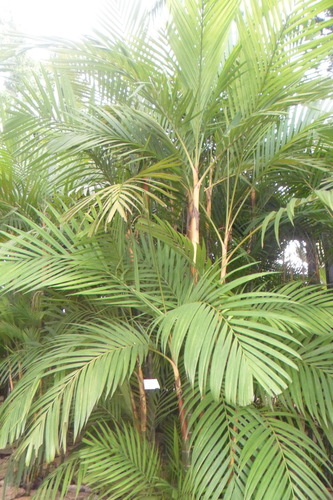
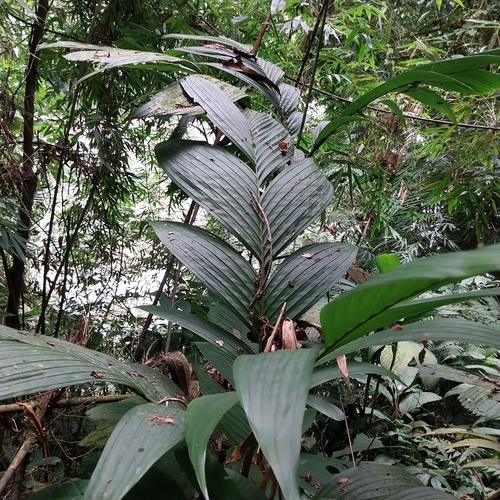
A palm. The trunk is underground. The leaves are erect and 7 m long. The tips arch over. The leaflets are regularly spaced along the leaf stalk. The leaflets can be 1 m long. They are deep green. The leaflets are limp and grow in one flat plane. The fruit are oval and 6-9 cm long by 5 cm wide. The seeds are the shape of almonds and are edible.
Edible Uses
Seed. A fine, edible oil is obtained from the seeds. This product has not been exploited commercially for lack of efficient machines to break the hard endocarp without damaging the seeds.
Traditional Uses
The seeds are eaten. They have a high oil content. The fruit are eaten raw.
This uses section is brief — help expand it
Distribution
A tropical plant. It grows in the hilly rainforest in Colombia. It grows between 1000-1600 m altitude in Colombia. In Townsville palmetum.
Where It Grows
Australia, Colombia, South America,
Cultivation
Prefers a position in light shade.
Notes
There are between (22) 30-71 Attalea species. Some authorities divide them among Attalea, Orbignya, Scheela and Maximiliana.
Synonyms
Also Known As
Taparo
References (12)
- Asprilla-Perea, J., & Diaz-Puente, J.M., 2018, Traditional use of wild edible food in rural territories within tropical forest zones: A case study from the northwestern Colombia. New Trends and Issues Proceedings on Humanities and Social Sciences [Online]. 5(1), 162–181.
- Balick, M.J. and Beck, H.T., (Ed.), 1990, Useful palms of the World. A Synoptic Bibliography. Colombia p 164 (As Attalea uberrima), 223, 474 (As Attalea uberrima), 561 (As Attalea victoriana and Attalea uberrima),
- Glassman, A Taxonomic Treatment of the Palm Subtribe Attaleinae (Tribe Cocoeae). p 29
- Henderson, A., Galeano, G and Bernal, R., 1995, Field Guide to the Palms of the Americas. Princeton. p 158
- Janick, J. & Paul, R. E. (Eds.), 2008, The Encyclopedia of Fruit & Nuts. CABI p 91
Show all 12 references Hide references
- Johnson, D.V., 1998, Tropical palms. Non-wood Forest products 10. FAO Rome. p 85
- Kermath, B. M., et al, 2014, Food Plants in the Americas: A survey of the domesticated, cultivated and wild plants used for Human food in North, Central and South America and the Caribbean. On line draft. p 105
- Marcia, M. J., et al, 2011, Palm Uses in Northwestern South America: A Quantitative Review. Bot. Rev. (2011) 77:462-570
- Riffle, R.L. & Craft, P., 2003, An Encyclopedia of Cultivated Palms. Timber Press. p 41, 265
- Wiersema, J. H. & Leon, B., 2013, World Economic Plants. A Standard Reference CRC Press. 2nd Ed. p 85
- World Checklist of Useful Plant Species 2020. Royal Botanic Gardens, Kew
- www.desert-tropicals.com