Astrocaryum tucuma
Mart.
Tucum palm, Star nut palm
iNaturalist· cc-by-nc
(c) Nelson Wisnik, some rights reserved (CC BY-NC), uploaded by Nelson Wisnik
iNaturalist· cc-by-nc
(c) Nelson Wisnik, some rights reserved (CC BY-NC), uploaded by Nelson Wisnik
iNaturalist· cc-by-nc
(c) Nelson Wisnik, some rights reserved (CC BY-NC), uploaded by Nelson Wisnik
Description
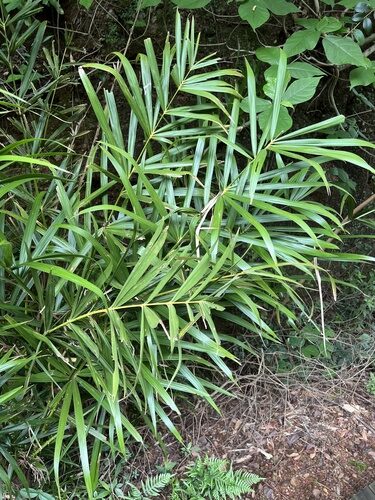
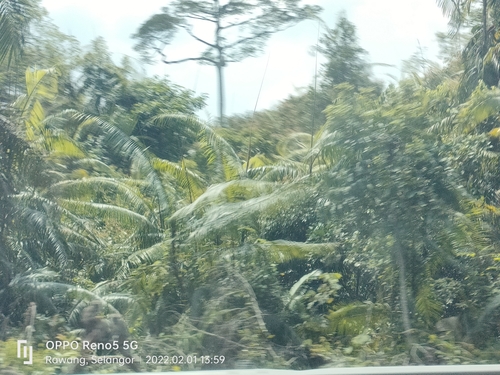
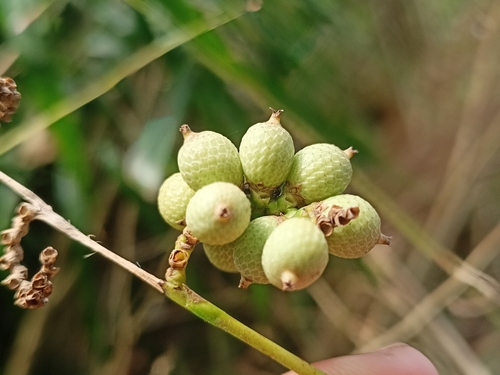
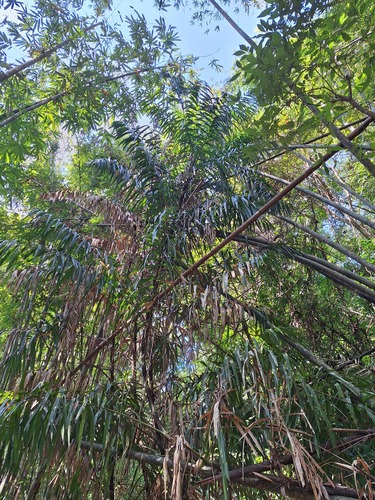
A palm. An erect plant 16 m tall. The trunk is spiny and the bark is greyish brown. The leaves are divided and about 3 m long. The fruit are fibrous and fleshy. They are 5-6 cm across. The outside is greenish yellow and the flesh is yellow.
Edible Uses
The fruit pulp is eaten fresh or made into wine. The fruit and seeds both yield edible oils. The palm heart and fruits are also consumed. The fruits are particularly noted for their high Vitamin A content.
Traditional Uses
The fruit yield an edible oil. The fruit pulp is eaten. It is also made into wine. The seed yield and edible oil.
This uses section is brief — help expand it
Medicinal Uses
The oil extracted from the seeds is used medicinally. The liquid endosperm of unripe fruits is used as eye drops. The leaves are used to disinfect the umbilical cord of newborn babies, and as a remedy for thrush.
Distribution
A tropical plant. It suits the hot tropical lowlands. It can grow in sandy soils in coastal areas.
Where It Grows
Amazon, Brazil, Ecuador, Guyana, Peru, South America,
Cultivation
Plants are grown from seed.
Propagation
Seed -pre-soak for 24 hours in warm water and sow in containers. The seed is enclosed in a hard endocarp which makes germination slow and erratic. Scarifying the seed before soaking can reduce germination time.
Other Uses
An oil can be obtained from the seed and fruits. The oil can be used as a biofuel. The oils extracted from the fruit and the seed are used as ingredients in commercial cosmetic preparations as emollients and skin conditioners. A fine, soft, strong fibre can be obtained from the leaves. It is used for weaving and cordage. The fibres of the young leaves are made into nets, hammocks etc. The fibre is easy to extract because it lies just under the epidermis of the leaf, which is so exceedingly thin that it is easily rubbed off, leaving the fibre white and clean. The leaflets are used in making baskets. The smoke from burning the epicarp of the fruit is used to cure rubber. The woody seed shell is used traditionally to make rings, earrings, necklaces etc. It is also halved and used as small bowls in which to place medications by Shamans when treating a patient. Wood - hard, strong and durable. Rot-resistant, it is used in making traditional houses. The seeds of this species are often buried as a food store by animals. Many of these seeds will then germinate, especially after a fire. The plant will often grow in open spaces and the seed will also germinate freely after a forest fire. Thus this plant is an excellent pioneer species to use when restoring native forest and also for use when creating a woodland garden.
Production
A fruit weighs 70 g.
Notes
There are about 40-50 Astrocaryum species. The fruit are high in Vitamin A.
Synonyms
Also Known As
Cumare, Kuru, Nukwa, Tucum
References (15)
- Balick, M.J. and Beck, H.T., (Ed.), 1990, Useful palms of the World. A Synoptic Bibliography. Colombia p 68, 342, 389,
- Bircher, A. G. & Bircher, W. H., 2000, Encyclopedia of Fruit Trees and Edible Flowering Plants in Egypt and the Subtropics. AUC Press. p 46
- Etkin, N.L. (Ed.), 1994, Eating on the Wild Side, Univ. of Arizona. p 121, 122, 136, 157
- Facciola, S., 1998, Cornucopia 2: a Source Book of Edible Plants. Kampong Publications, p 27
- Haynes, J., & McLaughlin, J., 2000, Edible palms and Their Uses. University of Florida Fact sheet MCDE-00-50-1 p 2
Show all 15 references Hide references
- Hedrick, U.P., 1919, (Ed.), Sturtevant's edible plants of the world. p 84 (As Astrocaryum tucuma)
- Hist. nat. palm. 2:77, t. 65, fig. 2. 1824
- Janick, J. & Paul, R. E. (Eds.), 2008, The Encyclopedia of Fruit & Nuts. CABI p 89 (As Astrocaryum tucuma)
- Jones, D.L., 1994, Palms throughout the World. Smithtonian Institution, Washington. p 55, 57
- Kiple, K.F. & Ornelas, K.C., (eds), 2000, The Cambridge World History of Food. CUP p 1873
- Martin, F. W., et al, 1987, Perennial Edible Fruits of the Tropics. USDA Handbook 642 p 46
- Omawale, 1973, Guyana's edible plants. Guyana University, Georgetown p 26
- Vasquez, R. and Gentry, A. H., 1989, Use and Misuse of Forest-harvested Fruits in the Iquitos Area. Conservation Biology 3(4): 350f
- Wiersema, J. H. & Leon, B., 2013, World Economic Plants. A Standard Reference CRC Press. 2nd Ed. p 76
- World Checklist of Useful Plant Species 2020. Royal Botanic Gardens, Kew