Zamia pumila
Linn.
Seminole bread
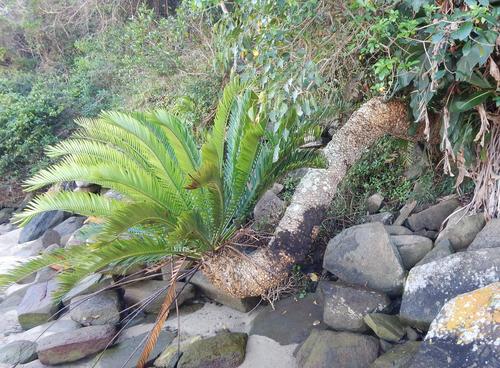
iNaturalist· cc-by-nc
(c) Jenny Evans, some rights reserved (CC BY-NC)
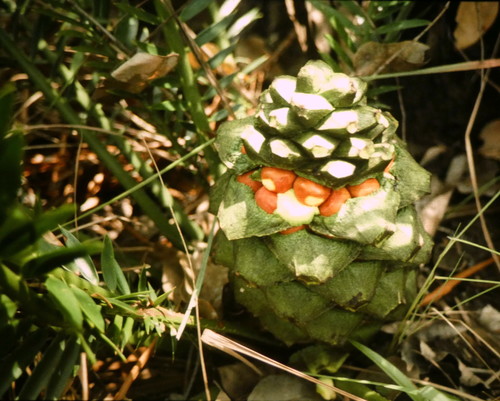
iNaturalist· cc-by-nc
(c) Jenny Evans, some rights reserved (CC BY-NC)
Summary
Source: WikipediaZamia pumila, commonly known as guáyiga or guáyara in Spanish, is a small, tough, woody cycad native to the Greater Antilles. Z. pumila was the first species described for the genus and, therefore, is the type species for the genus Zamia, the Zamia pumila species complex, and the family Zamiaceae.
Description
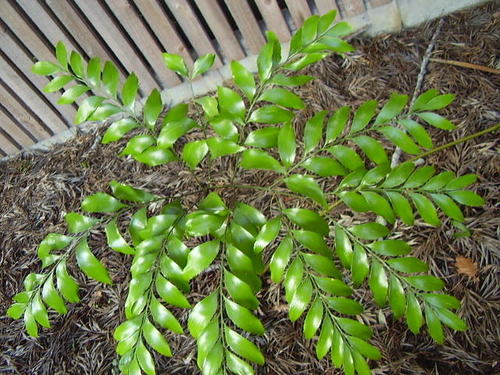
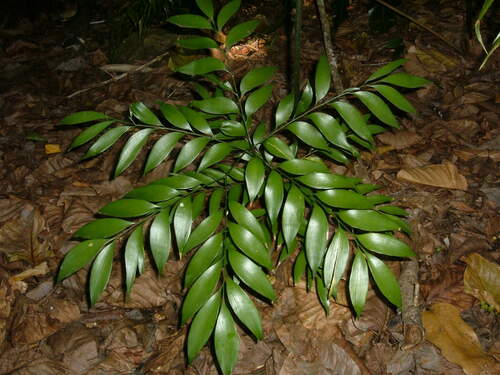
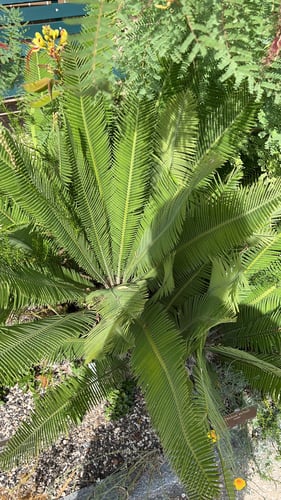
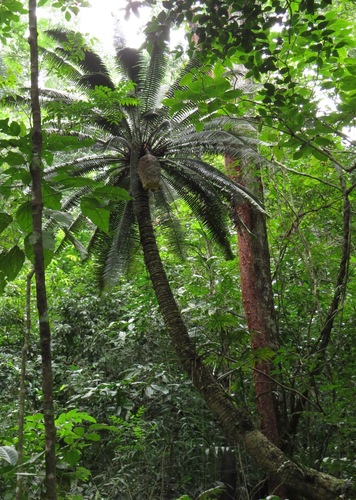
A small plant. It grows 1.5 m high and spreads 1.8 m wide. It is tough and woody. It has underground stems. This trunk can be 3-25 cm high. These are short and branched. From these leaves emerge. There are 4-12 dark green leaves. They have smooth leaf stalks. The leaves are 60-120 cm long with 5-30 pairs of leaflets. Each leaflet is 8-25 cm long and 0.5-2 cm wide. The leaves have teeth at the tips. Plants are separately male and female. The fruit are red to brown cones. The male cones are cylinder shaped and 3-15 cm long. The female cones are long and fattened and 6-15 cm long by 4-6 cm wide. They are pointed at the tip. Plants are pollinated by weevils.
Edible Uses
All parts of this plant are potentially toxic and should not be eaten unless effective measures are taken to remove the toxins. The starchy flour produced from the tubers is made into biscuits, rolls called cholas, and other specialties called hojaldres and tortillitas. Traditionally, a sort of bread was made from the starch in the tubers. The tubers were grated until they were made into a rough dough, which was then formed into a ball and placed in the sun. The dough ball, said to be the colour of sawdust, was left in the sun for 2 - 3 days, by which time it had turned blackish and was swarming with grubs. Then the dough was made into tortillas that were cooked over a fire until somewhat stiff. During cooking, the grubs were killed and the tortilla was rich in starch from the plant and protein from the grubs. Eating the bread before it had grubs was said to be dangerous as it was still very poisonous.
Traditional Uses
The stems are rich in starch which can be extracted as arrowroot. The plants are poisonous but this is removed by careful leaching.
This uses section is brief — help expand it
Known Hazards
We have no specific information for this species, but most if not all members of this genus are believed to contain toxins. The two main toxic compounds that have been identified are cycasin and macrozamin. When ingested in sufficient quantities, these compounds are extremely poisonous to humans and many other animals, and have been shown to cause liver damage and cancer. Cycasin and macrozamin have a cumulative effect upon the body and are suspected of causing neurological disorders when ingested in small amounts over long periods of time. There is a long history of human use of this genus as a starch-rich food, but it should be noted that the plants needed to be treated in various ways in order to remove any toxic principles. Caution should be exercised even with properly prepared foods, since even then regular consumption may lead to severe health problems and death. Since many of these species are becoming increasingly rare in the wild, this is probably a food best left to times of food shortage when other, better foods, are not available.
Distribution
A tropical plant. It grows in well-drained sands. It is best in light shade. It suits hardiness zones 10-12.
Where It Grows
Asia, Australia, Caribbean, Central America, Cuba, Dominican Republic, India, North America, SE Asia, Singapore, USA, West Indies,
Cultivation
Zamia pumila is native to low elevations in the Caribbean, growing in a region where the annual temperature ranges from highs of about 35°c to lows of about 10°c. The mean annual rainfall is around 1,500mm, evenly distributed throughout the year. Plants do particularly well in very well drained soils. This includes limestone soils and even sandy beach strand soils. Generally speaking the plants that are in a situation under shrubs are more vigorous. The growth of this plant is rapid for a cycad, and if both males and females are grown, hand pollination can be effective in producing viable seed. Coning plants can be grown from seed in 3 - 5 years. Cycad species can usually be transplanted easily even when quite large. The best time for moving them is just before the beginning of a new growing season, the roots being trimmed if they are damaged and perhaps some leaves being removed. New roots should develop quickly as the season progresses. Species in this genus form structures known as coralloid roots. These roots branch off from the taproot or secondary roots and are distinctive in that they grow laterally or upward, forming a nodular mass at the apex. These coralloid roots occur slightly below or slightly above the soil surface and generally contain cyanobacteria, also known as blue-green algae. These are able to fix atmospheric nitrogen and make it available as a nutrient to the plant. The ability to extract this important nutrient from the air explains how many cycad species are able to survive on almost sterile soils. A dioecious species, with individual plants producing either all male or all female cones. Therefore both male and female forms of the plant need to be grown if seed is required. On very rare occasions, usually when a plant has been under severe stress, it can change sex and produce either all female or all male cones.
Propagation
Seed - remove the fleshy coating and surface sow on damp sand. Germination is best at around 23 - 29°c. Pot up young seedlings into a rich, moist medium, as soon as they are large enough to handle and grow on at high temperatures without any check to growth until 2 - 3 leaves have been produced at one time, otherwise they may enter dormancy.
Notes
There are about 55 Zamia species.
Synonyms
Also Known As
Comfort root, Coontie, Florida arrowroot, Guayiga, Yabuna, Yuquilla de sabana
References (16)
- Ambasta, S.P. (Ed.), 2000, The Useful Plants of India. CSIR India. p 697
- Beckstrom-Sternberg, Stephen M., and James A. Duke. "The Foodplant Database." http://probe.nalusda.gov:8300/cgi-bin/browse/foodplantdb.(ACEDB version 4.0 - data version July 1994)
- Brickell, C. (Ed.), 1999, The Royal Horticultural Society A-Z Encyclopedia of Garden Plants. Convent Garden Books. p 1067
- Burkill, I.H., 1966, A Dictionary of the Economic Products of the Malay Peninsula. Ministry of Agriculture and Cooperatives, Kuala Lumpur, Malaysia. Vol 2 (I-Z) p 2326
- Cundall, P., (ed.), 2004, Gardening Australia: flora: the gardener's bible. ABC Books. p 1493
Show all 16 references Hide references
- Hedrick, U.P., 1919, (Ed.), Sturtevant's edible plants of the world. p 692
- Hibbert, M., 2002, The Aussie Plant Finder 2002, Florilegium. p 310
- Jones, D.L., 2000, Cycads of the world. Reed New Holland. p 296
- Lim, T. K., 2015, Edible Medicinal and Non Medicinal Plants. Volume 9, Modified Stems, Roots, Bulbs. Springer p 87
- Marinelli, J. (Ed), 2004, Plant. DK. p 381
- Menninger, E.A., 1977, Edible Nuts of the World. Horticultural Books. Florida p 164
- Miguel, E., et al, 1989, A checklist of the cultivated plants of Cuba. Kulturpflanze 37. 1989, 211-357
- Moerman, D. F., 2010, Native American Ethnobotany. Timber Press. p 609
- Saunders, C.F., 1948, Edible and Useful Wild Plants. Dover. New York. p 28
- Sp. pl. ed. 2, 2:1659. 1763
- World Checklist of Useful Plant Species 2020. Royal Botanic Gardens, Kew