Viburnum opulus
L.
Guelder Rose, Cranberry Bush
iNaturalist· cc-by-nc
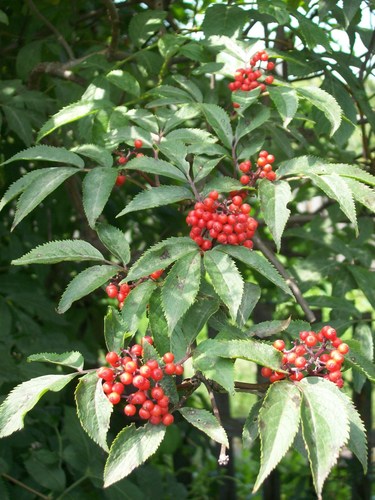
(c) katelayton, some rights reserved (CC BY-NC)
iNaturalist· cc-by
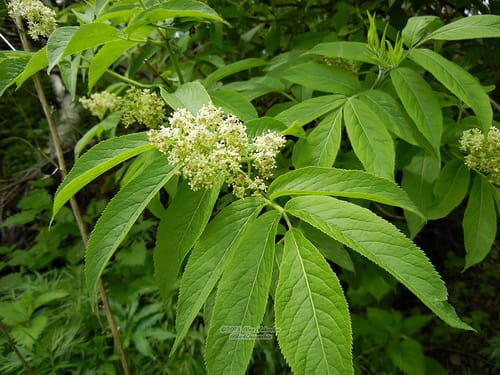
(c) Alina Bryleva, some rights reserved (CC BY)
Summary
Source: WikipediaViburnum opulus, commonly known as the guelder-rose, or guelder rose (), is an Old World species of flowering plant in the family Adoxaceae.
Description
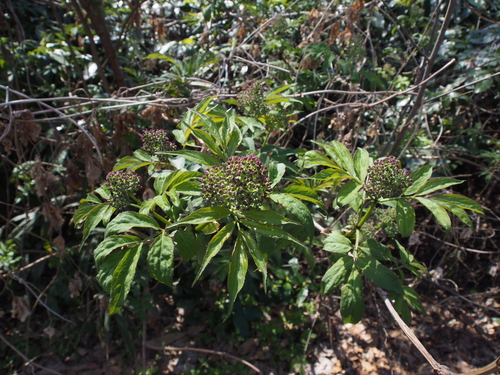
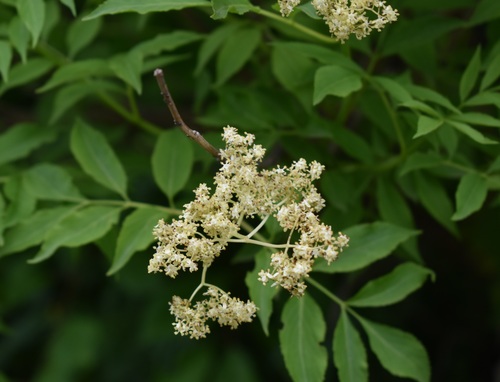
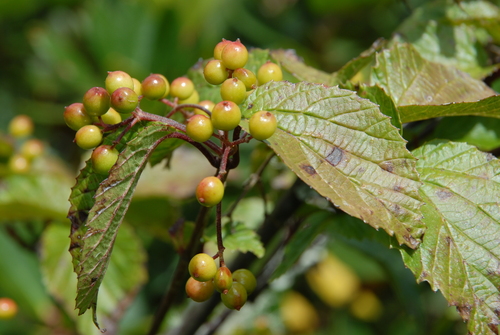
A shrub. It grows 3-4.5 m tall and spreads 2.5-3.7 m wide. It is larger than the North American cranberry. It loses its leaves during the year. There are saucer like glands on the leaf stalk. The leaves are maple like. The flowers are white and occur in heads. Small fertile flowers are surrounded by larger infertile flowers. The fruit are red and occur in bunches. The fruit are bitter and remain on the tree over winter.
Edible Uses
The fruit can be eaten raw or cooked, though it is best cooked due to its sour taste. The fruit is up to 8.5mm in diameter but contains a large seed, and the crushed fruit has an unpleasant smell. It is used as a cranberry substitute in jellies, preserves, and similar preparations. Some caution is advised — see notes on toxicity.
Traditional Uses
CAUTION: The leaves, bark and berries are all reported as poisonous. The fruit are sour and used as a substitute for cranberry in making jelly, jams, preserves, sauce and wine. They are also eaten with honey and flour. They are eaten raw after frosts. The flowers are dried and used for a tea drink.
Medicinal Uses
Guelder rose is a powerful antispasmodic, widely used to treat asthma, cramps, colic, and painful menstruation. It also acts as a sedative for nervous conditions. The bark is antispasmodic, astringent, and sedative, and contains scopoletin, a coumarin that has a sedative effect on the uterus. Bark tea is taken internally to relieve all types of spasms, including menstrual cramps, spasms after childbirth, and threatened miscarriage, as well as nervous complaints and debility. The bark is harvested in autumn before the leaves change colour, or in spring before the leaf buds open, then dried for later use. The leaves and fruits are antiscorbutic, emetic, and laxative. A homeopathic remedy prepared from the fresh bark is used to treat menstrual pain and spasms after childbirth.
Known Hazards
The fruit is edible in small quantities, with a very bitter taste; it can be used to make jelly. It is however mildly toxic, and may cause vomiting or diarrhea if eaten in large amounts. The ripe fruit is often ignored by birds and avoided by humans due to a foul smell emitted when crushed, described by some as "musty socks" or "urine and vomit". The term 'cramp bark' is related to the bark's use in traditional medicine for cramps, but there is no scientific evidence of its effectiveness for this use or any other.
Distribution
It is a temperate plant. It will grow in most soils. It is best in an open, sunny position. It is hardy. It grows in damp situations. It suits hardiness zones 3-9. Arboretum Tasmania. Hobart Botanical Gardens. Melbourne Botanical gardens. In Sichuan.
Where It Grows
Africa, Albania, Armenia, Asia, Australia, Austria, Azerbaijan, Balkans, Belarus, Belgium, Britain, Bulgaria, Canada, Caucasus, Central Asia, China - Xinjiang, Czech, Denmark, Estonia, Europe, Finland, France, Georgia, Germany, Greece, Himalayas, Hungary, India, Ireland, Italy, Japan, Kazakhstan, Korea, Kyrgyzstan, Latvia, Lithuania, Luxembourg, Mediterranean, Moldova, Mongolia, Netherlands, North Africa, North America, Norway, Pakistan, Poland, Romania, Russia, Scandinavia, Siberia, Slovakia, Slovenia, Sweden, Switzerland, Tajikistan, Tasmania, Turkey, Türkiye, Ukraine, USA, Yugoslavia,
Cultivation
An easily grown plant, it succeeds in most soils but is ill-adapted for poor soils and for dry situations. It prefers a deep rich moist loamy soil in a sunny position. Succeeds in semi-shade but does not grow or fruit so well in such a position. Grows well in heavy clay soils and on chalk. Does not do well on very acid soils. Best if given shade from the early morning sun in spring. A very ornamental plant, it is hardy to about -30°c and is often grown in the flower garden. There are many named varieties. Guelder rose regenerates quickly if it is cut to the ground, it can also produce suckers and will often form thickets. The plant is an alternative host for the broad bean aphid. In garden design, as well as the above-ground architecture of a plant, root structure considerations help in choosing plants that work together for their optimal soil requirements including nutrients and water. Thick or swollen - fibrous or tap root.
Propagation
Seed is best sown in a cold frame as soon as it is ripe. Germination can be slow, sometimes taking more than 18 months. Seed harvested green — fully developed but not yet fully ripe — and sown immediately in a cold frame should germinate the following spring. Stored seed needs 2 months of warm stratification followed by 3 months of cold, and may still take 18 months to germinate. Prick seedlings into individual pots when large enough to handle, grow on in a cold frame or greenhouse, and plant out in late spring or early summer of the following year. Softwood cuttings taken in early summer in a frame should be potted individually once rooting begins and planted out the following late spring or early summer. Half-ripe cuttings, 5–8 cm long with a heel if possible, taken in July or August in a frame should be potted as soon as they start to root. These can be difficult to overwinter and are best kept under glass until the following spring. Mature wood cuttings taken in winter in a frame should root in early spring; pot when large enough and plant out in summer if sufficient new growth has been made, otherwise overwinter in a cold frame and plant out the following spring. Layering of the current season's growth in July or August takes 15 months.
Other Uses
A red dye is obtained from the fruit, and an ink can be made from the dried berries. Plants can be grown as a tall hedge, though they are rather bare in winter. The wood can be used to make skewers.
Other Information
It is sold in local markets.
Notes
There are about 150 Viburnum species. Also put in the family Caprifoliaceae.
Synonyms
Also Known As
Brnchi, Brogovita, Crampbark, Dzaxhveli, European cranberry-bush, European highbush-cranberry, Kalina, Koera oidpuu, Lodjapuu, Putinas, Snowball
References (55)
- Aipeisova S.A., et al, 2019, Wild useful herbs of Aktobe Region (Western Kazakhstan). Ukrainian Journal of Ecology, 9(3), 329-331
- Bodkin, F., 1991, Encyclopedia Botanica. Cornstalk publishing, p 1015
- Bremness, L., 1994, Herbs. Collins Eyewitness Handbooks. Harper Collins. p 135
- Brickell, C. (Ed.), 1999, The Royal Horticultural Society A-Z Encyclopedia of Garden Plants. Convent Garden Books. p 1050
- Bussman, R. W., et al, 2016, A comparative ethnobotany of Khevsureti, Samtskhe-Javakheti, Tusheti, Svaneti, and Racha-Lechkhumi, Republic of Georgia (Sakartvelo), Caucasus. Journal of Ethnobiology and Ethnomedicine (2016) 12:43
Show all 55 references Hide references
- Bussman, R. W., et al, 2021, Unity in diversity—food plants and fungi of Sakartvelo (Republic of Georgia), Caucasus. Journal of Ethnobiology and Ethnomedicine (2021) 17:72 p 4
- Cerne, M., 1992, Wild Plants from Slovenia used as Vegetables. Acta Horticulturae 318
- Cundall, P., (ed.), 2004, Gardening Australia: flora: the gardener's bible. ABC Books. p 1468
- Denes, A., et al, 2012, Wild plants used for food by Hungarian ethnic groups living in the Carpathian Basin. Acta Societatis Botanicorum Poloniae 81 (4): 381-396
- Dzhangaliev, A. D., et al, 2003, The Wild Fruit and Nut Plants of Kazakhstan, Horticultural Reviews, Vol. 29. pp 305-371
- Ertug, F, Yenen Bitkiler. Resimli Türkiye Florası -I- Flora of Turkey - Ethnobotany supplement
- Facciola, S., 1998, Cornucopia 2: a Source Book of Edible Plants. Kampong Publications, p 73
- Farrar, J.L., 1995, Trees of the Northern United States and Canada. Iowa State University press/Ames p 178
- Flora of Pakistan. www.eFlora.org
- Flowerdew, B., 2000, Complete Fruit Book. Kyle Cathie Ltd., London. p 172
- Glowinski, L., 1999, The Complete Book of Fruit Growing in Australia. Lothian. p 183
- Hanelt, P. et al, (Eds.), 2001, Mansfield's encyclopedia of agricultural and horticultural crops. p 1702
- Harris, E & J., 1983, Field Guide to the Trees and Shrubs of Britain. Reader's Digest. p 143 (Fruit reported as poisonous)
- Hedrick, U.P., 1919, (Ed.), Sturtevant's edible plants of the world. p 673
- Hibbert, M., 2002, The Aussie Plant Finder 2002, Florilegium. p 306
- http://www.botanic-gardens-ljubljana.com/en/plants
- Irving, M., 2009, The Forager Handbook, A Guide to the Edible Plants of Britain. Ebury Press p 203
- Jack, M., Wild Foods and Medicines of Forest Garden Transylvania. http://www.forestgardentransylvania.org/ p20
- Janick, J. & Paul, R. E. (Eds.), 2008, The Encyclopedia of Fruit & Nuts. CABI p 7
- Joyce, D., 1998, The Garden Plant Selector. Ryland, Peters and Small. p 164
- Kalle, R. & Soukand, R., 2012, Historical ethnobotanical review of wild edible plants of Estonia (1770s-1960s) Acta Societatis Botanicorum Poloniae 81(4):271-281
- Kermath, B. M., et al, 2014, Food Plants in the Americas: A survey of the domesticated, cultivated and wild plants used for Human food in North, Central and South America and the Caribbean. On line draft. p 907
- Kolosova, V., et al, 2020, Foraging in Boreal Forest: Wild Food Plants of the Republic of Karelia, NW Russia. Foods 2020, 9, 1015; p 20
- Kremer, B.P., 1995, Shrubs in the Wild and in Gardens. Barrons. p 136. (Fruit listed as mildly poisonous.)
- Lord, E.E., & Willis, J.H., 1999, Shrubs and Trees for Australian gardens. Lothian. p 269
- Luczaj, L., 2012, Ethnobotanical review of wild edible plants of Slovakia. Acta Societatis Botanicorum Poloniae 81(4):245-255
- Łukasz Łuczaj and Wojciech M Szymański, 2007, Wild vascular plants gathered for consumption in the Polish countryside: a review. J Ethnobiol Ethnomedicine. 3: 17
- Luczaj, L. et al, 2013, Wild edible plants of Belarus: from Rostakinski's questionnaire of 1883 to the present. Journal of Ethnobiology and Ethnomedicine 9:21
- Luczaj, L., et al, 2015, Wild food plants and fungi used by Ukrainians in the western part of the Maramureş region in Romania. Acta Soc Bot Pol 84(3):339–346
- Mabey, R., 1973, Food for Free. A Guide to the edible wild plants of Britain, Collins. p 183
- MacKinnon, A., et al, 2009, Edible & Medicinal Plants of Canada. Lone Pine. p 126
- Moerman, D. F., 2010, Native American Ethnobotany. Timber Press. p 595
- Nanagulyan, S., et al, 2020, Wild plants and fungi sold in the markets of Yerevan (Armenia). Journal of Ethnobiology and Ethnomedicine 16:26
- Pieroni, A. & Soukand, R., 2017, Are Borders more Important than Geographical Distance? The Wild Food Ethnobotany of the Boykos and its Overlap with that of the Bukovinian Hutsuls in Western Ukraine. Journal of Ethnobiology 37(2): 326–345
- Pieroni, A. & Soukand, R., 2018, Forest as Stronghold of Local Ecological Practice: Currently Used Wild Food Plants in Polesia, Northern Ukraine. Economic Botany, XX(X) pp. 1-21
- Plants for a Future database, The Field, Penpol, Lostwithiel, Cornwall, PL22 0NG, UK. http://www.scs.leeds.ac.uk/pfaf/
- Prakofjewa, J., et al, 2023, Boundaries Are Blurred: Wild Food Plant Knowledge Circulation across the Polish-Lithuanian-Belarusian Borderland. Biology 2023, 12, 571.
- Pruse, B., et al, 2021, Active Wild Food Practices among Culturally Diverse Groups in the 21st Century across Latgale, Latvia. Biology 2021, 10, 551.
- Self, M., 199, Phoenix Seeds catalogue. p 15
- Sfikas, G., 1984, Trees and shrubs of Greece. Efstathiadis Group. Athens. p 188
- Shikov, A. N. et al, 2017, Traditional and Current Food Use of Wild Plants Listed in the Russian Pharmacopoeia. Frontiers in Pharmacology. Vol. 8 Article 841
- Soukand, R. & Kalle, R., 2016, Perceiving the Biodiversity of Food at Chest-height: use of the Fleshy Fruits of Wild Trees and Shrubs in Saaremaa, Estonia. Hum Ecol 44:265–272
- Soukand, R., et al, 2017, Multi-functionality of the few: current and past uses of wild plants for food and healing in Liubań region, Belarus. Journal of Ethnobiology and Ethnomedicine (2017) 13:10
- Sp. pl. 1:268. 1753
- Stryamets, N., et al, 2015, From economic survival to recreation: contemporary uses of wild food and medicine in rural Sweden, Ukraine and NW Russia. Journal of Ethnobiology and Ethnomedicine 11:53
- Toupal, R. S. & Hollenback, K., 2009, An Ethnobotany of Indiana Dunes National Lakeshore: Plant Uses of the Ojibwa People. Bureau of Applied Research in Anthropology. University of Arizona
- USDA, ARS, National Genetic Resources Program. Germplasm Resources Information Network - (GRIN). [Online Database] National Germplasm Resources Laboratory, Beltsville, Maryland. Available: www.ars-grin.gov/cgi-bin/npgs/html/econ.pl (10 April 2000)
- Wiersema, J. H. & Leon, B., 2013, World Economic Plants. A Standard Reference CRC Press. 2nd Ed. p 717
- World Checklist of Useful Plant Species 2020. Royal Botanic Gardens, Kew
- Kishor, Wild edible plants of Himachal Pradesh