Viburnum alnifolium
Marshall
Hobble Bush, Moosewood
iNaturalist· cc-by-nc
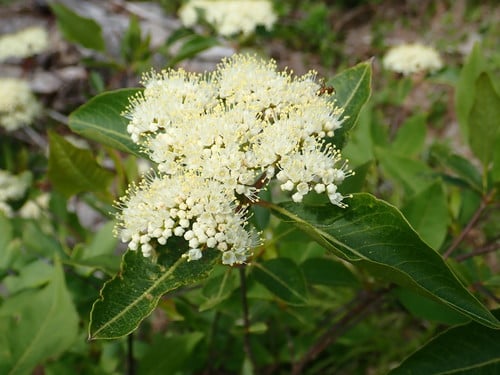
(c) Bryan Pfeiffer, some rights reserved (CC BY-NC)
iNaturalist· cc-by-nc-sa
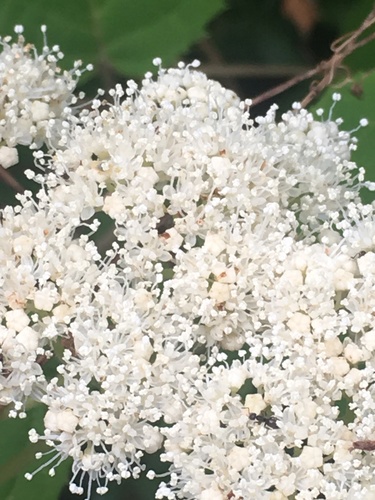
(c) pamdarrow, some rights reserved (CC BY-NC-SA)
iNaturalist· cc-by-nc-sa
(c) pamdarrow, some rights reserved (CC BY-NC-SA)
Description
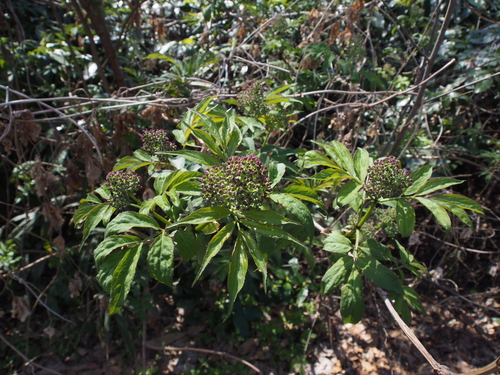
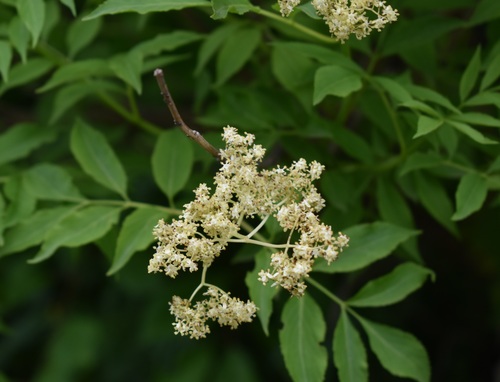
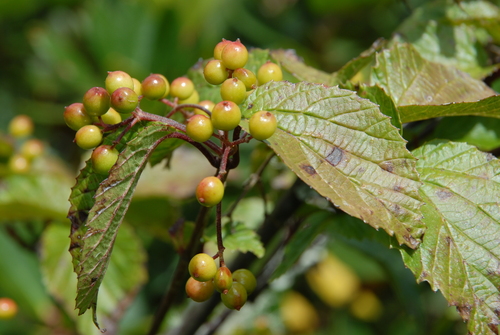
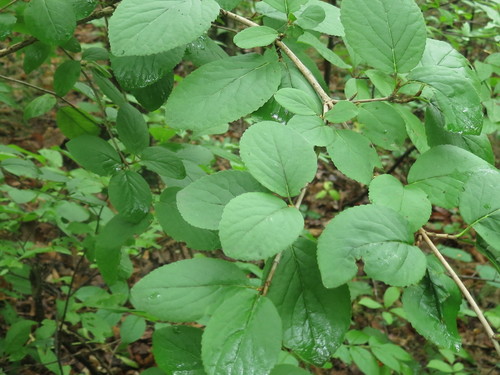
A bush. It grows 3 m high. The branches form roots where they touch the ground. The leaves are simple and heart shaped. They are opposite and fall off in the winter. The leaves turn red in autumn. The flowers are white. The fruit are red but become black. They have a large stone and thin flesh.
Edible Uses
The ripe fruit are sweet with a flavor reminiscent of raisins or dates.
Traditional Uses
The ripe fruit are sweet and taste like raisins or dates.
This uses section is brief — help expand it
Distribution
It is a temperate plant. It is native to North America. It needs shady, moist locations.
Where It Grows
Australia, Canada, North America, USA,
Cultivation
It can be grown from seeds or cuttings.
Production
Fruit in sunny areas are sweet and those in the shade are usually sour.
Notes
There are about 150 Viburnum species. There are 30 Species in Mexico and Central America and 29 species in South America. Also put in the family Caprifoliaceae.
References (9)
- Arbust. amer. 162. 1785
- Bodkin, F., 1991, Encyclopedia Botanica. Cornstalk publishing, p 1015
- Elias, T.S. & Dykeman P.A., 1990, Edible Wild Plants. A North American Field guide. Sterling, New York p 224
- Esperanca, M. J., 1988. Surviving in the wild. A glance at the wild plants and their uses. Vol. 2. p 15
- Facciola, S., 1998, Cornucopia 2: a Source Book of Edible Plants. Kampong Publications, p 72
Show all 9 references Hide references
- Glowinski, L., 1999, The Complete Book of Fruit Growing in Australia. Lothian. p 183
- Lord, E.E., & Willis, J.H., 1999, Shrubs and Trees for Australian gardens. Lothian. p 268
- MacKinnon, A., et al, 2009, Edible & Medicinal Plants of Canada. Lone Pine. p 126
- Morley, B. & Everard, B., 1970, Wild Flowers of the World. Ebury press. Plate 155