Sambucus sieboldiana
(Miq.) Blume ex Graebn.
iNaturalist· cc-by-nc
(c) Alexander Yakovlev, some rights reserved (CC BY-NC)
iNaturalist· cc-by-nc
(c) 堀内伸一, some rights reserved (CC BY-NC), uploaded by 堀内伸一
iNaturalist· cc-by-nc
(c) Alexander Yakovlev, some rights reserved (CC BY-NC)
Summary
Source: WikipediaSambucus sieboldiana, commonly called the Japanese red elder, is a deciduous shrub in the moschatel family (Adoxaceae). It is native to East Asia, where it is found in Japan and Korea. Its natural habitat is in thickets and forest edges, in low elevations. It is a common species throughout its range.
Description
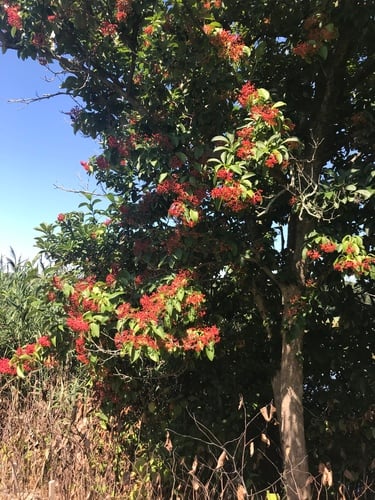
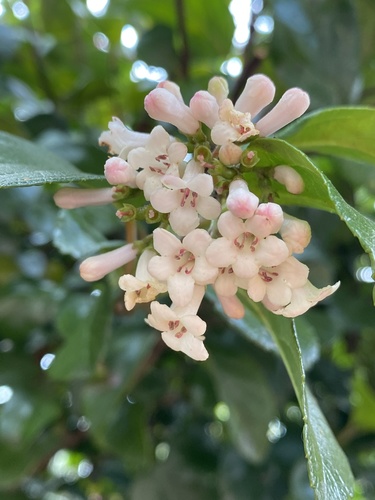
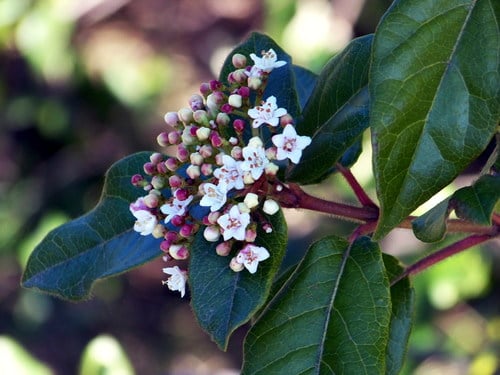
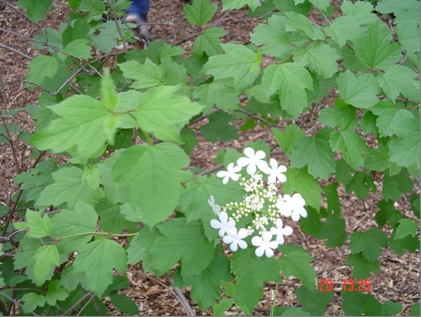
A deciduous shrub. It grows 3-6 m high. It has many branches. The young branches are light green. The older bark is corky and ash-brown. The leaves are compound. There are 2-3 pairs of leaflets with a leaflet at the end. The leaflets are alternate and narrowly oval and tapering to the tip. There are fine teeth along the edge. The flowers are small and white and in dense groups 3 cm high and 10 cm across. The fruit are 4 mm across. They are red when ripe.
Edible Uses
The young leaves and buds are boiled and eaten as a vegetable. The leaves are also used as a tea substitute.
Traditional Uses
The young leaves and buds are boiled and eaten as a vegetable The leaves are also used as a tea substitute. Caution: The seeds contain poisonous alkaloids.
Known Hazards
The seeds contain poisonous alkaloids.
Distribution
It is a temperate plant. It grows in mountainous woods. It grows best in fertile soil with good drainage. It can grow in sun or part shade. It suits hardiness zone 6.
Where It Grows
Asia, China, Japan, Korea,
Cultivation
Plants can be grown from stem cuttings or seeds.
Notes
There are about 25 Sambucus species. Also put in the family Sambucaceae.
Dangerous Lookalikes
This plant can be confused with the following toxic species. Always verify identification carefully before consuming any wild plant.
Pokeweed
Phytolacca americana
Jakec
Sambucus sieboldiana
Sambucus sieboldiana
(c) Alexander Yakovlev, some rights reserved (CC BY-NC)
Pokeweed: Thick red/purple herbaceous stems (no bark), berries in a line (raceme), simple large leaves, large white taproot.
Sambucus sieboldiana: Woody bark, berries in broad flat clusters (cymes), compound leaves with 5-7 leaflets.
Synonyms
Also Known As
Niwatoko, Tazu-no-ki, Sekkotsu boku
References (7)
- Chen, B. & Qiu, Z., Consumer's Attitudes towards Edible Wild Plants, Ishikawa Prefecture, Japan. p 24 www.hindawi.com/journals/ijfr/aip/872413.pdf
- L. Diels, Bot. Jahrb. Syst. 29:584. 1901
- Facciola, S., 1998, Cornucopia 2: a Source Book of Edible Plants. Kampong Publications, p 223
- Hwang, HS, et al, 2014, Distribution characteristics of plant in the Ungseokbong Mountain, Gyeongsangnam-do, Korea. Journal of Asia-Pacific Biodiversity. 7(2014) e164-e178 (As var. miquelii)
- Levy-Yamamori, R., & Taaffe, G., 2004, Garden Plants of Japan. Timber Press. p 260
Show all 7 references Hide references
- Plants for a Future database, The Field, Penpol, Lostwithiel, Cornwall, PL22 0NG, UK. http://www.scs.leeds.ac.uk/pfaf/
- Tanaka,