Viburnum betulifolium
Batalin
iNaturalist· cc-by
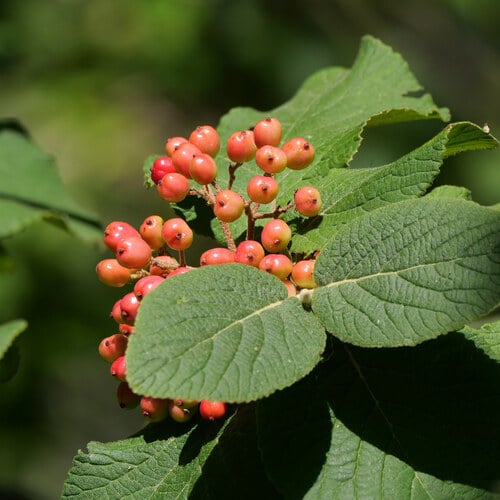
(c) 潘立傑 LICHIEH_PAN, some rights reserved (CC BY)
iNaturalist· cc-by
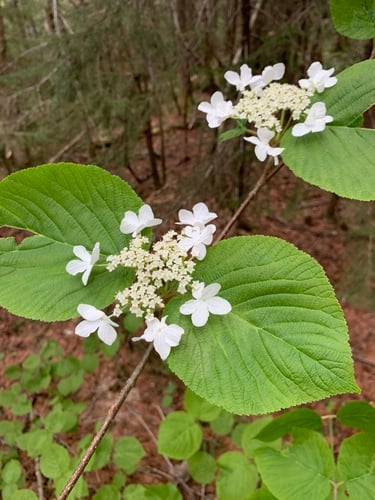
(c) Kristof & Yulia, some rights reserved (CC BY)
iNaturalist· cc-by
(c) Kristof & Yulia, some rights reserved (CC BY)
Summary
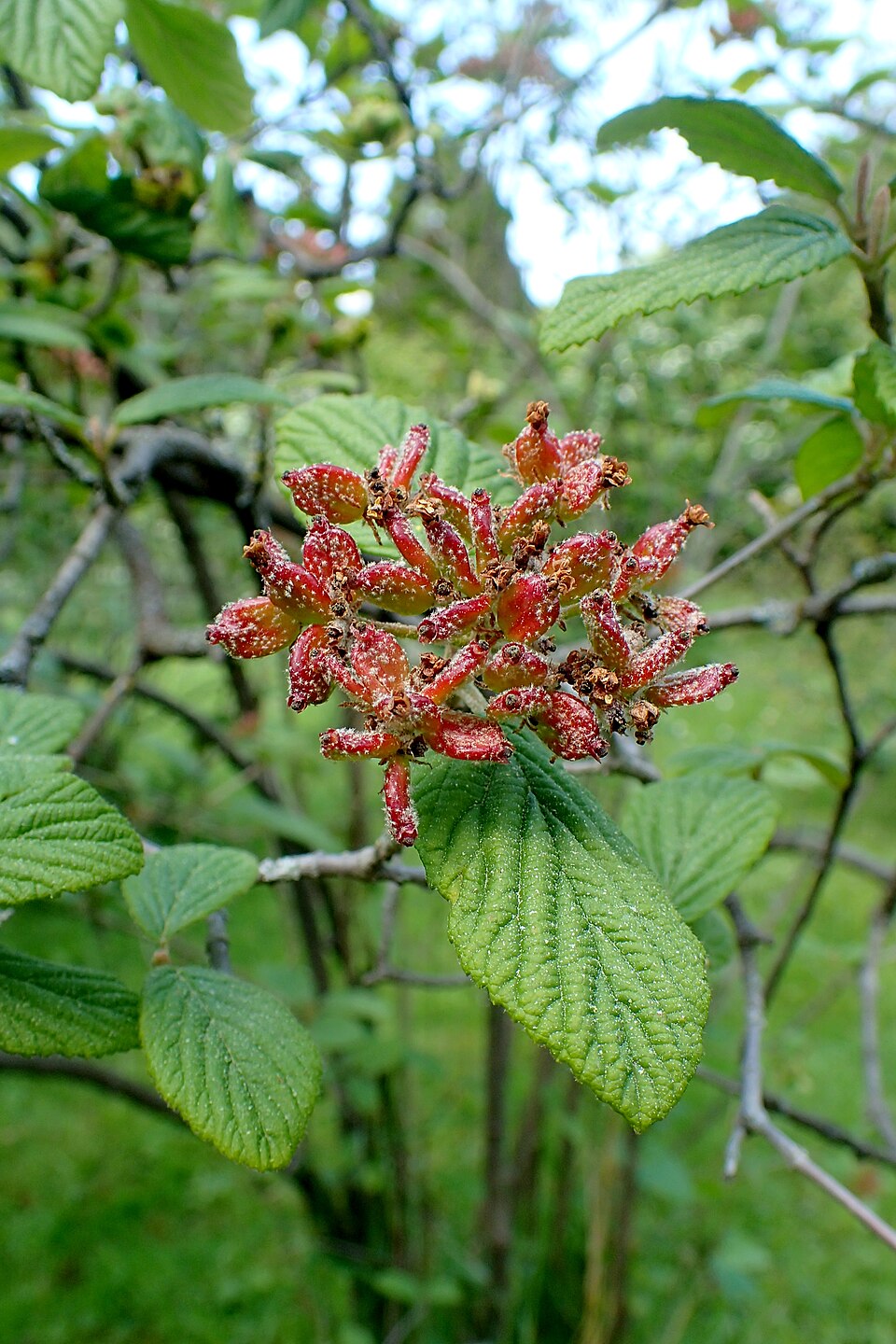
Source: WikipediaViburnum betulifolium, the birchleaf viburnum, is a species of flowering plant in the family Adoxaceae, native to China and the island of Taiwan. Shade tolerant, it is often dominant in the shrub layer of the forests in which it occurs. Widely cultivated outside of China, it has attractive bronze to burgundy Autumn foliage, and the masses of bright red berries are attractive to birds. It is hardy to USDA zone 4.
Description
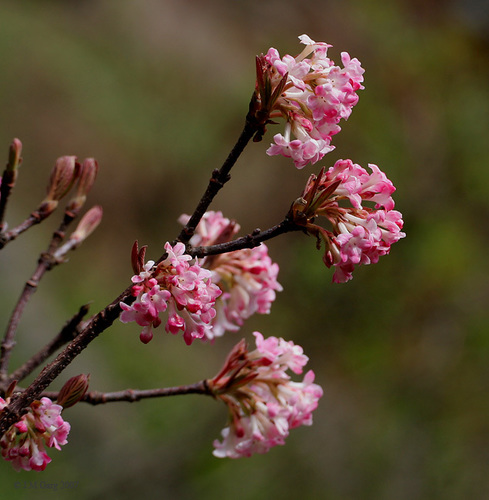
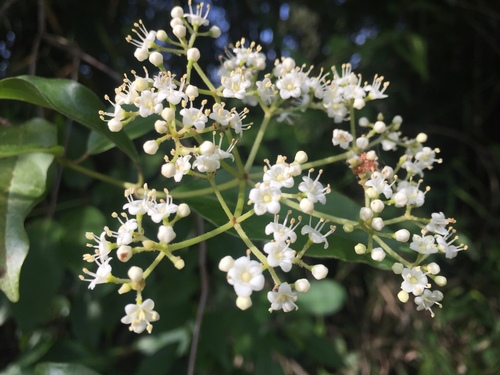
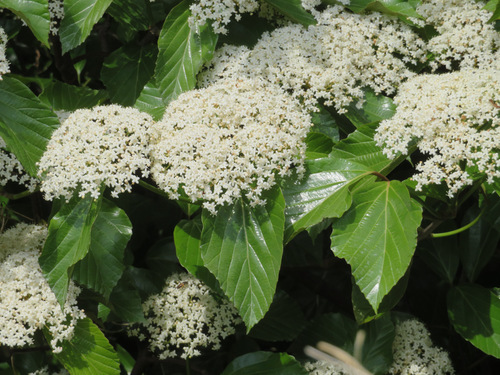
A shrub or small tree. It loses its leaves during the year. It grows 5 m tall. The bark is light brown. The leaves are opposite and oval and 4-9 cm long by 3-6 cm wide. They are hairy on the mid vein underneath. The flowers are in a flat topped group at the ends of the branches. They are white.
Edible Uses
The fruit can be eaten raw or cooked. It is rather acid when it first ripens but hangs on the plant well through winter. By late spring it becomes quite acceptable for raw eating, developing a mild flavour.
Traditional Uses
The fruit are eaten raw.
This uses section is brief — help expand it
Medicinal Uses
None known
Distribution
It is a temperate plant. It grows in forests and scrub between 1,300-3,500 m above sea level in China. In Sichuan and Yunnan.
Where It Grows
Asia, China, Taiwan, Tibet,
Cultivation
There is a form of this plant growng in Trewithen Gardens in Cornwall that produces very large crops of fruit each year.
Propagation
Seed -
Other Uses
None known
Synonyms
Also Known As
Efuni
References (4)
- Geng, Y., et al, 2016, Traditional knowledge and its transmission of wild edibles used by the Naxi in Baidi Village, northwest Yunnan province. Journal of Ethnobiology and Ethnomedicine. 12:10
- Kang, Y., et al, 2014, Wild food plants used by the Tibetans of Gongba Valley (Zouqu country, Gansu, China) Journal of Ethnobiology and Ethnomedicine 10:20
- Wang, J., et al, 2020, An ethnobotanical survey of wild edible plants used by the Yi people of Liangshan Prefecture, Sichuan Province, China. Journal of Ethnobiology and Ethnomedicine 16:10
- Zhang, L., et al, 2016, Ethnobotanical study of traditional edible plants used by the Naxi people during droughts. Journal of Ethnobiology and Ethnomedicine. 12:39