Sambucus williamsii
Hance
Chinese black elder
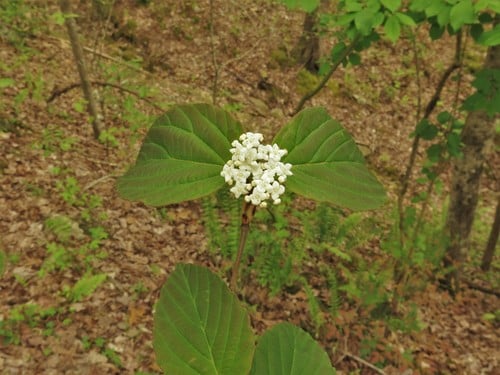
iNaturalist· cc-by
(c) Repina Tatyana, some rights reserved (CC BY), uploaded by Repina Tatyana
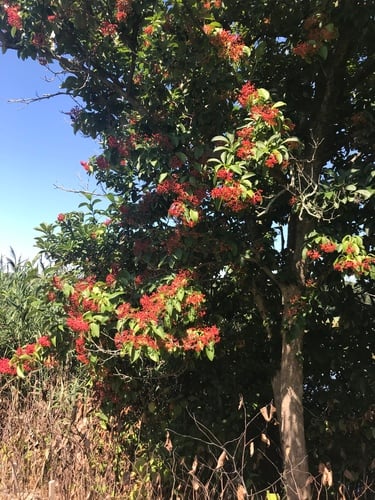
iNaturalist· cc-by-nc
(c) V.S. Volkotrub, some rights reserved (CC BY-NC), uploaded by V.S. Volkotrub
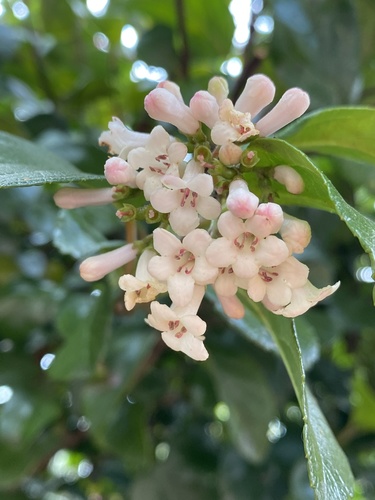
iNaturalist· cc-by-nc
(c) Alla Verkhozina, some rights reserved (CC BY-NC), uploaded by Alla Verkhozina
Summary
Source: WikipediaSambucus williamsii is a deciduous shrub with hermaphrodite, insect-pollinated flowers. It accommodates light sandy, medium loamy, or heavy clay soils across mildly acidic to mildly alkaline pH ranges. The plant tolerates semi-shade or full sun, favors moist soil, resists strong winds and atmospheric pollution, yet cannot survive maritime exposure.
Description
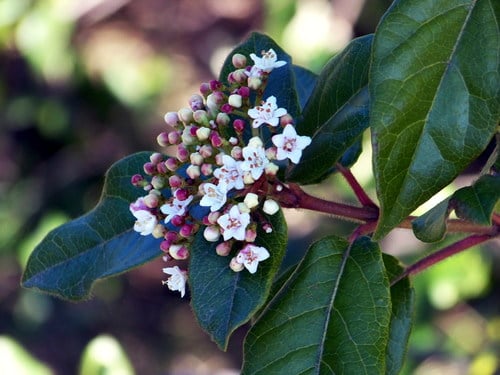
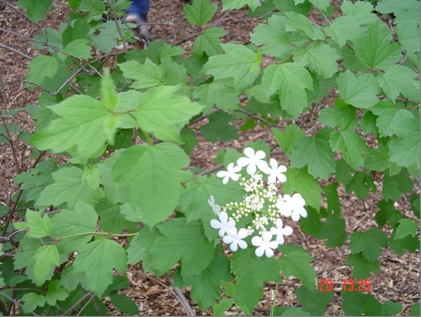
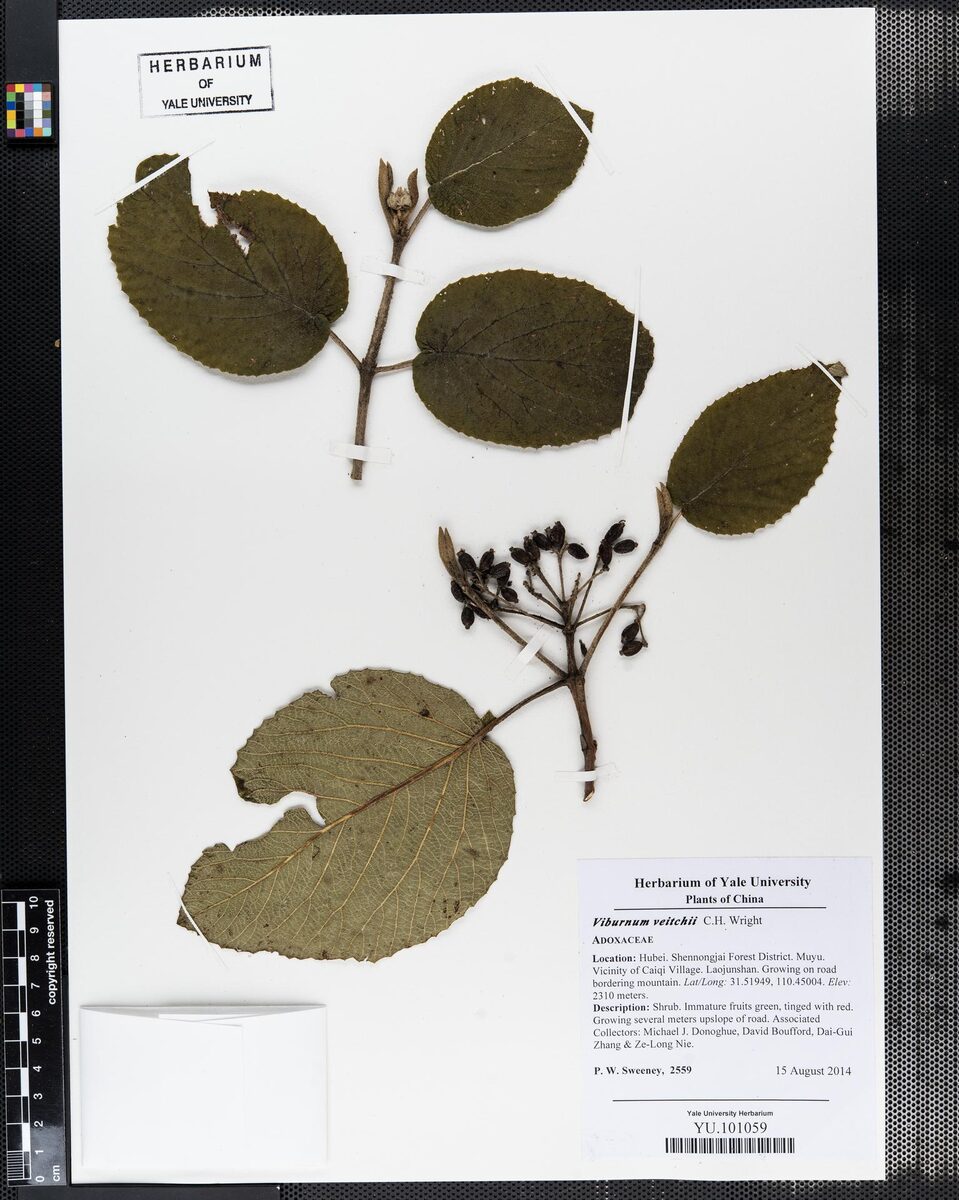
A shrub. It loses its leaves during the year. It grows 3-6 m high. The branches have lines along them and they have a yellow pith. The leaves are opposite and compound. They have leaflets along the stalk. There are 5-7 leaflets and these are broadly oval and 5-12 cm long by 2-4 cm wide. There are coarse teeth along the edge. The flowers are white but turn pale yellow. They occur as a group at the ends of branches. The fruit is like a berry and blue-purple. It is juicy and 4-5 mm across.
Edible Uses
Young leaves can be cooked, though this use is inadvisable given the plant's toxicity notes.
Traditional Uses
The young leaves are gathered and boiled then washed and seasoned and eaten as a vegetable.
This uses section is brief — help expand it
Medicinal Uses
The leaf is emetic and is used in the treatment of ague fits, serving to break the fit. The flowers are diaphoretic and diuretic. The juice of the stem is emetic. A decoction of the root is used in the treatment of rheumatoid arthritis. The plant is also anodyne and carminative.
Known Hazards
Some species of the Sambucus genus produce toxic berries, leaves, roots, and stems. Leaves, twigs, branches, seeds, roots, flowers, and berries of some Sambucus plants produce cyanogenic glycosides, which have toxic properties. Ingesting a sufficient quantity of cyanogenic glycosides from berry juice, flower tea, or beverages made from fresh leaves, branches, and fruit has been shown to cause illness, including nausea, vomiting, abdominal cramps, diarrhea, and weakness. In August 1983, a group of 25 people in Monterey County, California, became ill after ingesting elderberry juice pressed from fresh, uncooked S. mexicana berries, leaves, and stems. The concentration of cyanogenic glycosides is higher in tea made from flowers (or leaves) than from the berries. The berries and leaves of the species Sambucus nigra, spp. canadensis have been shown to lack cyanogenic glycosides. In a 2021 scientific analysis, commercial elderberry juice made from Sambucus nigra, spp. canadensis in Illinois, USA, had no trace of cyanogenic glycosides. The authors also point out that the 1983 "poisoning" event in California which coincided with consumption of Sambucus cerulea, rather than Sambucus mexicana, was not caused by cyanide. The seeds of Sambucus racemosa are reported to be poisonous and may cause vomiting or diarrhea.
Distribution
It is a temperate plant. It grows between 500-1,600 m above sea level in China. It grows in northern China. In Sichuan and Yunnan.
Where It Grows
Asia, China, Korea,
Cultivation
We have very little information on this species and do not know if it will be hardy in Britain, though judging by its native range it could succeed outdoors in many parts of this country. We are not sure if the plant is a shrub or a perennial. The following notes are based on the general needs of the genus. Tolerates most soils, including chalk, but prefers a moist loamy soil. Grows well in heavy clay soils. Tolerates some shade but is best in a sunny position. Tolerates atmospheric pollution and coastal situations. Plants in this genus are notably resistant to honey fungus.
Propagation
Seed is best sown as soon as it is ripe in autumn in a cold frame, where it should germinate in early spring. Stored seed sown in spring will likely germinate better with 2 months warm followed by 2 months cold stratification. Prick seedlings into individual pots when large enough to handle. If growth is good, young plants can go into permanent positions in early summer; otherwise, overwinter them in a sheltered nursery bed or in pots and plant out the following spring. Cuttings of half-ripe wood, 7–10cm with a heel, can be taken in July/August in a frame. Cuttings of mature wood from the current season's growth, 15–20cm with a heel, can be taken in late autumn in a frame or sheltered outdoor bed.
Other Uses
The plant has insecticidal properties.
Notes
There are about 25 Sambucus species. Also put in the family Sambucaceae.
Dangerous Lookalikes
This plant can be confused with the following toxic species. Always verify identification carefully before consuming any wild plant.
Pokeweed
Phytolacca americana
Jakec
Chinese black elder
Sambucus williamsii
(c) Repina Tatyana, some rights reserved (CC BY), uploaded by Repina Tatyana
Pokeweed: Thick red/purple herbaceous stems (no bark), berries in a line (raceme), simple large leaves, large white taproot.
Chinese black elder: Woody bark, berries in broad flat clusters (cymes), compound leaves with 5-7 leaflets.
Also Known As
Jiegumu, Shuhuacai
References (5)
- Ann. Sci. Nat. Bot. ser. 5, 5:217. 1866
- Hu, Shiu-ying, 2005, Food Plants of China. The Chinese University Press. p 687
- Kang, Y., et al, 2012, Wild food plants and wild edible fungi in two valleys on the Qinling Mountains (Shaanxi, central China) Journal of Ethnobiology and Ethnomedicine; 9:26
- Plants for a Future database, The Field, Penpol, Lostwithiel, Cornwall, PL22 0NG, UK. http://www.scs.leeds.ac.uk/pfaf/
- Wang, J., et al, 2020, An ethnobotanical survey of wild edible plants used by the Yi people of Liangshan Prefecture, Sichuan Province, China. Journal of Ethnobiology and Ethnomedicine 16:10