Syzygium forte
(F. Muell.) B. Hyland
White apple, Flaky-barked satinash, Brown satinash
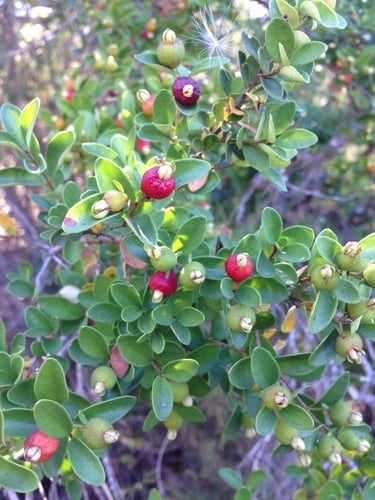
iNaturalist· cc-by-nc
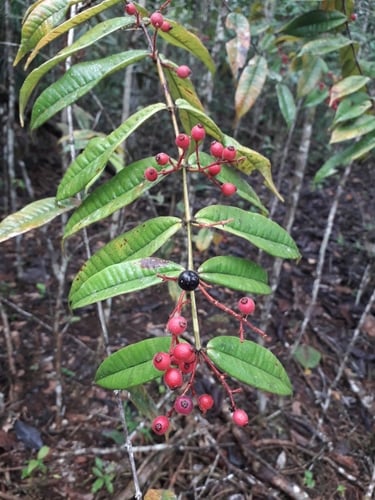
(c) Allan Lugg, some rights reserved (CC BY-NC)
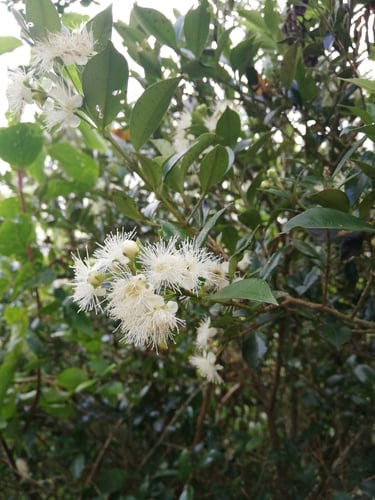
iNaturalist· cc-by-sa
(c) Steve Fitzgerald, some rights reserved (CC BY-SA), uploaded by Steve Fitzgerald
Summary
Source: WikipediaSyzygium forte, commonly known as flaky-barked satinash, white apple or brown satinash, is a tree in the family Myrtaceae native to New Guinea and northern Australia. It was first described in 1865 and is classified as least concern. The fruit are edible, and it is used as a landscaping tree for streets and parks.
Description
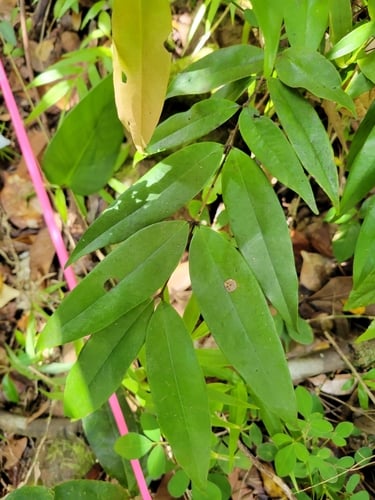
A graceful tree. It grows up to 15 m tall. It has a round crown of leaves. The bark is papery. The young shoots are deep bronze colour. The leaves are thick with a blunt point. They are 14 cm long by 8 cm wide. They are bright green on the upper surface and dull underneath. The flowers are white. They occur in clusters at the ends of small branches. The fruit are oval and white and grow to 6 cm across. The fruit are edible. The fruit have one seed inside and it is 1-2.5 cm long.
Edible Uses
Fruit - raw. A crunchy texture. The white, globose fruit can be 30mm in diameter, containing a single, large seed.
Traditional Uses
The ripe fruit are eaten. They are also used for jam.
This uses section is brief — help expand it
Distribution
A tropical plant. It occurs in northern Australia and in Papua New Guinea. It grows near the seaside on sandy soils. It can tolerate salt laden winds. It is often on sandstone near watercourses. They cannot tolerate poorly drained soils. In Townsville Queens BG.
Where It Grows
Australia*, Pacific, Papua New Guinea, PNG, Torres Strait,
Cultivation
Plants are grown from seed.
Propagation
Seed - sown fresh, it can germinate within 4 weeks.
Other Uses
The wood is sometimes used. We do not have any more specific information for the wood of this species, but the various species of Syzygium tend to have somewhat similar timber. The general description of syzygium timber is as follows:- The heartwood is a golden brown, greyish brown or brown, with pink or purplish glints; it is not clearly demarcated from the 1 - 4cm wide band of sapwood. The texture is fine; the grain slightly interlocked, sometimes wavy or irregular; there are resin deposits. The wood is heavy; moderately hard; somewhat durable, being moderately resistant to fungi and termites, but susceptible to dry wood borers. It seasons slowly, with a high risk of checking and distortion; once dry it is moderately stable in service. It works well with ordinary tools, nailing and screwing are good so long as the wood is pre-bored; gluing is correct. The wood is used for musical instruments, tool handles, furniture components, ship building, heavy carpentry, flooring, joinery etc.
Production
Plants are slow growing.
Synonyms
Also Known As
Anboyberre, Kuper, Pintowuni
References (18)
- Beasley, J., 2011, Plants of Tropical North Queensland - the compact guide. Footloose publications. p 170
- Bonney, N., 2012, Edible Wild Native Plants for Southern Australia. p 110
- Cherikoff V. & Isaacs, J., The Bush Food Handbook. How to gather, grow, process and cook Australian Wild Foods. Ti Tree Press, Australia p 51
- Cooper W & Cooper W T, 1994, Fruits of the Rain Forest. RD Press p 272
- Cooper, W. and Cooper, W., 2004, Fruits of the Australian Tropical Rainforest. Nokomis Editions, Victoria, Australia. p 363
Show all 18 references Hide references
- Fell, D.G. & Stanton, D.J., 2015: The vegetation and flora of Mabuyag, Torres Strait, Queensland. Memoirs of the Queensland Museum – Culture 8(1):1-33. Brisbane. ISSN 1440-4788.
- Garde, M., et al, 2003, A Preliminary List of Kundedjnjenghmi Plant Names. Northern Land Council. (Arnhem Land, Australia)
- Hardwick, G., 2001, Economically Useful Plants for Northern Australia: Master Species List. Crusader eBooks.
- Hibbert, M., 2002, The Aussie Plant Finder 2002, Florilegium. p 296
- Jones D, L, 1986, Ornamental Rainforest Plants in Australia, Reed Books, p 78, 340
- Low, T., 1992, Bush Tucker. Australia’s Wild Food Harvest. Angus & Robertson. p 18
- Mua Bioversity Profile, 2013, Profile for Management of the Habitats and Related Ecological and Cultural Resources of Mua Island. Torres Strait Regional Authority Land & Sea Management Unit. p 32
- Norrington, L., & Campbell, C., 2001, Tropical Food Gardens. Bloomings Books. p 89
- Paczkowska, G . & Chapman, A.R., 2000, The Western Australian Flora. A Descriptive Calatogue. Western Australian Herbarium. p 403
- Radke, P & A, Sankowsky, G & N., 1993, Growing Australian Tropical Plants. Frith & Frith, Australia. p 61
- Tiwi Plants and Animals. 2001, Aboriginal flora and fauna knowledge from Bathurst and Melville Islands, northern Australia. Northern Territory Botanical Bulletin; No. 24 p 82
- Townsend, K., 1994, Across the Top. Gardening with Australian Plants in the tropics. Society for Growing Australian Plants, Townsville Branch Inc. p 346
- World Checklist of Useful Plant Species 2020. Royal Botanic Gardens, Kew