Campomanesia guaviroba
(DC.) Kiaersk.
Guaviroba
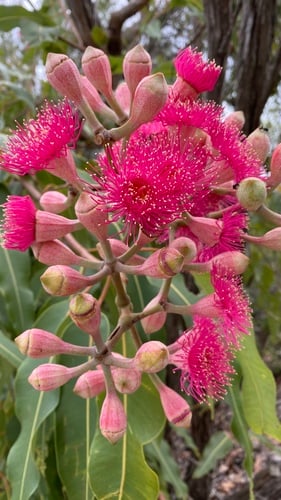
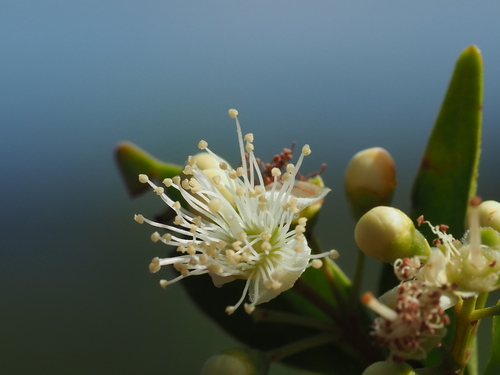
iNaturalist· cc-by-nc
(c) 薛映月, some rights reserved (CC BY-NC)
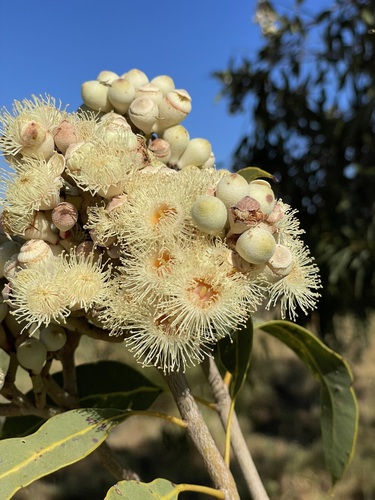
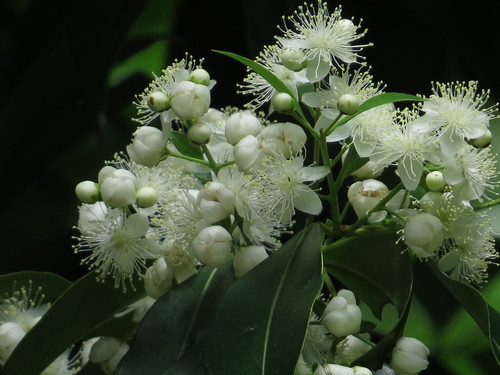
iNaturalist· cc-by-nc
(c) 薛映月, some rights reserved (CC BY-NC)
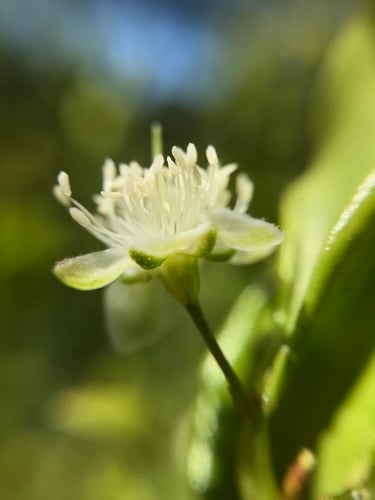
iNaturalist· cc-by-nc
(c) Gabriel Silva Guimarães, some rights reserved (CC BY-NC)
Description
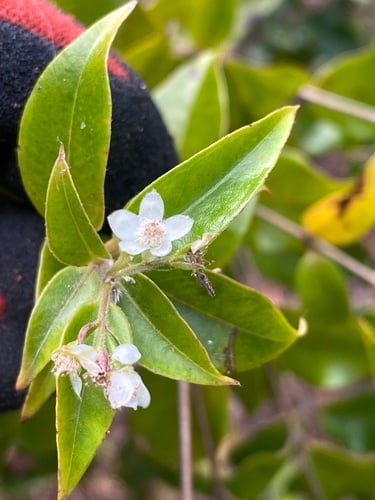
A small tree. It loses many leaves during the year. It grows 6-12 m tall. The leaves are simple and oval. They can have fine hairs along the veins. The leaves are 4-13 cm long. The flowers occur singly in the axils of leaves. The flower stalks have fine hairs. The flowers are like guava. The fruit are oval or round. They are about 2.5 cm across. The fruit are yellow or orange. The fruit have a juicy, sweet pulp. They have a large disk at the top and calyx segments which remain on the fruit. The fruit has a thin skin with a wrinkled surface. The flesh is yellow and soft with several seeds inside.
Edible Uses
The orange-yellow fruit has a flavour like a guava and can be eaten raw, cooked or made into a jelly. A firm, succulent pulp with a sweet flavour. The yellow-green, globose fruit can be 2 - 3cm in diameter.
Traditional Uses
The fruit are eaten raw.
This uses section is brief — help expand it
Distribution
It is a tropical plant. It grows naturally in the forest near the Atlantic in Brazil. In Argentina it grows below 1,000m above sea level.
Where It Grows
Argentina, Bolivia, Brazil*, Paraguay, South America, USA,
Cultivation
Plants are grown from seed. The seeds are collecting by shaking fruiting branches over canvas and then putting the fruit in plastic bags to partly decompose and washing out the seeds in running water. Seeds need to be planted fresh and are best in light shade. Seedlings emerge in 10-20 days.
Propagation
Seed - best sown as soon as it is ripe in a partially shaded position in a nursery seedbed. A germination rate in excess of 80% can be expected, with the seeds sprouting within 10 - 20 days.
Other Uses
The wood is fine-textured, irregular-grained, moderately heavy, slightly susceptible to wood eating insects. It is used to make musical instruments, tool handles and for general lumber.
Production
Plants grow rapidly.
Other Information
It is occasionally cultivated as a fruit tree. The fruit are popular.
Notes
There are at least 11 Campomanesia species. See possible synonyms and alternate names under Campomanesia Campomanesia guaviroba is an illegitimate, superfluous name (ICBN Art. 52) as Berg cited Psidium dulcis as a synonym
Synonyms
Also Known As
Guabiroba-do-litoral, Guabirobeira-folha-large, Guabirova
References (13)
- Alimenticias - FloraSBS
- Bircher, A. G. & Bircher, W. H., 2000, Encyclopedia of Fruit Trees and Edible Flowering Plants in Egypt and the Subtropics. AUC Press. p 77 (Also as Abbevillea maschalantha p 3)
- Brack, P., et al, 2020, Frutas nativas do Rio Grande do Sul, Brasil: riqueza e potencial alimentício. Native fruits of Rio Grande do Sul, Brazil: richness and potential as food. Rodriguésia 71: e03102018.
- Enum. Myrt. bras. 8. 1893
- Grandtner, M. M. & Chevrette, J., 2013, Dictionary of Trees, Volume 2: South America: Nomenclature, Taxonomy and Ecology. Academic Press p 95
Show all 13 references Hide references
- John, L., & Stevenson, V., 1979, The Complete Book of Fruit. Angus & Robertson p 286 (As Abbevillea fenzliana)
- Leal, M. L. et al, 2018, Knowledge, use, and disuse of unconventional food plants. Journal of Ethnobiology and Ethnomedicine (2018) 14:6
- Lorenzi, H., Bacher, L., Lacerda, M. & Sartori, S., 2006, Brazilian Fruits & Cultivated Exotics. Sao Paulo, Instituto Plantarum de Estuados da Flora Ltda. p 181
- Lorenzi, H., 2009, Brazilian Trees. A Guide to the Identification and Cultivation of Brazilian Native Trees. Instituto Plantarum de Estuados da Flora Ltda. Vol. 3 p 237
- Mabberley, D.J. 1990. The plant-book: a portable dictionary of the higher plants. Cambridge University Press. NY
- C. F. P. Martius, Fl. bras. 14(1):433. 1857 (As Abbevillea fenzliana)
- www.colecionandofrutas.org
- www.tradewindsfruit.com