Campomanesia guazumifolia
(Cambess.) O. Berg
Aguaricara
iNaturalist· cc-by-sa
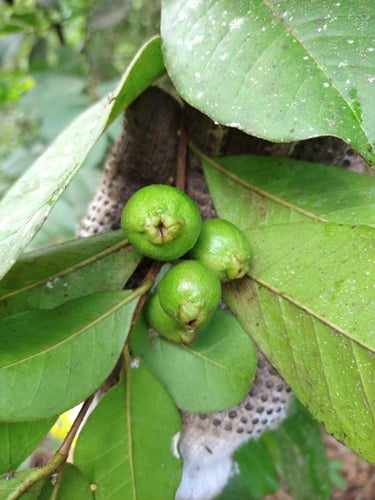
(c) Edson Luis Fabro Gasperin, some rights reserved (CC BY-SA), uploaded by Edson Luis Fabro Gasperin
iNaturalist· cc-by-nc
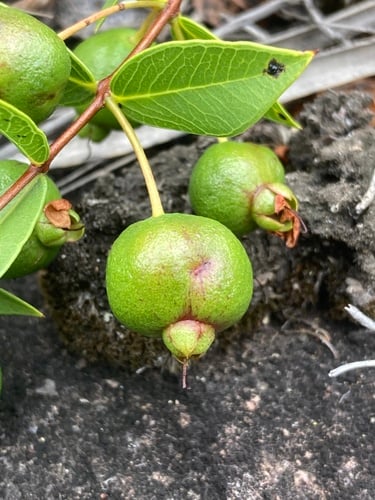
(c) Adalberto Berns, some rights reserved (CC BY-NC)
Summary
Source: WikipediaCampomanesia guazumifolia is a species of tree in the family Myrtaceae. The species ecological importance and has the possibility to be exploited by food and medical companies.
Description
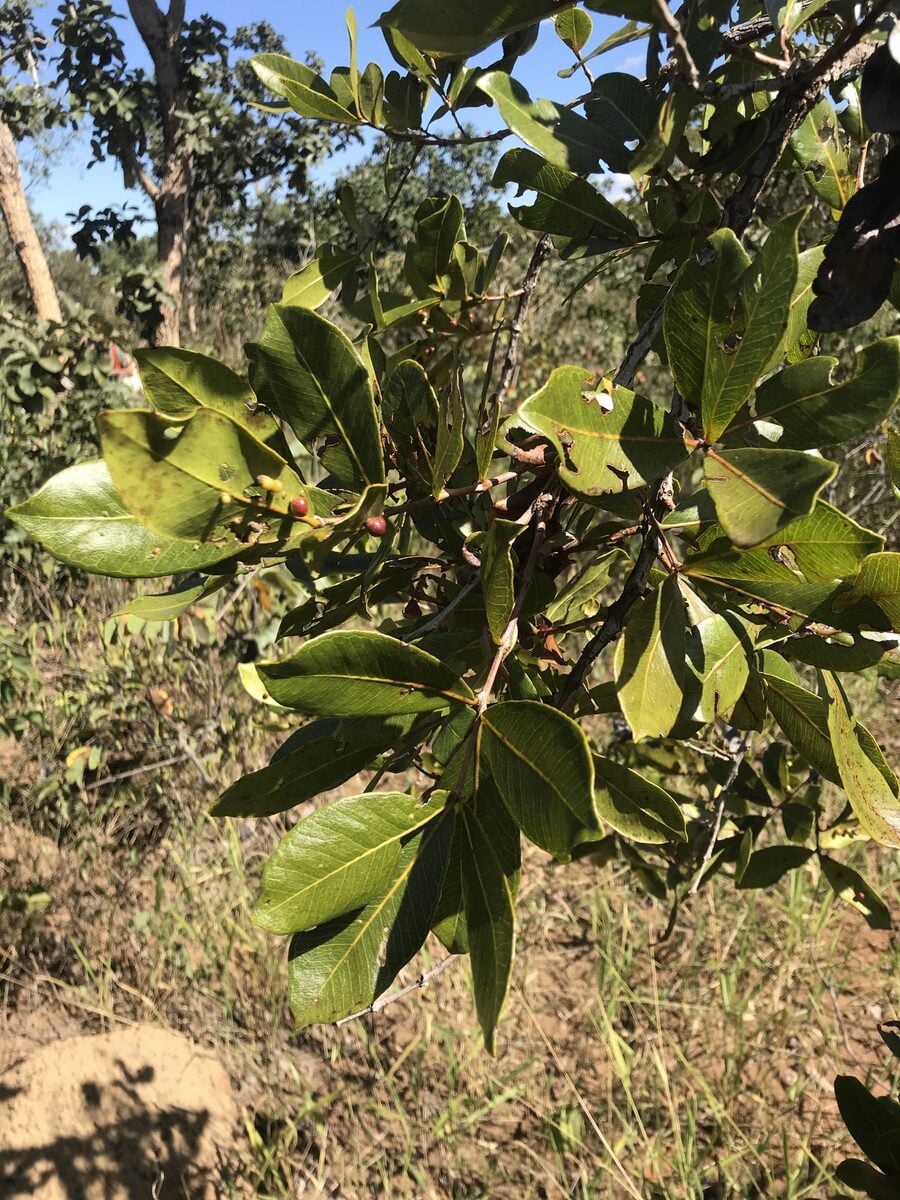
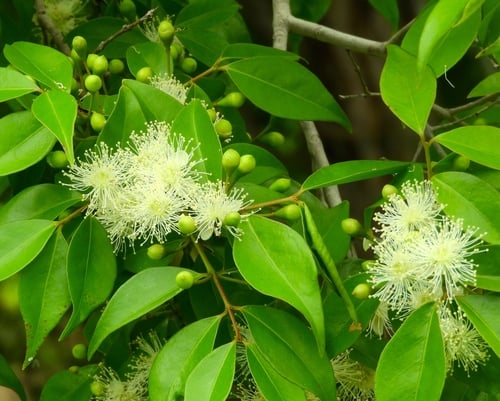
A tree. It grows 6-10 m high. The crown is open. The trunk is crooked and has grooves. It is 20-30 cm across. The bark is corky and peels off. The leaves are simple. There are hairs underneath. The leaves are 7-15 cm long by 3-6 cm wide. The flowers are large and white. The fruit are a flattened round shape. They are yellow and 2-3 cm across. The flesh is juicy and there and many soft seeds.
Edible Uses
The fruit are eaten raw, and used to make jams, jellies, and other fruit dishes. The fruit is high in Vitamin C.
Traditional Uses
The fruit are eaten raw. They are also used for jams, jellies and fruit dishes.
This uses section is brief — help expand it
Distribution
A subtropical plant. In Argentina it grows between 100-1,000 m above sea level.
Where It Grows
Argentina, Brazil*, Cuba, Paraguay, South America, West Indies,
Cultivation
Plants are grown from seed. The seed are removed from the ripe seed by washing. They can only be stored for a short time. Fresh seed are planted. They germinate in 15-30 days. Seedlings are transplanted after 9-10 months.
Propagation
Seed - it has a short viability and is best sown as soon as it is ripe. Sow in a lightly shaded position in nursery seedbeds or in individual containers. Fresh seed has a very high rate of germination, with the seed sprouting within 15 - 30 days. Transplant seedbed sown plants to individual containers when they are about 3 - 5cm tall and the plants should be ready to go into their final positions about 9 - 10 months later.
Other Uses
The wood is moderately heavy, hard, compact, of medium natural durability. It is used for internal work and general carpentry. The wood is used to make charcoal.
Production
Plants grow slowly in the field.
Other Information
It is occasionally cultivated as a fruit.
Notes
There are at least 11 Campomanesia species. The fruit is high in Vitamin C.
Synonyms
Also Known As
Araca-do-mato, Aracazeiro-grande, Capote, Capoteira, Gabiroba, Goiabinha, Guabirona, Ibira-piroca, Marmelero, Pessego-do-mato, Sete-capas, Sete-tapas, Sete-capote, Sete-casacas, Sietecapote, Sietecapotes
References (17)
- Brack, P., et al, 2020, Frutas nativas do Rio Grande do Sul, Brasil: riqueza e potencial alimentício. Native fruits of Rio Grande do Sul, Brazil: richness and potential as food. Rodriguésia 71: e03102018.
- Fouqué, A., 1972, Espèces fruitières d'Amérique tropicale. Institut français de recherches fruitierès outre-mer (As Britoa sellowiana)
- Grandtner, M. M. & Chevrette, J., 2013, Dictionary of Trees, Volume 2: South America: Nomenclature, Taxonomy and Ecology. Academic Press p 96
- Hermandez Bermejo, J.E., and Leon, J. (Eds.), 1994, Neglected Crops. 1492 from a different perspective. FAO Plant Production and Protection Series No 26. FAO, Rome. p16
- Hunter, D., et al, 2019, The potential of neglected and underutilized species for improving diets and nutrition. Planta (2019) 250:709-729
Show all 17 references Hide references
- Kinupp, V. F., 2007, Plantas alimenticias nao-convencionais da regiao metropolitana de Porto Alegre, RS, Brazil p 85
- Kujawska, M. & Luczaj, L., 2015, Wild Edible Plants Used by the Polish Community in Misiones, Argentina. Human Ecology 43:855-869
- Lorenzi, H., 2002, Brazilian Trees. A Guide to the Identification and Cultivation of Brazilian Native Trees. Vol. 01 Nova Odessa, SP, Instituto Plantarum p 271
- Lorenzi, H., Bacher, L., Lacerda, M. & Sartori, S., 2006, Brazilian Fruits & Cultivated Exotics. Sao Paulo, Instituto Plantarum de Estuados da Flora Ltda. p 182
- Martin, F.W., C.W. Campbell and R.M. Ruberté, 1987, Perennial edible fruits of the tropics - An inventory. United States Department of Agriculture, Agricultural Research Service, Agriculture Handbook No. 642. Washington, D.C., USA
- C. F. P. Martius, Fl. bras. 14(1):457. 1857
- Miguel, E., et al, 1989, A checklist of the cultivated plants of Cuba. Kulturpflanze 37. 1989, 211-357 (As Britoa guazumaefolia)
- TodaFruta.com.br
- USDA, ARS, National Genetic Resources Program. Germplasm Resources Information Network - (GRIN). [Online Database] National Germplasm Resources Laboratory, Beltsville, Maryland. Available: www.ars-grin.gov/cgi-bin/npgs/html/econ.pl (10 April 2000)
- Wiersema, J. H. & Leon, B., 2013, World Economic Plants. A Standard Reference CRC Press. 2nd Ed. p 137
- World Checklist of Useful Plant Species 2020. Royal Botanic Gardens, Kew
- www.colecionandofrutas.org