Campomanesia phaea
(O. Berg.) Landrum
Cambuci
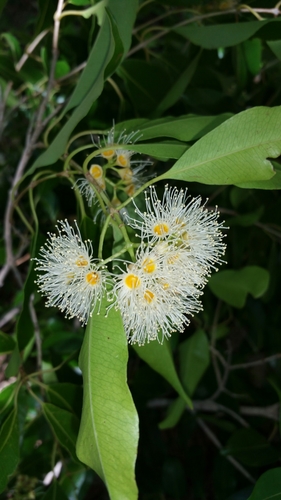
iNaturalist· cc-by-nc-sa
(c) Arthur Chapman, some rights reserved (CC BY-NC-SA)
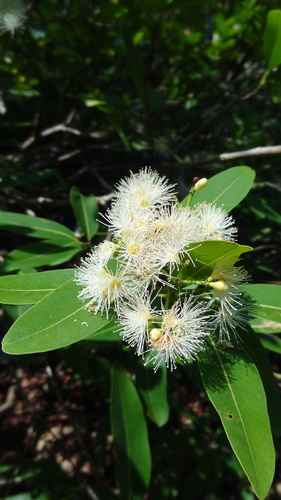
iNaturalist· cc-by-nc-sa
(c) Arthur Chapman, some rights reserved (CC BY-NC-SA), uploaded by Arthur Chapman
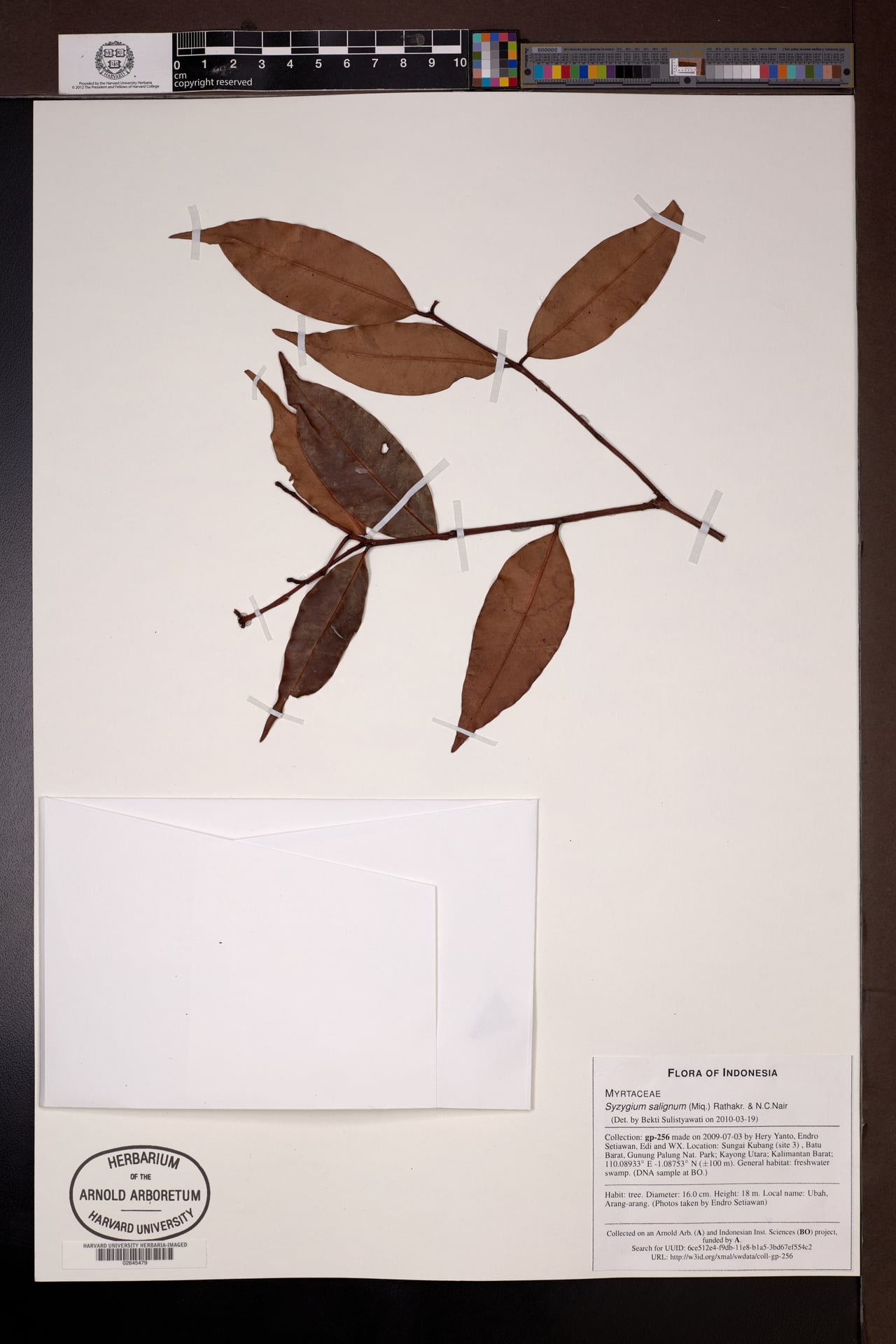
iNaturalist· cc-by-nc-sa
(c) Arthur Chapman, some rights reserved (CC BY-NC-SA), uploaded by Arthur Chapman
Summary
Source: WikipediaCampomanesia phaea is a species of plant in the family Myrtaceae. The plant is endemic to the Atlantic Forest ecoregion in southeastern Brazil. It is found in the states of Paraná, Rio de Janeiro, São Paulo. In Brazil its fruit is called cambuci and the tree cambucizeiro. Not to be confused with cambucá.
Description
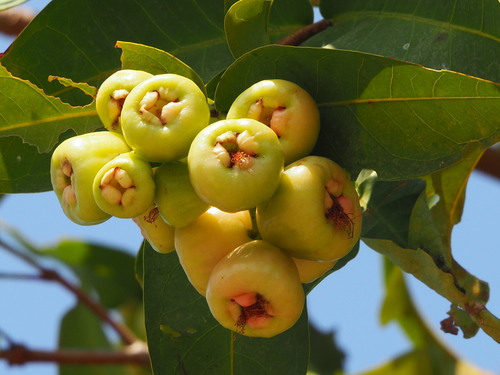
A small tree. It grows 3-5 m high. The trunk is short and 20-30 cm across. The bark peels off. The leaves are simple. They are 7-10 cm long by 3-4 cm wide. The flowers are white and usually occur singly. The fruit is a green berry. It is oval and 4-6 cm across. The seeds are soft.
Edible Uses
Campomanesia phaea is often cultivated in domestic gardens and orchards, for ornamental and culinary purposes. It is rare in the wild. The cambuci fruit has an acidic, astringent flavour. It can either be eaten either raw or prepared into jellies, sherbets, or juices. The fruit is rich in vitamins and minerals and is also a source of phenolic compounds.
Traditional Uses
The fruit are used for juice and made into jelly. The pulp of the fruit is eaten raw.
This uses section is brief — help expand it
Medicinal Uses
The bark is astringent.
Distribution
A tropical plant. It grows on slopes and in the highlands in Brazil.
Where It Grows
Brazil*, South America,
Cultivation
Plants are grown from seed. The ripe fruit are harvested and put into a heap to start rotting to make it easier to remove seeds. These are then squeezed out and washed in running water. They are dried in the shade. Fresh seed should be planted. Seeds germinate in 10-30 days. Seedlings can be transplanted into the field after 9 months.
Propagation
Seed - no pre-treatment is required, but they are best sown as soon as they are ripe. Sow in seed beds or containers in a position in light shade. Germination rates are rather low, taking place in 10 - 30 days. Transplant seedlings to individual containers when 3 - 5cm tall and plant out when 9 - 10 months old.
Other Uses
The wood is moderately heavy, of medium texture and resistance, durable in protected sites. It is used for general carpentry and agricultural implements. An indispensible plant in the heterogeneous reforestation of reclaimed and protected areas.
Production
Plants grow slowly.
Other Information
It is a cultivated fruit tree. The fruit are appreciated.
Notes
There are at least 11 Campomanesia species.
Nutrition
| Part | Moisture | kJ | kcal | Protein | Vit A | Vit C | Iron | Zinc |
|---|---|---|---|---|---|---|---|---|
| Fruit | 88.3 | 160 | 38 | 0.4 | — | — | 0.4 | 0.4 |