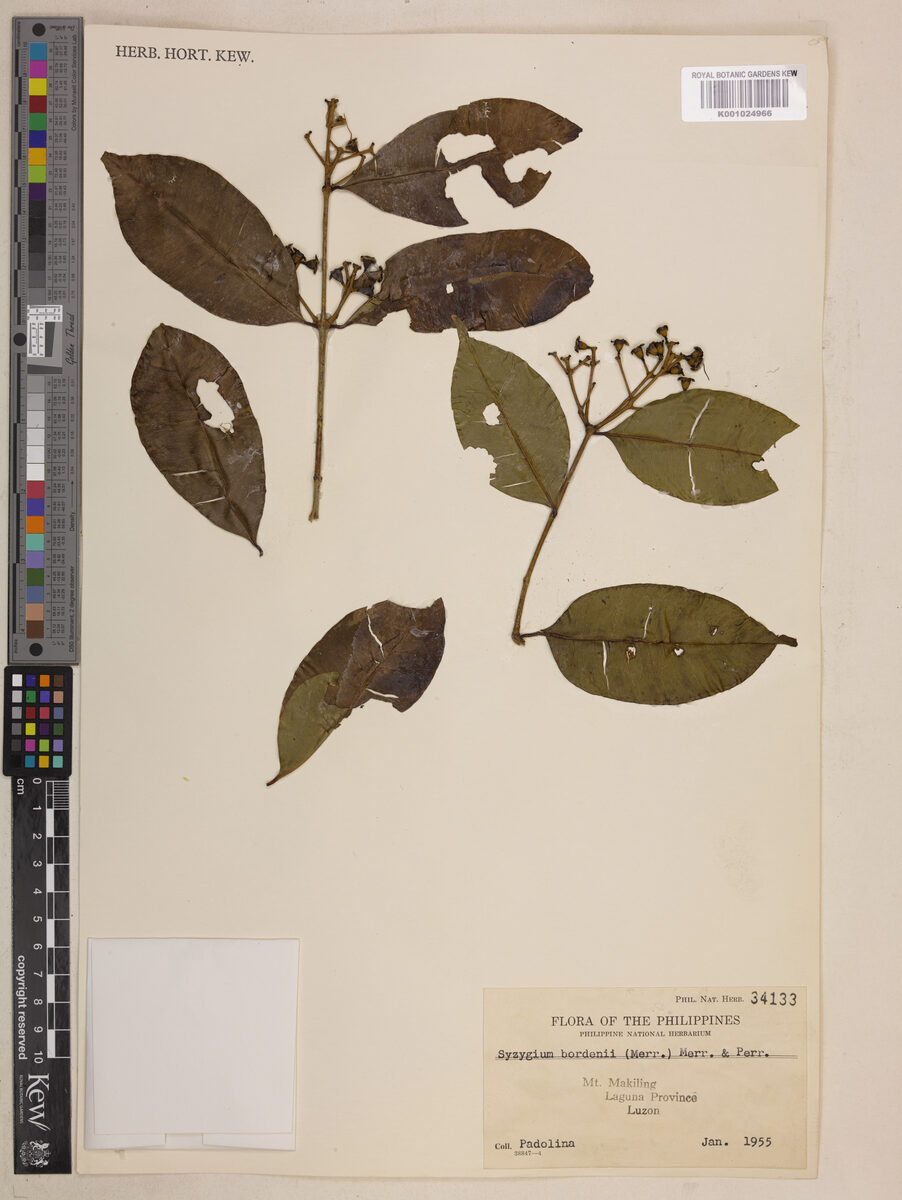
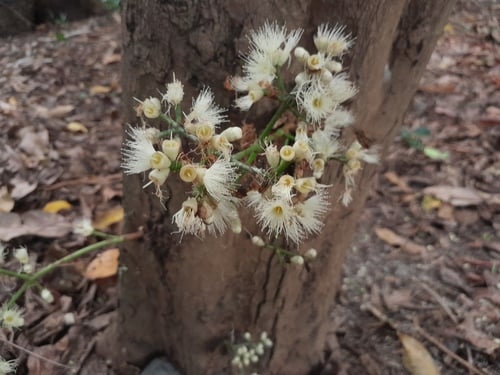
Campomanesia lineatifolia
Ruiz. & Pav.
Perfume guava
iNaturalist· cc-by-nc
(c) May Bedoya, some rights reserved (CC BY-NC), uploaded by May Bedoya
iNaturalist· cc-by-nc
(c) sobelo123, some rights reserved (CC BY-NC)
Summary
Source: WikipediaCampomanesia lineatifolia is a species of plant in the family Myrtaceae. Common names include guabiraba and perfume guava.
Description
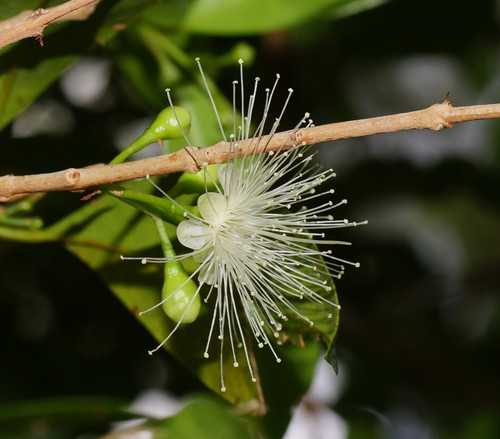
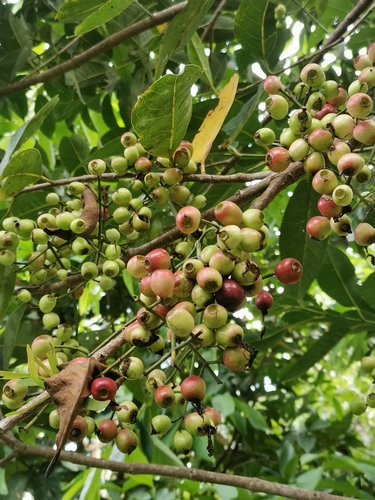
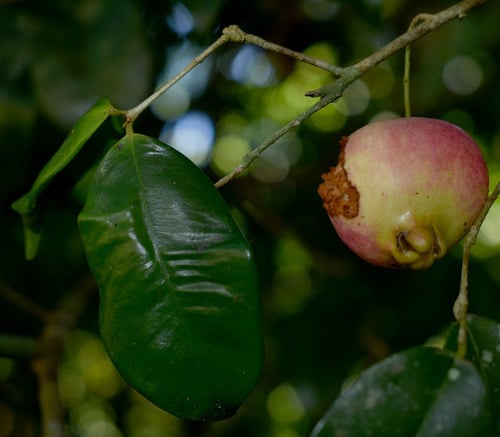
A small tree. It grows up to 8-10 m high. The trunk is 25 cm across. The leaves are simple and opposite. They are oval with irregular borders. They are 20 cm long by 10 cm wide. The fruit are yellow skinned and like a common guava. They are 7 cm long. They have a sweet, juicy flesh and strong aroma. There are about 10 flat, round seeds.
Edible Uses
The fruit are eaten fresh or used in drinks, desserts, and ice-cream and are noted for their sweet, juicy flesh and strong aroma.
Traditional Uses
Fruit are eaten fresh or used in drinks, desserts and ice-cream.
This uses section is brief — help expand it
Medicinal Uses
The fruit are rich in Vitamin C, containing 33 mg per 100 g of pulp.
Distribution
A tropical plant. It does best in warm, humid tropical zones. The yearly average temperature range is 22-30°C. The rainfall is 1,500 mm per year. It grows naturally in the Amazon in Brazil. It grows up to 1,500 m above sea level.
Where It Grows
Amazon, Andes, Australia, Bolivia*, Brazil*, Colombia, Ecuador, Paraguay, Peru*, South America,
Cultivation
Plants are grown from seed.
Other Uses
The leaves are crushed to extract a perfume.
Other Information
It is an occasionally cultivated fruit tree. The fruit are enjoyed.
Notes
There are at least 11 Campomanesia species. Fruit are rich in Vitamin C with 33 mg per 100 g of pulp.
Synonyms
Also Known As
Arani ma'nya, Champa, Guabiroba, Guaviroba, Guayaba de leche, Guayaba de mono, Guayaba de palo, Guayabillo, Guayabo de leche, Hueso, Masika ma'nya, Palillo
References (22)
- Altschul, S.V.R., 1973, Drugs and Foods from Little-known Plants. Notes in Harvard University Herbaria. Harvard Univ. Press. Massachusetts. no. 3055
- Bircher, A. G. & Bircher, W. H., 2000, Encyclopedia of Fruit Trees and Edible Flowering Plants in Egypt and the Subtropics. AUC Press. p 77
- Facciola, S., 1998, Cornucopia 2: a Source Book of Edible Plants. Kampong Publications, p 157
- Fouqué, A., 1972, Espèces fruitières d'Amérique tropicale. Institut français de recherches fruitierès outre-mer (Also as Campomanesia rivularis)
- Grandtner, M. M. & Chevrette, J., 2013, Dictionary of Trees, Volume 2: South America: Nomenclature, Taxonomy and Ecology. Academic Press p 96
Show all 22 references Hide references
- Hedrick, U.P., 1919, (Ed.), Sturtevant's edible plants of the world. p 148
- INFOODSUpdatedFGU-list.xls
- Kew Plants of the World Online
- Lopez-Diago, D. & Garcia, N., 2021, Wild edible fruits of Colombia. Biota ColomBiana 22 (2) p 44
- Lorenzi, H., Bacher, L., Lacerda, M. & Sartori, S., 2006, Brazilian Fruits & Cultivated Exotics. Sao Paulo, Instituto Plantarum de Estuados da Flora Ltda. p 183
- Paz, F. S., et al, 2021, Edible Fruit Plant Species in the Amazon Forest Rely Mostly on Bees and Beetles as Pollinators. Journal of Economic Entomology, XX(XX), 2021, 1–13
- Ricker, M., et al, 1997, The Case for Borojoa patinoi (Rubiaceae) in the Choco Region, Colombia. Economic Botany 51(1) pp 39-48
- Recher, P, 2001, Fruit Spirit Botanical Gardens Plant Index. www.nrg.com.au/~recher/ seedlist.html p 1 (As Campomane lineatifolia)
- Roa, J. A. G. & Boada, D. S. G., 2018, Fundación para el Fortalecimiento de la Fruticultura y Plantas Alimenticias no Convencionales en Colombia.
- Smith, N., et al, 2007, Amazon River Fruits. Flavors for Conservation. Missouri Botanical Gardens Press. p 194
- Syst. veg. fl. peruv. chil. 128. 1798
- Torre, de la, L., et al, 2008, Enciclopedia de las Plantas Útiles del Ecuador. Herbario QCA. Pontificia Universidad Católica del Ecuador. p 465
- USDA, ARS, National Genetic Resources Program. Germplasm Resources Information Network - (GRIN). [Online Database] National Germplasm Resources Laboratory, Beltsville, Maryland. Available: www.ars-grin.gov/cgi-bin/npgs/html/econ.pl (10 April 2000)
- Villachica, H., (Ed.), 1996, Frutales Y hortalizas promisorios de la Amazonia. FAO, Lima. p 211
- Wiersema, J. H. & Leon, B., 2013, World Economic Plants. A Standard Reference CRC Press. 2nd Ed. p 137
- World Checklist of Useful Plant Species 2020. Royal Botanic Gardens, Kew
- www.tradewindsfruit.com