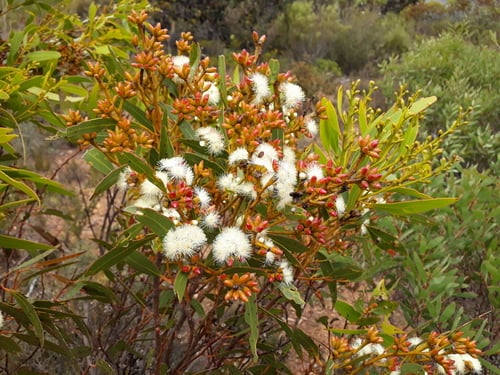
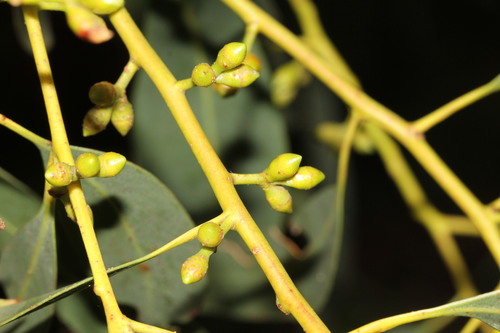
Syzygium cumini
(L.) Skeels
Java plum, Jambolan
iNaturalist· cc-by-nc-nd
(c) sea-kangaroo, some rights reserved (CC BY-NC-ND), uploaded by sea-kangaroo
iNaturalist· cc-by-nc
(c) Geovane Siqueira, some rights reserved (CC BY-NC)
iNaturalist· cc-by-nc
(c) Surendhar Boobalan, some rights reserved (CC BY-NC)
Summary
Source: WikipediaSyzygium cumini, also known as Malabar plum, Java plum, black plum, jamun, jaman, jambul, jambolan or Indian blackberry, is an evergreen tropical tree in the flowering plant family Myrtaceae, and favored for its fruit, timber, and ornamental value. It is native to the Indian subcontinent and Southeast Asia. It can reach heights of up to 30 m (100 ft) and can live more than 100 years. A rapidly growing plant, it is considered an invasive species in many world regions. Syzygium cumini has been introduced to areas including islands of the Pacific and Indian Oceans, Australia, Hong Kong and Singapore. The tree was introduced to Florida and is grown in tropical and subtropical regions worldwide. Its fruits are eaten by various native birds and small mammals, such as jackals, civets, and fruit bats.
Description
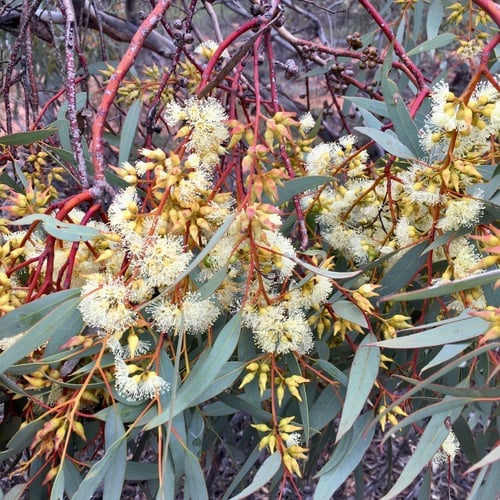
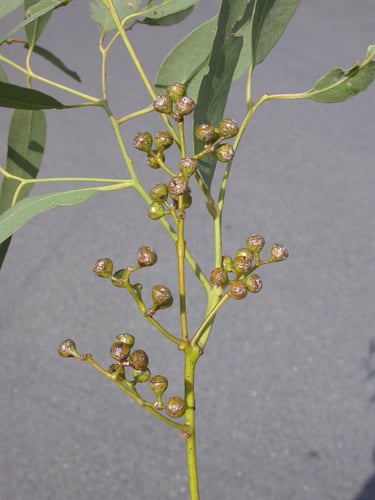
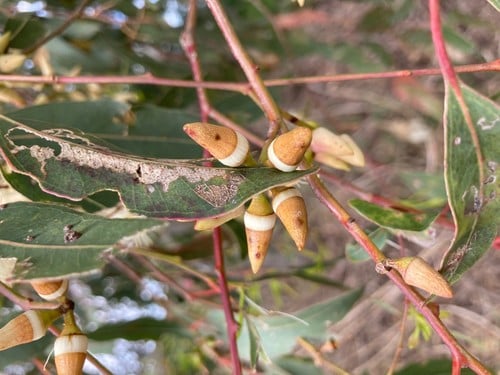
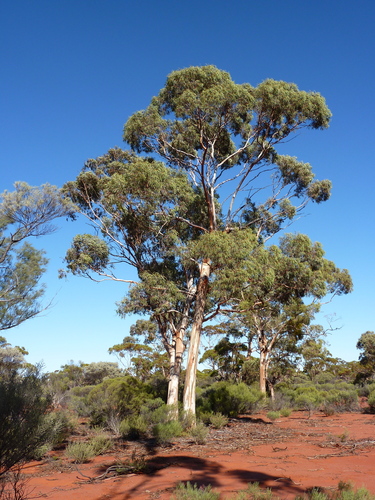
A medium sized evergreen tree. It grows 10-30 m tall. The stem is erect and branching. The leaves are opposite and smooth. They are shiny, leathery and somewhat oval shaped. The leaves are 4.5-16.5 cm long by 2-8 cm wide. The flowers are pink or nearly white and occur on compound flower arrangements below the leaves. The fruit is oval with dark purple flesh and is green but develops a nearly black skin when ripe. Fruit can be 2.5 cm long or more. The pulp is purplish-white and juicy. They are fleshy and have a large greenish seed. The fruit is edible.
Edible Uses
The fruit is eaten raw or made into jams, sherbet, jellies, juice, tarts and puddings. It is juicy and almost odourless, with a pleasant, slightly bitter and astringent taste. The purple, olive-shaped fruit is somewhat astringent, though soaking it in salt water before cooking will remove this quality. Flavour is variable — at best pleasantly and mildly acidic. The oblong fruit measures about 20mm long by 18mm wide. A coffee-like beverage can be made from the dried, ground seeds.
Traditional Uses
The ripe fruit are eaten raw. Rubbing it with salt is sometimes used for poorer fruit. Or they are soaked in salt water. Fruit are also used for vinegar (unripe fruit) and for wine (ripe fruit). They can be used for making jelly or jam. The young leaves are eaten.
Medicinal Uses
Both the seeds and fruit are diuretic and possess important carminative and astringent properties. The seeds also lower blood sugar levels and are useful in treating diabetes. Seeds and bark are well known in the Far East for treating dysentery and controlling hyperglycaemia and glycosuria in diabetic patients. The juice of the bark is considered beneficial for treating wounds and enlargement of the spleen. The bark is astringent, and an infusion is used to treat irregular menstruation, diarrhoea, dysentery and children's thrush. The bark is also used as a gargle to strengthen gums and treat mouth ulcers. Ripe fruit is astringent and used as an effective treatment for diabetes; it is also used to relieve colic and diarrhoea. A leaf infusion is used in the treatment of diabetes and diarrhoea. The wood yields a sulphate pulp with medicinal applications. The roots are sometimes used as a treatment for epilepsy.
Known Hazards
None reported.
Distribution
It is a tropical plant. It grows in the lowlands. They are common and widely distributed throughout the Philippines, India and Indonesia. The plant prefers a well composted soil which is moist and well drained. It needs a protected position and prefers part shade. It is drought and frost tender. In valleys in the Himalayas trees grow up to 1300 m above sea level. In the tropics they grow to 2000 m altitude. Trees can tolerate some flooding. It requires a good rainfall or adequate watering. It can grow on alkaline soils, salty soils and marshy lands. Once established trees can stand strong winds. It grows in Miombo woodland in Africa. It suits hardiness zones 11-12. In XTBG Yunnan.
Where It Grows
Africa, Algeria, Amazon, Andamans, Antigua and Barbuda, Asia, Australia, Bahamas, Bangladesh, Barbados, Belize, Bermuda, Bhutan, Brazil, Cambodia, Central America, China, Colombia, Cook islands, Cuba, Dominica, Dominican Republic, East Africa, Eswatini, Fiji, Ghana, Grenada, Guadeloupe, Guam, Guatemala, Guianas, Guyana, Haiti, Hawaii, Himalayas, Honduras, India, Indochina, Indonesia, Israel, Jamaica, Kenya, Laos, Madagascar, Malawi, Malaysia, Maldives, Marquesas, Martinique, Mediterranean, Mexico, Middle East, Montserrat, Mozambique, Myanmar, Nepal, Netherlands Antilles, New Caledonia, Nicaragua, North Africa, North America, Northeastern India, NW India, Pacific, Pakistan, Panama, Peru, Philippines, Puerto Rico, SE Asia*, Sikkim, South Africa, Southern Africa, South America, Sri Lanka, St Kitts and Nevis, St Lucia, St Vincent and the Grenadines, Sudan, Suriname, Swaziland, Tanzania, Thailand, Timor-Leste, Tonga, Trinidad and Tobago, Uganda, USA, Vanuatu, Venezuela, Vietnam, Virgin Islands, West Africa, West Indies, West Timor, Zambia, Zimbabwe,
Cultivation
It is grown from fresh seed. Seeds normally germinate well within 2-3 weeks. Seed can only be stored for about a month. It can also be grown from tip cuttings. Trees can be cut back and will regrow or they can be heavily pruned into a hedge. It is best to select better quality fruit then grow them from cuttings or by air layering. For air layering, using growth substances is recommended. Budding can also be used. Seedlings vary in fruit quality. Almost seedless fruit can be selected. Seeds should be sown 4-5 cm deep and putting them in pots makes transplanting easiest. Some seeds produce several shoots or seedlings and the ones produced by cell tissue breed more true. Trees are planted 10 m apart. Budded trees are smaller and can be 8 m apart. Trees can be pruned to give one main stem and 4-5 main branches. Flowers are cross pollinated by honey bees so keeping bee hives in the orchard helps fruit sett.
Propagation
Freshly collected seeds are sown in nursery beds at a depth of 20–25mm during the rainy season, germinating in 2–4 weeks at a rate of 20–90%. Seedlings are pricked out at 6–9 months old into beds spaced 30 x 30cm. Moisture is more critical than shade for seedling development — seedlings in full sun grow well if the soil is kept moist, but shaded seedlings die if the soil dries out. Seedlings are somewhat frost tender, particularly on grassy ground where they are frequently killed back. Sapling growth is faster than seedling growth, and seedlings 1–3 years old can be planted out without difficulty. Air layering and grafting are also suitable propagation methods.
Other Uses
The bark contains 13–19% tannins and has been used in tanning and to produce a brown dye for colouring and preserving fishnets. The branches are used to whiten teeth. The plant can be trimmed to serve as a hedge or shelterbelt, and is often interplanted as a shade provider alongside crops such as bananas, coffee and cocoa. Its flowers are highly attractive to bees and yield a quality honey. The reddish-grey or reddish-brown, fine-grained heartwood is used in exterior joinery and carpentry. The wood is durable in water and resistant to termites; although difficult to work, it saws and machines well and is used for construction, boat building, tea chest and commercial plywood, agricultural implements, tool handles, cart wheels, well curbs and troughs, railway sleepers, furniture, mine shaft props and gallery supports, bridge building and musical instruments including guitars.
Production
It grows quickly after the first year. It can reach 12 m tall in 12 years. Trees start bearing fruit when 4-6 years old. Trees can last for 70 years. There is usually one main flowering period in the spring, but there can be minor times of flowering. Several months are taken between flowering and ripe fruit being ready. It is normally 120-150 days. The fruit does not ripen after being harvested so fruit need to be picked when ripe. Flower and fruit drop can be reduced with sprays of Giberellic acid. A tree can yield 60-70 kg of fruit.
Other Information
The fruit are sold in markets. The ripe fruit are eaten especially by children. It is cultivated.
Synonyms
Also Known As
Aceituna dulce, Ameixa, Arugadam, Bak waa, Bor jam, Chambu, Dhanbu gas, Dieng-ramai, Dinkikudadaru, Djamoen, Duhat, Duwet, Gyayabo pesjua, Hai nan pu tao, Hmuizolong, Indian black cherry, Jaam, Jalao, Jam esing, Jam, Jaman, Jamblang, Jambolanier, Jambu, Jambu gesen, Jambul, Jambulao, Jamelao, Jamli, Jammu, Jamno, Jamo, Jamoa, Jamoon, Jamukoli, Jamun, Jamuna, Janboran, Jangmi, Jangmikethi, Jiwat, Juwan-juwan, Juwet, Kalajam, Kalojam, Kano, Kaujabaqei, Khorjam, Kolajam, Kola jamu, Koriang, Koth ja, Kottainagam, Kula jamu, Lenhmui, Len-hmui, Lomboy, Look hwa, Lunaboy, Lushanaku, Ma-ha, Madan, Maha-dan, Motlho, Msambarau, Mui chi, Mzambarau, Nava, Naval, Nava-mara annu, Neera, Neereedu, Neradi, Neradu, Nerale, Neredam, Neredu, Njaval, Okak, Paiman, Perinnaral, Pesjua extranjera, Phalenda, Phalinda, Phoberkung, Pohon duwet, Pohon jamblang, Pring ba'y, Robazaha, Rotra vazaha, Rotsy, Runi, Sa, Salam, Sa leng, Sambal, Sepuinusu, Shilongthi, Tallay, Tame, Thabye, Thabye-kyet-chi, Tha-pyay, Thei subor, Thei-vom, Va, Voi rung, Wa pasan, Wa pu, Waa, Zambalawe, Zambarau
References (178)
- Abbiw, D.K., 1990, Useful Plants of Ghana. West African uses of wild and cultivated plants. Intermediate Technology Publications and the Royal Botanic Gardens, Kew. p 48
- Acharya K. P. and Acharya, R., 2010, Eating from the Wild: Indigenous knowledge on wild edible plants in Parroha VDC of Rupandehi District, Central Nepal. International Journal of Social Forestry. 3(1):28-48
- Ali, A. M. S., 2005, Homegardens in Smallholder Farming Systems: Examples from Bangladesh. Human Ecology, Vol. 33, No. 2 pp. 245-270 (As Szyum Jambolium)
- Ambasta, S.P. (Ed.), 2000, The Useful Plants of India. CSIR India. p 614
- Anderson, E. F., 1993, Plants and people of the Golden Triangle. Dioscorides Press. p 222
Show all 178 references Hide references
- Arinathan, V., et al, 2007, Wild edibles used by Palliyars of the western Ghats, Tamil Nadu. Indian Journal of Traditional Knowledge. 6(1) pp 163-168
- Arora, R. K., 2014, Diversity in Underutilized Plant Species - An Asia-Pacific Perspective. Bioversity International. p 88
- Aryal, K. P., et al, 2018, Diversity and use of wild and non-cultivated edible plants in the Western Himalaya. Journal of Ethnobiology and Ethnomedicine (2018) 14:10
- Ashton, M. S., et al 1997, A Field Guide to the Common Trees and Shrubs of Sri Lanka. WHT Publications Ltd. pdf p 298
- Baishya, S. Kr., et al, 2013, Survey of Wild Edible Fruits of Dhubri District, Assam, India. Plant Archives Vol 13 (1): 155-158
- Bajpai, O., et al, 2015, Tree species of the Himalayan Terai region of Uttar Pradesh, India: a checklist. Check List 11(4): 1718
- Bajracharya, D., 1980, Nutritive Values of Nepalese Edible Wild Fruits. Z. Lebensm. Unters. Forsch. 171: 363-366
- Balkrishna, A., et al, 2022, Indigenous Uses of Plants among Forest-dependent Communities of Seijosa, Arunachal Pradesh. International Journal of Economic Plants 2022, 9(1):064-080
- Bandyopadhyay, S. et al, 2009, Wild edible plants of Koch Bihar district, West Bengal. Natural Products Radiance 8(1) 64-72
- Barwick, M., 2004, Tropical and Subtropical Trees. A Worldwide Encyclopedic Guide. Thames and Hudson p 391
- Basha, S. K. M., Ethnobotanical Trees of Sri Lanka Malleswara Wildlife Sanctuary; Eastern Ghats, Andhra Pradesh.
- Bhatia, H., et al, 2018, Traditionally used wild edible plants of district Udhampur, J&K, India. Journal of Ethnobiology and Ethnomedicine (2018) 14:73
- Blench, R., 2004, Fruits and Arboriculture in the Indo-Pacific Region. Indo-Pacific Prehistory Association Bulletin 24. (Taipei Papers Volume 2) p 40
- Bodkin, F., 1991, Encyclopedia Botanica. Cornstalk publishing, p 963
- Bodkin, F., 1991, Encyclopedia Botanica. Cornstalk publishing, p 458
- Bohra, N., et al, 2017, Ethnobotany of wild edible plants traditionally used by the local people in the Ramnagar regions from Nainital District, Uttarakhand, India. Biolife 5(1): 12-19
- Bole, P.V., & Yaghani, Y., 1985, Field Guide to the Common Trees of India. OUP p 59
- Bourret, D., 1981, Bonnes-Plantes de Nouvelle-Caledonie et des Loyaute. ORSTOM. p 50
- Brahma, S., et al, 2013, Wild edible fruits of Kokrajhar district of Assam, North-East India, Asian Journal of Plant Science and Research 3(6):95-100
- Brown, W.H., 1920, Wild Food Plants of the Philippines. Bureau of Forestry Bulletin No. 21 Manila. p 134
- Burkill, H. M., 1985, The useful plants of west tropical Africa, Vol. 4. Kew.
- Burkill, I.H., 1966, A Dictionary of the Economic Products of the Malay Peninsula. Ministry of Agriculture and Cooperatives, Kuala Lumpur, Malaysia. Vol 1 (A-H) p 981 (As Eugenia cumini)
- Call, C. A., et al, 2004, Participatory Rural Appraisal in the Upland Ecosystem of Mt Malindang, Misamis Occidental, Philippines. Biodiversity Research Programme for Development in Mindanao. p 53
- Carig, Elizabeth T., 2020, Guidebook on Native Trees within the Quirino Forest Landscape. Plaridel, Bulacan, St. Andrew Publishing House. p 52
- Cengel, D. J. & Dany, C., (Eds), 2016, Integrating Forest Biodiversity Resource Management and Sustainable Community Livelihood Development in the Preah Vihear Protected Forest. International Tropical Timber Organization p 119
- Chakraborty, S. & Chaturbedi, H. P., 2014, Some Wild Edible Fruits of Tripura- A Survey. Indian Journal of Applied research. (4) 9
- Chandrakumar, P., et al, 2015, Ethnobotanical studies of wild edible plants of Gond, Halba and Kawar tribes of Salekasa Taluka, Gondia District, Maharashtra State, India. International Research Journal of Pharmacy 6(8)
- Chandrashekara, U. M., 2009, Tree species yielding edible fruit in the coffee-based homegardens of Kerala, India: their diversity, uses and management. Food Sec. 1:361-370
- Chase, P. & Singh, O. P., 2016, Bioresources of Nagaland: A Case of Wild 4 Edible Fruits in Khonoma Village Forest. in J. Purkayastha (ed.), Bioprospecting of Indigenous Bioresources of North-East India. p 51
- Chauhan, S. H., et al, 2018, Consumption patterns of wild edibles by the Vasavas: a case study from Gujarat, India. Journal of Ethnobiology and Ethnomedicine (2018) 14:5
- Chowdery, T., et al, 2014, Wild edible plants of Uttar Dinajpur District, West Bengal. Life Science Leaflets. 47:pp 20-36 http://lifesciencesleaflets.ning.com
- Chowdhury, M. & Mukherjee, R., 2012, Wild Edible Plants Consumed by Local Communities of Maldah of West Bengal, India. Indian J.Sci.Res.3(2) : 163-170
- Coronel, R.E., 1982, Fruit Collections in the Philippines. IBPGR Newsletter p 8
- Cruz-Garcia, G. S., & Price, L. L., 2011, Ethnobotanical investigation of 'wild' food plants used by rice farmers in Kalasin, Northeast Thailand. Journal of Ethnobiology and Ethnomedicine 7:33
- Dangol, D. R., 2002, Economic uses of forest plant resources in western Chitwan, Nepal. Banko Janakari, 12(2): 56-64
- Dangol, D. R. et al, 2017, Wild Edible Plants in Nepal. Proceedings of 2nd National Workshop on CUAOGR, 2017.
- Darley, J.J., 1993, Know and Enjoy Tropical Fruit. P & S Publishers. p 131
- DARLINGTON & AMMAL,
- Das, T. & Das, A. K., 2005, Inventorying plant biodiversity in homegardens: A case study in Barak Valley, Assam, North East India. CURRENT SCIENCE, VOL. 89, NO. 1, 10 JULY 2005
- Davis, S.D., Heywood, V.H., & Hamilton, A.C. (eds), 1994, Centres of plant Diversity. WWF. Vol 1 or 2. p 117
- Devi, O.S., P. Komor & D. Das, 2010, A checklist of traditional edible bio-resources from Ima markets of Imphal Valley, Manipur, India. Journal of Threatened Taxa 2(11): 1291-1296
- Dharani, N., 2002, Field Guide to common Trees & Shrubs of East Africa. Struik. p 167
- Dhyani, S.K., & Sharma, R.V., 1987, Exploration of Socio-economic plant resources of Vyasi Valley in Tehri Garwhal. J. Econ. Tax. Bot. Vol. 9 No. 2 pp 299-310
- Dobriyal, M. J. R. & Dobriyal, R., 2014, Non Wood Forest Produce an Option for Ethnic Food and Nutritional Security in India. Int. J. of Usuf. Mngt. 15(1):17-37
- Eiadthong, W., et al, 2010, Management of the Emerald Triangle Protected Forests Complex. Botanical Consultant Technical Report. p 23
- Ethnobotanical Study of Tehsil Kabal, Swat District, KPK, Pakistan, Table 1 (As Eugenia jambolana)
- Ethnobotany of Karbis. Chapter 4 in p 106
- Food Composition Tables for use in East Asia FAO http://www.fao.org/infoods/directory No. 883
- GAMMIE,
- Garner, R.J., and Chaudhri, S.A., (Ed.) 1976, The Propagation of Tropical fruit Trees. FAO/CAB. p 336
- Gautam, R. S., et al, 2020, Wild Edible Fruits of Nepal. Int. J. Appl. Sci. Biotechnol. Vol 8(3): 289-304
- Ghimeray, A. K., Lamsal, K., et al, 2010, Wild edible angiospermic plants of the Illam Hills (Eastern Nepal) and their mode of use by local community. Korean J. Pl. Taxon. 40(1) (As Syzygium jambolanum)
- Ghosh, C. & Das A. P., 2011, Some useful and poisonous tea garden weeds from the Darjiling District of West Bengal, India. Pleione 5(1): 91 - 114
- Guite, C., 2016, Study of wild edible plants associated with the Paite Tribe of Manipur, India. International Journal of Current Research. Vol. 8, Issue 11, pp. 40927-40932
- Hazarika, B. et al. (2020). An overview of the unexplored underutilized fruit crops of Assam, India. Journal of Applied and Natural Science, 12(3): 442 - 453
- Hedrick, U.P., 1919, (Ed.), Sturtevant's edible plants of the world. p 298 (As Eugenia jambolana and Eugenia djouat))
- Hibbert, M., 2002, The Aussie Plant Finder 2002, Florilegium. p 296
- http://www.botanic-gardens-ljubljana.com/en/plants
- IRVINE,
- Jahan, S. et al, 2011, Nutritional Profile of Some Tropical Fruits in Bangladesh: Specially Anti-Oxidant Vitamins and Minerals. Bangladesh Journal of Medical Science Vol. 10 No. 2
- Jardin, C., 1970, List of Foods Used In Africa, FAO Nutrition Information Document Series No 2.p 164
- Jeeva, S., 2009, Horticultural potential of wild edible fruits used by the Khasi tribes of Meghalaya. Journal or Horticulture and Forestry Vol. 1(9) pp. 182-192 (As Eugenia jambolana)
- Jin, Chen et al, 1999, Ethnobotanical studies on Wild Edible Fruits in Southern Yunnan: Folk Names: Nutritional Value and Uses. Economic Botany 53(1) pp 2-14
- JSTOR Global Plants edible
- Kachenchart, B., et al, 2008, Phenology of Edible Plants at Sakaerat Forest. In Proceedings of the FORTROP II: Tropical Forestry Change in a Changing World. Bangkok, Thailand.
- Kala, C. P., 2007, Prioritization of cultivated and wild edibles by local people in the Uttaranchal hills of Indian Himalaya. Indian Journal of Traditional Knowledge. 6(1) pp 239-244
- Kar, A., et al, 2013, Wild Edible Plant Resources used by the Mizos of Mizoram, India. Kathmandu University Journal of Science, Engineering and Technology. Vol. 9, No. 1, July, 2013, 106-126
- Karki, S., et al, 2017, Minor Fruits in Nepal: Utilization and Conservation Efforts. Proceedings of 2nd National Workshop on CUAPGR, 2017.
- Katende, A.B., Birnie, A & Tengnas B., 1995, Useful Trees and Shrubs for Uganda. Identification, Propagation and Management for Agricultural and Pastoral Communities. Technical handbook No 10. Regional Soil Conservation Unit, Nairobi, Kenya. p 602
- Khan, D. & Shaukat, S.S., 2006, The Fruits of Pakistan: Diversity, Distribution, Trends of Production and Use. Int. J. Biol. Biotech., 3(3):463-499
- Khan, M. & Hussain, S., 2014, Diversity of wild edible plants and flowering phenology of district Poonch (J & K) in the northwest Himalaya. Indian Journal of Sci, Res. 9(1): 032-038
- Khanal, R., et al, 2014, Documenting abundance and use of underutilized plant species in the mid hill region of Nepal. ECOPRINT 21: 63-71, 2014
- Kiple, K.F. & Ornelas, K.C., (eds), 2000, The Cambridge World History of Food. CUP p 1791
- Kiran, K. C., et al, 2019, Diversity and Seasonal Availability of Potential Wild Edible Plants from Vidarbha Region of Maharashtra State, India. Int.J.Curr.Microbiol.App.Sci (2019) 8(2): 1434-1446
- Krishen P., 2006, Trees of Delhi, A Field Guide. DK Books. p 85
- Lalfakzuala, R., 2007, Ethnobotanical usages of plants in western Mizoram. Indian Journal of Traditional Knowledge. Vol 6(3) pp 480-493 (Also as Eugenia jambolana)
- Leal, M. L. et al, 2018, Knowledge, use, and disuse of unconventional food plants. Journal of Ethnobiology and Ethnomedicine (2018) 14:6
- Lebot, V. & Sam, C., Green desert or ‘all you can eat’? How diverse and edible was the flora of Vanuatu before human introductions?. Terra australis 52 p 409
- Llamas, K.A., 2003, Tropical Flowering Plants. Timber Press. p 290
- Long, C., 2005, Swaziland's Flora - siSwati names and Uses http://www.sntc.org.sz/flora/
- Lorenzi, H., Bacher, L., Lacerda, M. & Sartori, S., 2006, Brazilian Fruits & Cultivated Exotics. Sao Paulo, Instituto Plantarum de Estuados da Flora Ltda. p 460
- Macmillan, H.F. (Revised Barlow, H.S., et al) 1991, Tropical Planting and Gardening. Sixth edition. Malayan Nature Society. Kuala Lumpur. p 309
- Maheshwari, J.K., & Singh, J.P., 1984, Contribution to the Ethnobotany of Bhoxa Tribe of Bijnor and Pauri Garhwal Districts, U.P. J. Econ. Tax. Bot. Vol.5. No.2 pp 253-
- Majumdar, K and Datta, N., 2009, Traditional wild edible fruits for the forest dwellers of Tripura, India. Pleione 3(2) 167-178
- Manandhar, N.P., 2002, Plants and People of Nepal. Timber Press. Portland, Oregon. p 447
- Martin, F. W., et al, 1987, Perennial Edible Fruits of the Tropics. USDA Handbook 642 p 42
- Masoodi, H. U. R. & Sundriyal, R. C., 2020, Richness of non-timber forest products in Himalayan communities—diversity, distribution, use pattern and conservation status. Journal of Ethnobiology and Ethnomedicine 16:56
- Mashile, S. P., et al, 2019, Indigenous fruit plants species of the Mapulana of Ehlanzeni district in Mpumalanga province, South Africa. South African Journal of Botany 122 (2019) 180–183
- Maundu, P. et al, 1999, Traditional Food Plants of Kenya. National Museum of Kenya. 288p
- Mbuya, L.P., Msanga, H.P., Ruffo, C.K., Birnie, A & Tengnas, B., 1994, Useful Trees and Shrubs for Tanzania. Regional Soil Conservation Unit. Technical Handbook No 6. p 464
- Medhi, P. & Borthakur, S. K., 2012, Phytoresources from North Cachur Hills of Assam -3: Edible plants sold at Hflong market. Indian Journal of Natural Products and Resources. 3(1) pp 84-109
- Medhi, P., Sarma, A and Borthakur, S. K., 2014, Wild edible plants from the Dima Hasao district of Assam, India. Pleione 8(1): 133-148
- Miguel, E., et al, 1989, A checklist of the cultivated plants of Cuba. Kulturpflanze 37. 1989, 211-357
- Misra S. & Misra M., 2016, Ethnobotanical and Nutritional Evaluation of Some Edible Fruit Plants of Southern Odisha, India. International Journal of Advances in Agricultural Science and Technology, Vol.3 Issue.1, March- 2016, pg. 1-30
- Misra, S., 2018, Ethno Botany and Nutritional Status of Some Edible Plants of South Odisha, India. International Journal of Advances in Agricultural Science and Technology, Vol.5 Issue.2, February- 2018, pg. 21-32
- Miya, M. S. & Gautum, D., 2021, Checklist of floral species at the Institute of Forestry, Pokhara Campus, Pokhara, Nepal. Journal of Institute of Forestry, Nepal 18 (2021) 133-177
- Monsalud, M.R., Tongacan, A.L., Lopez, F.R., & Lagrimas, M.Q., 1966, Edible Wild Plants in Philippine Forests. Philippine Journal of Science. p 505
- Morton, Julia F., 1987, Fruits of Warm Climates. Creative Resources Systems, Inc. . p. 375
- Mozhui, R., et al, 2011, Wild edible fruits used by the tribals of Dimapur district of Nagaland, India. Pleione 5(1): 56 - 64
- Mukhia, P.K., et al, 2013, Wild plants as Non Wood Forest Products used by the rural community of Dagana, a southern foothill district of Bhutan, SAARC Journal, 27 pages
- Murtem, G. & Chaudhrey, P., 2016, An ethnobotanical note on wild edible plants of Upper Eastern Himalaya, India. Brazilian Journal of Biological Sciences, 2016, v. 3, no. 5, p. 63-81
- Mutie, F. M., et al, 2023, Important Medicinal and Food Taxa (Orders and Families) in Kenya, Based on Three Quantitative Approaches. Plants 2023, 12, 1145
- Natuhara, Y., et al, 2011, Uses of trees in paddy fields in Champasak Province, Southern Lao PDR. Landscape and Ecological Engineering. p 8
- Nayaham, M. C., et al, 1993, Less Known Edible Fruit - Yielding plants of Nilgiris. Ancient Science of Life. Vol. X11 Nos. 3 & 4, pp 363-376
- Omawale, 1973, Guyana's edible plants. Guyana University, Georgetown p 25
- Oryema, C., et al, 2013, Edible wild fruit species of Gulu District, Uganda. International Journal of Biology and Biological Sciences Vol 2(4) pp 068-082
- Pandy, R. K. & Saini, S. K., 2007, Edible plants of tropical forests among tribal communities of Madhya Pradesh. Indian Journal of Traditional Knowledge. 6(1), pp 185-190
- Patiri, B. & Borah, A., 2007, Wild Edible Plants of Assam. Geethaki Publishers. p 54
- Palgrave, K.C., 1996, Trees of Southern Africa. Struik Publishers. p 691
- Paul, A., 2013, Minor and uncultivated fruits of Eastern India, 2nd International Symposium on Minor Fruits and Medicinal Plants
- Paz, F. S., et al, 2021, Edible Fruit Plant Species in the Amazon Forest Rely Mostly on Bees and Beetles as Pollinators. Journal of Economic Entomology, XX(XX), 2021, 1–13
- Pegu, R., et al, 2013, Ethnobotanical study of Wild Edible Plants in Poba Reserved Forest, Assam, India. Research Journal of Agriculture and Forestry Sciences 1(3):1-10
- Phon, P., 2000, Plants used in Cambodia. © Pauline Dy Phon, Phnom Penh, Cambodia. p 578
- Plants of Haiti Smithsonian Institute http://botany.si.edu/antilles/West Indies
- Porcher, V., et al, 2022, Growing up in the Betsileo landscape: Children’s wild edible plants knowledge in Madagascar. PLoS ONE 17(2): e0264147.
- Pradhan, R., et al, 2020, Potential Wild Edible Plants and its Significance in Livelihood of Indigenous People of Male Mahadeshwara Hills, Karnataka. Economic Affairs Vol. 64, No. 4 pp. 01-14
- Priyadi, H., et al, Five hundred plant species in Gunung Halimun Salak National Park West Java. A checklist including Sundanese names, distribution and use. CIFOR, FFPRI, SLU p 40
- Purseglove, J.W., 1968, Tropical Crops Dicotyledons, Longmans. p 401
- Queensland Forest Service, 1991, Trees and Shrubs. Department of Primary Industries. p 116
- Rajapaksha, U., 1998, Traditional Food Plants in Sri Lanka. HARTI, Sri Lanka. p 330
- Rashid, A., Anand, V.K. & Serwar, J., 2008, Less Known Wild Plants Used by the Gujjar Tribe of District Rajouri, Jammu and Kashmir State. International Journal of Botany 4(2):219-244
- Rashid, H. E., 1977, Geography of Bangladesh. Westview. p 347
- Ramachandran, V.S. and Nair, V.J., 1981, Ethnobotanical studies in Cannanore District, Kerala State (India). J Econ. Tax. Bot. Vol 2 pp 65-72
- Ramachandran, V. S., 2007, Wild edible plants of the Anamalais, Coimbatore district, western Ghats, Tamil Nadu. Indian Journal or Traditional Knowledge. 6(1) pp 173-176
- Rao, M. L. S., et al, 2014, Indigenous Plant Foods which are commonly consumed by the tribal communities in Dumbriguda Area of Visakhapatnam District, Andhra Pradesh, India. Biolife. Vol 2, Issue 3
- Rasingam, L., 2012, Ethnobotanical studies on the wild edible plants of Irula tribes of Pillur Valley, Coimbatore district, Tamil Nadu, India. Asian Pacific Journal of Tropical Biomedicine. (2012) S1493-S1497
- Reddy, B. M., 2012, Wild edible plants of Chandrapur district, Maharashtra, India. Indian Journal of Natural Products and Resources. 3(1) pp 110-117
- Roa, J. A. G. & Boada, D. S. G., 2018, Fundación para el Fortalecimiento de la Fruticultura y Plantas Alimenticias no Convencionales en Colombia.
- Rufino, M. M. et al, 2010, Bioactive compounds and antioxidant capacities of 18 non-traditional tropical fruit from Brazil. Food Chemistry 121: 996-1002
- Sahni, K.C., 2000, The Book of Indian Trees. Bombay Natural History Society. Oxford. p 109
- Sam, H. V. et al, 2004, Trees of Laos and Vietnam: A Field Guide to 100 Economically or Ecologically Important Species. BLUMEA 49: 201-349
- Sangma, A. j. T., 2018, Non-timber forest products (NTFPs) used by Garo tribe of Rongram block in West Garo Hills, Meghalaya. Indian Journal of Traditional Knowledge Vol 18 (1), pp 151-161
- Sarma, H., et al, 2010, Updated Estimates of Wild Edible and Threatened Plants of Assam: A Meta-analysis. International Journal of Botany 6(4): 414-423
- Sasi, R. & Rajendran, A., 2012, Diversity of Wild Fruits in Nilgiri Hills of the Southern Western Ghats - Ethnobotanical Aspects. IJABPT, 3(1) p 82-87
- Sawian, J. T., et al, 2007, Wild edible plants of Meghalaya, North-east India. Natural Product Radiance Vol. 6(5): p 422
- Schatz, G.E., 2001, Generic Tree Flora of Madagascar. Royal Botanical Gardens, Kew and Missouri Botanical Garden. p 289
- Schmidt, E., Lotter, M., & McCleland, W., 2007, Trees and shrubs of Mpumalanga and Kruger National Park. Jacana Media p 480
- Selvam, V., 2007, Trees and shrubs of the Maldives. RAP Publication No. 2007/12 p 156
- Sharma, B.B., 2005, Growing fruits and vegetables. Publications Division. Ministry of Information and broadcasting. India. p 73
- Sharma, P., et al, 2013, Wild edibles of Murari Devi and surrounding areas in Mandi district of Himachal Pradesh, India. International Journal of Biodiversity and Conservation. Vol. 5(9), pp. 580-592, September 2013
- Shin, T., et al, 2018, Traditional knowledge of wild edible plants with special emphasis on medicinal uses in Southern Shan State, Myanmar. Journal of Ethnobiology and Ethnomedicine (2018) 14:48
- Singh, H.B., Arora R.K.,1978, Wild edible Plants of India. Indian Council of Agricultural Research, New Delhi. p 73
- Staples, G.W. and Herbst, D.R., 2005, A tropical Garden Flora. Bishop Museum Press, Honolulu, Hawaii. p 430
- Styger, E., et al, 1999, Indigenous fruit trees of Madagascar: potential components of agroforestry systems to improve human nutrition and restore biological diversity. Agroforestry Systems 46: 289-310 (As Eugenia jambolana)
- Sujanapal, P., & Sankaran, K. V., 2016, Common Plants of Maldives. FAO & Kerala FRI, p 259
- Swaminathan, M.S., and Kochnar, S.L., 2007, An Atlas of Major Flowering Trees in India. Macmillan. p 149
- Tankard, G., 1990, Tropical fruit. An Australian Guide to Growing and using exotic fruit. Viking p 109
- Teron, R. & Borthakur, S. K., 2016, Edible Medicines: An Exploration of Medicinal Plants in Dietary Practices of Karbi Tribal Population of Assam, Northeast India. In Mondal, N. & Sen, J.(Ed.) Nutrition and Health among tribal populations of India. p 153
- Thaman, R. and W. Clarke, Paper on Agroforestry on Aneityum and Tanna, Vanuatu from Internet
- Thapa, L. B., et al, 2014, Wild Edible Plants used by endangered and Indigenous Raji Tribe in Western Nepal. International Journal of Applied Sciences and Biotechnology. Vol 2(3):243-252
- Thitiprasert, W., et al, 2007, Country report on the State of Plant Genetic Resources for Food and Agriculture in Thailand (1997-2004). FAO p 95
- Tomar, A., Kumar, A., & Dubey, K., 2002, Underutilized Wild Edible fruits of Nutritional and Medicinal Value. J. Res. Educ. Indian Med., Vol XX1
- Toppo, P. et al, 2016, Wild edible plants of Dhamtari district of Chhattisgarh, India. Van Sangyan Vol. 3, No. 4
- Tuiwawa, S. H., et al, 2013, The genus Syzygium (Myrtaceae) in Vanuatu. Blumea 58, 2013:53-67
- Upreti, K., et al, 2010, Diversity and Distribution of Wild Edible Fruit Plants of Uttarakhand. Bioversity Potentials of the Himalaya. p 188
- Uprety, Y., et al, 2010, Non-timber Forest Products in Bardiya District of Nepal: Indigenous Use, Trade and Conservation. J Hum Ecol, 30(3): 143-158
- Uprety, Y., et al, 2011, Plant biodiversity and ethnobotany inside the projected impact area of the Upper Seti Hydropower Project, Western Nepal. Environ. Dev. Sustain. (2011) 13:463-492
- Uprety, Y., et al, 2012, Diversity of use and local knowledge of wild edible plant resources in Nepal. Journal of Ethnobotany and Ethnomedicine 8:16
- USDA, ARS, National Genetic Resources Program. Germplasm Resources Information Network - (GRIN). [Online Database] National Germplasm Resources Laboratory, Beltsville, Maryland. Available: www.ars-grin.gov/cgi-bin/npgs/html/econ.pl (10 April 2000)
- Van Sam, H. et al, 2004, Trees of Laos and Vietnam: A Field Guide to 100 Economically or Ecologically Important Species. Blumea 29 (2004) 201-349
- van Wyk, B., 2005, Food Plants of the World. An illustrated guide. Timber press. p 358
- Vasquez, R. and Gentry, A. H., 1989, Use and Misuse of Forest-harvested Fruits in the Iquitos Area. Conservation Biology 3(4): 350f
- Walsh, M., 2009, The Use of Wild and Cultivated Plants as famine Foods on Pemba Island, Zanzibar. Études océan Indien. 42-43
- WATT,
- Wiersema, J. H. & Leon, B., 2013, World Economic Plants. A Standard Reference CRC Press. 2nd Ed. p 672
- World Checklist of Useful Plant Species 2020. Royal Botanic Gardens, Kew
- www.worldagroforestrycentre.org/treedb/
- Yeshi, K. et al, 2017, Taxonomical Identification of Himalayan Edible Medicinal Plants in Bhutan and the Phenolic Contents and Antioxidant Activity of Selected Plants. TBAP 7 (2) 2017 pp 89 - 106
- Yesodharan, K. & Sujana, K. A., 2007, Wild edible plants traditionally used by the tribes in the Parambokulam Wildlife Sanctuary, Kerala, India. Natural Product Radiance 6(1) pp 74-80
- Yuncker, T.G., 1959, Plants of Tonga, Bernice P. Bishop Museum, Hawaii, Bulletin 220. p 202
- Wild edible plants of Himachal Pradesh
- Zawiah, N. & Othaman, H., 2012, 99 Spesies Buah di FRIM. Institut Penyelidikan Perhutanan Malaysia. p 222
- Zeven, A. C. & de West, J. M. J., 1982, Dictionary of cultivated plants and their regions of diversity. Wageningen. p 61 (As Eugenia jambolana)