Syzygium densiflorum
Wall. ex Wight. & Arn.
Mountain black plum
iNaturalist· cc-by
(c) Srinivasan Kasinathan, some rights reserved (CC BY), uploaded by Srinivasan Kasinathan
iNaturalist· cc-by
(c) madhavan a.p, some rights reserved (CC BY)
Summary
Source: WikipediaSyzygium densiflorum is a species of evergreen tree in the family Myrtaceae. It is endemic to the Western Ghats mountains, India. The species is categorised as Vulnerable in the IUCN Red List.
Description
A tree. It grows 15 m tall. The bark is grey and smooth. The leaves are simple and opposite. They are 4-8 cm long by 3 cm wide. The flowers are in dense groups at the ends of branches. They are white. The fruit is an oblong berry. It is fleshy and dark purple. It has one seed.
Edible Uses
The fruit are eaten raw.
Traditional Uses
The fruit are eaten raw.
This uses section is brief — help expand it
Distribution
A tropical plant. It grows in high elevation evergreen forest between 1,500-2,300 m above sea level.
Where It Grows
Asia, India, Indonesia, Malaysia, Myanmar, SE Asia,
Propagation
Seed - best sown as soon as it is ripe.
Other Uses
The greyish-brown or yellowish-brown wood is hard, close-grained. A popular timber in southern India. We do not have any more specific information for the wood of this species, but the various species of Syzygium tend to have somewhat similar timber. The general description of syzygium timber is as follows:- The heartwood is a golden brown, greyish brown or brown, with pink or purplish glints; it is not clearly demarcated from the 1 - 4cm wide band of sapwood. The texture is fine; the grain slightly interlocked, sometimes wavy or irregular; there are resin deposits. The wood is heavy; moderately hard; somewhat durable, being moderately resistant to fungi and termites, but susceptible to dry wood borers. It seasons slowly, with a high risk of checking and distortion; once dry it is moderately stable in service. It works well with ordinary tools, nailing and screwing are good so long as the wood is pre-bored; gluing is correct. The wood is used for musical instruments, tool handles, furniture components, ship building, heavy carpentry, flooring, joinery etc.
Production
In India it flowers and fruits in April-June.
Synonyms
Also Known As
Ayura, Ayuri, Karayambuvu, Kurunjaval, Kuruthal, Kuruthamaram, Lumshun, Nagay, Naval, Njaval, Pillanjaval, Vellanjaval
References (10)
- Ajesh, T. P., et al, 2012, Ethnobotanical Documentation of Wild Edible Fruits used by Muthuvan Tribes of Idukki, Kerala-India. International Journal of Pharma and Bio Sciences 3(3): 479-487
- Ambasta, S.P. (Ed.), 2000, The Useful Plants of India. CSIR India. p 613 (As Syzygium arnottianum)
- Burkill, I.H., 1966, A Dictionary of the Economic Products of the Malay Peninsula. Ministry of Agriculture and Cooperatives, Kuala Lumpur, Malaysia. Vol 1 (A-H) p 983 (As Eugenia densiflora)
- Hedrick, U.P., 1919, (Ed.), Sturtevant's edible plants of the world. p 295 (As Eugenia arnottiana)
- Heyne, K., 1927, p 1188 (As Eugenia densiflora)
Show all 10 references Hide references
- Jose, D. T. & Sasidharan, N., 2016, Checklist of wild edible plants of Aralam Wildlife sanctuary, Kerala, India. South Indian Journal Of Biological Sciences 2016; 2(1); 141‐144
- Ramasubbu, R., et al, 2016, A note on the taxonomy, field status and threats to three endemic species of Syzygium (Myrtaceae) from the Southern Western Ghats, India. The International Journal of Conservation and Taxonomy 8(11) pp 9384-9390
- Sasi, R. & Rajendran, A., 2012, Diversity of Wild Fruits in Nilgiri Hills of the Southern Western Ghats - Ethnobotanical Aspects. IJABPT, 3(1) p 82-87 (As Syzygium arnottianum)
- Singh, H.B., Arora R.K.,1978, Wild edible Plants of India. Indian Council of Agricultural Research, New Delhi. p 72 (As Syzygium arnottianum)
- Suwardi, A. B., et al, 2020, Ethnobotany and conservation of indigenous edible fruit plants in South Aceh, Indonesia. Biodiversitas Vol. 21, No. 5, pp 1850-1860
More from Myrtaceae
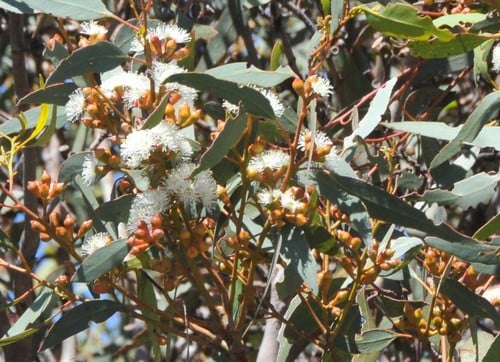
Eucalyptus dumosa
White Mallee, Water mallee
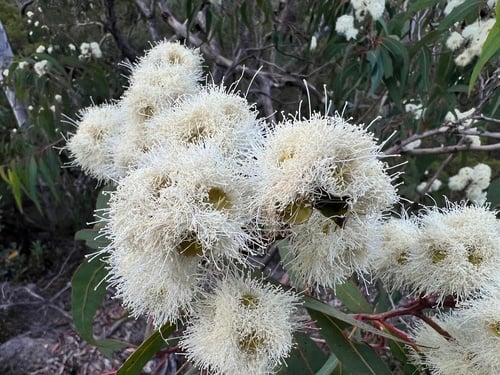
Eucalyptus eximia
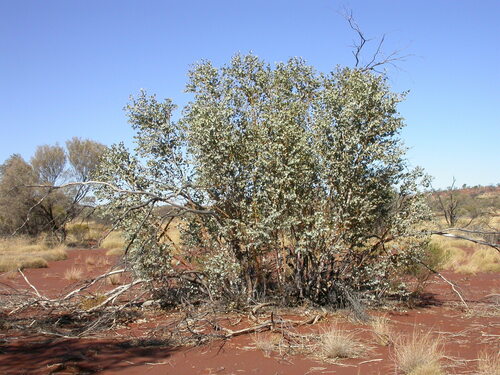
Eucalyptus gamophylla
Blue Mallee, Twin-leaved Gum, Blue-leafed mallee, Warilu, Twin-leaf Mallee
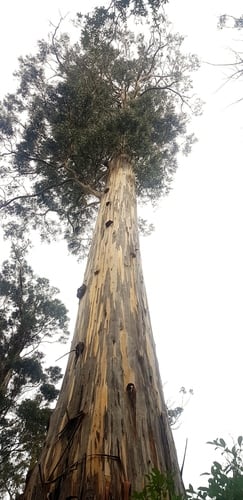
Eucalyptus globulus
Blue gum, Tasmanian blue gum
Eucalyptus gomphocephala
Tuart, Tuart Gum
Eucalyptus gracilis
White Mallee, Yorrell, Snap and Rattle, Red Mallee