Syzygium dansiei
B. Hyland
Windsor Satinash
gbif· cc0
President and Fellows of Harvard College
Description
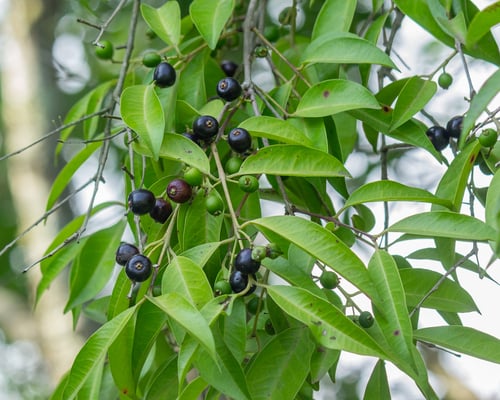
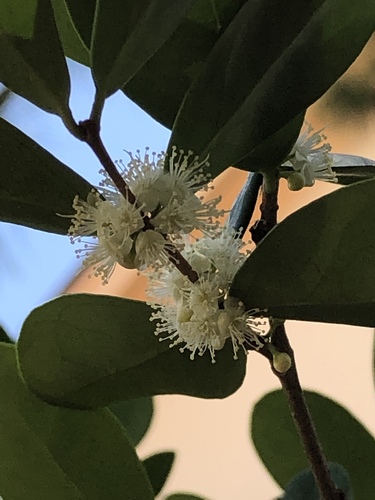
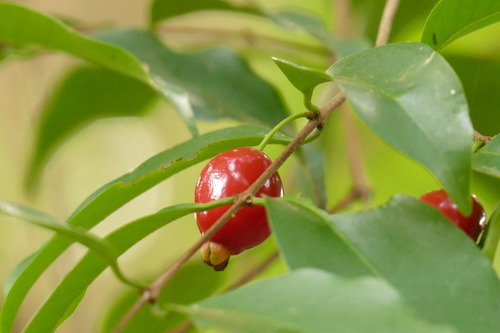
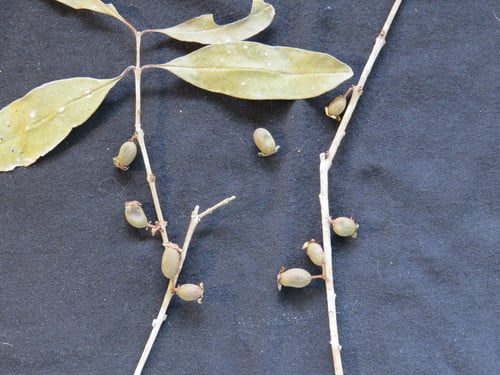
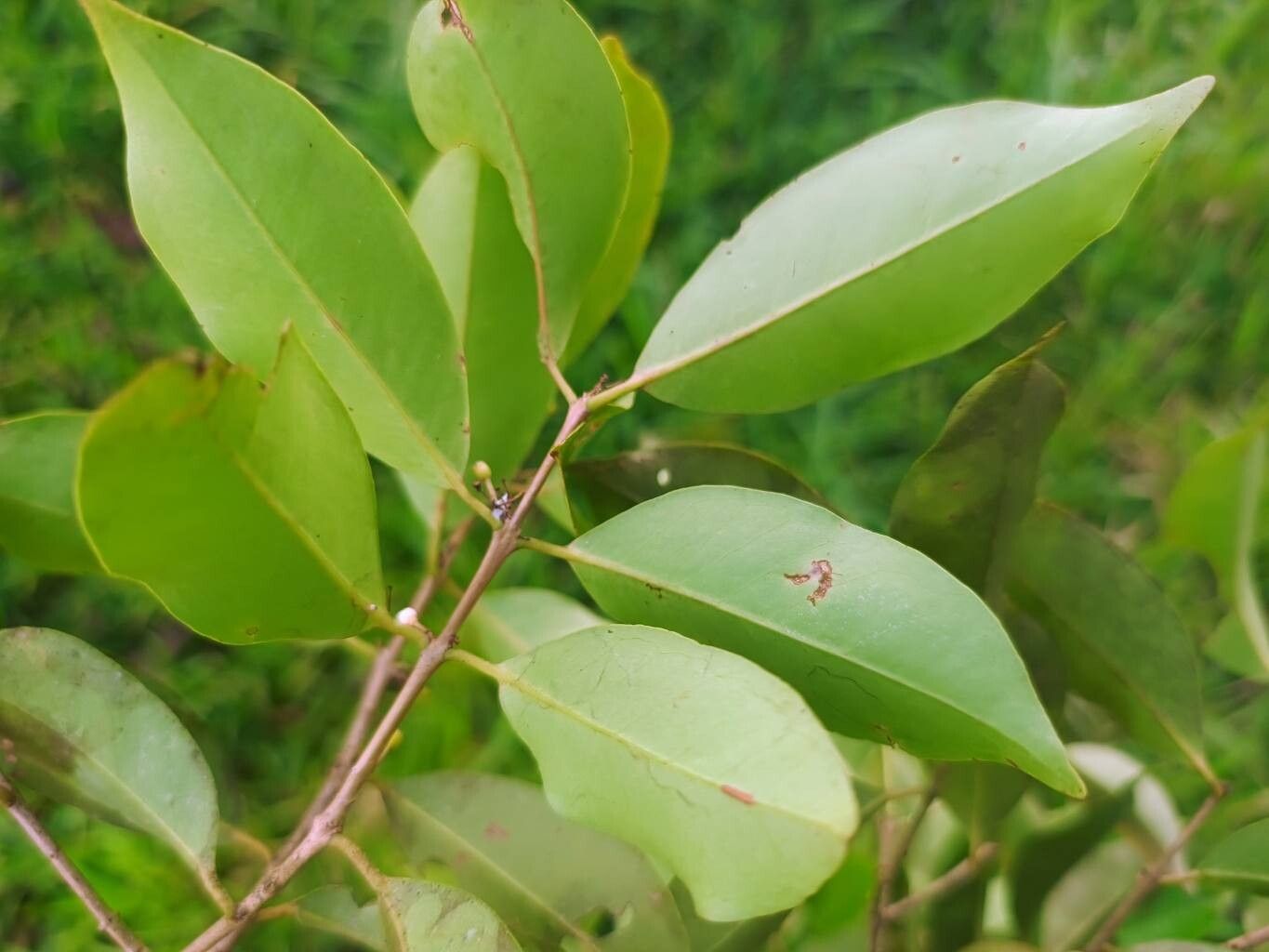
A tree up to 30 m tall. The leaves are simple and 5-6 cm long. The vein around the edge of the leaf can just be seen on the upper surface but is more visible underneath the leaf. The fruit is 2.5-3 cm across. They hang singly or in bunches either in the angles where leaves join or at the end of branches. The fruit is bright purple when ripe. It has a crown at the end of the fruit. The fruit has one seed inside. The seed is 1.5-2 cm long. The fruit is edible.
Edible Uses
We have no specific information on edibility for the fruit of this species, but the fruits of many members of this genus are edible. The depressed globular, purple fruits have a succulent flesh; they are around 25 - 30mm in diameter, and contain a single seed about 15 - 20mm in diameter.
Traditional Uses
The fruit is eaten.
This uses section is brief — help expand it
Distribution
A tropical plant. It occurs in the highland rainforest in northeast Queensland in Australia. It grows between 950-1200 m altitude. Mt Cootha Botanical Gardens.
Where It Grows
Australia*,
Propagation
Seed - best sown as soon as it is ripe.
Other Uses
The wood is used in construction. We do not have any more specific information for the wood of this species, but the various species of Syzygium tend to have somewhat similar timber. The general description of syzygium timber is as follows:- The heartwood is a golden brown, greyish brown or brown, with pink or purplish glints; it is not clearly demarcated from the 1 - 4cm wide band of sapwood. The texture is fine; the grain slightly interlocked, sometimes wavy or irregular; there are resin deposits. The wood is heavy; moderately hard; somewhat durable, being moderately resistant to fungi and termites, but susceptible to dry wood borers. It seasons slowly, with a high risk of checking and distortion; once dry it is moderately stable in service. It works well with ordinary tools, nailing and screwing are good so long as the wood is pre-bored; gluing is correct. The wood is used for musical instruments, tool handles, furniture components, ship building, heavy carpentry, flooring, joinery etc.
Production
The fruit are ripe February to April.
References (2)
- Cooper W & Cooper W T, 1994, Fruits of the Rain Forest. RD Press p 270
- Cooper, W. and Cooper, W., 2004, Fruits of the Australian Tropical Rainforest. Nokomis Editions, Victoria, Australia. p 361