Strychnos innocua
Delile
Monkey orange, Dull-leaved mukwakwa
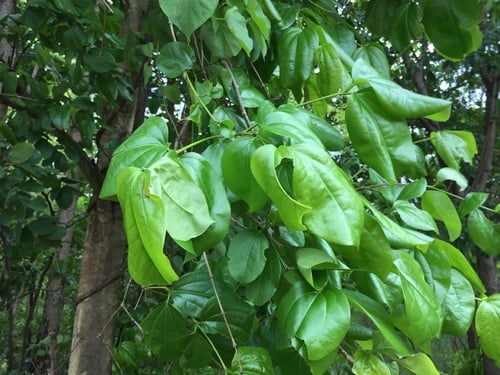
iNaturalist· cc-by-nc
(c) Troos van der Merwe, some rights reserved (CC BY-NC)
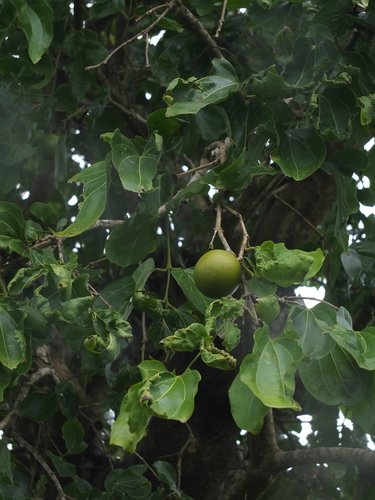
iNaturalist· cc-by-nc
(c) Troos van der Merwe, some rights reserved (CC BY-NC)
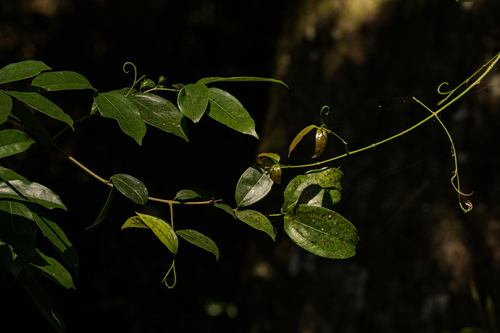
iNaturalist· cc-by-nc
(c) Troos van der Merwe, some rights reserved (CC BY-NC)
Description
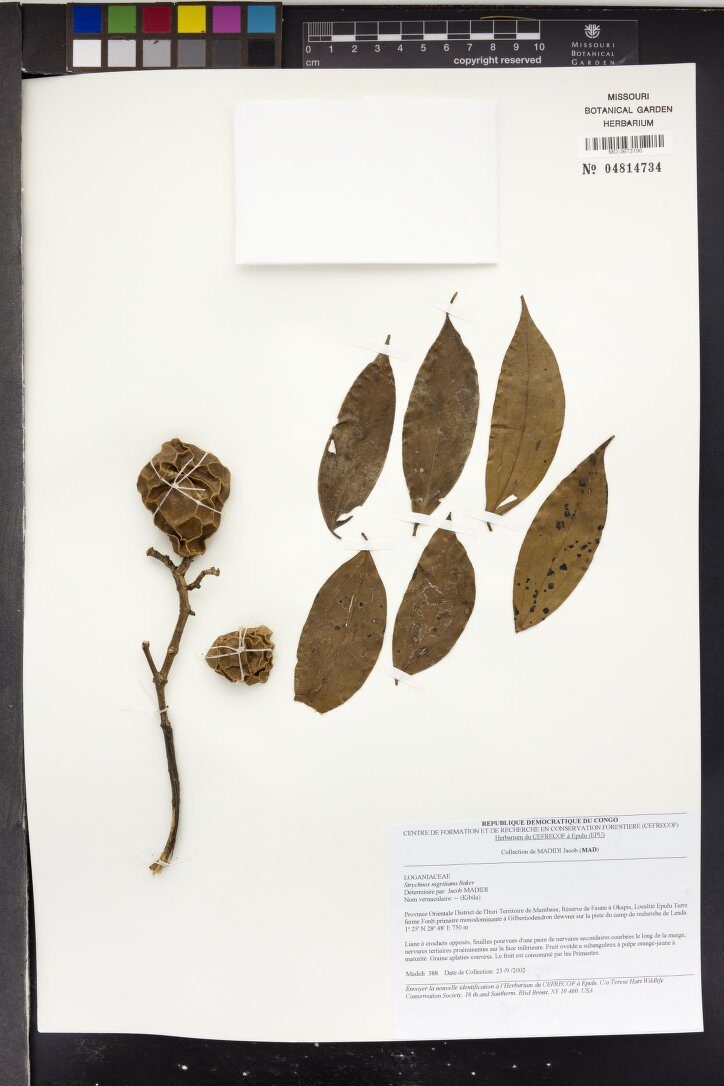
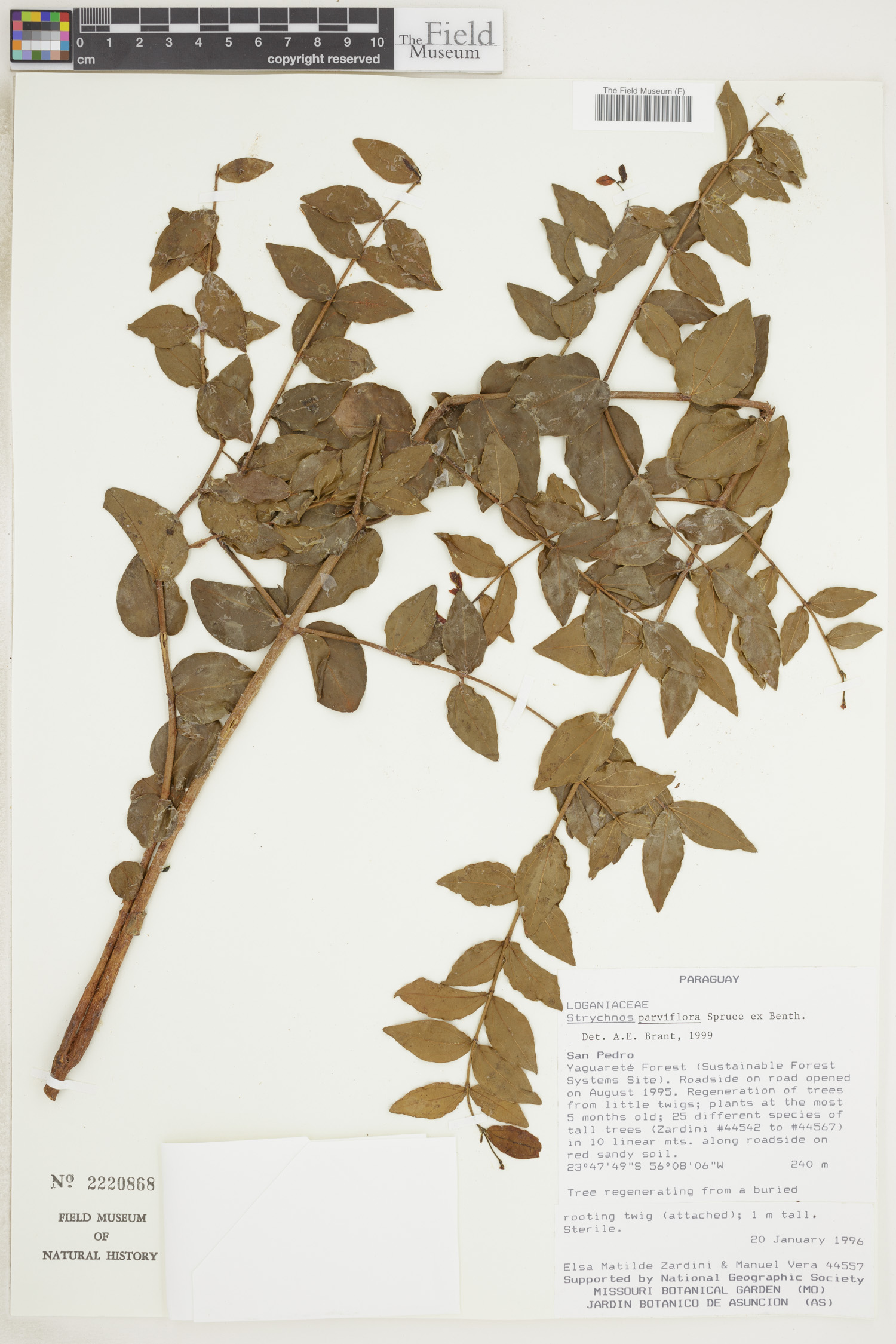
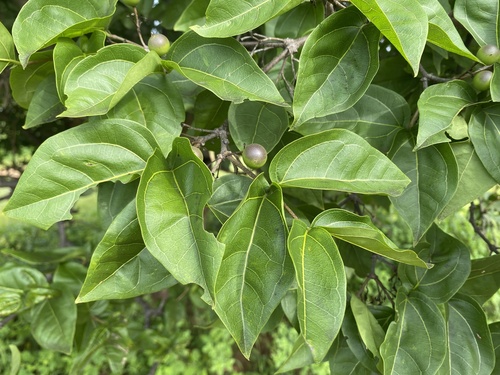
A small or medium sized tree. It grows up to 13 m high. The trunk is straight. The bark is smooth and green or yellow, and powdery. The small branches are stout and smooth and also powdery. They are often twisted and hang downwards. The leaves are simple and occur in opposite pairs. They are widely spaced apart. They have short leaf stalks. They are oval and 3-15 cm long by 2-9 cm wide. The leaves are wedge shaped at the base and leathery. They tend to be wider at the rounded tip. They can have fine hairs underneath. The veins are fine and net like. The flowers are green or yellow and in the axils of leaves. They are 8 mm long. Mostly 2-4 flowers occur in stalked clusters. Fruit are round and 6-10 cm across. They have a hard peel. They are bluish-green when young and turn yellow or orange when ripe. There are many seeds imbedded in a yellow pulp. The seeds are 4 sided and yellow. They are 1.5 cm across and very hard. The ripe fruit pulp is edible.
Edible Uses
The ripe fruit pulp is eaten fresh, dried and stored after removing seeds, or mixed in water to make a drink. The leaves are cooked and eaten.
Traditional Uses
The fruit pulp is eaten. It is also dried and stored after the seeds are removed. It is inside a hard fruit case. The fruit pulp is also put in water to make a drink. The leaves are cooked and eaten. CAUTION: Many Loganiaceae are very poisonous. The seeds are poisonous.
Medicinal Uses
Traditional uses include consumption of the fruit pulp and cooked leaves.
Known Hazards
Various parts of Strychnos plants, especially the seeds and bark, contain toxic alkaloids such as strychnine and brucine. The fleshy pulp of the ripe fruits, however, is often edible.
Distribution
It is a tropical and subtropical plant. It grows in the lowlands. It grows from sea level to 1,400 m altitude in Tanzania. It grows naturally in areas with a rainfall of 600 to 1,000 mm annually. The places have 60 to 100 rainy days per year. The temperature ranges are 17°C to 29°C. The relative humidity is from 45 to 80%. These areas have dry lowland forest. Trees need to be in sunny locations. It grows in open woodland and rocky hills. It can grow in arid places. It grows in Miombo woodland.
Where It Grows
Africa, Angola, Benin, Burkina Faso, Cameroon, Central Africa, Central African Republic, Chad, Côte d'Ivoire, East Africa, Egypt, Ethiopia, Ghana, Guinea, Guinée, Guinea-Bissau, Ivory Coast, Kenya, Madagascar, Malawi, Mali, Mozambique, Niger, Nigeria, North Africa, Senegal, South Africa, Southern Africa, South Sudan, Sudan, Tanzania, Togo, Uganda, West Africa, Zambia, Zimbabwe,
Cultivation
Plants can be grown from seed or root cuttings. The seed does not germinate easily due to the hard seed coat. If roots are damaged they shoot and can be replanted. When trees are felled new shoots arise and these can be used. Seeds should be sown directly where they are to grow. The stone should be cracked to assist the seed to grow. Seed should be sown as soon as collected. Trees can be pruned or topped.
Propagation
Seed - best sown as soon as it is ripe. The seed can be stored for up to 2 months with no loss of viability.
Other Uses
A mixture of ground roots and oil is rubbed on the skin as a fly repellent. Small branches are used for toothbrushes and toothpicks. An oil obtained from the fruit pulp and seeds is used in making soap. The cream or pale yellow hardwood is inclined to split. The wood is used for making tool handles, other small items and building poles. The tree provides an excellent firewood that burns even when wet.
Production
Fruit remain on the tree and are picked when ripe. Flowers occur in August to January and fruit are ripe in July to December. It takes about one year from flower fertilization to fruit ripening.
Other Information
Fruit are sold in markets in East Africa. The fruit are eaten especially by children.
Notes
The wood burns very easily.
Nutrition
| Part | Moisture | kJ | kcal | Protein | Vit A | Vit C | Iron | Zinc |
|---|---|---|---|---|---|---|---|---|
| Fruit | 70.6 | 338 | 81 | 0.3 | — | — | — | — |
| Juice | 91 | — | — | 7.9 | — | — | — | — |
| Seeds | 9 | — | — | 15.8 | — | — | — | — |
Synonyms
Also Known As
Akwalakwala, Alingkwalo, Booka, Bunkundu, Dong gud, Ekwakwalet, Ekwalakwala, Eturugugut, Eturukuku, Gankoro, Glogbandon, Gum akon, Hog el fil, Jailjeko, Kahongohongo, Kakomekome, Kulegan, Lakwakwalo, Lkwalo kwalo, Locomin, Madonga, Mahongo kome, Mangurungundu, Mbaya, Mgulugulu, Mkaye, Mkingi, Mkulwa, Mkwakwa, Mngulungulu, Mpundu, Mtonga, Mtongatonga, Mucuacua, Mukolonkolo, Mukomekome, Munkolo, Munkolokolo, Muzilakiala, Ngaja, Nzilakiala, Okuakwala, Olemba, Oola, Ugugee, Ugugia, Umbukesia, Urungu, Yual potiga
References (52)
- Abbiw, D.K., 1990, Useful Plants of Ghana. West African uses of wild and cultivated plants. Intermediate Technology Publications and the Royal Botanic Gardens, Kew. p 48
- Achigan-Dako, E, et al (Eds), 2009, Catalogue of Traditional Vegetables in Benin. International Foundation for Science.
- Acipa, A. et al, 2013, Nutritional Profile of some Selected Food Plants of Otwal and Ngai Counties, Oyam District, Northern Uganda. African Journal or Food, Agriculture, Nutrition and Development. 13(2)
- Anywar, G., et al, 2014, Wild Plants Used as Nutraceuticals from Nebbi District, Uganda. European Journal of medicinal Plants. 4(6):641-660
- Balemie, K., & Kebebew, F., 2006, Ethnobotanical study of wild edible plants in Derashe and Kucha Districts, South Ethiopia. Journal of Ethnobiology and Ethnomedicine. 2:53
Show all 52 references Hide references
- Bekele-Tesemma A., Birnie, A., & Tengnas, B., 1993, Useful Trees and Shrubs for Ethiopia. Regional Soil Conservation Unit. Technical Handbook No 5. p 420
- Belem, M., et al, 2017, Strategy of Conservation and Protection of Wild Edible Plants Diversity in Burkina Faso. ANADOLU 27 (2) 2017, 82- 90
- Berihun, T. & Molla, E., 2017, Study on the Diversity and Use of Wild Edible Plants in Bullen District Northwest Ethiopia. Hindawi Journal of Botany. Article ID 8383468
- Bonou, A., et al, 2013, Valeur economique des Produits Forestiers Non Ligneux (PFNL) au Benin. Editions Universitaires Europeennes p 97
- Bruschi, P., et al, 2014, Traditional use of plants in a rural community of Mozambique and possible links with Miombo degradation and harvesting sustainability. Journal of Ethnobiology and Ethnomedicine. 2014, 10:59
- Burkill, H. M., 1985, The useful plants of west tropical Africa, Vol. 3. Kew.
- Centurie de plantes d'Afrique 53. 1826 (F. Cailliaud, Voy. Meroe 4:346. 1827)
- Diarra, N. et al, 2016, Etude ethnobotanique des plantes alimentaires utilisées en période de soudure dans les régions Sud du Mali. Int. J. Biol. Chem. Sci. 10(1): 184-197
- Ethiopia: Famine Food Field Guide. http://www.africa.upenn.edu/faminefood/category3.htm
- FAO. 1983, Food and fruit-bearing forest species 1: Examples from Eastern Africa. FAO Food and Forestry Paper 44/1 p 103
- Fowler, D. G., 2007, Zambian Plants: Their Vernacular Names and Uses. Kew. p 62
- Gallagher, D. E., 2010, Farming beyond the escarpment: Society, Environment, and Mobility in Precolonial Southeastern Burkina Faso. PhD University of Michigan.
- Goode, P., 1989, Edible Plants of Uganda. FAO p 30
- Goode, P., 1989, Edible Plants of Uganda. FAO p 37
- Grivetti, L. E., 1980, Agricultural development: present and potential role of edible wild plants. Part 2: Sub-Saharan Africa, Report to the Department of State Agency for International Development. p 43, 72
- Hedrick, U.P., 1919, (Ed.), Sturtevant's edible plants of the world. p 636
- http://www.fao.org/forestry/25323-096344a3de335832e8f363c3ac5184a66.pdf
- INFOODS:FAO/INFOODS Databases
- Jardin, C., 1970, List of Foods Used In Africa, FAO Nutrition Information Document Series No 2.p 48, 163
- JSTOR Global Plants edible
- Katende, A.B., Birnie, A & Tengnas B., 1995, Useful Trees and Shrubs for Uganda. Identification, Propagation and Management for Agricultural and Pastoral Communities. Technical handbook No 10. Regional Soil Conservation Unit, Nairobi, Kenya. p 592
- Kidane, B., et al, 2014, Ethnobotany of Wild and Semi-wild Edible Fruit Species used by Maale and Ari Ethnic Communities in South Ethiopia. Ethnobotany Research and Applications. Vol. 12, 1546-3465-12-455
- Lulekal, E., et al, 2011, Wild edible plants in Ethiopia: a review on their potential to combat food insecurity. Afrika Focus - Vol. 24, No 2. pp 71-121
- Malaisse, F., 1997, Se nourrir en floret claire africaine. Approche ecologique et nutritionnelle. CTA., p 69
- Masters, T., 2021, Traditional food plants of the upper Aswa River catchment of northern Uganda—a cultural crossroads. Journal of Ethnobiology and Ethnomedicine (2021) 17:24
- Maundu, P. et al, 1999, Traditional Food Plants of Kenya. National Museum of Kenya. 288p
- Mbuya, L.P., Msanga, H.P., Ruffo, C.K., Birnie, A & Tengnas, B., 1994, Useful Trees and Shrubs for Tanzania. Regional Soil Conservation Unit. Technical Handbook No 6. p 456
- Mengistu, F. & Hager, H., 2008, Wild Edible Fruit Species Cultural Domain, Informant Species Competence and Preference in Three Districts of Amhara Region, Ethiopia. Ethnobotany Research & Applications 6:487-502
- Moksia, F., et al, 2019, Diversity and Socio-Economic Value of Wild Edible Plants in the Mounts Mandara Region, Cameroon. International Journal of Sciences. Vol. 8:10
- Mpasiwakomu, R. A., 2017, The Diversity and Utilization of Wild Edible and Medicinal Plant Species found in Uvinza Miombo Woodlands, Tanzania. M. Sc. thesis University of Tanzania.
- Mutie, F. M., et al, 2023, Important Medicinal and Food Taxa (Orders and Families) in Kenya, Based on Three Quantitative Approaches. Plants 2023, 12, 1145
- Njana, M. A., et al, 2013, Are miombo woodlands vital to livelihoods of rural households? Evidence from Urumwa and surrounding communities, Tabora, Tanzania. Forests, Trees and Livelihoods, 22:2, 124-140
- Ojelel, S. & Kakudidi, E. K., 2015, Wild edible plant species utilized by a subsistence farming community in the Obalanga sub-county, Amuria district, Uganda. Journal of Ethnobiology and Ethnomedicine. 11:7
- Ojelel, S., et al, 2019, Wild edible plants used by communities in and around selected forest reserves of Teso-Karamoja region, Uganda. Journal of Ethnobiology and Ethnomedicine (2019) 15:3
- Oryema, C., et al, 2013, Edible wild fruit species of Gulu District, Uganda. International Journal of Biology and Biological Sciences Vol 2(4) pp 068-082
- Palgrave, K.C., 1996, Trees of Southern Africa. Struik Publishers. p 766
- Peters, C. R., O'Brien, E. M., and Drummond, R.B., 1992, Edible Wild plants of Sub-saharan Africa. Kew. p 142
- RILEY & BROKENSHA,
- Royal Botanic Gardens, Kew (1999). Survey of Economic Plants for Arid and Semi-Arid Lands (SEPASAL) database. Published on the Internet; http://www.rbgkew.org.uk/ceb/sepasal/internet [Accessed 1st May 2011] (Subsp. innocua)
- Ruffo, C. K., Birnie, A. & Tengnas, B., 2002, Edible Wild Plants of Tanzania. RELMA p 634
- Ruiters-Welcome, A. K., 2019, Food plants of southern Africa. Ph.D. thesis. Univ. of Johannesburg p 73
- Salako, V. K. et al, 2013, Home gardens: an assessment of their biodiversity and potential contribution to conservation of threatened species and crop wild relatives in Benin. Genet Resour Crop Evol
- The Digital Flora of Central Africa, 2013, (Democratic Republic of Congo, Rwanda & Burundi) Botanical Garden Meise
- Vivien, J., & Faure, J.J., 1996, Fruitiers Sauvages d'Afrique. Especes du Cameroun. CTA p 189
- Williamson, J., 2005, Useful Plants of Malawi. 3rd. Edition. Mdadzi Book Trust. p 237
- World Checklist of Useful Plant Species 2020. Royal Botanic Gardens, Kew
- www.worldagroforestrycentre.org/treedb/