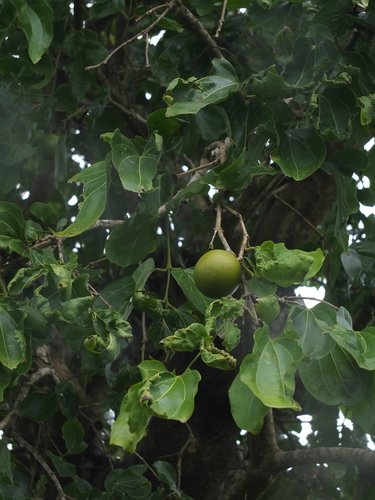
Strychnos aculeata
Soler.
iNaturalist· cc-by-nc
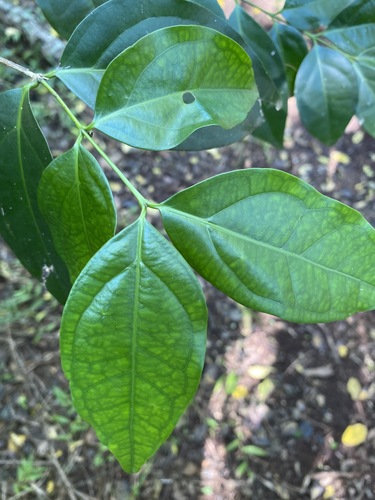
(c) Carel Jongkind, some rights reserved (CC BY-NC), uploaded by Carel Jongkind
iNaturalist· cc-by-nc
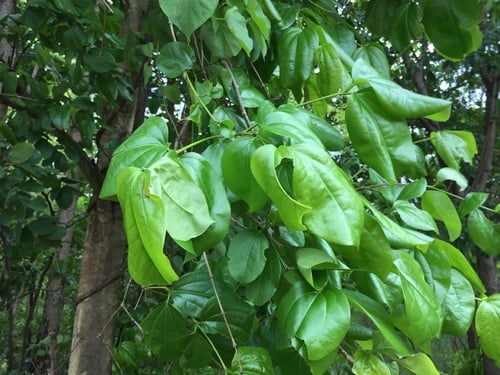
(c) Carel Jongkind, some rights reserved (CC BY-NC), uploaded by Carel Jongkind
iNaturalist· cc-by-nc
(c) Carel Jongkind, some rights reserved (CC BY-NC), uploaded by Carel Jongkind
Description
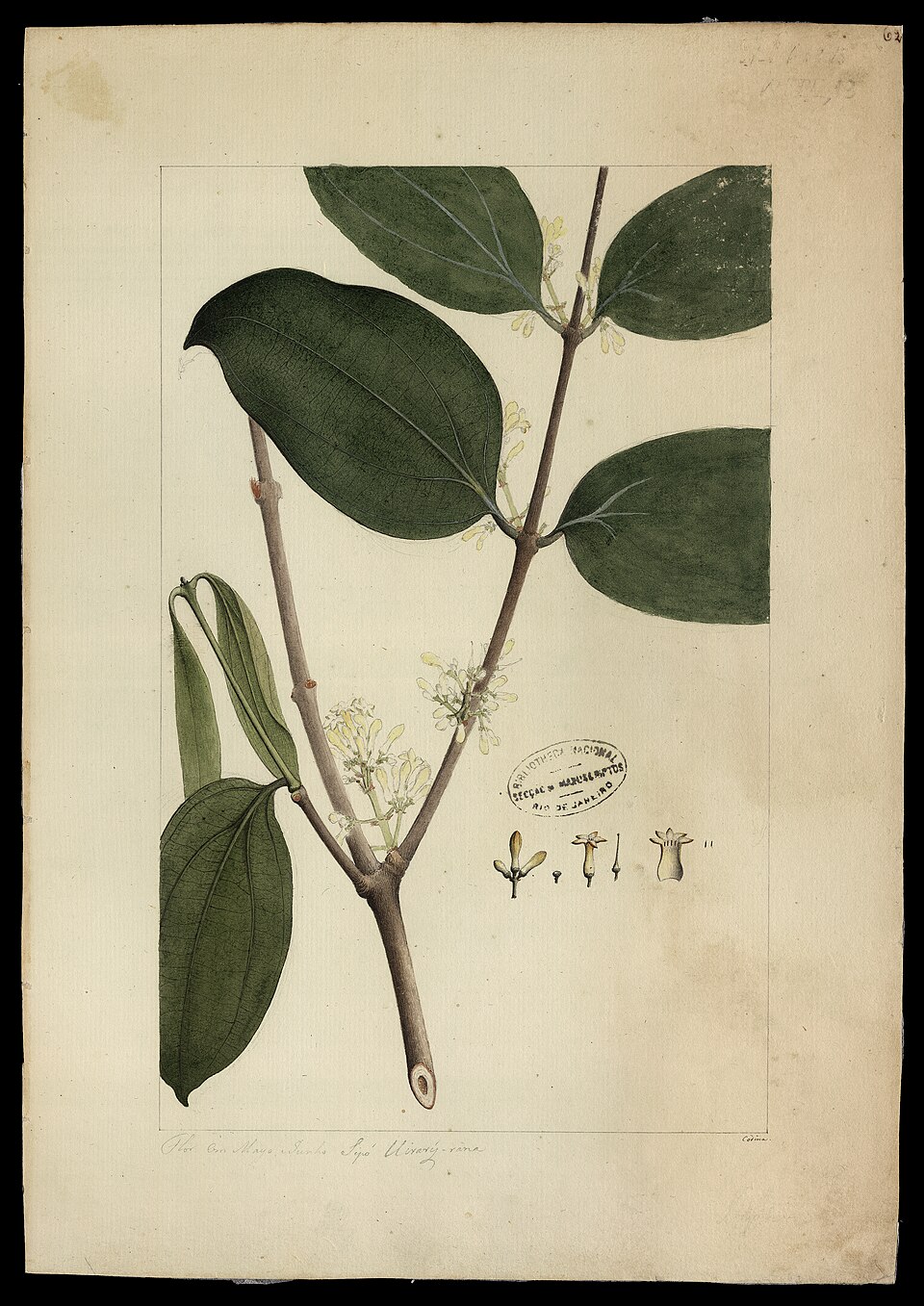
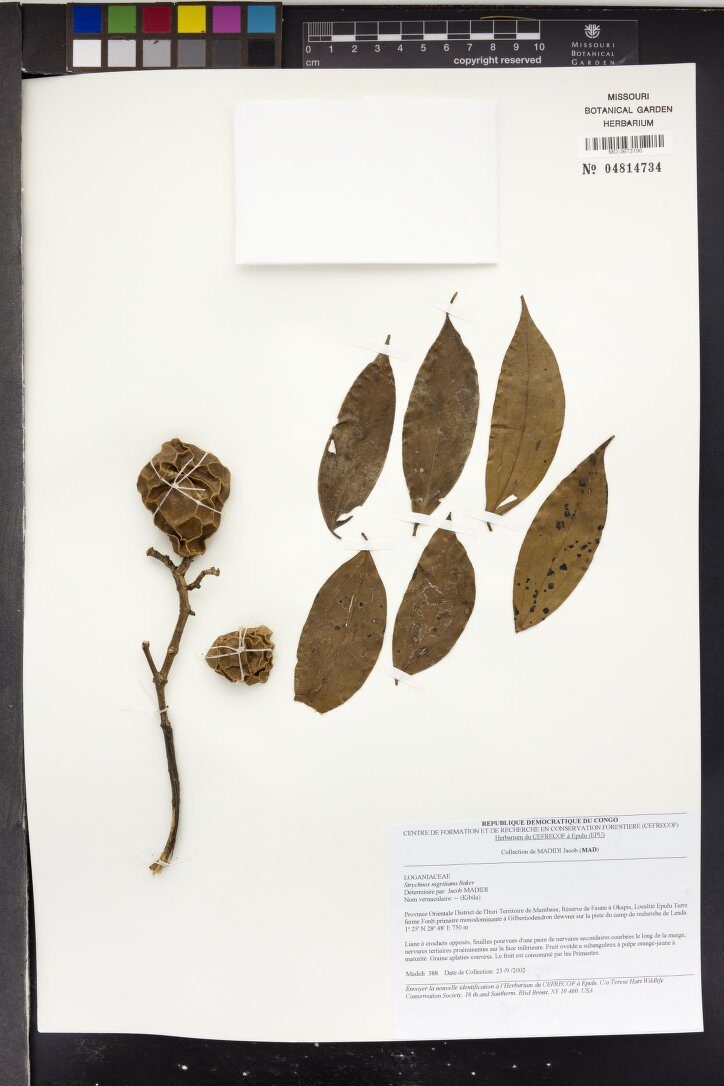
A creeper. It has prickles on the nodes. The stems can be 5-30 m long and 20 cm across. The young branches are almost 4 sided. Older branches have cracks along them. The leaves are oblong and 8-16 cm long by 5-7 cm wide. The fruit are large. They are 9-12 cm across.
Medicinal Uses
Although very poisonous, the plant is widely used for traditional medicinal purposes in Africa, mainly as an emetic and to treat urinary, genital and pulmonary infections. A decoction of the bark is taken to treat pulmonary complaints, food poisoning, trypanosomiasis and insanity, and also as an expectorant and emetic. An infusion of the bark, combined with the fruit of Piper guineense, is taken as an enema, and also rubbed in topically in the treatment of gonorrhoea and swellings in the genital region. A bark decoction is taken and used as an enema to treat oedema and scrotal elephantiasis. A decoction of the root is taken to treat gonorrhoea and pneumonia. A maceration of the pulped fruit is taken as an abortifacient. The fruit pulp is rubbed on the head to treat insanity. The ground up seeds are taken in water as an emetic. The ground seeds are used as an enema to treat oedema of the abdomen. The crushed leaves are used in the treatment od pulmonary tuberculosis. The leaf sap is rubbed in, and a bark decoction is used in vapour baths, in order to treat fever fits. The plant sap is rubbed in to the affected areas in order to treat guinea worm infections.
Known Hazards
The seeds are rubbed into a paste and used as arrow poison. The fruit and a paste from the seed are used as fish poison. The fruits and especially the seeds of Strychnos aculeata are highly poisonous. The fruit contains saponins. Indole alkaloids were only found in the fruit wall, not in the seeds. Principal indole alkaloids of the root bark are strychnofendlerine and N-acetyl-strychnosplendine. The stem bark contains spermostrychnine, N-acetyl-isostrychnosplendine and N-acetyl-O-methylstrychnosplendine, the latter being also the main indole alkaloid of the fruit. N-acetyl-O-methylstrychnosplendine is partly responsible for the strong muscle-paralysing activity in vitro and in vivo. Spermostrychnine causes clonic convulsions, but no tonic convulsions in mice.
Distribution
It is a tropical plant. It grows in forests up to 700 m above sea level.
Where It Grows
Africa, Angola, Cameroon, Central Africa, Congo R., Côte d'Ivoire, Gabon, Ghana, Ivory Coast, Liberia, Nigeria, Sierra Leone, Uganda, West Africa,
Other Uses
The fruit is commonly used as a soap substitute. The large spherical fruits, which are around 10 - 12cm in diameter, have woody shells. They are cut in half and used to make drinking cups and ladles.
References (1)
- World Checklist of Useful Plant Species 2020. Royal Botanic Gardens, Kew