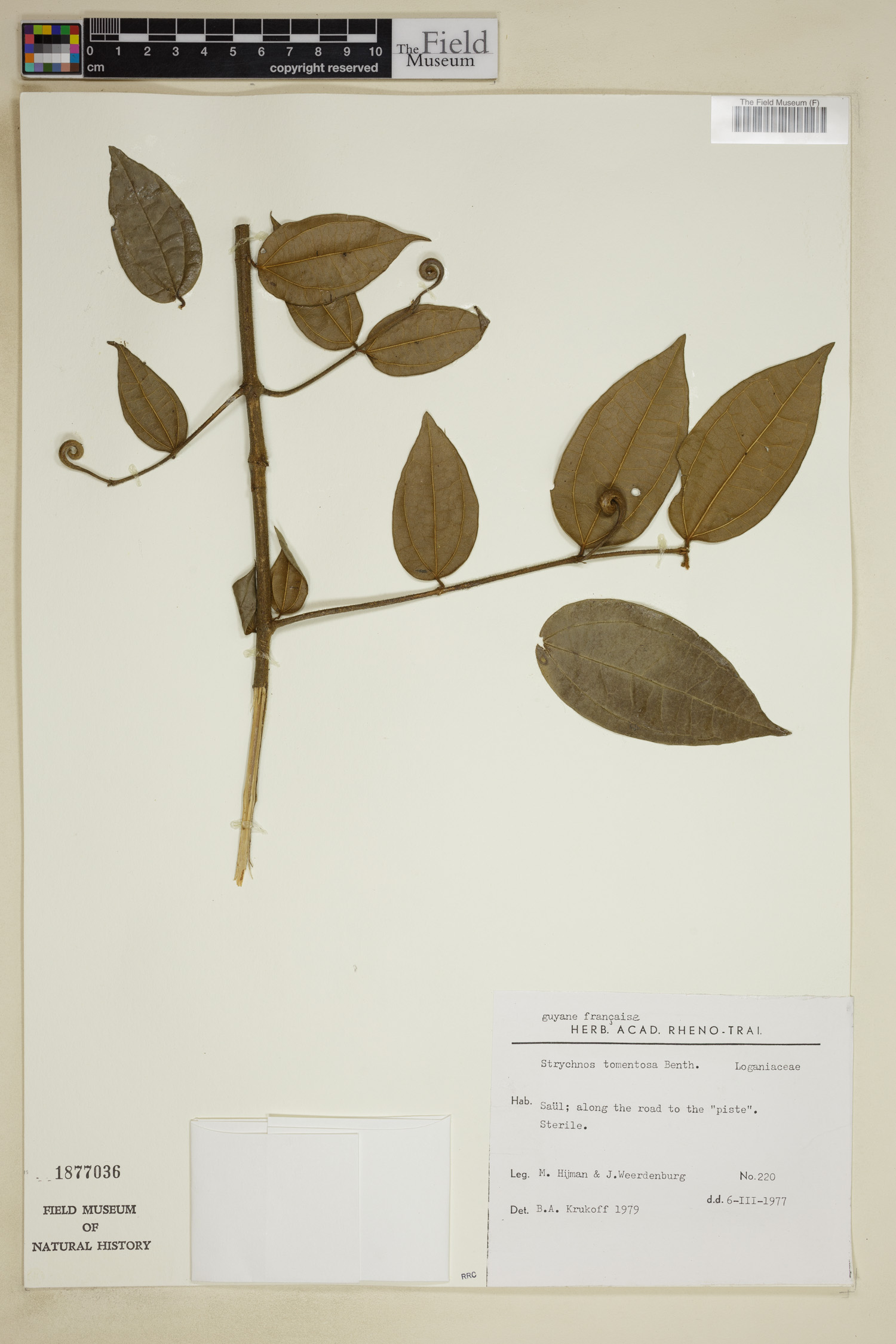
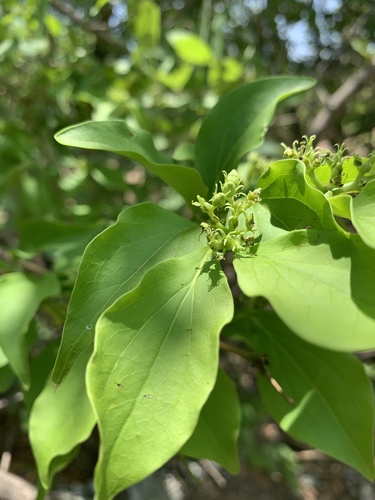
Strychnos camptoneura
Gilg. & Busse
wikimedia· cc0
Wikimedia Commons - NMNH
Summary
Source: WikipediaStrychnos camptoneura is a species of plant in the Loganiaceae family. It is native to Cameroon, the Central African Republic, the Democratic Republic of the Congo, Gabon, Ivory Coast, Liberia, Nigeria, the Republic of the Congo and Zaire.
Description
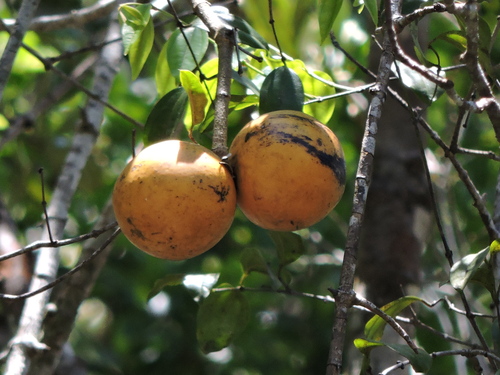
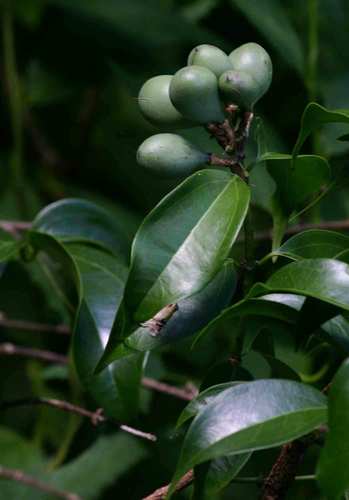
A large creeper. It can grow 20-45 m long or more. The stems are 2-25 cm wide. There are tendrils in pairs. The fruit is large. It is 16 cm long by 13 cm wide.
Medicinal Uses
Although toxic, the plant is used locally in traditional medicine. It is rich in alkaloids, with a total alkaloid content in the leaves of over 2% and both the stem and root barks also rich in alkaloids. At least 10 monomeric indole alkaloids have been isolated. Serpentine, one of the alkaloids present, has been shown to inhibit topoisomerase II and has shown cytotoxic activity against some tumour cell lines. Retuline, another alkaloid, has a significant anti-oedematogenic activity in anti-inflammatory tests. Akagerine is a potent convulsant agent, though it is 100 times less active than strychnine. Kribine causes clonic and tonic convulsions. Stem bark and root bark extracts have strong muscle relaxant activity. The bark is eaten, or a maceration in water or palm wine is taken, in order to treat lack of sexual strength. The bark is also used to treat malaria. A tea made from the stem bark, sweetened with honey, is taken to treat stomach-ache, kidney pain and hernia. A warm decoction of the leaves, bark, or dry powdered bark, is applied to wounds and ulcers.
Known Hazards
The root bark, combined with the plant sap of Periploca nigrescen and sometimes other plant species, is used as an arrow poison. The fruit, and the root, are both used as a fish poison.
Distribution
It is a tropical plant. It grows up to 700 m above sea level.
Where It Grows
Africa, Cameroon, Central Africa, Congo DR, Congo R, Côte d'Ivoire, Gabon, Ivory Coast, Liberia, Nigeria, West Africa,
Synonyms
Also Known As
Goin
References (1)
- World Checklist of Useful Plant Species 2020. Royal Botanic Gardens, Kew