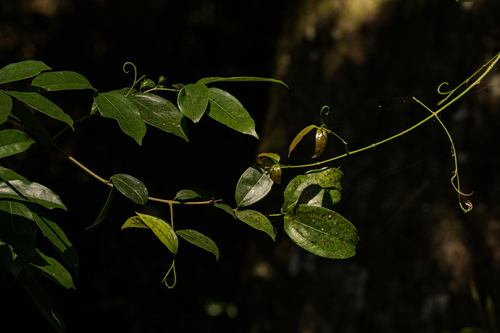
Geniostoma rupestre
J.R. & G Forst.
Hangehange
iNaturalist· cc-by
(c) Jason Alexander, some rights reserved (CC BY), uploaded by Jason Alexander
iNaturalist· cc-by-nc
(c) juju98, some rights reserved (CC BY-NC), uploaded by juju98
iNaturalist· cc-by-nc
(c) Kenneth R. Wood (NTBG), some rights reserved (CC BY-NC), uploaded by Kenneth R. Wood (NTBG)
Summary
Source: WikipediaGeniostoma rupestre is a species of flowering plant in the family Loganaceae. It is a shrub or tree which ranges from Taiwan and Malesia to Papuasia, Queensland, New Zealand, and the western and central Pacific islands. Geniostoma rupestre is a shrub or small tree from 2 to 5 meters tall, and occasionally up to 12 meters tall. It grows in both primary and secondary tropical moist forests, often in open areas in secondary forests, from sea level to 2,800 meters elevation. Plants often have a straggling form in the forest shade, with more dense and compact growth in open sunny areas.
Description
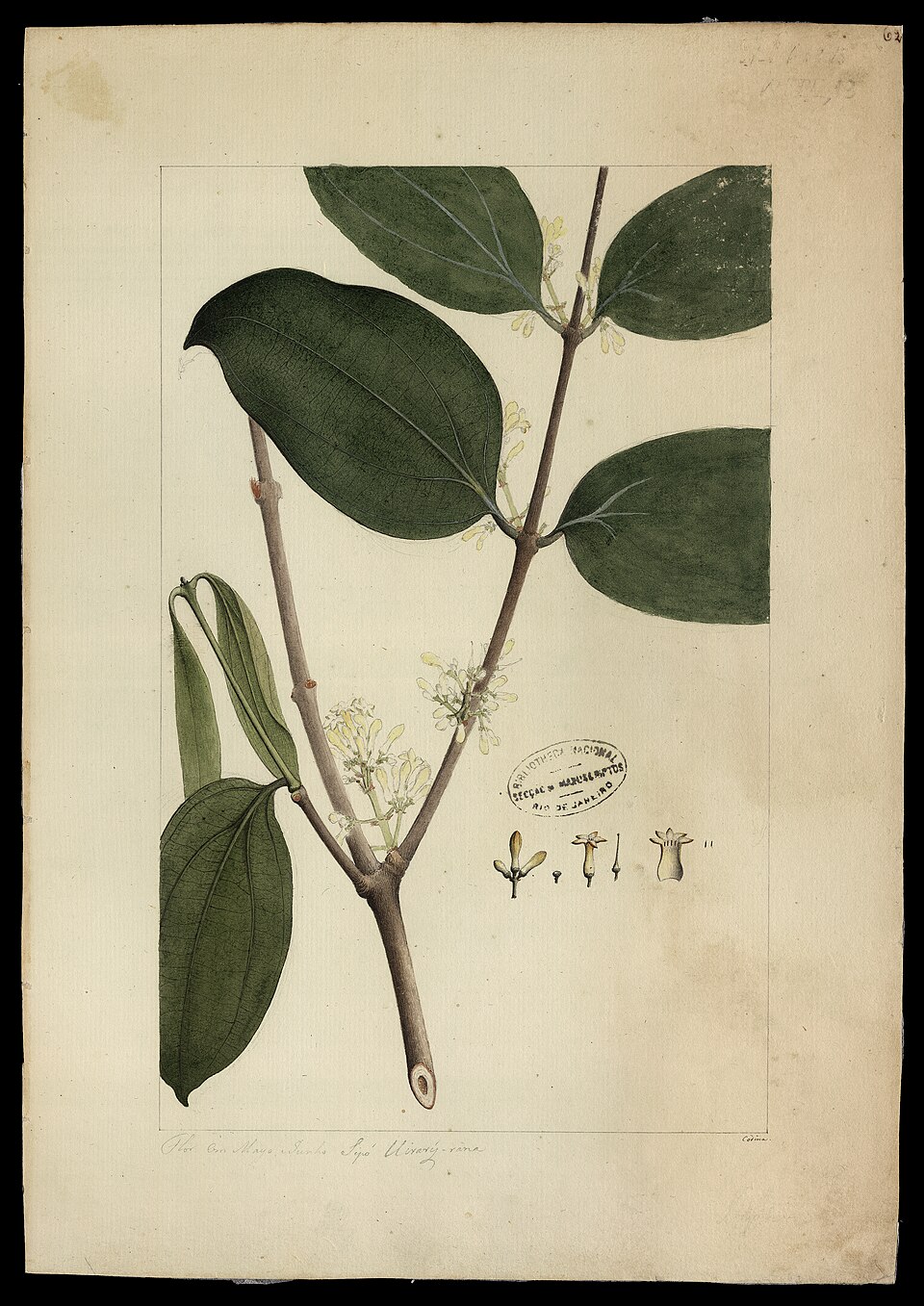
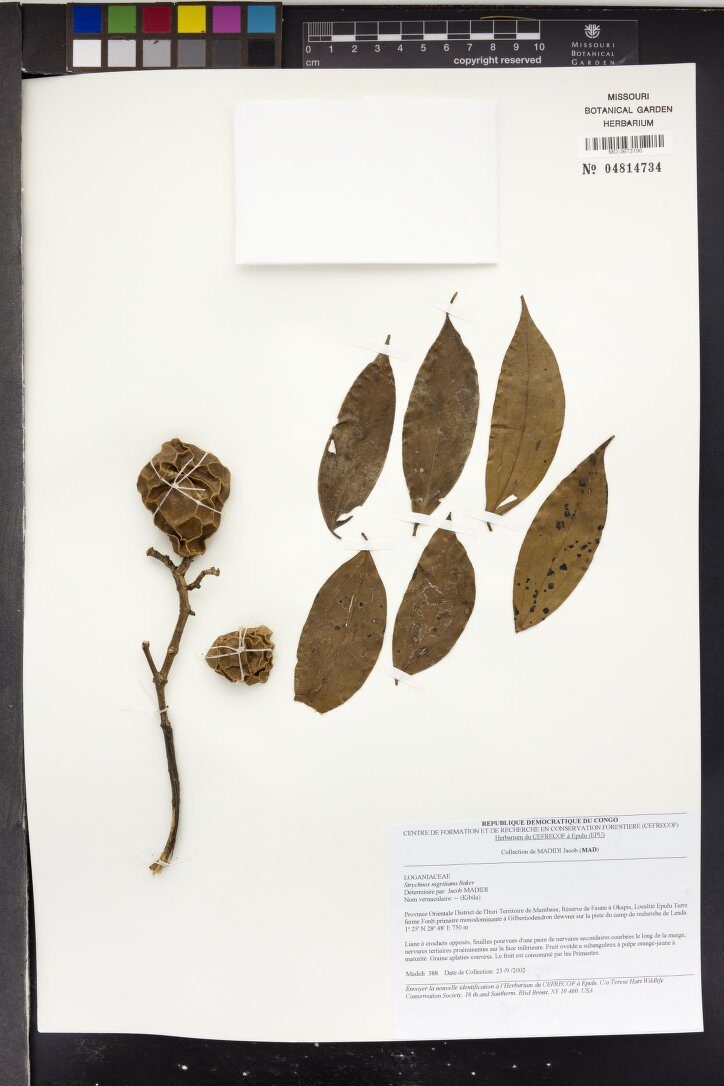
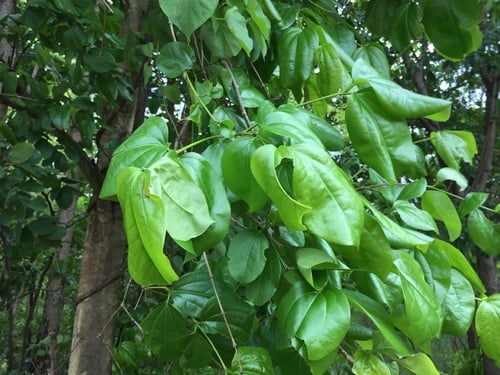
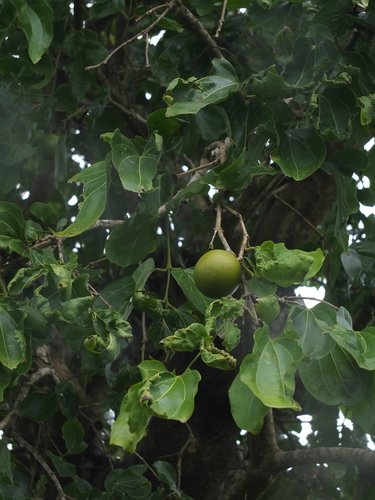
A smooth shrub up to 3-8 m tall. The branches are very brittle and break easily. The leaves are opposite and oblong with a sharpened base. They are 10-12 cm long and 5-6 cm wide. The leaves are dark green and shiny. The leaf stalk is less than 1 cm long. The flowers are very small, white and in small branching clusters. There are 2-6 flowers per cluster. The fruit is oval and pointed. It is 5-8 mm long. Fruit are blackish. The plant varies a lot and has been split into several species by some authors.
Edible Uses
Young shoots are eaten cooked, turning black when cooked. The fruit, seeds, and leaves are also edible. Young leaves are eaten in the Makira hills in the Solomon Islands.
Traditional Uses
Young shoots are eaten cooked in some areas. They turned black when cooked. CAUTION: Many Loganiaceae are very poisonous.
This uses section is brief — help expand it
Known Hazards
Many species in the Loganiaceae family are very poisonous.
Distribution
A tropical plant. They grow near the seaside. They occur in several Pacific Islands. Plants require a protected position in well drained soil. They grow up to about 300 m. in Taiwan. In Samoa it grows from sea level to 1600 m altitude.
Where It Grows
American Samoa, Australia, Asia, China, Fiji, Indonesia, Malaysia, New Caledonia, New Zealand, Niue, Pacific, Philippines, Rotuma, Samoa, SE Asia, Solomon Islands, Taiwan, Tonga, Vanuatu, Wallis and Futuna,
Cultivation
Plants can be grown from seed which should be sown fresh.
Production
It flowers and fruit from August to December.
Other Information
The young leaves are eaten in the Makira hills in the Solomon Islands.
Notes
There are about 24-60 Geniostoma species.
Synonyms
Also Known As
Lau mafatifati, Mafusifusi, Mogasi, Ran guan hua, Taipoipoi, Tapoipo
References (20)
- Conn, B.J., 1980, A taxonomic revision of Geniostoma subg. Geniostoma (Loganiaceae) Blumea 26:245-364.
- Conn, B.J., (Ed.) 1995, Handbooks of the Flora of Papua New Guinea. Vol 3. Melbourne University Press. p 128
- Cooper, W. and Cooper, W., 2004, Fruits of the Australian Tropical Rainforest. Nokomis Editions, Victoria, Australia. p 221
- Cribb, A.B. & J.W., 1976, Wild Food in Australia, Fontana. p 75
- Elliot, W.R., & Jones, D.L., 1992, Encyclopedia of Australian Plants suitable for cultivation. Vol 4. Lothian. p 355
Show all 20 references Hide references
- Flora of Australia, Volume 28, Gentiales, Melbourne:CSIRO Australia, 1996. p 67
- Franklin, J., Keppel, G., & Whistler, W., 2008, The vegetation and flora of Lakeba, Nayau and Aiwa Islands, Central Lau Group, Fiji. Micronesica 40(1/2): 169–225, 2008
- French, B.R., 2010, Food Plants of Solomon Islands. A Compendium. Food Plants International Inc. p 333
- Henderson, C.P. and I.R.Hancock, 1988, A Guide to the Useful Plants of the Solomon Islands. Res. Dept. Min of Ag. & Lands. Honiara, Solomon Islands. p 130 (As Geniostoma rupestris)
- Jackes, B.R., 2001, Plants of the Tropics. Rainforest to Heath. An Identification Guide. James Cook University. p 61
- Lebot, V. & Sam, C., Green desert or ‘all you can eat’? How diverse and edible was the flora of Vanuatu before human introductions?. Terra australis 52 p 410
- Liefting, A., et al, Samoan plant names. http://en.wikipedia.org
- Li Ping-tao, Leewenburg, A., Loganiaceae. Flora of China. p 324
- McClatchey, W. C., 2012, Wild food plants of Remote Oceania. Acta Societatis Botanicorum Poloniae 81(4) 371-380
- Melzer, R. & Plumb, J., 2011, Plants of Capricornia. Belgamba, Rockhampton. p 147 (As var. australianum)
- Parham, B. E. V., 1972, Plants of Samoa. New Zealand Department of Scientific and Industrial Research. Information Series. No. 85 p 58 (As Geniostoma samoense)
- Salmon, J.T., 1989, The Native Trees of New Zealand. Heinmann Reid p 292
- Smith, A.C., 1988, Flora Vitiensis Nova, Lawaii, Kuai, Hawaii, Volume 4 p 6
- Thaman, R. and W. Clarke, Paper on Agroforestry on Aneityum and Tanna, Vanuatu from Internet
- Yuncker, T.G., 1959, Plants of Tonga, Bernice P. Bishop Museum, Hawaii, Bulletin 220. p 216.