Strombosia grandifolia
Hook. f. ex Benth.
iNaturalist· cc-by-nc
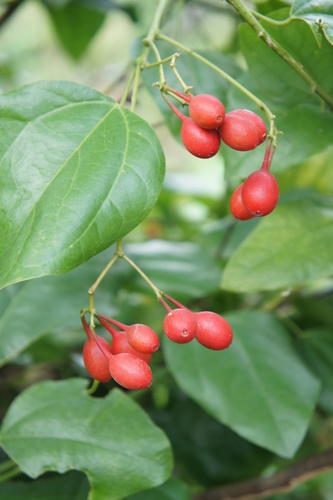
(c) Nick Helme, some rights reserved (CC BY-NC), uploaded by Nick Helme
iNaturalist· cc-by-nc
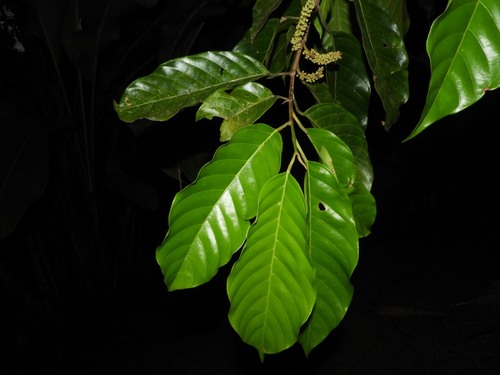
(c) Nick Helme, some rights reserved (CC BY-NC), uploaded by Nick Helme
Summary
Source: WikipediaStrombosia grandifolia is an understorey tree native to West and Central Africa belonging to the family Olacaceae.
Description
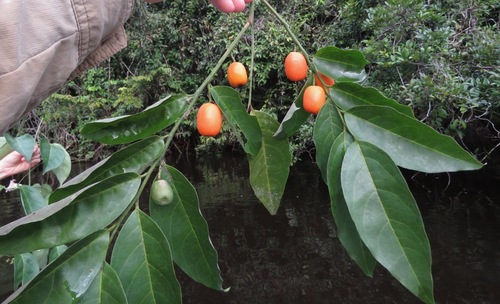
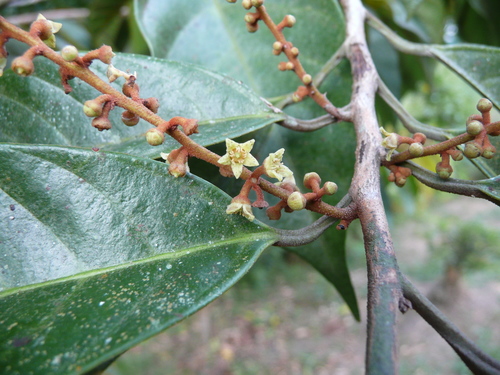
A tree. It grows 25 m tall. The trunk is 10 m tall and 60 cm across. The crown is dense and spreading. The leaves are alternate and simple. They are 8-30 cm long by 5-15 cm wide. They end in a point. The fruit is small and fleshy with a stone inside. This contains one seed.
Edible Uses
The kernels and seeds are eaten as nuts.
Medicinal Uses
In traditional medicine, stem bark extracts are used in the treatments of various ailments that includes skin infections, abdominal pains and cough.
Distribution
A tropical plant. It grows in closed evergreen forest in West Africa. It can be in swamp and occasionally flooded areas.
Where It Grows
Africa, Benin, Cameroon, Central Africa, Central African Republic, CAR, Congo, Gabon, Nigeria, West Africa,
Production
In Central African Republic fruit have been recorded in June.
Notes
There are 10 Strombosia species.
Synonyms
Also Known As
Aramemila, Epinado, Ezipt, Itako pupa, Keshu, Mbang mbazoa, Nghila
References (6)
- Burkill, H. M., 1985, The useful plants of west tropical Africa, Vol. 4. Kew.
- Jardin, C., 1970, List of Foods Used In Africa, FAO Nutrition Information Document Series No 2.p 36
- Menninger, E.A., 1977, Edible Nuts of the World. Horticultural Books. Florida p 9
- Vivien, J. & Faure, J.J., 1985, Abres des forets dense d'Afrique Centrale. Agence de Cooperation Culturelle et Technique. Paris. p 336
- Wickens, G.E., 1995, Edible Nuts. FAO Non-wood forest products. FAO, Rome. p145
Show all 6 references Hide references
- World Checklist of Useful Plant Species 2020. Royal Botanic Gardens, Kew