Ximenia americana
L.
Wild olive, Yellow plum, Beach plum
iNaturalist· cc-by-nc
(c) jasiminalinkutifolia, some rights reserved (CC BY-NC)
iNaturalist· cc-by-nc
(c) jasiminalinkutifolia, some rights reserved (CC BY-NC)
iNaturalist· cc-by-nc
(c) jasiminalinkutifolia, some rights reserved (CC BY-NC)
Summary
Source: WikipediaXimenia americana, commonly known as tallow wood, hog plum, yellow plum, sea lemon, or pi'ut (Chamorro), is bush-forming shrub/small tree; a species from the Ximenia genus in the Olacaceae family. It is mainly found in the tropics, ranging from Africa, India and southeast Asia, to Australia, New Zealand, Pacific Islands, West Indies, Central, North and South America. It is especially common in Africa and South America. It is not domesticated so it is only found occurring in the wild. They grow in areas with more than 500 mm of mean annual rainfall and up to heights of 2000 m. It is commonly found in a variety of diverse habitats ranging from dry woodlands, hilly areas to coastal bushlands, along riverbanks, and mangroves They are commonly found in poor and dry soil types. The plant has not been domesticated; as such, it only occurs in the wild.
Description
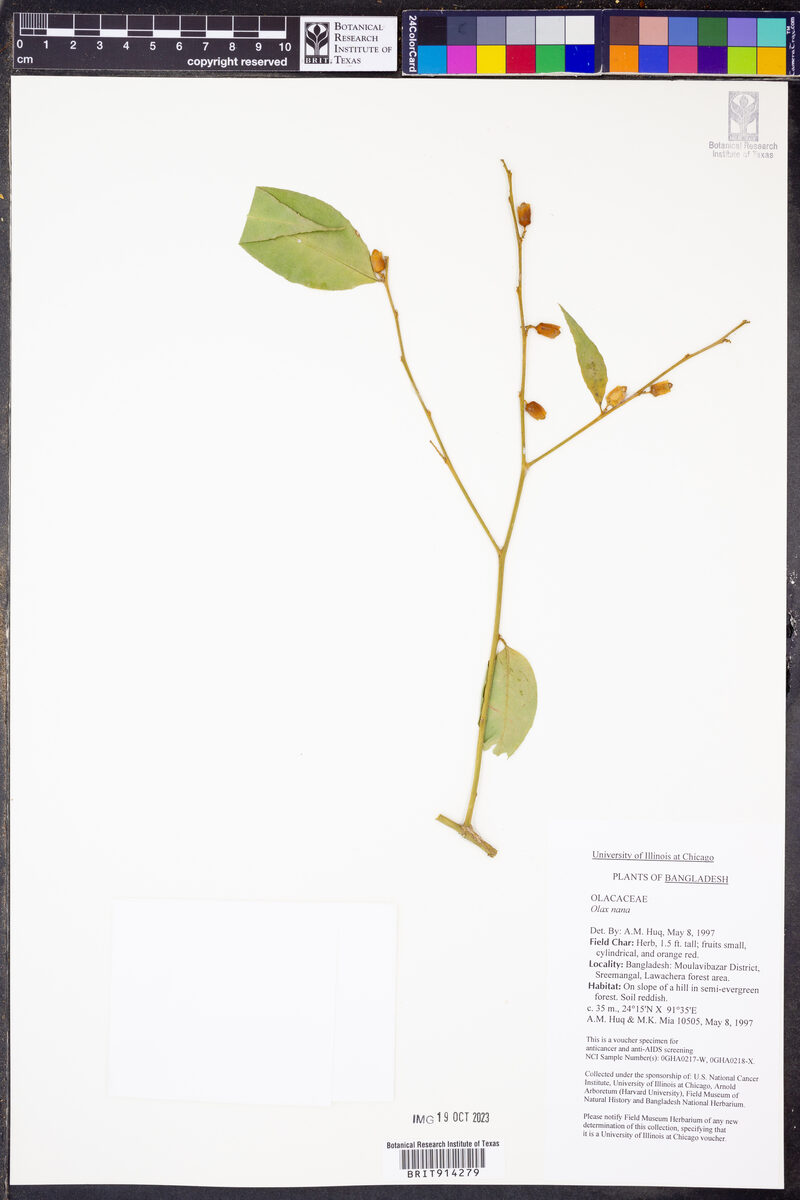
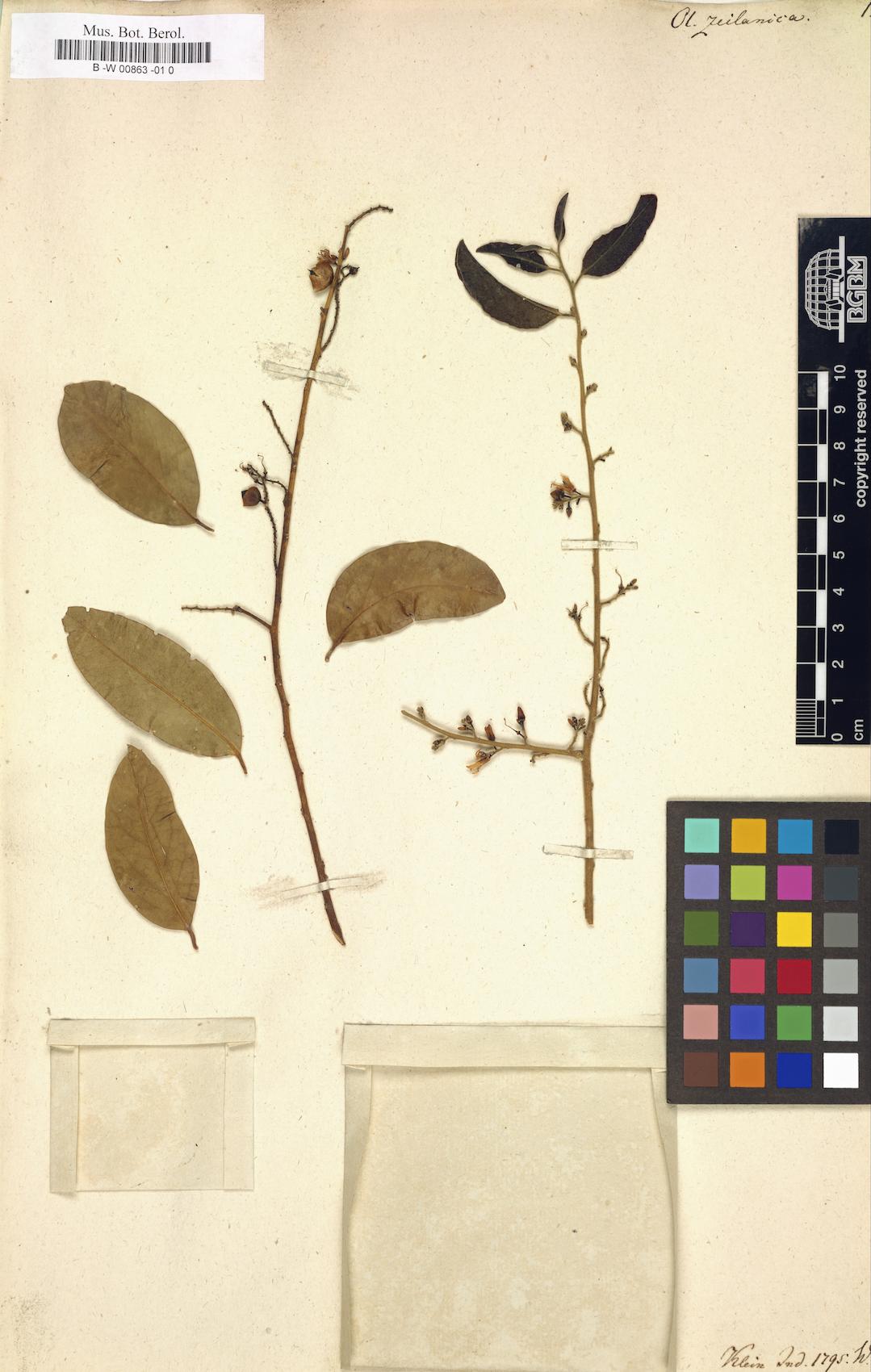
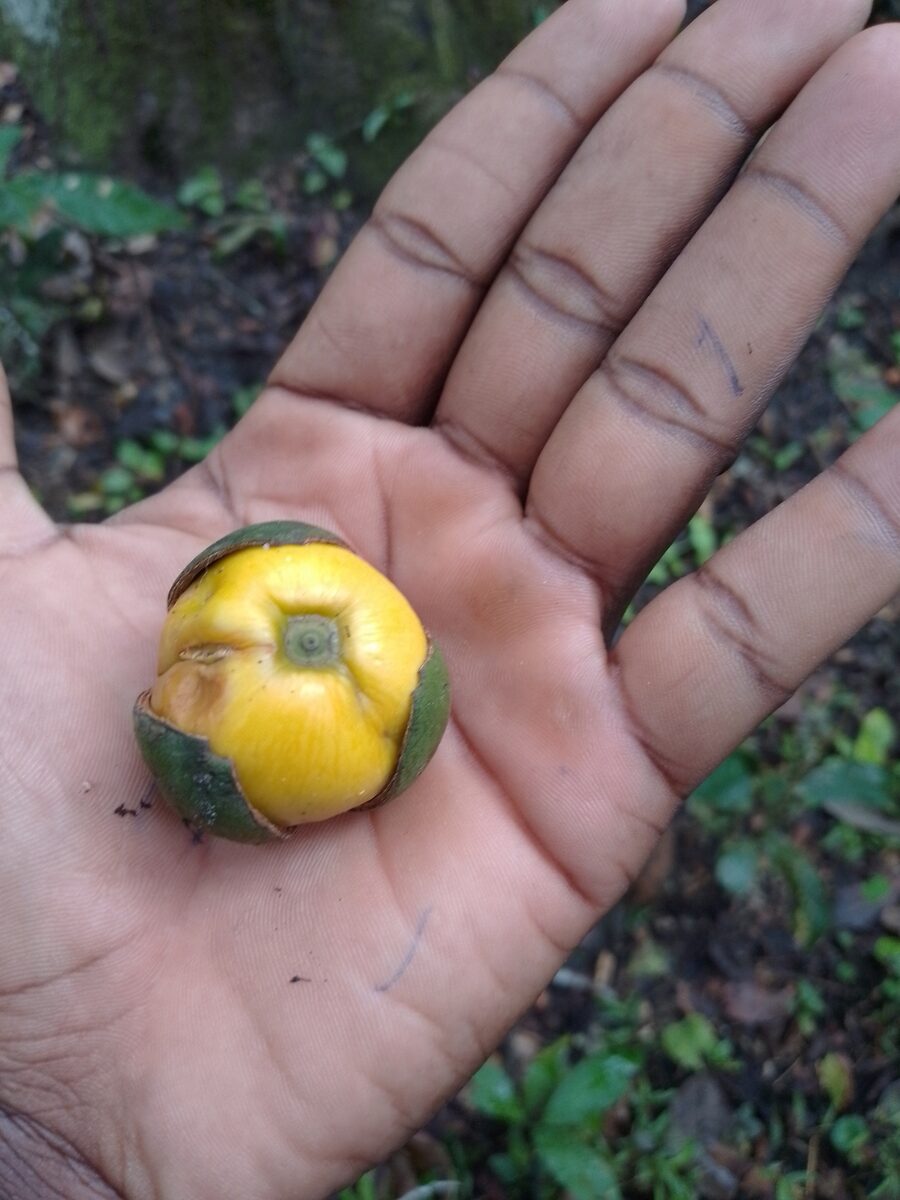
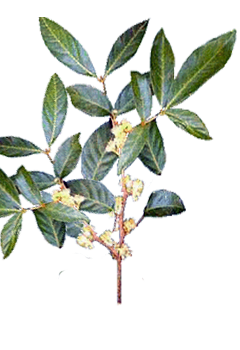
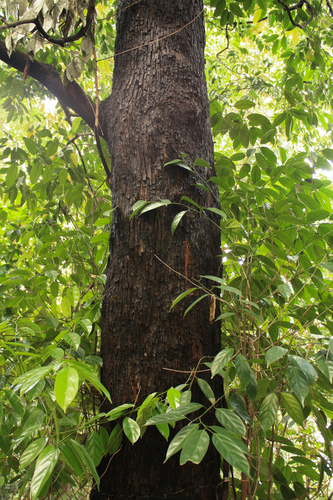
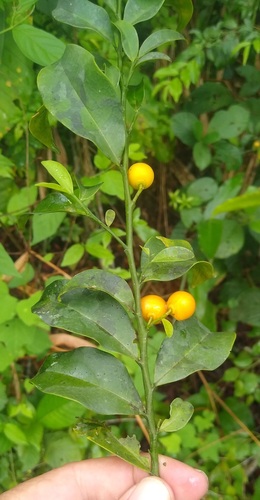
A small tree or spiny shrub about 3-4 m high. It has spines about 1 cm long which are thin and straight. The leaves and branches are without hairs. The leaves are alternate, oval and about 2-4 cm long. The leaves are bluish green. The leaves fold upwards along the midrib. The tip of the leaf can be round or with a notch. The flowers are greenish white, have a smell and are less than 1 cm long. They occur in small branched clusters with a common stalk. The fruit are yellow, egg shaped and 2 cm across. They are thin skinned. They are sour. There is one large seed.
Edible Uses
Ripe fruit are eaten raw, pickled, dried, or made into jam and jellies, and can be fermented to make beer. The seeds or nuts are powdered and mixed with sago to make bread, and oil is extracted from the seeds. Young leaves are eaten after cooking. The root bark is used for tea.
Traditional Uses
The ripe fruit are eaten raw or pickled. They are used for jam and jellies. They can be dried. They are also used to make beer. The seeds or nuts are powdered and mixed with sago to make bread. Oil is also extracted from the seeds. The kernels of the nuts are recorded as both edible and purgative. They should only be eaten in small numbers. CAUTION The leaves have been reported as poisonous. They contain a cyanogenic glycoside. Young leaves are eaten after cooking.
Medicinal Uses
Fatty acids and glycerides are abundantly available in X.americana. Further classes of chemical compounds found in X. americana includes alkaloids, anthraquinones, glycosides, flavonoids, glycosides, phenolic compounds, phlobatannins, quinones, saponins, tannins, and terpenoids. Leaves collected from X. americana in southern Niger were found to be rich in calcium, iron, magnesium, and manganese content but were also noted to be lacking protein. Linolenate was also detected in the leaves, along with high levels of palmitate. Vitamin C content varies according to maturity of the plant, with the green fruits having 74% more than the mature, yellow fruits. The seed of the fruit contains cyanide derivatives and high levels of riproximin were noted in the fruit kernels. The seed oil was observed to contain the compounds ximenic, linolenic, linoleic, and stearic acids along with smaller amounts of lumequic, ximenynic, arachidonic, erucic, and nervonic acids and a variety of other compounds. The volatile oil of the leaves were observed to be consisted of benzaldehyde (63.5%), hydroxybenzyl cyanide (13%) and isophorone (3.5%), the cyanide content contributes to the aforementioned almond-like smell of leaves. Methods of using X. americana in traditional medicine include infusion, decoction, syrup, cataplasm, or as a tincture.
Known Hazards
Leaves containing the cyanogenic glycoside sambunigrin at 100 ppm were noted to be fatal for the freshwater snail, Bulinus globus, the species responsible for causing the disease schistosomiasis. Researchers noted that X. americana extract had no deaths when the toxic effects of the extract of the plant for 14 days, however, after an oral administration of 2000 mg.kg−1, forced breathing and analgesia in the animals were noted. Another study was conducted on the effects of the liquid extracts of the root, stem and leaves of X. americana on the blood and the liver, and damage to the cells of the liver were noted.
Distribution
A tropical plant. It grows in the lowlands. They occur along the back of coasts and seashores from Luzon to Mindanao and Palawan in the Philippines. It occurs in the vegetation near the coastline. The plant occurs in all tropical countries. It is found in savannah in Africa. It is drought resistant. In China it grows in sandy areas behind beaches along the sea shore and mostly below 100 m in S China. In Bolivia it grows up to 900 m altitude. In Kenya it grows between 1,700-1,800 m altitude. In Ethiopia it grows between 500-2,450 m above sea level. It grows in the Sahel. It grows in areas with an annual rainfall between 100-1,270 mm. It can grow in arid places.
Where It Grows
Africa, American Samoa, Andaman Is., Angola, Antilles, Argentina, Asia, Australia, Bahamas, Bangladesh, Belize, Benin, Bolivia, Botswana, Brazil, Burkina Faso, Burundi, Cameroon, Cape Verde, Central Africa, Central African Republic, CAR, Central America, Chad, Chile, China, Colombia, Congo DR, Congo R, Cook Islands, Costa Rica, Côte d'Ivoire, Cuba, Djibouti, Dominica, Dominican Republic, East Africa, East Timor, Ecuador, El Salvador, Eritrea, Eswatini, Ethiopia, Fiji, French Guiana, Gabon, Gambia, Ghana, Guadeloupe, Guam, Guatemala, Guianas, Guinea, Guinée, Guinea-Bissau, Guyana, Haiti, Honduras, India, Indonesia, Ivory Coast, Jamaica, Kenya, Liberia, Malawi, Malaysia, Maldives, Mali, Martinique, Mexico, Mozambique, Myanmar, Namibia, New Caledonia, New Zealand, Nicaragua, Niger, Nigeria, Niue, North America, Pacific, Panama, Papua New Guinea, PNG, Paraguay, Peru, Philippines, Puerto Rico, Rotuma, Rwanda, Sahel, Samoa, Sao Tome and Principe, SE Asia, Senegal, Seychelles, Sierra Leone, Solomon Islands, Somalia, South Africa, Southern Africa, South America, South Sudan, Sri Lanka, Sudan, Suriname, Swaziland, Tanzania, Thailand, Timor-Leste, Togo, Tonga, Torres Strait, Trinidad-Tobago, Tuvalu, Uganda, USA, Uruguay, Vanuatu, Venezuela, Vietnam, West Africa, West Indies, Zambia, Zimbabwe,
Cultivation
Plants normally grow wild. The plant often has roots which feed off other plants. Plants can be grown from seed. These can be grown in pots then transplanted or can be sown where they are to grow. As seed do not store well, they should be sown fresh.
Propagation
Seed - sown fresh it usually germinates well.
Other Uses
The seed contains a non-drying oil suitable for soap manufacture and lubrication. The fruit yields up to 67.4% oil from the seed that has been used as a body and hair oil. The oil is not edible, and the presence of a rubber-like substance excludes it from many industrial uses The heartwood contains an essential oil that is used for fumigation. The flowers have an essential oil that could be a good substitute for orange blossom. The leaves, at a concentration of 100 ppm, cause 100% mortality of Bulinus globus, the vector in the transmission of schistosomiasis. Both bark and the crushed fruit rind are used to keep off fleas. The bark contains approximately 17% tannin. Both it and the roots are used in tanning. The bark is used to strengthen indigo dyes. The heartwood is yellow-red to brown-orange, fine textured and regular. The wood is very hard, heavy and durable. When large enough it is used for tool handles. It is sometimes used as a substitute for sandalwood. Firewood and charcoal are the chief uses of the wood, because the trunk is usually too small to make it useful for timber. Plants can be grown as a hedge.
Production
Plants are slow growing. They can be pruned as a hedge or cut back and allowed to regrow. Plants fruit is 3-4 years. Fruit mature in 50-60 days. Fruit are harvested by climbing the plucking the fruit.
Other Information
A minor wild edible fruit (and nut) in several coastal areas of Papua New Guinea. It is commonly used in West Africa. Fruit tend to be available in the drier more hungry season. Fruit are enjoyed by children. Fruit are sold in local markets.
Notes
The seed contains a non drying oil useful in soaps. There are about 8-10 Ximenia species. They are tropical.
Synonyms
Also Known As
Agara, Ailama, Albarillo, Alimo, Ameixa, Aurasech, Bedara laut, Blue sourplum, Boure, Chiru-illantai, Ciruelillo, Citronier-de-mer, Elamai, En boo, Enkoy, Enkoye, Enseka, False sandalwood, Fransman-mope, Helelea, Huddaa, Hudha, Inginkada, Kadaranji, Kandanakkare, Kinyat, Kitula, Konda nakkera, Kondanakkera, Kunyotwo, Lalilimo, Leenga, Limoncillo, Limon-di-sancho, Limon-do-mato, Mampa, Messenguele, Meyo, Mhingi, Misimisi, Moli tai, Mopubono, Moretologa, Motsadi, Msantu, Mtrio, Mtumbatumba, Mtumbitumbi, Myundakula, Mtundwa, Mtundwahavi, Mtundwi, Mukla, Mukunduthi, Mulaho, Mullancho, Mutengeni, Mu-Tuura, Mutula, Nagaragandaman, Nagarigidde, Naggiri, Nakkare, Nakkera, Nhundu, Nhundwa, Ntonke, O-suca-s, Olelemo, Olemo, Olemu, Olimo, Oora nechra, Oshikukulu, Pangungan, Pata, Pidzi, Pinle-kayin, Pinle-zi, Plum hutan, Prunier-de-mer, Putit, Quiltic yocsa'a, Rukam laut, Seaside plum, Sengigta, Siruyilandai, Small sourplum, So munoru, Sour plum, Tallow-wood, Tchabuli, Tcheme, Tjeme, Tsada, Tufissa, Tumbecrinhaque, Turino, Udongul, Ulaemo manan dago, Umbuvah, Undemna-aguidig, Unko, Uranechra, Urgi, Wiri, Wulaeng
References (185)
- Abbiw, D.K., 1990, Useful Plants of Ghana. West African uses of wild and cultivated plants. Intermediate Technology Publications and the Royal Botanic Gardens, Kew. p 49
- Acipa, A. et al, 2013, Nutritional Profile of some Selected Food Plants of Otwal and Ngai Counties, Oyam District, Northern Uganda. African Journal or Food, Agriculture, Nutrition and Development. 13(2)
- Addis, G., et al, 2013, The Role of Wild and Semi-wild Edible Plants in Household Food Sovereignty in Hamer and Konso Communities, South Ethiopia. Ethnobotany Research & Applications. 11:251-271
- Agea, J. G., et al 2011, Wild and Semi-wild Food Plants of Bunyoro-Kitara Kingdom of Uganda: etc. Environmental Research Journal 5(2) 74-86
- Alemneh, D., 2020, Ethnobotany of wild edible plants in Yilmana Densa and Quarit Districts of West Gojjam Zone, Amhara Region, Ethiopia. Ethnobotany Research & Applications. 20:47
Show all 185 references Hide references
- Altschul, S.V.R., 1973, Drugs and Foods from Little-known Plants. Notes in Harvard University Herbaria. Harvard Univ. Press. Massachusetts. no. 796
- Ambasta, S.P. (Ed.), 2000, The Useful Plants of India. CSIR India. p 693
- Ambe, G., 2001, Les fruits sauvages comestibles des savanes guinéennes de Côte-d’Ivoire : état de la connaissance par une population locale, les Malinké. Biotechnol. Agron. Soc. Environ. 5(1), 43-48
- Arora, K., Indigenous Forest Management in the Andaman and Nicobar Islands, India. (The Jarwars)
- Asfaw, Z. and Tadesse, M., 2001, Prospects for Sustainable Use and Development of Wild Food Plants in Ethiopia. Economic Botany, Vol. 55, No. 1, pp. 47-62
- Ashagre, M., et al, 2016, Ethnobotanical study of wild edible plants in Burji District, Segan Area Zone of Southern Nations, Nationalities and Peoples Region (SNNPR), Ethiopia. Journal of Ethnobiology and Ethnomedicine (2016) 12:32
- Assefa, A. & Abebe, T., 2010, Wild Edible Trees and Shrubs in the Semi-arid Lowlands of Southern Ethiopia. Journal of Science and Development 1 (1) 2010
- Assogbadjo, A. E. et al, 2013, Specific Richness and Cultural Importance of Wild Edible Trees in Benin. Acta Hort. 979, ISHS 2013
- Atato, A., et al, 2010, Diversity of Edible Wild Fruit Tree Species of Togo. Global Science Books.
- Atato, A.,et al, 2011, Edible Wild Fruit Highly Consumed during Food Shortage Period in Togo: State of Knowledge and Conservation Status. Journal of Life Sciences 5 (2011) 1046-1057
- Awas, T., 1997, A Study on the Ecology and Ethnobotany of Non-cultivated Food Plants and Wild Relatives of Cultivated crops in Gambella Region, Southwestern Ethiopia. Addis Ababa University. p 58
- Awodoyin, R.O., Olubode, O.S., Ogbu, J.U., Balogun, R.B., Nwawuisi, J.U. and Orji, K.O., 2015, Indigenous Fruit Trees of Tropical Africa: Status, Opportunity for Development and Biodiversity Management. Agricultural Sciences, 6, 31-41
- Bahru, T., et al, 2013, Wild Edible Plants: Sustainable Use and Management by Indigenous Communities in and the Buffer Area of Awah National Park, Ethiopia. Ethiop. J. Sci., 36(2): 93-108
- Balemie, K., & Kebebew, F., 2006, Ethnobotanical study of wild edible plants in Derashe and Kucha Districts, South Ethiopia. Journal of Ethnobiology and Ethnomedicine. 2:53
- Ballal, M. E., et al, 2014, Ethno-botany of Natural Forests of Nuba Mountains, South Kordofan State, Sudan. Journal of Forest Poducts & Industries. 3(1):13-19
- Beche D, Gebeyehu G, Feyisa K., 2016, Indigenous Utilization and Management of Useful Plants in and around Awash National Park, Ethiopia. J Plant Biol Soil Health. 3(1):12.
- Bekele-Tesemma A., Birnie, A., & Tengnas, B., 1993, Useful Trees and Shrubs for Ethiopia. Regional Soil Conservation Unit. Technical Handbook No 5. p 450
- Belem, B., et al, 2007, Use of Non Wood Forest Products by local people bordering the “Parc National Kaboré Tambi”, Burkina Faso. The Journal of Transdisciplinary Environmental Studies vol. 6, no. 1 p 9
- Belem, M., et al, 2017, Strategy of Conservation and Protection of Wild Edible Plants Diversity in Burkina Faso. ANADOLU 27 (2) 2017, 82- 90
- Berihun, T. & Molla, E., 2017, Study on the Diversity and Use of Wild Edible Plants in Bullen District Northwest Ethiopia. Hindawi Journal of Botany. Article ID 8383468
- Blake, S. F., Native Names and Uses of some Plants of Eastern Guatemala and Honduras. Contributions from the National Herbarium. p 100
- Bodkin, F., 1991, Encyclopedia Botanica. Cornstalk publishing, p 1030
- Bonou, A., et al, 2013, Valeur economique des Produits Forestiers Non Ligneux (PFNL) au Benin. Editions Universitaires Europeennes p 88
- Borrell, O.W., 1989, An Annotated Checklist of the Flora of Kairiru Island, New Guinea. Marcellin College, Victoria Australia. p 116, 209
- Bortolotto, I. M., et al, 2018, Lista preliminar das plantas alimenticias nativas de Mato Grosso do Sul, Brasil. Iheringia, Serie Botanica, Porto Alegre, 73 (supl.):101-116
- Brown, W.H., 1920, Wild Food Plants of the Philippines. Bureau of Forestry Bulletin No. 21 Manila. p 52
- Burkill, H. M., 1985, The useful plants of west tropical Africa, Vol. 4. Kew.
- Burkill, I.H., 1966, A Dictionary of the Economic Products of the Malay Peninsula. Ministry of Agriculture and Cooperatives, Kuala Lumpur, Malaysia. Vol 2 (I-Z) p 2314
- Carretero, A. L., 2005, Useful Plants and traditional knowledge in the Tucumano-Boliviano Forest. M. Sc. Thesis Institute of Biological Science University of Aarhus, Denmark p 52
- Catarino, L., et al, 2016, Ecological data in support of an analysis of Guinea-Bissau's medicinal flora. Data in Brief 7 (2016):1078-1097
- Chapman, J. D. & Chapman, H. M., 2001, The Forest Flora of Taraba and Andamawa States, Nigeria. WWF & University of Canterbury. p 193
- Cheikhyoussef, A & Embashu, W., 2013, Ethnobotanical knowledge on Indigenous fruits in Ohangwena and Oshito regions in Northern Namibia. Journal of Ethnobiology and Ethnomedicine 9:34
- Codjia, J. T. C., et al, 2003, Diversity and local valorisation of vegetal edible products in Benin. Cahiers Agricultures 12:1-12
- Cole, D. et al, 2014, Indigenous Plant Products in Namibia. Venture Publications Windhoek, Namibia. p 70
- Cooper, W. and Cooper, W., 2004, Fruits of the Australian Tropical Rainforest. Nokomis Editions, Victoria, Australia. p 376
- Cowie, I, 2006, A Survey of Flora and vegetation of the proposed Jaco-Tutuala-Lore National Park. Timor-Lests (East Timor) www.territorystories.nt/gov.au p 51
- Cribb, A.B. & J.W., 1976, Wild Food in Australia, Fontana. p 60
- Dale, I. R. and Greenway, P. J., 1961, Kenya Trees and Shrubs. Nairobi. p 345
- Dalziel, J. M., 1937, The Useful plants of west tropical Africa. Crown Agents for the Colonies London.
- Diarra, N. et al, 2016, Etude ethnobotanique des plantes alimentaires utilisées en période de soudure dans les régions Sud du Mali. Int. J. Biol. Chem. Sci. 10(1): 184-197
- Dobriyal, M. J. R. & Dobriyal, R., 2014, Non Wood Forest Produce an Option for Ethnic Food and Nutritional Security in India. Int. J. of Usuf. Mngt. 15(1):17-37
- Duarte, M. C., et al, 2022, Diversity of Useful Plants in Cabo Verde Islands: A Biogeographic and Conservation Perspective. Plants 2022, 11, 1313 p 14
- Duguma, H. T., 2020, Wild Edible Plant Nutritional Contribution and Consumer Perception in Ethiopia. Hindawi International Journal of Food Science Volume 2020, Article ID 2958623, 16 pages
- Exell, A.W. et al, (Ed), 1963, Flora Zambesiaca Vol 2 Part 1 Crown Agents, London. p 329
- Facciola, S., 1998, Cornucopia 2: a Source Book of Edible Plants. Kampong Publications, p 162
- Fell, D.G. & Stanton, D.J., 2015: The vegetation and flora of Mabuyag, Torres Strait, Queensland. Memoirs of the Queensland Museum – Culture 8(1):1-33. Brisbane. ISSN 1440-4788
- Flora of China @ efloras.org Volume 5
- Flora Somalia. http://plants.jstor.org
- Fowler, D. G., 2007, Zambian Plants: Their Vernacular Names and Uses. Kew. p 51
- Franklin, J., Keppel, G., & Whistler, W., 2008, The vegetation and flora of Lakeba, Nayau and Aiwa Islands, Central Lau Group, Fiji. Micronesica 40(1/2): 169–225, 2008
- Freiberger, C. E., et al, 1998, Nutrient content of the edible leaves of seven wild plants from Niger. Plant Foods for Human Nutrition 53: 57–69,
- French, B.R., 1986, Food Plants of Papua New Guinea, A Compendium. Asia Pacific Science Foundation p 291
- Gaisberger, H., et al, 2017, Spatially explicit multi-threat assessment of food tree species in Burkina Faso: A fine-scale approach. PLoS ONE 12 (9): e0184457
- Gallagher, D. E., 2010, Farming beyond the escarpment: Society, Environment, and Mobility in Precolonial Southeastern Burkina Faso. PhD University of Michigan.
- Gilbert, T., et al, 2017, Diversity and local transformation of indigenous edible fruits in sahelian domain of Cameroon. Journal of Animal & Plant Sciences Vol. 26 (2): 5289-5300
- Godfrey, J. et al, 2013, Harvesting, preparation and preservation of commonly consumed wild and semi-wild food plants in Bunyoro-Kitara Kingdom, Uganda. Int. J. Med. Arom. Plants. Vol.3 No.2 pp 262-282
- Goode, P., 1989, Edible Plants of Uganda. FAO p 30
- Goode, P., 1989, Edible Plants of Uganda. FAO p 37
- Goode, P., 1989, Edible Plants of Uganda. FAO p 40
- Grandtner, M. M., 2008, World Dictionary of Trees. Wood and Forest Science Department. Laval University, Quebec, Qc Canada. (Internet database http://www.wdt.qc.ca)
- Grandtner, M. M. & Chevrette, J., 2013, Dictionary of Trees, Volume 2: South America: Nomenclature, Taxonomy and Ecology. Academic Press p 706
- Grivetti, L. E., 1980, Agricultural development: present and potential role of edible wild plants. Part 2: Sub-Saharan Africa, Report to the Department of State Agency for International Development. p 43
- Gueye, M., et al, 2014, Wild Fruits Traditionally Gathered by the Malinke Ethnic Group in the Edge of Niokolo Koba Park (Senegal). American Journal of Plant Sciences 5, 1306-1317
- Habitat Management Profile – Saibai Island. Appendix C. Preliminary List of Useful Plants for Saibai Island. p 118
- Hanawa, Y., 2013, Wild edible plants used by Guiziga people of far north region of Cameroon. Int. J. Med. Arom. Plants. Vol 3 (2) : 136-143
- Harris, F. M. A. and Mohammed, S., 2003, Relying on Nature: Wild Foods in Northern Nigeria. Ambio Vol. 32 No. 1. p 25-30
- Hedrick, U.P., 1919, (Ed.), Sturtevant's edible plants of the world. p 689
- Henty, E.E., 1980, Harmful Plants in Papua New Guinea. Botany Bulletin No 12. Division Botany, Lae, Papua New Guinea. p 109,
- Ibrahim, H. A., et al, 2012, Ethnobotanical Survey of the Wild Edible Food Plants Consumption among Local Communities in Kano State, North-Western, Nigeria, International Journal of Science and Technology. Vol. 2. No. 10 p 716
- Ichikawa, M., 1980, The Utilization of Wild Food Plants by the Suiei Dorobo in Northern Kenya. J. Anthrop. Soc. Nippon. 88(1): 25-48
- INFOODS:FAO/INFOODS Databases
- Jardin, C., 1970, List of Foods Used In Africa, FAO Nutrition Information Document Series No 2.p 169
- Jimenez, Q. & Knapp, S., 2011, Olacaceae, Flora Mesoamericana Volume 2(1) Olacaceae.
- Johns, T., and Kokwaro, J.O., 1991, Food Plants of the Luo of Siayo District, Kenya. Economic Botany 45(1), pp 103-113
- John, L., & Stevenson, V., 1979, The Complete Book of Fruit. Angus & Robertson p 285
- Katende, A.B., Birnie, A & Tengnas B., 1995, Useful Trees and Shrubs for Uganda. Identification, Propagation, Flowering Plants of the Neotropics. Princeton. p 277
- Kebebew, M. & Leta, G., 2016, Wild Edible Plant Bio-diversity and Utilization System in Nech Sar National Park, Ethiopia. International Journal of Bio-resource and Stress Management 2016, 7(4):885-896
- Kew Plants of the World Online
- Kidane, B., et al, 2014, Ethnobotany of Wild and Semi-wild Edible Fruit Species used by Maale and Ari Ethnic Communities in South Ethiopia. Ethnobotany Research and Applications. Vol. 12, 1546-3465-12-455
- Lamien-Meda, A., et al, 2008, Polyphenol Content and Antioxidant Activity of Fourteen Wild Edible Fruits from Burkina Faso. Molecules 2008,13, 581-594
- Le Houerou, H. N., (Ed.), 1980, Browse in Africa. The current state of knowledge. International Livestock Centre for Africa, Ethiopia. p 163
- Little, E. L., et al, 1974, Trees of Puerto Rico and the Virgin Islands. USDA Handbook 449. Forestry Service. p 70
- Lopez-Diago, D. & Garcia, N., 2021, Wild edible fruits of Colombia. Biota ColomBiana 22 (2) p 46
- Lulekal, E., et al, 2011, Wild edible plants in Ethiopia: a review on their potential to combat food insecurity. Afrika Focus - Vol. 24, No 2. pp 71-121
- Maroyi, A., 2011, The Gathering and Consumption of Wild Edible Plants in Nhema Communal Area, Midlands Province, Zimbabwe. Ecology of Food and Nutrition 50:6, 506-525
- Maroyi, A. & Cheikhyoussef, A., 2017, Traditional knowledge of wild edible fruit in southern Africa: A comparative use patterns in Namibia and Zimbabwe. Indian Journal of Traditional Knowledge. 16(3): 385-392
- Martin, F. W., et al, 1987, Perennial Edible Fruits of the Tropics. USDA Handbook 642 p 44
- Mashile, S. P., et al, 2019, Indigenous fruit plants species of the Mapulana of Ehlanzeni district in Mpumalanga province, South Africa. South African Journal of Botany 122 (2019) 180–183
- Masters, T., 2021, Traditional food plants of the upper Aswa River catchment of northern Uganda—a cultural crossroads. Journal of Ethnobiology and Ethnomedicine (2021) 17:24
- Mengistu, F. & Hager, H., 2008, Wild Edible Fruit Species Cultural Domain, Informant Species Competence and Preference in Three Districts of Amhara Region, Ethiopia. Ethnobotany Research & Applications 6:487-502
- Miguel, E., et al, 1989, A checklist of the cultivated plants of Cuba. Kulturpflanze 37. 1989, 211-357
- Moksia, F., et al, 2019, Diversity and Socio-Economic Value of Wild Edible Plants in the Mounts Mandara Region, Cameroon. International Journal of Sciences. Vol. 8:10
- Motlhanka, D. M. T., et al, 2008, Edible Indigenous Fruit Plants of Eastern Botswana. International Journal of Poultry Science. 7(5): 457-460
- Mpasiwakomu, R. A., 2017, The Diversity and Utilization of Wild Edible and Medicinal Plant Species found in Uvinza Miombo Woodlands, Tanzania. M. Sc. thesis University of Tanzania.
- Msuya, T. S., et al, 2010, Availability, Preference and Consumption of Indigenous Foods in the Eastern Arc Mountains, Tanzania, Ecology of Food and Nutrition, 49:3, 208-227
- Mua Bioversity Profile, 2013, Profile for Management of the Habitats and Related Ecological and Cultural Resources of Mua Island. Torres Strait Regional Authority Land & Sea Management Unit. p 152
- Mutie, F. G., 2020, Conservation of Wild Food Plants and Their Potential for Combatting Food Insecurity in Kenya as Exemplified by the Drylands of Kitui County. Plants 2020, 9, 1017
- Neelo, J., et al, 2015, Ethnobotanical Survey of Woody Plants in Shorobe and Xobe Villages, Northwest Region of Botswana. Ethnobotany Research & Applications 14:367-379
- Neudeck, L. et al, 2012, The Contribution of Edible Wild Plants to Food Security, Dietary Diversity and Income of Households in Shorobe Village, Northern Botswana. Ethnobotany Research & Applications 10:449-462
- Nkeoua, G. & Boundzanga, G. C., 1999, Donnees sur les produits forestieres non ligneux en Republique du Congo. FAO. p 39
- Nunes, E. N., et al, 2018, Local botanical knowledge of native food plants in the semiarid region of Brazil. Journal of Ethnobiology and Ethnomedicine (2018) 14:49
- Nyadanu, D., et al, 2015, Agro-biodiversity and challenges of on-farm conservation: the case of plant genetic resources of neglected and underutilized crop species in Ghana. Genet. Resourc. Crop Evol. 62(7):
- Ojelel, S. & Kakudidi, E. K., 2015, Wild edible plant species utilized by a subsistence farming community in the Obalanga sub-county, Amuria district, Uganda. Journal of Ethnobiology and Ethnomedicine. 11:7
- Ojelel, S., et al, 2019, Wild edible plants used by communities in and around selected forest reserves of Teso-Karamoja region, Uganda. Journal of Ethnobiology and Ethnomedicine (2019) 15:3
- Oryema, C., et al, 2013, Edible wild fruit species of Gulu District, Uganda. International Journal of Biology and Biological Sciences Vol 2(4) pp 068-082
- Palmieri, V. S., et al, 2018, Aproximaciones etnobotánicas de las especies y prácticas de frutos nativos comestibles de la Actualidad. Aportes para la interpretación del pasado prehispánico de cerro colorado (Córdoba, Argentina). Bol. Soc. Argent. Bot. 53 (1): 115-133
- Palmeiri, V. S., & Geisa, M. G., 2019, Las plantas comestibles empleadas por las comunidades comechingonas de San Marcos Sierras (Córdoba, Argentina). Primeras aproximaciones. Bol. Soc. Argent. Bot. 54: 295-309.
- Palmieri, V. S., et al, 2022, Wild edible plants of the Central Mountains in Argentina. Comparing subregions to understand the complexity of local botanical knowledge. Rodriguésia 73: e01092021. 2022
- Piedra-Malagón, E. M., et al, 2022, Edible native plants of the Gulf of Mexico Province. Biodiversity Data Journal 10: e80565 p 26
- Polini, G., et al, Useful and edible plants of Paraguay Region of Chaco. p 138
- Pradhan, R., et al, 2020, Potential Wild Edible Plants and its Significance in Livelihood of Indigenous People of Male Mahadeshwara Hills, Karnataka. Economic Affairs Vol. 64, No. 4 pp. 01-14
- Roa, J. A. G. & Boada, D. S. G., 2018, Fundación para el Fortalecimiento de la Fruticultura y Plantas Alimenticias no Convencionales en Colombia.
- Roy, S. D., et al, 2009, Mangroves of Andaman and Nicobar Islands. ICAR p 49
- Ruffo, C. K., Birnie, A. & Tengnas, B., 2002, Edible Wild Plants of Tanzania. RELMA p 726
- Ruiters-Welcome, A. K., 2019, Food plants of southern Africa. Ph.D. thesis. Univ. of Johannesburg p 82
- Schmidt, E., Lotter, M., & McCleland, W., 2007, Trees and shrubs of Mpumalanga and Kruger National Park. Jacana Media p 102
- Selvam, V., 2007, Trees and shrubs of the Maldives. RAP Publication No. 2007/12 p 172
- Seyoum, Y., et al, 2015, Edible Wild Fruit Trees and Shrubs and Their Socioeconomic Significance in Central Ethiopia. Ethnobotany Research & Applications. 14:183-197
- Sp. pl. 2:1193. 1753
- Sukarya, D. G., (Ed.) 2013, 3,500 Plant Species of the Botanic Gardens of Indonesia. LIPI p 733
- Swaziland's Flora Database http://www.sntc.org.sz/flora
- Thaman, R.R., 1976, The Tongan Agricultural System, University of the South Pacific, Suva, Fiji. p 430
- USDA, ARS, National Genetic Resources Program. Germplasm Resources Information Network - (GRIN). [Online Database] National Germplasm Resources Laboratory, Beltsville, Maryland. Available: www.ars-grin.gov/cgi-bin/npgs/html/econ.pl (10 April 2000)
- van Wyk, Be, & Gericke, N., 2007, People's plants. A Guide to Useful Plants of Southern Africa. Briza. p 30, 60
- Vasquez, Roberto Ch. & Coimbra, German S., 1996, Frutas Silvestres Comestibles de Santa Cruz. p 150
- Walter, A. & Sam C., 2002, Fruits of Oceania. ACIAR Monograph No. 85. Canberra. p 282
- Wickens, G.E., 1995, Edible Nuts. FAO Non-wood forest products. FAO, Rome. p146
- Williams, K.A.W., 1999, Native Plants of Queensland Volume 4. Keith A.W. Williams North Ipswich, Australia. p 386
- Williamson, J., 2005, Useful Plants of Malawi. 3rd. Edition. Mdadzi Book Trust. p 268
- Yuncker, T.G., 1959, Plants of Tonga, Bernice P. Bishop Museum, Hawaii, Bulletin 220. p 105288p
- Maydell, H. von, 1990 Trees and shrubs of the Sahel: their characteristics and uses. Margraf. p 399
- Mbuya, L.P., Msanga, H.P., Ruffo, C.K., Birnie, A & Tengnas, B., 1994, Useful Trees and Shrubs for Tanzania. Regional Soil Conservation Unit. Technical Handbook No 6. p 514
- Menninger, E.A., 1977, Edible Nuts of the World. Horticultural Books. Florida p 10
- Molla, A., Ethiopian Plant Names. http://www.ethiopic.com/aplants.htm
- Monsalud, M.R., Tongacan, A.L., Lopez, F.R., & Lagrimas, M.Q., 1966, Edible Wild Plants in Philippine Forests. Philippine Journal of Science. p 512
- MORTIMORE,
- Mutie, F. M., et al, 2023, Important Medicinal and Food Taxa (Orders and Families) in Kenya, Based on Three Quantitative Approaches. Plants 2023, 12, 1145
- Palgrave, K.C., 1996, Trees of Southern Africa. Struik Publishers. p 158
- Palmer, E and Pitman, N., 1972, Trees of Southern Africa. Vol. 1. A.A. Balkema, Cape Town p 563
- Parham, H. B. R, 1940, Supplement to the Journal of the Polynesian Society No. 16. Fiji Plants: Their Name and Uses. (As Ximenia elliptica)
- Peekel, P.G., 1984, (Translation E.E.Henty), Flora of the Bismarck Archipelago for Naturalists, Division of Botany, Lae, PNG. p 159, 161
- Peters, C. R., O'Brien, E. M., and Drummond, R.B., 1992, Edible Wild plants of Sub-saharan Africa. Kew. p 156
- Pickering, H., & Roe, E., 2009, Wild Flowers of the Victoria Falls Area. Helen Pickering, London. p 86
- Plants of Haiti Smithsonian Institute http://botany.si.edu/antilles/West Indies
- Rao, M. L. S., et al, 2014, Indigenous Plant Foods which are commonly consumed by the tribal communities in Dumbriguda Area of Visakhapatnam District, Andhra Pradesh, India. Biolife. Vol 2, Issue 3
- RILEY & BROKENSHA,
- Roodt, V., 1998, Trees & Shrubs of the Okavango Delta. Medicinal Uses and Nutritional value. The Shell Field Guide Series: Part 1. Shell Botswana. p 63
- Royal Botanic Gardens, Kew (1999). Survey of Economic Plants for Arid and Semi-Arid Lands (SEPASAL) database. Published on the Internet; http://www.rbgkew.org.uk/ceb/sepasal/internet [Accessed 4th May 2011]
- Scarpa, G. F., 2009, Wild food plants used by the indigenous peoples of South American Gran Chaco: A general synopsis and intercultural comparison. Journal of Applied Botany and Food Quality 83:90-101
- SHORTT,
- Shumsky, S., et al, 2014, Institutional factors affecting wild edible plant (WEP) harvest and consumption in semi-arid Kenya. Land Use Policy 38(2014) 48-69
- Singh, H.B., Arora R.K.,1978, Wild edible Plants of India. Indian Council of Agricultural Research, New Delhi. p 83
- Smith, N., Mori, S.A., et al, 2004, Flowering Plants of the Neotropics. Princeton. p 277
- Sp. pl. 2:1193. 1753
- Sujanapal, P., & Sankaran, K. V., 2016, Common Plants of Maldives. FAO & Kerala FRI, p 283
- Swaziland's Flora Database http://www.sntc.org.sz/flora
- Tebkew, M. et al, 2014, Underutilized wild edible plants in the Chilga District, northwestern Ethiopia: focus on wild woody plants. Agriculture & Food Security 3:12
- Tebkew, M., et al, 2018, Uses of wild edible plants in Quara district, northwest Ethiopia: implication for forest management. Agriculture and Food Security (2018) 7:12
- Teklehaymanot, T., 2017, An ethnobotanical survey of medicinal and edible plants of Yalo Woreda in Afar regional state, Ethiopia. Journal of Ethnobiology and Ethnomedicine 13:40
- Termote, C., et al, 2014, Assessing the potential of wild foods to reduce the cost of a nutritionally adequate diet: An example from eastern Baringo District, Kenya. Food and Nutrition Bulletin, vol. 35, no. 4
- Thaman, R.R., 1976, The Tongan Agricultural System, University of the South Pacific, Suva, Fiji. p 430
- Thaman, R. R, 2016, The flora of Tuvalu. Atoll Research Bulletin No. 611. Smithsonian Institute p 103
- Toledo, B. A., et al, 2007, Knowledge and Use of Edible and Medicinal Plants in two Populations from the Chaco Forest, Cordoba Province, Argentina. Journal of Ethnobiology 27(2):218-232
- USDA, ARS, National Genetic Resources Program. Germplasm Resources Information Network - (GRIN). [Online Database] National Germplasm Resources Laboratory, Beltsville, Maryland. Available: www.ars-grin.gov/cgi-bin/npgs/html/econ.pl (10 April 2000)
- Vanderjagt, F. J., et al, 2000, The trypsin inhibitor content of 61 wild edible plant foods of Niger. Plant Foods for Human Nutrition 55: 335–346, 2000.
- van Wyk, Be, & Gericke, N., 2007, People's plants. A Guide to Useful Plants of Southern Africa. Briza. p 30, 60
- van Wyk, B-E., 2011, The potential of South African plants in the development of new food and beverage products. South African Journal of Botany 77 (2011) 857–868
- Vasquez, Roberto Ch. & Coimbra, German S., 1996, Frutas Silvestres Comestibles de Santa Cruz. p 150
- Walter, A. & Sam C., 2002, Fruits of Oceania. ACIAR Monograph No. 85. Canberra. p 282
- Welcome, A. K. & Van Wyk, B.-E., 2019, An inventory and analysis of the food plants of southern Africa. South African Journal of Botany 122 (2019) 136–179
- Wickens, G.E., 1995, Edible Nuts. FAO Non-wood forest products. FAO, Rome. p146
- Wiersema, J. H. & Leon, B., 2013, World Economic Plants. A Standard Reference CRC Press. 2nd Ed. p 730
- Williams, K.A.W., 1999, Native Plants of Queensland Volume 4. Keith A.W. Williams North Ipswich, Australia. p 386
- Williamson, J., 2005, Useful Plants of Malawi. 3rd. Edition. Mdadzi Book Trust. p 268
- World Checklist of Useful Plant Species 2020. Royal Botanic Gardens, Kew
- www.efloras.org Flora of China
- www.worldagroforestrycentre.org/treedb/
- Yimer, A., et al, 2021, Ethnobotanical study of wild edible plants used by Meinit Ethnic Community at Bench-Maji Zone, Southwest Ethiopia. Research Square. p 6
- Yuncker, T.G., 1959, Plants of Tonga, Bernice P. Bishop Museum, Hawaii, Bulletin 220. p 105
- Zika, A., et al, 2015, Traditional plant use in Burkina Faso (West Africa): a national-scale analysis with focus on traditional medicine. Journal of Ethnobiology and Ethnomedicine 2015, 11:9