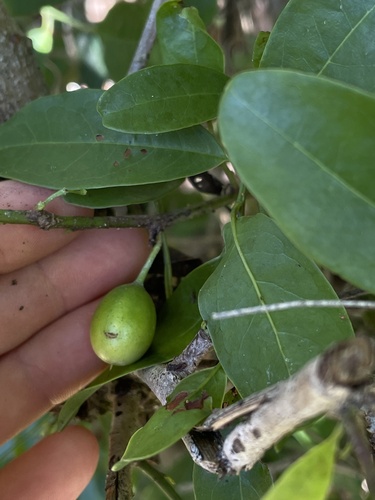
Ximenia caffra
Sonder
Large sourplum, Blue sour plum
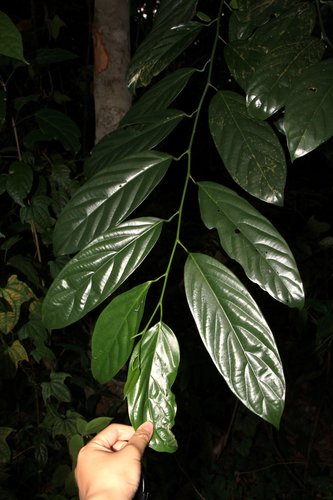
iNaturalist· cc-by-nc
(c) Moira FitzPatrick, some rights reserved (CC BY-NC)
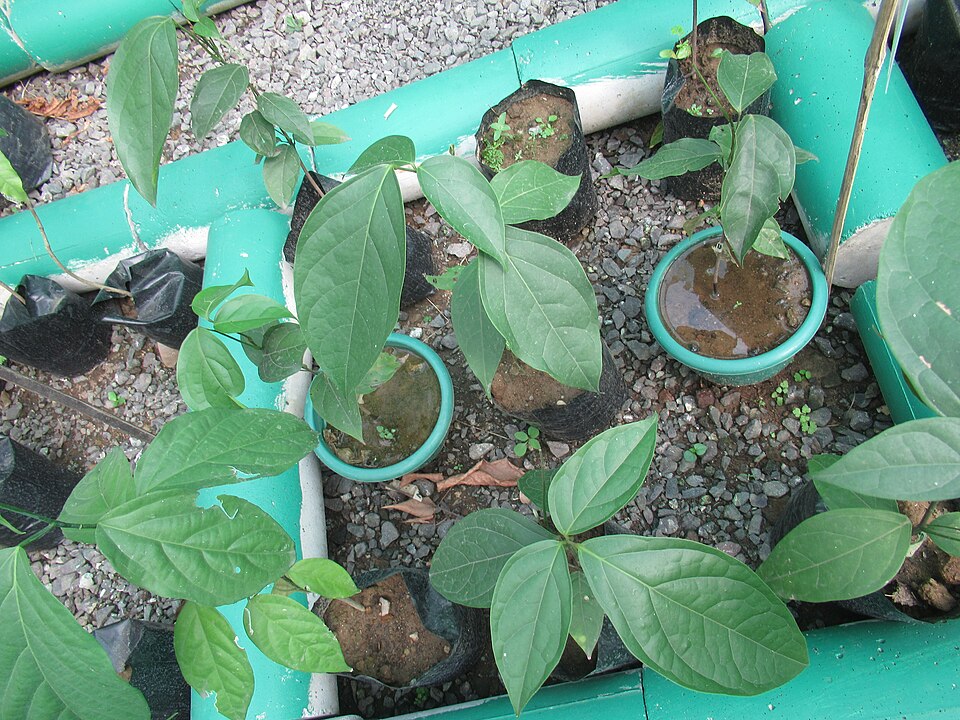
iNaturalist· cc-by-nc
(c) Khama III Memorial Museum in Serowe, some rights reserved (CC BY-NC)
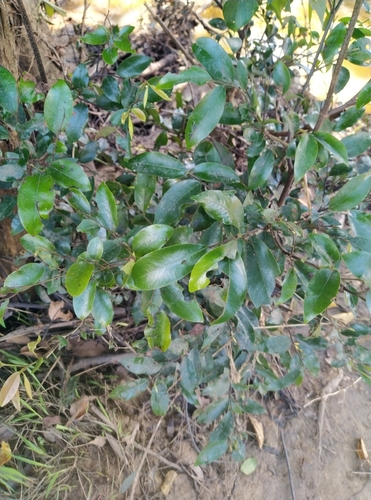
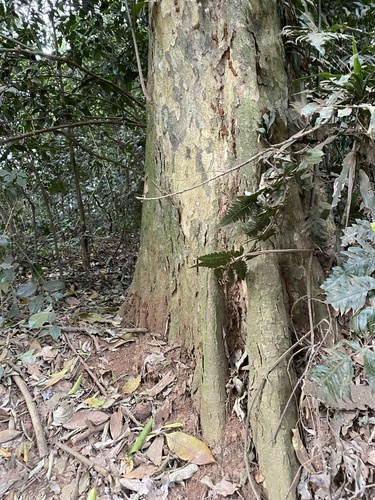
iNaturalist· cc-by-nc
(c) Khama III Memorial Museum in Serowe, some rights reserved (CC BY-NC)
Description
A shrub or small tree It grows to 8 m tall. It has many spines. Young stems can be very hairy. The bark is grey or brown. It is smooth at first but then becomes rough and cracked along its length. The young twigs are covered with fine red hairs. The leaves are simple and alternate. They vary in shape. They are 2.5-6 cm long and 2 cm wide. They are densely hairy at first. They become shiny green and smooth with age. The leaves narrow to the base and are on short leaf stalks. The lower leaf surface is more pale than the upper surface. The leaves tend to fold inwards. The flowers develop as long green buds in the axils of the leaves. These open to 4 petalled green, hairy flowers. The flowers are either on their own or in a bunch from the same point. They are small and white. They have a sweet scent and are 1.3 cm long. The fruit are oval and 2.5-3 cm long. They are greenish when young and become bright red when ripe. They are edible. The contain one woody seed. (The large leaves, fewer spines, more solitary flowers and red fruit help distinguish this plant from the variety americana.)
Edible Uses
The ripe fruit are eaten fresh, dried, or used for jelly, marmalade, drinks, and porridge; the flavor is best when over-ripe. The seeds are also eaten.
Traditional Uses
The fruit are eaten ripe either raw and fresh or dried. The flavour is best when the fruit are over-ripe. They can be used for jelly and marmalade. They are used for drinks and in porridge. The seeds are eaten.
Medicinal Uses
The roots are used to treat abscesses, stomach aches, colic, malaria, coughs, and bilharzias. They can also be pounded, turned into porridge and eaten to reportedly prevent sterility in women. It is thought that powdered roots can also be added to beer to act as an aphrodisiac. The tree's bark is used as a remedy for syphilis, hookworm, chest pains, and body pain. The seeds are generally roasted and then pounded for their oils to be used for wounds as an ointment. The leaves can be used to soothe inflamed eyes and as a reported cure for tonsillitis. Most of these claims do not appear to have been scientifically validated, and further research is required.
Distribution
A tropical plant. It grows on rocky woodlands from 5 m to 2,000 m above sea level. It suits dry areas. It can tolerate drought. It can grow in arid places.
Where It Grows
Africa, Angola, Botswana, Burundi, Central Africa, Congo, East Africa, Eswatini, Ethiopia, Kenya, Madagascar, Malawi, Mozambique, Namibia, Rwanda, Somalia, South Africa, Southern Africa, Swaziland, Tanzania, Uganda, Zambia, Zimbabwe, Zululand,
Cultivation
Plants can be grown from seed or suckers. To collect seed fruit are collected when soft then left to dry in the sun before removing the seed. Seed are best sown fresh. Seed germinate quickly and easily. Seed lose their viability after 3 months.
Propagation
Seed - sow in a semi-shaded position in a nursery seedbed or in a container. It generally germinates easily within 14 - 30 days. Prick the seedlings out into individual containers when the first two true leaves have appeared.
Other Uses
The seed contains up to 65% oil. The roasted seeds are mashed in the mortar yielding a viscous, non-drying oil. The oil is applied to the hair to darken its colour and help straighten it. The oil from the seeds is used for lighting; to soften bowstrings; make cosmetic products locally; and as a general body ointment to soften the skin. The heartwood is reddish brown; the sapwood white. The wood is fine-grained, hard. It is used in general construction and to make tool handles, spoons etc. The wood is used for fuel. The plant is sometimes grown as part of a boundary screen and living fence.
Production
Plants are slow growing. They can be topped or pruned. Plants will regrow when cut back.
Other Information
The fruit are especially eaten by children.
Notes
It forms a good fence. There are about 10 Ximenia species. They are tropical.
Nutrition
| Part | Moisture | kJ | kcal | Protein | Vit A | Vit C | Iron | Zinc |
|---|---|---|---|---|---|---|---|---|
| Fruit | 77.4 | 374 | 89 | 1.9 | — | 68.2 | 0.5 | 0.3 |
| Fruit | 66.4 | 347 | 83 | 2 | — | — | — | — |
Also Known As
Amanumbilo, Amasasa, Amathunduluka, Amatimdolubi, Amatu nduluka, Dadzwanombe, Elamai, Emu apple, Groot-suurpruim, Gui, Hinkiketa, Ingigita, Inginkada, Itsengeni, Lama, Ma-aayangu, Masidi, Matshidi, Mat'zenguei, Mepidge, Mhingi, Mnembwe, Mochidi, Morokolo, Morotologa, Motshidi, Motjhidi, Mpheke, Mpigipingi, Mpingi, Mpingipingi, Mtrondwe, Mtundwa, Mtundwi, Mtungwa, Mukalee, Mulebelebe, Mulutulua, Munhengeni, Musanza, Musongosongo, Mutanzwa, Mutengeni, Mutengeno, Mulutulwa, Mutengueni, Mutenguru, Muthanzwa, Mutnegeni, Mutshili, Mutsvanzva, Mutundwa, N'pidji, Natal plum, Nhengeni, Nhundwa, Olemo, Omumbeke, Omuseka, Oshumbyupeke, Pepo, Pingipingi, Seretologakgomo, Tsvanzva, Umkolotshane, Umthunduluka, Umtunduku, Umtunduluka
References (69)
- Addis, G., et al, 2013, Dietary values of wild and semi-wild edible plants in Southern Ethiopia. African Journal of Food, Agriculture, Nutrition and Development. 13(2) (Recalculated from dmb)
- Addis, G., Asfaw, Z & Woldu, Z., 2013, Ethnobotany of Wild and Semi-wild Edible Plants of Konso Ethnic Community, South Ethiopia. Ethnobotany Research and Applications. 11:121-141
- Addis, G., et al, 2013, The Role of Wild and Semi-wild Edible Plants in Household Food Sovereignty in Hamer and Konso Communities, South Ethiopia. Ethnobotany Research & Applications. 11:251-271
- Asfaw, Z. and Tadesse, M., 2001, Prospects for Sustainable Use and Development of Wild Food Plants in Ethiopia. Economic Botany, Vol. 55, No. 1, pp. 47-62
- Ashagre, M., et al, 2016, Ethnobotanical study of wild edible plants in Burji District, Segan Area Zone of Southern Nations, Nationalities and Peoples Region (SNNPR), Ethiopia. Journal of Ethnobiology and Ethnomedicine (2016) 12:32
Show all 69 references Hide references
- Baidu-Forson, J.J., et al ,2014,. Assessment of agrobiodiversity resources in the Borotse flood plain, Zambia. CGIAR Research Program on Aquatic Agricultural Systems. Penang, Malaysia. Working Paper: AAS-2014-12.
- Bigirimana, C., et al, 2016, Utilisation of Indigenous Fruit Tree Species within the Lake Victoria Basin, Rwanda. Agricultural Science: An International Journal. (AGRIJ) Vol. 1, No. 1
- Bruschi, P., et al, 2014, Traditional use of plants in a rural community of Mozambique and possible links with Miombo degradation and harvesting sustainability. Journal of Ethnobiology and Ethnomedicine. 2014, 10:59
- Campbell, B. M., 1987, The Use of Wild Fruits in Zimbabwe. Economic Botany 41(3): 375-385
- Cheikhyoussef, A & Embashu, W., 2013, Ethnobotanical knowledge on Indigenous fruits in Ohangwena and Oshito regions in Northern Namibia. Journal of Ethnobiology and Ethnomedicine 9:34
- Cole, D. et al, 2014, Indigenous Plant Products in Namibia. Venture Publications Windhoek, Namibia. p 70
- Dale, I. R. and Greenway, P. J., 1961, Kenya Trees and Shrubs. Nairobi. p 345
- Drummond, R. B., 1981, Common Trees of the Central Watershed Woodlands of Zimbabwe, National Herbarium Salisbury. p 30 (As Ximenia caffra)
- Duguma, H. T., 2020, Wild Edible Plant Nutritional Contribution and Consumer Perception in Ethiopia. Hindawi International Journal of Food Science Volume 2020, Article ID 2958623, 16 pages
- Exell, A.W. et al, (Ed), 1963, Flora Zambesiaca Vol 2 Part 1 Crown Agents, London. p 331
- Facciola, S., 1998, Cornucopia 2: a Source Book of Edible Plants. Kampong Publications, p 162 (As Ximenia caffra)
- Flora Somalia. http://plants.jstor.org (As Ximenia caffra var. caffra)
- Food Composition Tables for use in Africa FAO http://www.fao.org/infoods/directory No. 1032 (As Ximenia caffra)
- Fowler, D. G., 2007, Zambian Plants: Their Vernacular Names and Uses. Kew. p 51
- Fox, F. W. & Young, M. E. N., 1982, Food from the Veld. Delta Books. p 281
- Goode, P., 1989, Edible Plants of Uganda. FAO p 30
- HELY- HUTCHINSON, (As Ximenia caffra)
- Hines, D. A. & Eckman, K., 1993, Indigenous multipurpose trees of Tanzania: Uses and economic benefits for people. FAO Forestry Department. p 233
- INFOODS:FAO/INFOODS Databases
- Jardin, C., 1970, List of Foods Used In Africa, FAO Nutrition Information Document Series No 2.p 169 (As Ximenia caffra)
- Johns, T., Mhoro, E. B. and Sanaya, P., 1996, Food Plants and Masticants of the Batemi of Ngorongoro District, Tanzania. Economic Botany, Vol. 50, No. 1, pp. 115-121
- Katende, A.B., Birnie, A & Tengnas B., 1995, Useful Trees and Shrubs for Uganda. Identification, Propagation and Management for Agricultural and Pastoral Communities. Technical handbook No 10. Regional Soil Conservation Unit, Nairobi, Kenya. p 672
- Kebebew, M. & Leta, G., 2016, Wild Edible Plant Bio-diversity and Utilization System in Nech Sar National Park, Ethiopia. International Journal of Bio-resource and Stress Management 2016, 7(4):885-896
- Kidane, B., et al, 2014, Ethnobotany of Wild and Semi-wild Edible Fruit Species used by Maale and Ari Ethnic Communities in South Ethiopia. Ethnobotany Research and Applications. Vol. 12, 1546-3465-12-455
- Kiple, K.F. & Ornelas, K.C., (eds), 2000, The Cambridge World History of Food. CUP p 1854
- Leger, S., 1997, A Description of Today's Use of Plants in West Bushmanland (Namibia). German Development Service. PO Box 220035, 14061 Berlin, Germany. http://www.sigridleger.de/book/
- Le Houerou, H. N., (Ed.), 1980, Browse in Africa. The current state of knowledge. International Livestock Centre for Africa, Ethiopia. p 163
- Long, C., 2005, Swaziland's Flora - siSwati names and Uses http://www.sntc.org.sz/flora/
- Lulekal, E., et al, 2011, Wild edible plants in Ethiopia: a review on their potential to combat food insecurity. Afrika Focus - Vol. 24, No 2. pp 71-121
- Luoga, E. J., et al, 2000, Differential Utilization and Ethnobotany of Trees in Kitulanghalo Forest Reserve and Surrounding Communal Lands, Eastern Tanzania. Economic Botany, Vol. 54, No. 3, pp. 328-343 (As Ximenia caffra)
- Magwede, K., van Wyk, B.-E., & van Wyk, A. E., 2019, An inventory of Vhavenḓa useful plants. South African Journal of Botany 122 (2019) 57–89
- Malaisse, F., 1997, Se nourrir en floret claire africaine. Approche ecologique et nutritionnelle. CTA., p 69 (As Ximenia caffra)
- Mannheimer, C. A. & Curtis. B.A. (eds), 2009, Le Roux and Muller's Field Guide to the Trees and Shrubs of Namibia. Windhoek: Macmillan Education Namibia. p 36
- Maroyi, A., 2011, The Gathering and Consumption of Wild Edible Plants in Nhema Communal Area, Midlands Province, Zimbabwe. Ecology of Food and Nutrition 50:6, 506-525
- Maroyi, A. & Cheikhyoussef, A., 2017, Traditional knowledge of wild edible fruit in southern Africa: A comparative use patterns in Namibia and Zimbabwe. Indian Journal of Traditional Knowledge. 16(3): 385-392
- Mashile, S. P., et al, 2019, Indigenous fruit plants species of the Mapulana of Ehlanzeni district in Mpumalanga province, South Africa. South African Journal of Botany 122 (2019) 180–183
- Maundu, P. et al, 1999, Traditional Food Plants of Kenya. National Museum of Kenya. 288p
- Mbuya, L.P., Msanga, H.P., Ruffo, C.K., Birnie, A & Tengnas, B., 1994, Useful Trees and Shrubs for Tanzania. Regional Soil Conservation Unit. Technical Handbook No 6. p 516
- Mokganya, M. G. et al, 2018, An evaluation of additional uses of some wild edible fruit plants of the Vhembe District Municipality in the Limpopo Province, South Africa. Indian Journal of Traditional Knowledge. Vol 17(2) April 2018, pp 276-281
- Molla, A., Ethiopian Plant Names. http://www.ethiopic.com/aplants.htm
- Motlhanka, D. M. T., et al, 2008, Edible Indigenous Fruit Plants of Eastern Botswana. International Journal of Poultry Science. 7(5): 457-460
- Mpasiwakomu, R. A., 2017, The Diversity and Utilization of Wild Edible and Medicinal Plant Species found in Uvinza Miombo Woodlands, Tanzania. M. Sc. thesis University of Tanzania.
- Msola, D. K., 2007, The role of Wild Foods in Household Income and Food Security in Mufundi District, Tanzania. Morogoro, Tanzania. p 44
- Msuya, T. S., et al, 2010, Availability, Preference and Consumption of Indigenous Foods in the Eastern Arc Mountains, Tanzania, Ecology of Food and Nutrition, 49:3, 208-227
- Mutie, F. M., et al, 2023, Important Medicinal and Food Taxa (Orders and Families) in Kenya, Based on Three Quantitative Approaches. Plants 2023, 12, 1145
- Palgrave, K.C., 1996, Trees of Southern Africa. Struik Publishers. p 158
- Palmer, E and Pitman, N., 1972, Trees of Southern Africa. Vol. 1. A.A. Balkema, Cape Town p 561 (As Ximenia caffra)
- Peters, C. R., O'Brien, E. M., and Drummond, R.B., 1992, Edible Wild plants of Sub-saharan Africa. Kew. p 156
- Pickering, H., & Roe, E., 2009, Wild Flowers of the Victoria Falls Area. Helen Pickering, London. p 86
- Roodt, V., 1998, Trees & Shrubs of the Okavango Delta. Medicinal Uses and Nutritional value. The Shell Field Guide Series: Part 1. Shell Botswana. p 67
- Royal Botanic Gardens, Kew (1999). Survey of Economic Plants for Arid and Semi-Arid Lands (SEPASAL) database. Published on the Internet; http://www.rbgkew.org.uk/ceb/sepasal/internet [Accessed 4th May 2011] (As Ximenia caffra)
- Ruffo, C. K., Birnie, A. & Tengnas, B., 2002, Edible Wild Plants of Tanzania. RELMA p 728
- Ruiters-Welcome, A. K., 2019, Food plants of southern Africa. Ph.D. thesis. Univ. of Johannesburg p 82
- Schmidt, E., Lotter, M., & McCleland, W., 2007, Trees and shrubs of Mpumalanga and Kruger National Park. Jacana Media p 104
- Swaziland's Flora Database http://www.sntc.org.sz/flora
- van Wyk, B, van Wyk, P, and van Wyk B., 2000, Photographic guide to Trees of Southern Africa. Briza. p 324 (As Ximenia caffra)
- van Wyk, Be, & Gericke, N., 2007, People's plants. A Guide to Useful Plants of Southern Africa. Briza. p 30, 60
- van Wyk, B-E., 2011, The potential of South African plants in the development of new food and beverage products. South African Journal of Botany 77 (2011) 857–868
- Venter, F & J., 2009, Making the most of Indigenous Trees. Briza. p 296
- Wehmeyer, A. S, 1986, Edible Wild Plants of Southern Africa. Data on the Nutrient Contents of over 300 species
- Welcome, A. K. & Van Wyk, B.-E., 2019, An inventory and analysis of the food plants of southern Africa. South African Journal of Botany 122 (2019) 136–179
- Williamson, J., 2005, Useful Plants of Malawi. 3rd. Edition. Mdadzi Book Trust. p 268
- World Checklist of Useful Plant Species 2020. Royal Botanic Gardens, Kew
- www.worldagroforestrycentre.org/treedb/