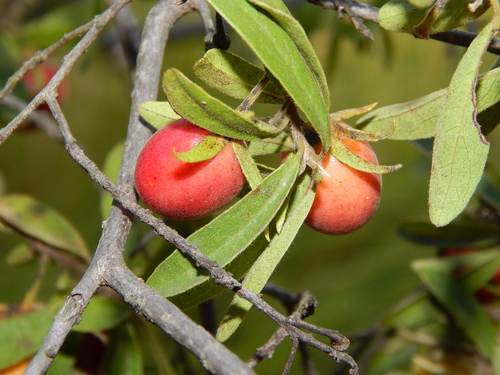
Strombosia pustulata
Oliv.
iNaturalist· cc-by-nc
(c) Babajide Agboola, some rights reserved (CC BY-NC), uploaded by Babajide Agboola
wikimedia· cc0
Wikimedia Commons - Gilles Dauby, Diosdado Nguema, Etienne Mounoumoulossi & P. Bissiemou (collectors)
Summary
Source: WikipediaStrombosia pustulata is a species of tree in the family Olacaceae. It is native to the rainforests of tropical West and Central Africa. Common names for this tree include itako in Nigeria, afina in Ghana, poé in Abé spoken in Côte d'Ivoire and mba esogo in Equatorial Guinea.
Description
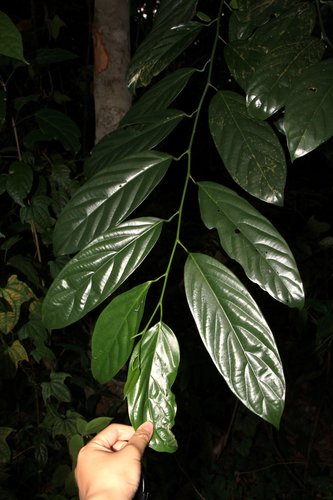
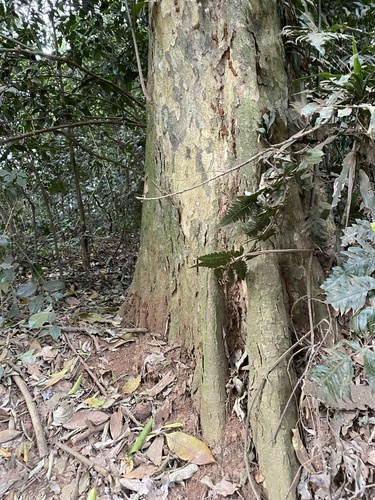
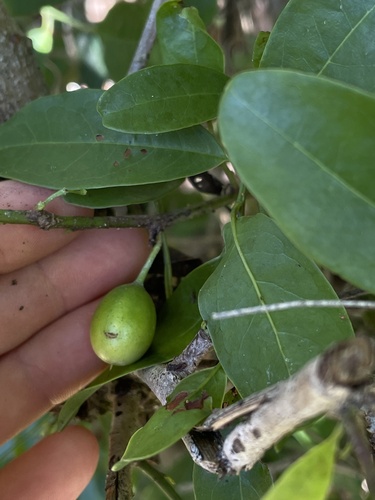
A tree. The trunk is 25 m tall and 1 m across. The leaves are alternate and simple. They are 5-15 cm long by 2-10 cm wide. They end in a point. The fruit is small and black and 1-3 cm across. There is one seed in the stone.
Edible Uses
The kernels and nuts are edible.
Distribution
A tropical plant.
Where It Grows
Africa, Benin, Cabinda, Cameroon, Central Africa, Central African Republic, CAR, Congo DR, Ghana, Guinea, Guinée, Guinea-Bissau, Liberia, Nigeria, Sierra Leone, Togo, West Africa,
Other Uses
An oil from the seeds is used for ointment and making soap. The heartwood is pink or pale brown with purplish streaks; the sapwood wide, yellowish and sharply defined. The texture is fine; the grain fairly straight; lustrous but with an unpleasant smell when freshly cut; rather oily to touch. The heartwood is highly durable and is immune to termite and other insect attack. The timber saws cleanly but is apt to spring and split; it works well and takes a smooth finish; glues well; splits in nailing and requires preboring; can be sliced into veneers. Often used in the round as building poles and transmission poles (treated), striking tool handles, turnery, heavy-duty flooring. It has been suggested as a substitute for European boxwood.
Production
In Central African Republic flowers have been recorded in February and fruit in June and November.
Other Information
It is a famine food.
Synonyms
Also Known As
Adjip, Afina, Bonbongo, Democori, Itako, Komondip, Mbang mbazoa, Mbazork, Nkemelo, Osso-de-dari, Poe, Tinlake, Ubelu
References (6)
- Dalziel, J. M., 1937, The Useful plants of west tropical Africa. Crown Agents for the Colonies London.
- Menninger, E.A., 1977, Edible Nuts of the World. Horticultural Books. Florida p 9
- Peters, C. R., O'Brien, E. M., and Drummond, R.B., 1992, Edible Wild plants of Sub-saharan Africa. Kew. p 156
- Vivien, J. & Faure, J.J., 1985, Abres des forets dense d'Afrique Centrale. Agence de Cooperation Culturelle et Technique. Paris. p 338
- Wickens, G.E., 1995, Edible Nuts. FAO Non-wood forest products. FAO, Rome. p146
Show all 6 references Hide references
- World Checklist of Useful Plant Species 2020. Royal Botanic Gardens, Kew