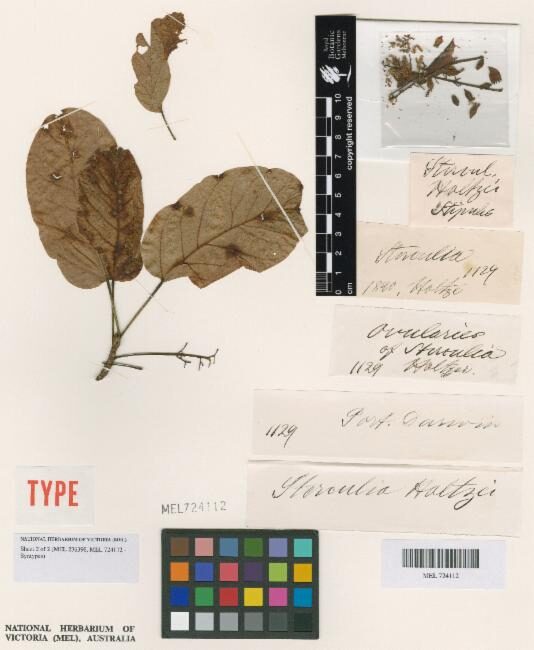
Sterculia parviflora
Roxb.
iNaturalist· cc-by
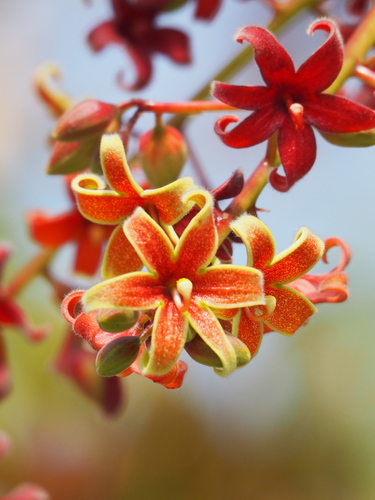
(c) Huey, some rights reserved (CC BY)
iNaturalist· cc-by
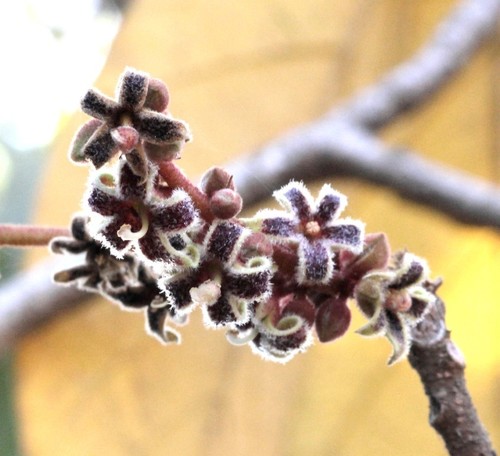
(c) Huey, some rights reserved (CC BY)
iNaturalist· cc-by-nc
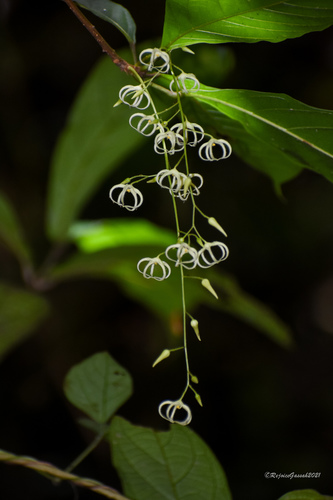
(c) Katerina Kashirina, some rights reserved (CC BY-NC)
Summary
Source: WikipediaSterculia parviflora is a species of plant in the family Malvaceae. It is found in India, Indonesia, Malaysia, and Singapore. First described in the Flora Indica by the botanist William Roxburgh, S. parviflora is a tree reaching up to 35 metres (115 ft) tall.
Description
A large deciduous tree. It grows 7-20 m high. The trunk is 30-45 cm across. The trunk is curved and branches early. The fruit are 4-5.5 cm long and 3 cm wide. They consist of 5 follicles. They are arranged in a star shape. They are yellowish red. There are 3-5 black seeds.
Edible Uses
Although we have seen no specific information for this species, the large seeds of many species in this genus are used for food. Usually cooked, they are rich in oil and have a flavour described by some as like peanuts. The dark brown to black seed is 10 - 20mm long.
Traditional Uses
The seeds are eaten.
This uses section is brief — help expand it
Distribution
A tropical plant. It grows in primary and secondary forest below 500 m altitude. It often grows on limestone mountain areas.
Where It Grows
Asia, Cambodia, India, Indochina, Indonesia, Malaysia, Myanmar, SE Asia, Singapore, Thailand, Vietnam,
Cultivation
Plants are grown from seeds.
Propagation
A physical dormancy caused by the hard seed coat of the mature seeds of many species in this genus can be overcome by scarifying the seed. This is carried out by cutting away or abrading some of the seed coat to allow the ingress of water, though great care must be taken not to damage the embryo. The aril surrounding the seed should also be removed - this is easiest when it has been softened through soaking in water. The seeds germinate optimally at temperatures between 20 - 30°c. They can be sown in a nursery seedbed or in containers. A germination rate of about 95%, occurring within about 2 weeks can be expected if the seed has been properly treated.
Other Uses
The inner bark is fibrous. This report does not say that the fibre is utilized, but the fibre from the bark of many species in this genus is used to make ropes etc. The wood is said to be used.
Production
It is slow growing.
Notes
Unresolved in the Plant List but also put as a synonym of Sterculia kayae with a different author. Also put in the family Sterculiaceae.
Synonyms
Also Known As
Kelumpang, Perupak, Rongga jantan, Samrong, Trom hoa nho, Unting-unting
References (6)
- Ambasta, S.P. (Ed.), 2000, The Useful Plants of India. CSIR India. p 601 (As Sterculia parviflora)
- Burkill, I.H., 1966, A Dictionary of the Economic Products of the Malay Peninsula. Ministry of Agriculture and Cooperatives, Kuala Lumpur, Malaysia. Vol 2 (I-Z) p 2118 (As Sterculia parviflora)
- Forest Inventory and Planning Institute, 1996, Vietnam Forest Trees. Agriculture Publishing House p 704 (As Sterculia parviflora)
- Milow, P., et al, 2013, Malaysian species of plants with edible fruits or seeds and their evaluation. International Journal of Fruit Science. 14:1, 1-27 (As parvifolia)
- Pham-Hoang Ho, 1999, An Illustrated Flora of Vietnam. Nha Xuat Ban Tre. p 507 (As Sterculia parviflora)
Show all 6 references Hide references
- Thai Forestry Bulletin 23:62-108, 1995