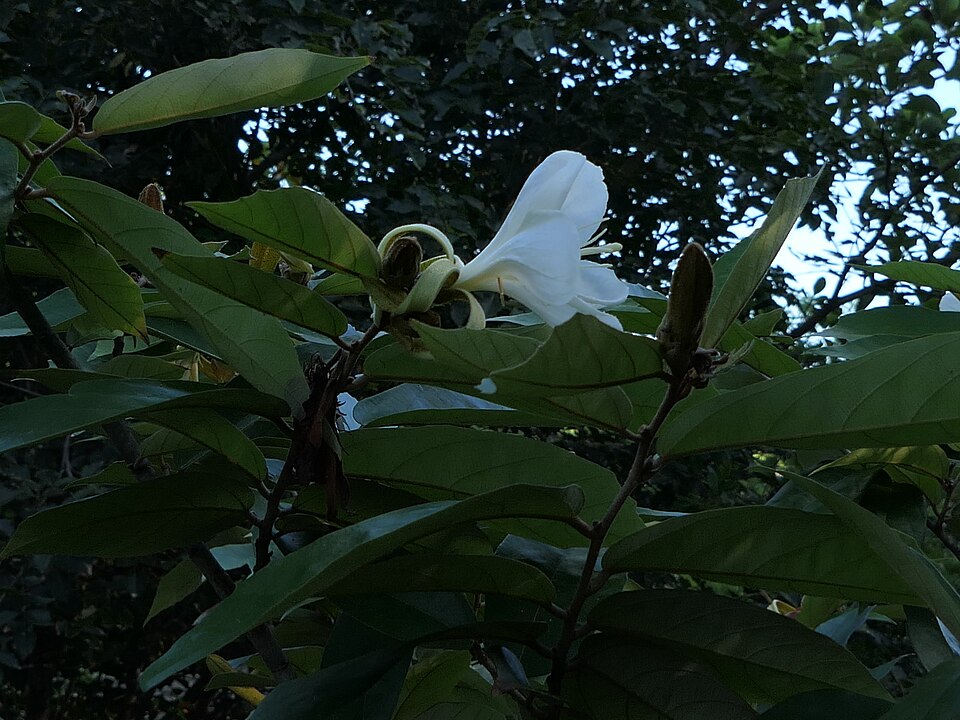
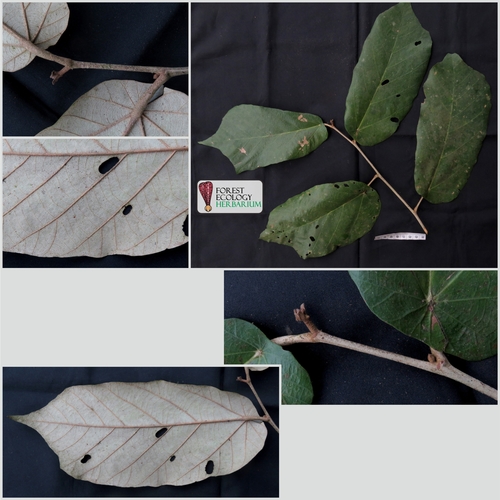
Pseudobombax septenatum
(Jacq.) Dugand.
Barrigon kapoktree
iNaturalist· cc-by-nc
(c) Anderson Mesa C, some rights reserved (CC BY-NC)
iNaturalist· cc-by-nc
(c) Anderson Mesa C, some rights reserved (CC BY-NC)
iNaturalist· cc-by-nc
(c) Amber Litterer, some rights reserved (CC BY-NC)
Summary
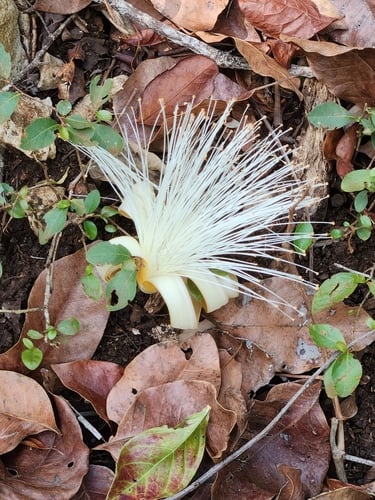
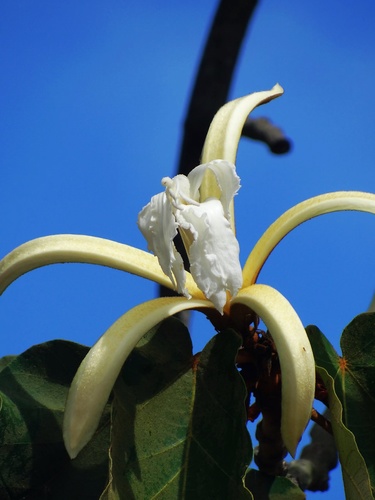
Source: WikipediaPseudobombax septenatum is of the family Malvaceae, commonly known as Algodón de río, beldaco, ceibo barrigón, majagua colorada or barrigon. It is a deciduous tree up to 80 feet (24 meters) in height which grows in semi-deciduous rainforest with a definite dry season. It is found from Nicaragua to Brazil. Its flowers are cream-colored and like those of Ceiba spp., in forming a roundish cluster of stamens on a stalk surrounding the pistel, in this instance up to one thousand stamens in number. The leaves generally have seven smooth-edged narrowly oblong leaflets. It was originally named Pachira barrigon, and later Bombax barrigon. It has the bright green lines running through the bark that is also seen in Ceiba spp. It was first described in 1760 by the Dutch scientist Nikolaus Joseph von Jacquin as Bombax septenatum. The current name is from Armando Dugand in 1943.
Description
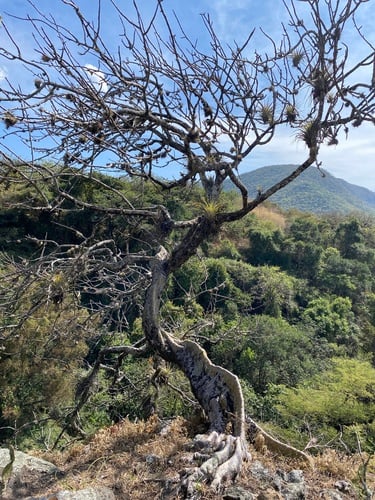
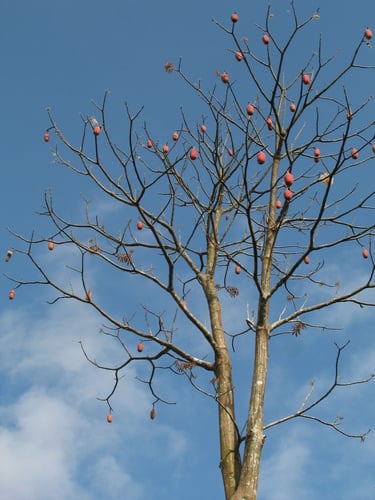
A large tree. It can grow 40 m high. The trunk is swollen at the base and can be 3 m across. It has vertical light green lines along it. The leaves are alternate and compound. They have leaflets arranged like fingers on a hand. The leaflets have short tips. Trees lose their leaves in the dry season. The flowers are large and white. The flowers open at night. The flowers appear before the leaves. The pods are woody capsules 18 cm long. The seeds are small.
Edible Uses
The leaves are eaten as a vegetable and the seeds are eaten roasted, though they are not commonly consumed.
Traditional Uses
The leaves are eaten as a vegetable. The seeds are eaten roasted.
This uses section is brief — help expand it
Distribution
It is a tropical plant. It grows in open areas or forest clearings. It is often on drier slopes. It grows from sea level to 1,900 m above sea level.
Where It Grows
Amazon, Andes, Belize, Bolivia, Central America, Colombia, Costa Rica, Nicaragua, Panama, South America,
Other Information
They are not often eaten.
Notes
There are about 8-20 Bombax species. Also put in the family Bombacaceae. In the subfamily Bombacoideae.
Synonyms
References (5)
- Bircher, A. G. & Bircher, W. H., 2000, Encyclopedia of Fruit Trees and Edible Flowering Plants in Egypt and the Subtropics. AUC Press. p 61
- Condit, R., et al, 2011, Trees of Panama and Costa Rica. Princeton Field Guides. p 280
- Hedrick, U.P., 1919, (Ed.), Sturtevant's edible plants of the world. p 109
- Kermath, B. M., et al, 2014, Food Plants in the Americas: A survey of the domesticated, cultivated and wild plants used for Human food in North, Central and South America and the Caribbean. On line draft. p 719
- Roa, J. A. G. & Boada, D. S. G., 2018, Fundación para el Fortalecimiento de la Fruticultura y Plantas Alimenticias no Convencionales en Colombia.