Pterospermum acerifolium
(L.) Willd.
Maple-leafed bayur, Maple twist
iNaturalist· cc0
no rights reserved, uploaded by 葉子
iNaturalist· cc0
no rights reserved, uploaded by 葉子
iNaturalist· cc-by-nc
(c) Abhishek Kumar, some rights reserved (CC BY-NC), uploaded by Abhishek Kumar
Summary
Source: WikipediaPterospermum acerifolium, the bayur tree or karnikara tree, is a flowering plant indigenous to Southeast Asia, from India to Burma. It is most likely to grow naturally along forested stream banks. The best growing conditions are a seasonally moist then dry climate with access to full sunlight. Pterospermum acerifolium is an angiosperm that is traditionally included in the family Sterculiaceae; however, it is grouped in the expanded family Malvaceae as well. The classification Pterospermum is based on two Greek words, Pteron and Sperma, meaning "winged seed" and the species name acerifolium indicates leaves shaped like a maple's. There is an array of common names for Pterospermum acerifolium, depending on the region where it is grown. It is commonly referred to as Kanak Champa, Muchakunda or Karnikar Tree within its native range. In the Philippines, it is known as Bayog. Other common names include bayur tree, maple-leafed bayur tree, and dinner plate tree. It is a relatively a large tree, growing up to thirty meters tall. Mostly planted as an ornamental or shade tree, the leaves, flowers, and wood of a bayur tree can serve a variety of functions.
Description
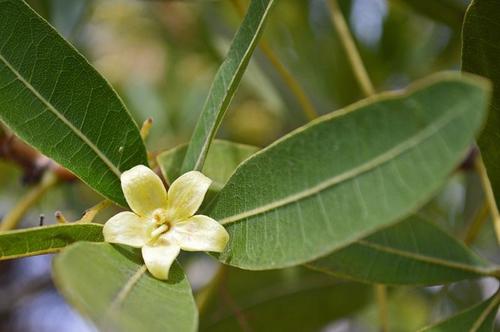
A large evergreen tree. It grows to 30 m high. The branches are thick and reach upwards. The leaves are deep green and have lobes like fingers on a hand. The leaves are 35 cm long. They are velvety when young and unfurl. They are silvery white underneath. The flowers are white and showy. They are trumpet shaped. They have silky petals and stamens. The sepals are long and velvety. The flowers have a sweet scent. The fruit is a capsule 15 cm across. It is woody. It has 5 angles and has many seeds. The seeds have wings.
Edible Uses
Flowers are boiled and eaten as a vegetable, though they have a sharp bitter acrid taste and make water slimy.
Traditional Uses
The flowers have a sharp bitter, acrid taste. They make water slimy. They are boiled and eaten as a vegetable.
This uses section is brief — help expand it
Medicinal Uses
As mentioned before, one of the common names for Pterospermum acerifolium is the dinner plate tree. The utilization of the leaves is exactly what the name depicts. Mature leaves are very large, reaching a length and width of up to thirty five centimeters. They can be used as actual dinner plates or as packaging and storage by wrapping materials inside. In India they are shaped into regular dinner plates and soup bowls on moulds, some even stitched together with twigs. In Burma they are also used to dry tobacco upon. The leaves can also serve as a primitive method of re-enforcing roofs and preventing leaks. The pubescent under surface of the leaves is said to stop bleeding and can be used as tinder for a means of sparking fires. The flowers of the bayur tree can serve as a pleasant perfume and can even keep away insects. The flowers also provide a number of medicinal uses. An effective tonic can be prepared, as well as being used as a cure for inflammation, ulcers, blood problems, and even tumors. The reddish wood of the bayur tree can be used for planking. Because the wood is soft, it is not considered to be very strong. However it is incredibly durable and somewhat flexible, making it perfect for planking and wooden boxes. The bayur tree even serves a cultural function. Local Hindu people employ the plant for religious purposes. Its bark is also supposed to be used in case of scabies and topical preparation in lipsticks.
Distribution
A tropical plant. It is native from India to Indonesia. It grows in humid lowland forests and near swamps. It grows in the Himalayan foothills. It can grow up to 1,200 m altitude. It has some salt tolerance. The soil needs to be fertile and retain moisture. It suits hardiness zones 8-12.
Where It Grows
Andamans, Asia, Australia, Bangladesh, China, Himalayas, India, Indochina, Indonesia, Malaysia, Myanmar, Nepal, North America, Northeastern India, Pakistan, SE Asia, Sikkim, Thailand, Vietnam,
Cultivation
It can be grown from seed or by cuttings or layering. The flowers are pollinated by bats. The tree can be cut back and allowed to regrow. It produces suckers. It can be grown from these.
Propagation
Seed - Cuttings of half-ripe wood with a heel.
Other Uses
The flowers, kept among clothes, impart a pleasant perfume and keep away insects. The down obtained from the leaves is used as a tinder. The large leaves have been used as plates and for wrapping up items such as tobacco leaves. The heartwood is red; the sapwood white. The wood is soft to moderately hard. It is sometimes used for planking and interior construction. The wood is used for fuel.
Production
It is fast growing.
Notes
There are 25 (40) Pterospermum species. The flowers are used in medicine. Also put in the family Pentapetaceae.
Synonyms
Also Known As
Dieng-khong-swet, Dieng-tharo-masi, Hathipalia, Hatipeala, Hatti-paila, Kanakchampa, Kanako champa, Kaniar, Karnikara, Katha-champa, Longman la-phong, Magwinapa, Matsa kanda, Mayeng, Moragos, Morra, Muchkund, Muskunda, Numbong, See-em-kung, Sik-sil, Sinna, Taung-phet-wun, Taw-kalamet, Waisap-thing
References (13)
- Ambasta S.P. (Ed.), 2000, The Useful Plants of India. CSIR India. p 502
- Barwick, M., 2004, Tropical and Subtropical Trees. A Worldwide Encyclopedic Guide. Thames and Hudson p 350
- Burkill, I.H., 1966, A Dictionary of the Economic Products of the Malay Peninsula. Ministry of Agriculture and Cooperatives, Kuala Lumpur, Malaysia. Vol 2 (I-Z) p 1867
- Cundall, P., (ed.), 2004, Gardening Australia: flora: the gardener's bible. ABC Books. p 1107
- Flora of Pakistan. www.eFloras.org
Show all 13 references Hide references
- Gardner, S., et al, 2000, A Field Guide to Forest Trees of Northern Thailand, Kobfai Publishing Project. p 84
- Hooper, Ann. Rep. Ind. Mus. Industr. Sect for 1909-1910 p 36
- Kar, A., et al, 2013, Wild Edible Plant Resources used by the Mizos of Mizoram, India. Kathmandu University Journal of Science, Engineering and Technology. Vol. 9, No. 1, July, 2013, 106-126
- Krishen P., 2006, Trees of Delhi, A Field Guide. DK Books. p 156
- Llamas, K.A., 2003, Tropical Flowering Plants. Timber Press. p 266
- Savita, et al, 2006, Studies on wild edible plants of ethnic people in east Sikkim. Asian J. of Bio Sci. (2006) Vol. 1 No. 2 : 117-125
- Sp. pl. 3(1):729. 1800
- Swaminathan, M.S., and Kochnar, S.L., 2007, An Atlas of Major Flowering Trees in India. Macmillan. p 58
More from Malvaceae
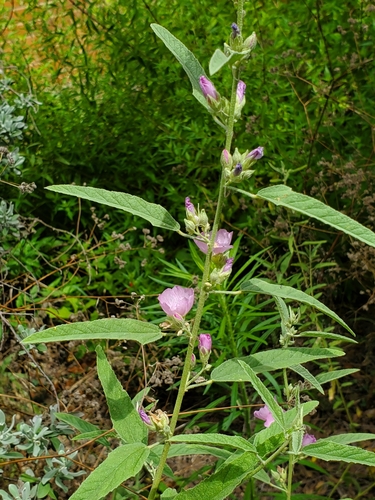
Sphaeralcea angustifolia
Narrow leaf globe mallow, Copper globemallow
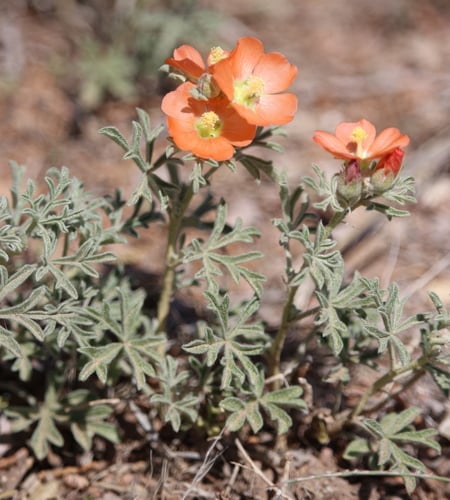
Sphaeralcea coccinea
Globemallow, Prairie mallow, Red false mallow, Scarlet mallow
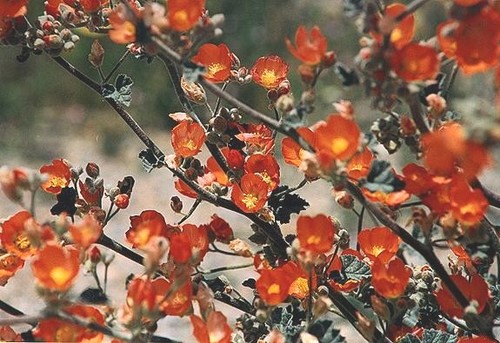
Sphaeralcea munroana
White-stemmed globe-mallow, Munro's globemallow
Sterculia aberrans
Sang curoc
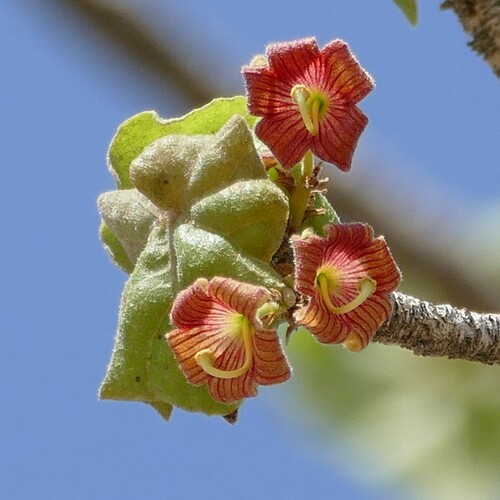
Sterculia africana
African star-chestnut
Sterculia alexandri
Cape sterculia, Cape star-chestnut