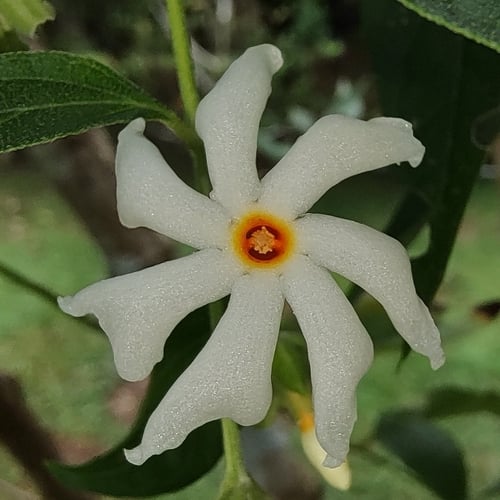
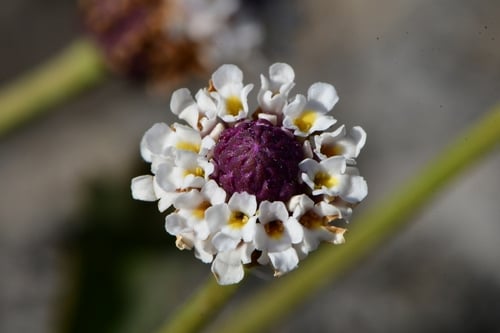
Stachytarpheta jamaicensis
(L.) Vahl
Brazilian tea
iNaturalist· cc-by-nc
(c) Dayron Breto, some rights reserved (CC BY-NC), uploaded by Dayron Breto
iNaturalist· cc-by-nc
(c) Bill Miller, some rights reserved (CC BY-NC), uploaded by Bill Miller
iNaturalist· cc-by-nc
(c) Anubhav Agarwal, some rights reserved (CC BY-NC), uploaded by Anubhav Agarwal
Summary
Source: WikipediaStachytarpheta jamaicensis is a species of plant in the family Verbenaceae, native throughout the Caribbean, including Florida. It has many common names including blue porterweed, blue snake weed, bastard vervain, Brazilian tea, Jamaica vervain, light-blue snakeweed, and, in St. Croix, worryvine.source? It usually is found along country roadsides, and it also grows well as a ruderal plant on disturbed terrain. A similar plant, Stachytarpheta cayennensis, which is an invasive species in Florida, is sometimes mistaken for S. jamaicensis. It is unclear whether S. indica is a separate species.
Description
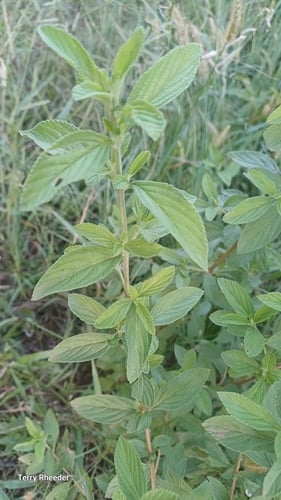
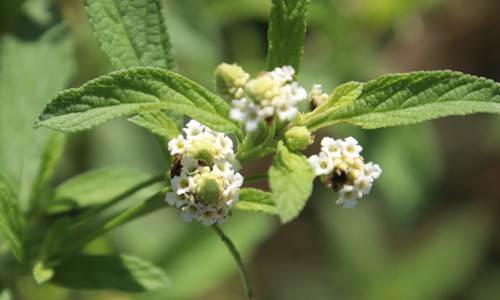
A herb which keeps growing from year to year. The branches curve upwards. It grows to 1.5 m high. The leaves are produced opposite one another on winged stalks. The leaves are oval and 4-10 cm long. They have forward facing teeth. The flowers occur as a spike at the end of the plant. The stalk is thickened and the flowers arise from depressions in it. The flower forms a tube towards its base and is purplish-blue. This stalk thickens more and the fruit are about 3.5 mm long in the depressions. They form 2 nutlets. The inner side of each one is flat.
Edible Uses
Young stem tips are eaten as a flavouring or prepared like spinach. Dried leaves are sold as Brazilian tea.
Traditional Uses
The young stem tips are eaten as a flavouring. They are also eaten like spinach. Dried leaves are sold as Brazilian tea. CAUTION: It is claimed to cause miscarriages so should be avoided by pregnant women.
Medicinal Uses
The fresh leaves are consumed in bush tea as a "cooling" tonic and blood cleanser, to treat "asthma" and "ulcerated stomachs". Tea brewed from this species has been shown to cause a dose-dependent "fall in [the] blood pressure" of normal rabbits. However, the tea has also been observed to cause a "mild non-dose dependent systematic toxicity" in various tissues throughout the body, "such as congestion, fatty changes, and necrosis in liver, blood vessels, kidney, lung and testis, but the brain, eyes, intestines and heart were essentially normal."
Known Hazards
Claimed to cause miscarriages; should be avoided by pregnant women.
Distribution
It is a tropical plant. It grows naturally along roadsides. It needs an average to fertile, well-drained soil. It can grow in full or part sun. In Papua New Guinea it is at low altitudes but may be up to 700 m altitude. It suits hardiness zones 9-12. In XTBG Yunnan.
Where It Grows
Africa, American Samoa, Anguilla, Asia, Australia, Bahamas, Brazil, British Indian Ocean Terr., BIOT, Caribbean, Central America, China, Chuuk, Costa Rica, Dominican Republic, East Africa, East Timor, El Salvador, Fiji, FSM, Guatemala, Guiana, Guianas, Guyana, Haiti, Hawaii, Honduras, India, Indochina, Indonesia, Jamaica, Kiribati, Laos, Lesser Antilles*, Malaysia, Maldives, Mexico, Nauru, Nicaragua, North America, Pacific, Panama, Papua New Guinea, PNG, Philippines, Puerto Rico, SE Asia, Sierra Leone, South America, Sri Lanka, St Lucia, Suriname, Taiwan, Tanzania, Thailand, Timor-Leste, Turks & Caicos, Tuvalu, USA, Venezuela, West Africa, West Indies*,
Cultivation
Plants can be grown from seeds. It can be planted as a hedge.
Other Uses
The flowers are used to make earrings. The plant is used for hedges.
Production
Leaves are usually collected during the rainy season.
Other Information
It is sold in local markets in China.
Synonyms
Also Known As
Aaron's rod, Bastard vervain, Blue porterweed, Blue snakeweed, Chirchiti, Devil's coachwhip, Edidubaiy, Gewongan, Jalajali, Jamaica false vervain, Jamaican Snake weed, Jarong, Kadu uttarani, Kandikandilaan, Kariyartharani, Katapunuthu, Kikwayakwaya, Light blue snakeweed, Marang chirchiti, Marang circiti, Medraquiloyilo, Naioringi, Ngadi-rangga, Pecut kuda, Rabo de gato, Rakimaa, Ratstail, Rumput tahi babi, Sakura, Selaseh dandi, Seta sitir kad, Simainaivirunji, Simainayuruvi, Te uti, Uttirani, Wan ling cao
References (33)
- Ambasta, S.P. (Ed.), 2000, The Useful Plants of India. CSIR India. p 597
- Burkill, I.H., 1966, A Dictionary of the Economic Products of the Malay Peninsula. Ministry of Agriculture and Cooperatives, Kuala Lumpur, Malaysia. Vol 2 (I-Z) p 2107
- Cowie, I, 2006, A Survey of Flora and vegetation of the proposed Jaco-Tutuala-Lore National Park. Timor-Lests (East Timor) www.territorystories.nt/gov.au p 55
- Enum. pl. 1:206. 1804
- Facciola, S., 1998, Cornucopia 2: a Source Book of Edible Plants. Kampong Publications, p 244
Show all 33 references Hide references
- Grubben, G. J. H. and Denton, O. A. (eds), 2004, Plant Resources of Tropical Africa 2. Vegetables. PROTA, Wageningen, Netherlands. p 565
- Henty, E.E., & Pritchard, G.S., 1973, Weeds of New Guinea and their control. Botany Bulletin No 7, Division of Botany, Lae, PNG. p 158
- Hide, R., et al, 1979, A checklist of some plants in the territory of the Sinasina Nimai (Simbai Province, Papua New Guinea), with notes on their uses. Department Anthropology, University of Aukland
- Heyne, K., 1927, p 1310
- Hussey, B.M.J., Keighery, G.J., Cousens, R.D., Dodd, J., Lloyd, S.G., 1997, Western Weeds. A guide to the weeds of Western Australia. Plant Protection Society of Western Australia. p 228
- Jackes, B.R., 2001, Plants of the Tropics. Rainforest to Heath. An Identification Guide. James Cook University. p 85
- Kermath, B. M., et al, 2014, Food Plants in the Americas: A survey of the domesticated, cultivated and wild plants used for Human food in North, Central and South America and the Caribbean. On line draft. p 836
- Lazarides, M. & Hince, B., 1993, Handbook of Economic Plants of Australia, CSIRO. p 228
- Li, D. et al, 2017, Ethnobotanical survey of herbal tea plants from the traditional markets in Chaoshan, China. Journal of Ethnopharmacology. 205 (2017) 195-206
- Llamas, K.A., 2003, Tropical Flowering Plants. Timber Press. p 359
- Lugod, G.C. and de Padua L.S., 1979, Wild Food Plants in the Philippines. Vol. 1. Univ. of Philippines Los Banos. p 78
- Martin, F.W. & Ruberte, R.M., 1979, Edible Leaves of the Tropics. Antillian College Press, Mayaguez, Puerto Rico. p 80, 224
- Melzer, R. & Plumb, J., 2011, Plants of Capricornia. Belgamba, Rockhampton. p 547
- Morton,
- Paczkowska, G . & Chapman, A.R., 2000, The Western Australian Flora. A Descriptive Calatogue. Western Australian Herbarium. p 567
- Plants of Haiti Smithsonian Institute http://botany.si.edu/antilles/West Indies
- Polinag, M. A., 2003, Food from the Wilderness. Department of Environment and Natural Resources. Laguna. (Incorrectly as Dillenia reifferscheidia)
- Ruffo, C. K., Birnie, A. & Tengnas, B., 2002, Edible Wild Plants of Tanzania. RELMA p 622
- Stone, B.,
- Sujanapal, P., & Sankaran, K. V., 2016, Common Plants of Maldives. FAO & Kerala FRI, p 253
- Sukarya, D. G., (Ed.) 2013, 3,500 Plant Species of the Botanic Gardens of Indonesia. LIPI p 716
- Tanaka,
- Thaman, R. R, 2016, The flora of Tuvalu. Atoll Research Bulletin No. 611. Smithsonian Institute p 120
- Topp, J. M. W., 1988, An Annotated Check List of the Flora of Diego Garcia, British Ocean Territory. Atoll Research Bulletin No. 313
- Uphof,
- van Andel, T., 2000, Useful plants of Guyana. Non-timber forest products of the North-West District of Guyana. Part 2. A Field Guide. Tropenbos-Guyana Programme. p 307
- World Checklist of Useful Plant Species 2020. Royal Botanic Gardens, Kew
- Zuchowski W., 2007, Tropical Plants of Costa Rica. A Zona Tropical Publication, Comstock Publishing. p 341