Aloysia triphylla
(L'Hér.) Britton.
Lemon verbena
iNaturalist· cc-by
(c) zebedeugalinha, some rights reserved (CC BY)
iNaturalist· cc-by
(c) zebedeugalinha, some rights reserved (CC BY)
iNaturalist· cc-by
(c) zebedeugalinha, some rights reserved (CC BY)
Description
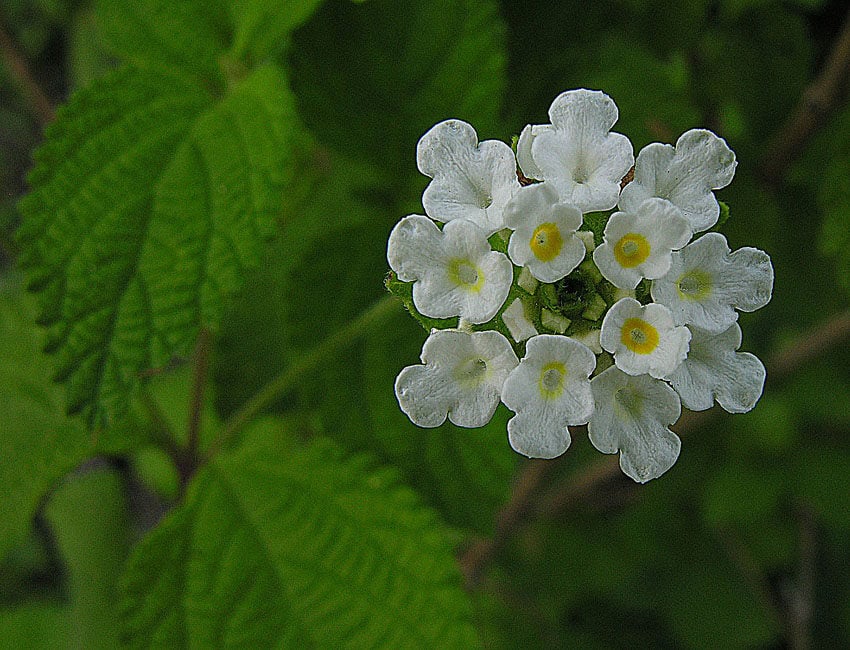
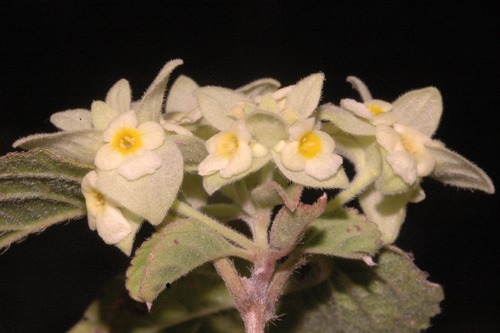
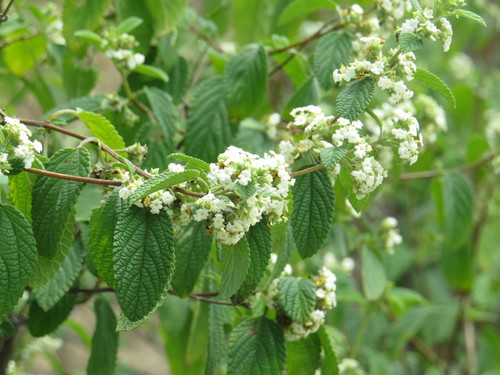
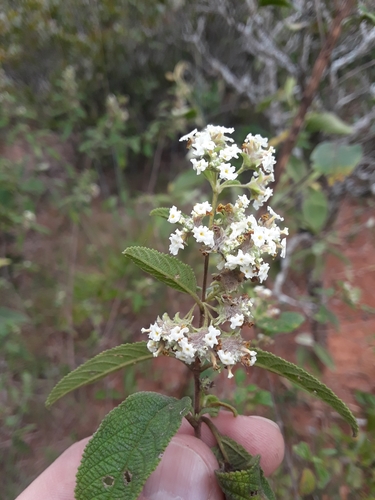
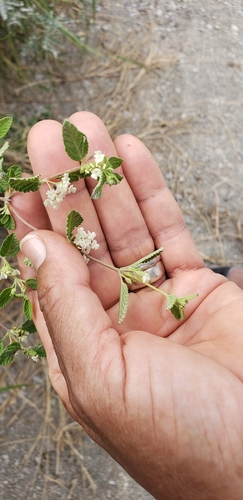
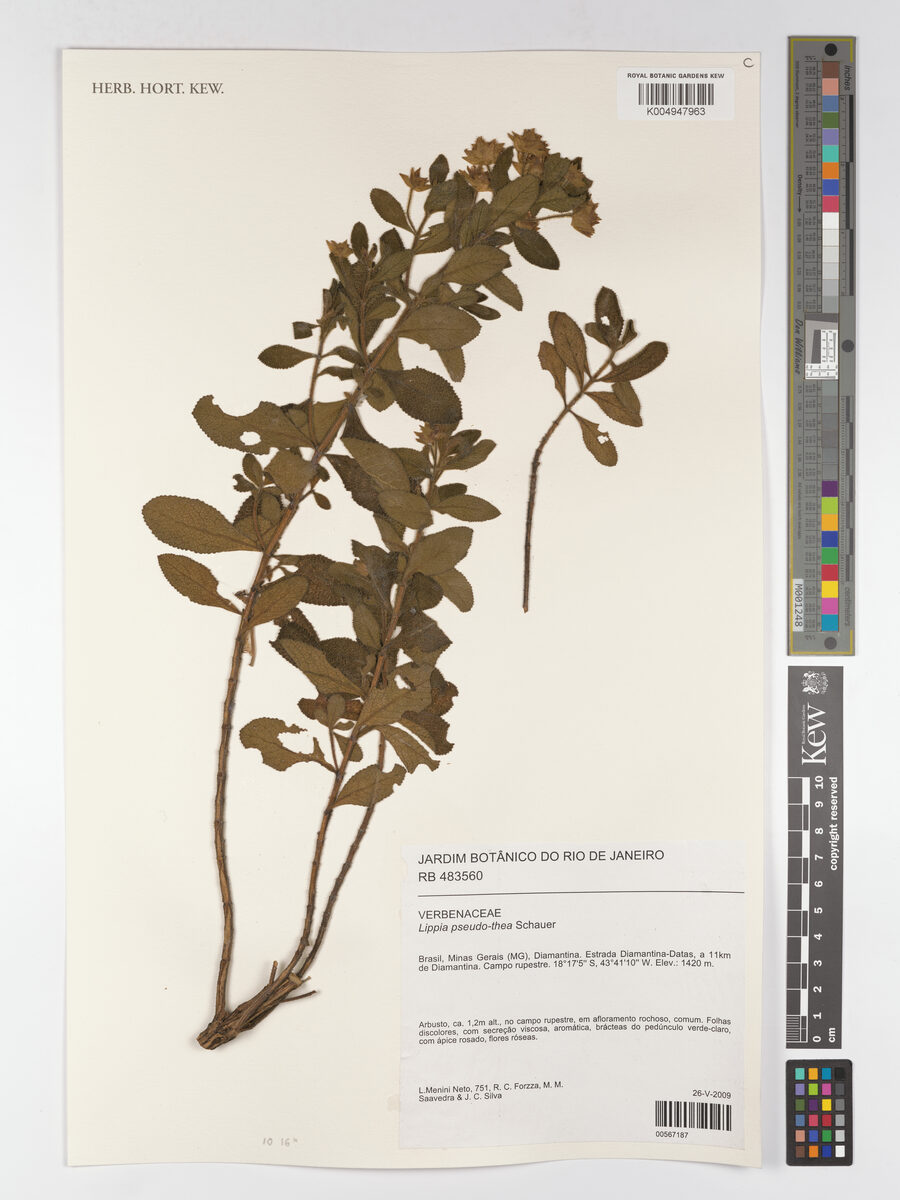
A shrub to 1.5-3 m high. It spreads to 3 m across. It keeps growing from year to year. It loses its leaves during the year. The leaves are slender and green. They are 10 cm long. They smell strongly of lemon. Under the leaves there are oil glands which give a sticky, almost rough feel. The flowers are purple and white. They form in feather like groups are the ends of branches. Probably now Aloysia citriodora.
Edible Uses
The young leaves can be eaten raw in salads or cooked for their lemon flavor. Leaves are used for tea, and can be used fresh or dried to flavor fruit salads, punches, and fruit cups. The flowers are also edible.
Traditional Uses
The young leaves can be eaten cooked or used raw in salads for their lemon flavour. The leaves can be used for tea. The leaves can be used fresh to flavour fruit salads, punches and fruit cups. The leaves can be used fresh or dried.
Medicinal Uses
Lemon verbena leaves are used to add a lemon flavor to fish and poultry dishes, vegetable marinades, salad dressings, jams, puddings, Greek yogurt, and beverages. The leaves are also used in potpourri. Lemon verbena is used to make herbal teas and as a liqueur flavoring. It is used in traditional medicine in Latin American countries. The oil was historically steam-distilled from the leaves for use in the perfume industry, but it has skin-sensitising and phototoxic properties. In the European Union, verbena essential oils (Lippia citriodora Kunth.) and derivatives other than absolute are prohibited when used as a fragrance ingredient (Regulation No. 1223/2009, Annex II).
Distribution
It is a warm temperate plant. It requires a sunny sheltered position. It needs a moderately fertile well drained soil. It requires a warm damp climate. In Hobart Botanical gardens. (As Lippia citriodora). It suits hardiness zones 8-12. Arboretum Tasmania.
Where It Grows
Argentina, Australia, Brazil, Britain, Canada, Central America, Chile, Dominican Republic, Europe, Haiti, Mediterranean, Mexico, North America, Peru, South Africa, Southern Africa, South America*, Spain, Tasmania, Turkey, Türkiye, Uruguay, Venezuela, West Indies,
Cultivation
Plants can be grown from cuttings. Trees are best pruned to give a thick clumpy bush.
Production
The leaves are best harvested a couple of months after the new leaves appear. The leaves are normally dried.
Other Information
It is a cultivated food plant.
Notes
There are about 40 Aloysia species. The correct name is Aloysia citriodora.
Synonyms
Also Known As
Erva-luisa, Herb Louisa
References (21)
- Ambasta S.P. (Ed.), 2000, The Useful Plants of India. CSIR India. p 30
- Bodkin, F., 1991, Encyclopedia Botanica. Cornstalk publishing, p 70
- Bremness, L., 1994, Herbs. Collins Eyewitness Handbooks. Harper Collins. p 93
- N. L. Britton & P. Wilson, Bot. Porto Rico 6:140. 1925
- Brown, D., 2002, The Royal Horticultural Society encyclopedia of Herbs and their uses. DK Books. p 116 (As Aloysia triphylla)
Show all 21 references Hide references
- Burnie, G & Fenton-Smith, J., 1999, A Grower's Guide to Herbs. Murdoch Books. p 46
- Etherington, K., & Imwold, D., (Eds), 2001, Botanica's Trees & Shrubs. The illustrated A-Z of over 8500 trees and shrubs. Random House, Australia. p 90 (As Aloysia triphylla)
- Facciola, S., 1998, Cornucopia 2: a Source Book of Edible Plants. Kampong Publications, p 244
- Fox, F. W. & Young, M. E. N., 1982, Food from the Veld. Delta Books. p 364
- Hemphill, I, 2002, Spice Notes. Macmillan. p 227 (As Aloysia triphylla)
- Kinupp, V. F., 2007, Plantas alimenticias nao-convencionais da regiao metropolitana de Porto Alegre, RS, Brazil p 106
- Kiple, K.F. & Ornelas, K.C., (eds), 2000, The Cambridge World History of Food. CUP p 1800 (As Lippia citriodora)
- Lord, E.E., & Willis, J.H., 1999, Shrubs and Trees for Australian gardens. Lothian. p 204 (As Aloysia triphylla)
- Morley, B.D., & Toelken, H.R., (Eds), 1983, Flowering Plants in Australia. Rigby. p 288 (As Aloysia triphylla)
- Newdick, J., 1994, Jane Newdick's Book of Herbs. The Book Company. p 208 (As Aloysia triphylla)
- Plants for a Future database, The Field, Penpol, Lostwithiel, Cornwall, PL22 0NG, UK. http://www.scs.leeds.ac.uk/pfaf/ (As Aloysia triphylla)
- Rigat, M et al, 2009, Ethnobotany of Food Plants in the High River Ter Valley (Pyrenees, catalonia, Iberian Peninsula): Non-Crop Food Vascular Plants and Crop Food Plants with medicinal Properties. Ecology of Food and Nutrition, 48:303-327 (As Lippia triphylla)
- Staples, G.W. and Herbst, D.R., 2005, A tropical Garden Flora. Bishop Museum Press, Honolulu, Hawaii. p 556 (As Aloysia triphylla)
- Torre, de la, L., et al, 2008, Enciclopedia de las Plantas Útiles del Ecuador. Herbario QCA. Pontificia Universidad Católica del Ecuador. p 615
- van Wyk, B., 2005, Food Plants of the World. An illustrated guide. Timber press. p 53 (As Aloysia triphylla)
- Young, J., (Ed.), 2001, Botanica's Pocket Trees and Shrubs. Random House. p 89 (As Aloysia triphylla)