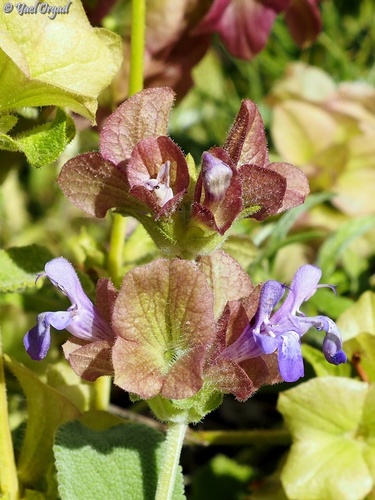
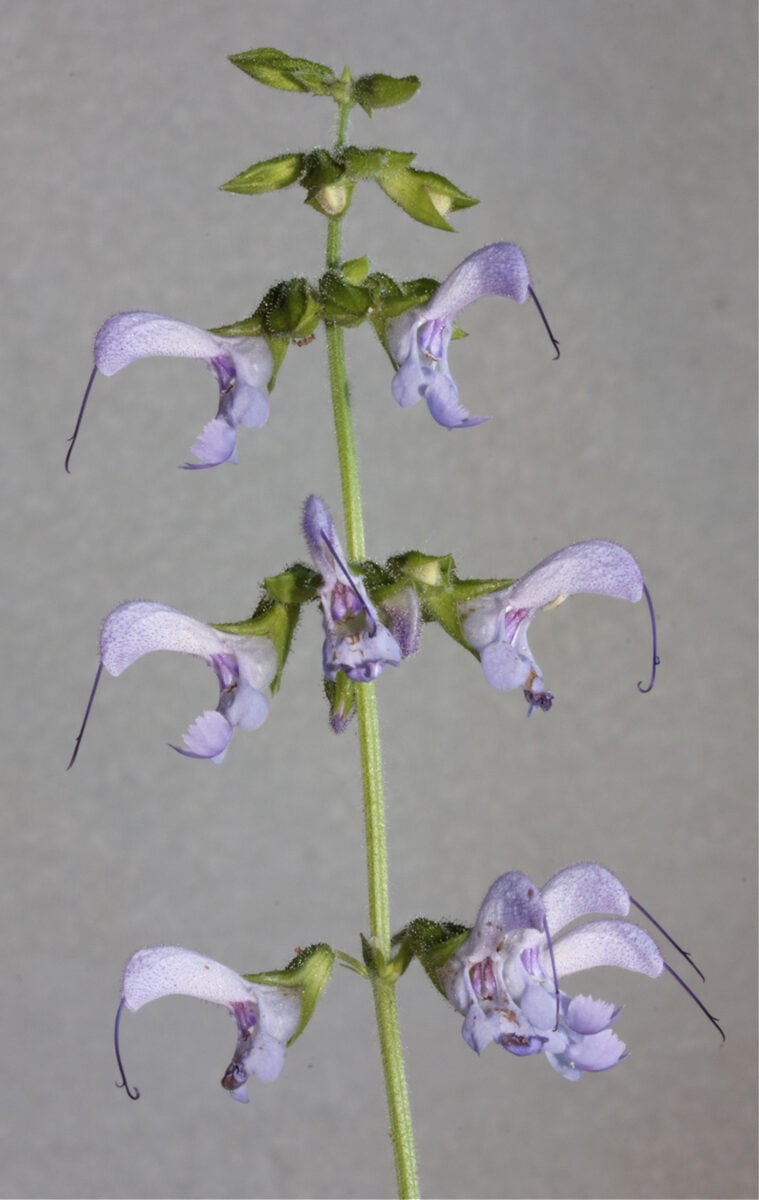
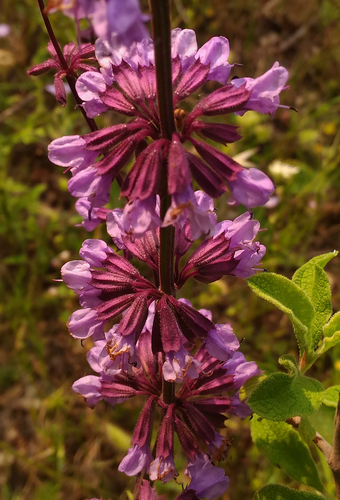
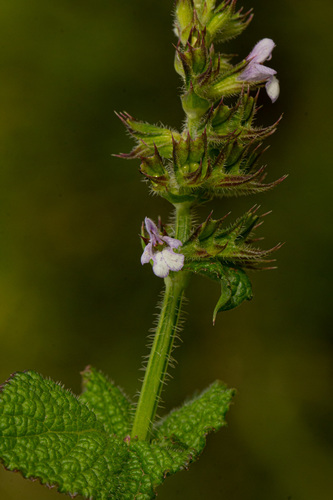
Stachys baicalensis
Fisch. ex Benth.
Mao shui su
gbif· cc-by-nc
RSA - California Botanic Garden Herbarium (RSA-RSA)
gbif· cc-by
Royal Botanic Gardens, Kew
Summary
A perennial herb reaching 0.6 m (2 ft) tall. Flowers appear in July with seeds ripening by August. The plant is hermaphroditic and insect-pollinated. It thrives in light sandy, medium loamy, or heavy clay soils with good drainage and tolerates mildly acidic to mildly alkaline pH. Grows in semi-shade or full sun and prefers consistently moist soil. Noted for attracting wildlife.
Description
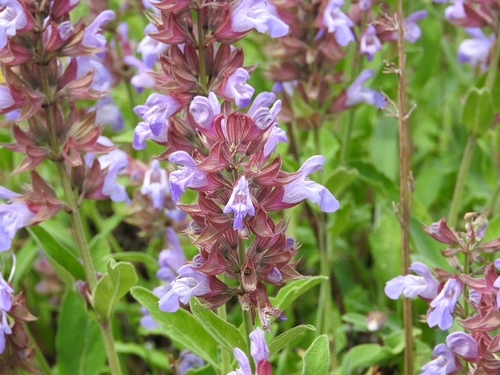
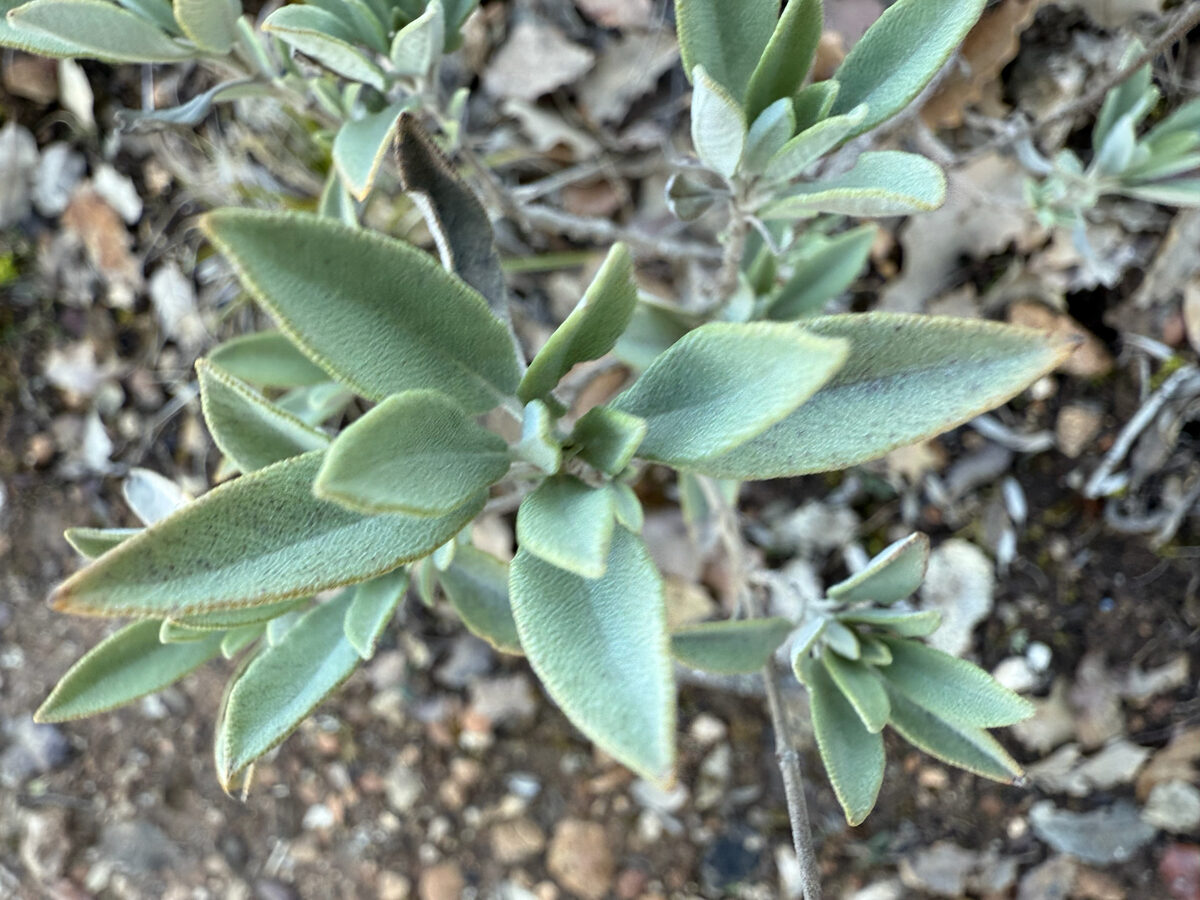
A herb. It keeps growing from year to year. There are underground stems. The above ground stems are erect and 50-100 cm high. They sometimes branch near the top. The leaf stalk is 0-2 mm long. The leaf blade is 3-11 cm long by 0.4-1.5 cm wide. There are teeth along the edge. There are 6 flowers in a ring. They are purple.
Edible Uses
Young leaves can be eaten cooked.
Medicinal Uses
The stem and leaves are astringent, carminative, and deodorant. The whole plant is depurative, diuretic, and haemostatic. A decoction is used to treat metrorrhagia, haematuria, jaundice, and bacterial dysentery.
Distribution
It is a temperate plant. In China it grows on wet grassy areas near riverbanks. It grows between 200-1700 m altitude in northern regions.
Where It Grows
Asia, China, Japan, Korea, Russia,
Cultivation
We have very little information on this species and do not know if it will be hardy in Britain, though judging by its native range it should succeed outdoors in many parts of this country. The following notes are based on the general needs of the genus. Succeeds in any deep well-drained moderately fertile soil in full sun or light shade. A good bee plant.
Propagation
Sow seed in spring in a cold frame. Prick seedlings into individual pots once large enough to handle and grow on in the greenhouse through their first winter. Plant out into permanent positions in late spring or early summer, after the last expected frosts. Divide in spring.
Other Uses
The plant has deodorant properties.
Notes
There are about 300 Stachys species.
References (2)
- Li Hai-wen, Hedge, I.C., Lamiaceae. Flora of China. p 233
- Plants for a Future database, The Field, Penpol, Lostwithiel, Cornwall, PL22 0NG, UK. http://www.scs.leeds.ac.uk/pfaf/