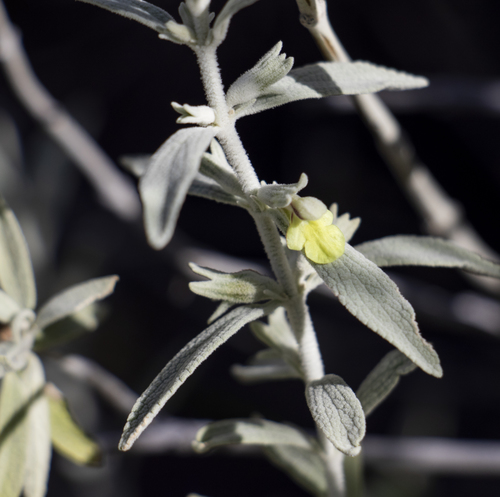
Salvia multiorrhiza
Bunge
Red-rooted Sage
wikimedia· cc-by
First Light (talk) (via Wikimedia Commons)
Summary
Source: WikipediaPerennial reaching 0.6 m tall and 0.3 m wide. Hardy to UK zone 6. Flowers June through September. Hermaphrodite, bee-pollinated plant. Suitable for light sandy or medium loamy, well-drained soil with mildly acid to basic pH. Requires full sun and tolerates dry or moist conditions.
Description
Perennial reaching 0.6 m tall and 0.3 m wide. Hardy to UK zone 6. Flowers June through September. Hermaphrodite, bee-pollinated plant. Suitable for light sandy or medium loamy, well-drained soil with mildly acid to basic pH. Requires full sun and tolerates dry or moist conditions.
Edible Uses
The seeds are edible, though no specific preparation details are recorded.
Medicinal Uses
Dan Shen has a long history of use in Chinese medicine, and modern research supports its application in treating heart and circulatory conditions. The root is adaptogen, alterative, anticholesterolemic, antirheumatic, antiseptic, antispasmodic, astringent, emmenagogue, hepatic, sedative, tonic, and vulnerary. It acts primarily on heart energy, clearing excess heat and stagnation, improving micro-circulation, increasing coronary blood flow, improving myocardial contraction, and regulating heart rate. It also has an antibacterial action, inhibiting Pseudomonas, E. coli, Vibrio Proteus, Bacillus typhi, Shigella dysenteriae, Shigella flexneri, Staphylococcus aureus, and others. Internally it is used for coronary heart disease, poor circulation, palpitations, irritability, insomnia, breast abscesses, mastitis, ulcers, boils, sores, bruises, menstrual problems, and post-natal pains. It has also been praised for alleged anticancer properties. Roots are harvested in autumn and early winter and dried for later use.
Distribution
It is a subtropical plant.
Where It Grows
Asia, China,
Cultivation
Requires a very well-drained light sandy soil in a sunny position. Prefers a rich soil. Plants can be killed by excessive winter wet. Members of this genus are rarely if ever troubled by browsing deer.
Propagation
Sow seed in March/April in a greenhouse; germination typically occurs within 2 weeks. Prick seedlings into individual pots when large enough and plant out in early summer. In marginal areas, overwinter young plants under glass and plant out in late spring the following year. Cuttings of half-ripe wood can be taken at almost any point during the growing season.
Other Uses
None known.
Notes
There are about 900 Salvia species.
Also Known As
Dan Shen, Hung Ken
References (3)
- Bremness, L., 1994, Herbs. Collins Eyewitness Handbooks. Harper Collins. p 126
- Liang, Q., et al, 2009, Essential oil composition of Salvia multiorrhiza flower. Food Chemistry 113: 592-594
- Plants for a Future database, The Field, Penpol, Lostwithiel, Cornwall, PL22 0NG, UK. http://www.scs.leeds.ac.uk/pfaf/