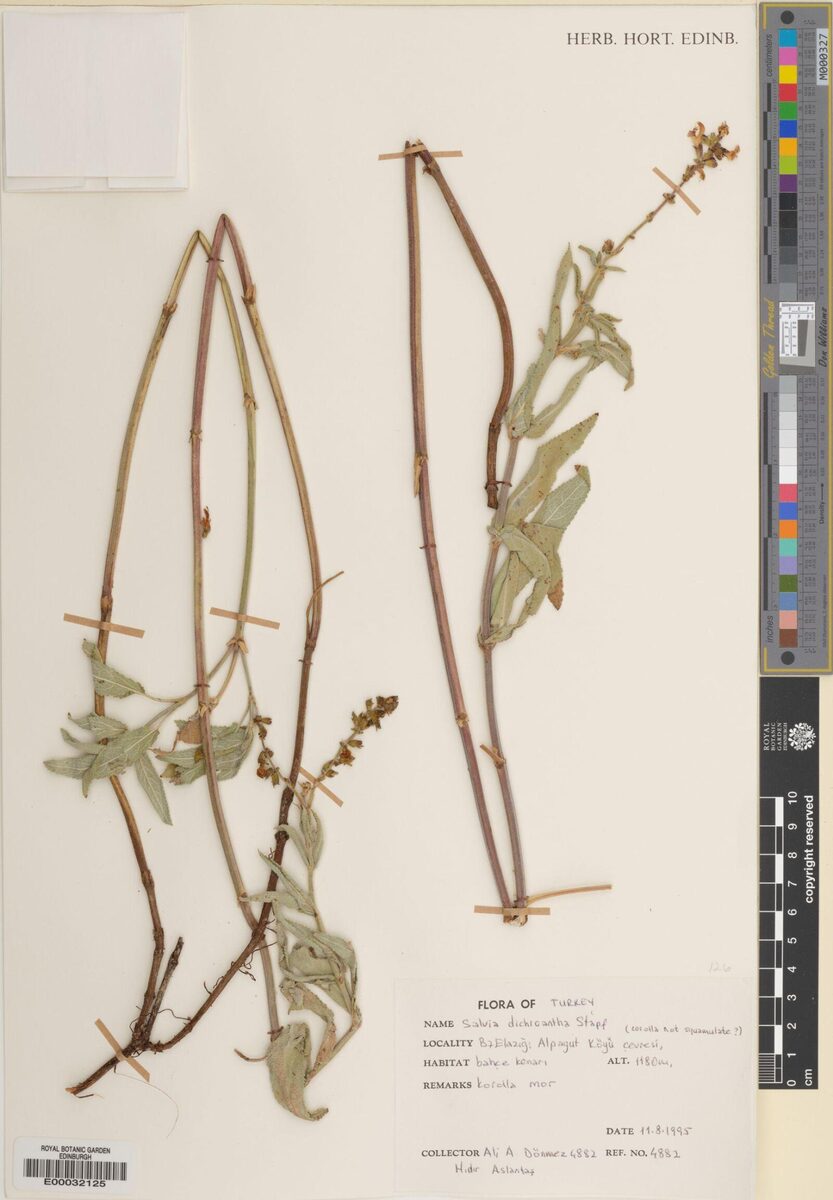
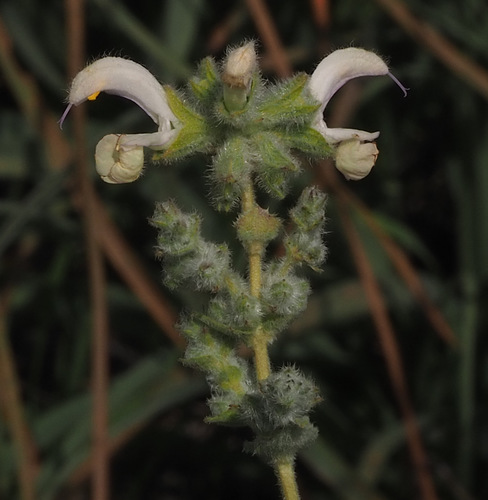
Salvia officinalis subsp. lavandulifolia
(Vahl) Gams
Narrow Leaf Sage, Spanish sage, Lavender sage
gbif· cc-by-nc
Luis de Ossorno
gbif· cc-by-nc
Luis de Ossorno
gbif· cc-by-nc
Luis de Ossorno
Summary
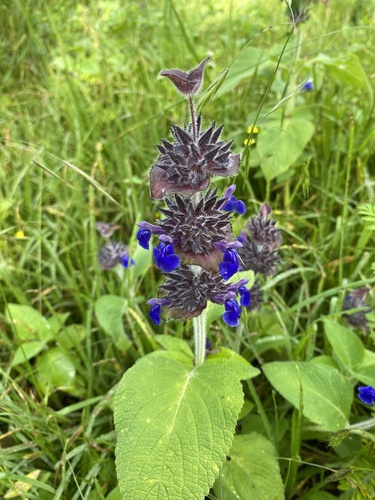
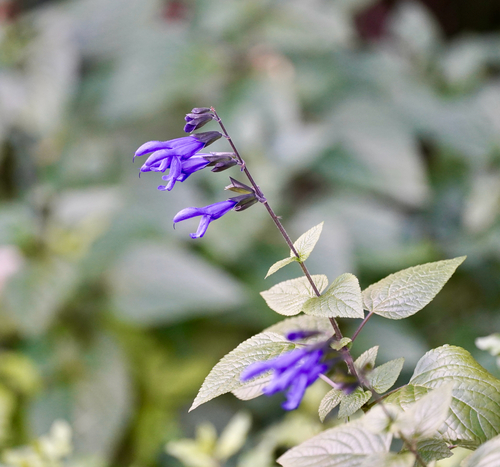
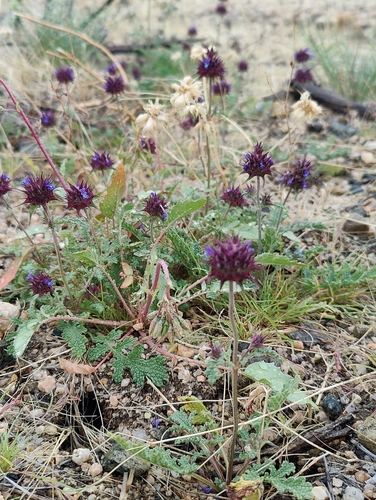
Source: WikipediaSalvia officinalis subsp. lavandulifolia, synonym Salvia lavandulifolia, (Spanish sage) is a small woody herbaceous perennial native to Spain and southern France, growing in rocky soil in Maquis shrubland, often found growing with rosemary, Lavandula lanata, and Genista cinerea. S. officinalis subsp. lavandulifolia grows 30 centimetres (1 ft) tall and wide, with a reclining habit and narrow, lanceolate, whitish-gray evergreen leaves that are less than 50 mm (2 in) long. The leaves grow opposite each other on the stem and appear to grow in bunches. When the leaves are rubbed, oils give off a fragrance similar to rosemary. These oils are used for scenting soaps. The 25 mm (1 in) long, pale lavender flowers grow on short inflorescences, blooming for about one month in late spring and early summer. The flowering stems have very few flowers on widely spaced whorls. Some varieties have a dark calyx.
Description
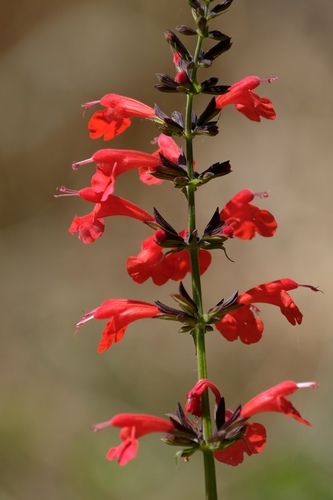
A small herb. The shoots are slightly woody at the base. It grows 45 cm high and spreads 45 cm wide. The leaves are narrow and greyish white. They have a scent. The flowers are pale blue and on short spikes.
Edible Uses
The leaves are used to flavour ice cream, baked goods, chewing gum, soft drinks and alcoholic drinks. The flowering aerial parts are brewed as a herbal tea.
Traditional Uses
The leaves produce an essential oil used to flavour ice cream, baked goods, chewing gum, soft drinks and alcoholic drinks. Caution: Alcohol is a cause of cancer. The flowering aerial parts are used for a herbal tea.
Medicinal Uses
The leaves produce an essential oil with traditional uses in beverages and food flavouring.
Distribution
It grows in rocky and stony places. It suits hardiness zones 6-10.
Where It Grows
Andorra, Australia, Europe, France, Greece, Italy, Mediterranean, Spain, Turkey, Türkiye,
Notes
There are about 900 Salvia species.
Synonyms
Also Known As
Salvia, Savia
References (8)
- Blamey, M and Grey-Wilson, C., 2005, Wild flowers of the Mediterranean. A & C Black London. p 402
- Bonet, M. A. & Valles, J., 2002, Use of non-crop food vascular plants in Montseny biosphere reserve (Catalonia, Iberian Peninsula). International Journal of Food Sciences and Nutrition (2002) 53, 225–248
- Bremness, L., 1994, Herbs. Collins Eyewitness Handbooks. Harper Collins. p 126
- Brickell, C. (Ed.), 1999, The Royal Horticultural Society A-Z Encyclopedia of Garden Plants. Convent Garden Books. p 929
- Cundall, P., (ed.), 2004, Gardening Australia: flora: the gardener's bible. ABC Books. p 1303
Show all 8 references Hide references
- Enum. pl. 1:222. 1804
- Facciola, S., 1998, Cornucopia 2: a Source Book of Edible Plants. Kampong Publications, p 135
- Tardio, J., et al, Ethnobotanical review of wild edible plants in Spain. Botanical J. Linnean Soc. 152 (2006), 27-71