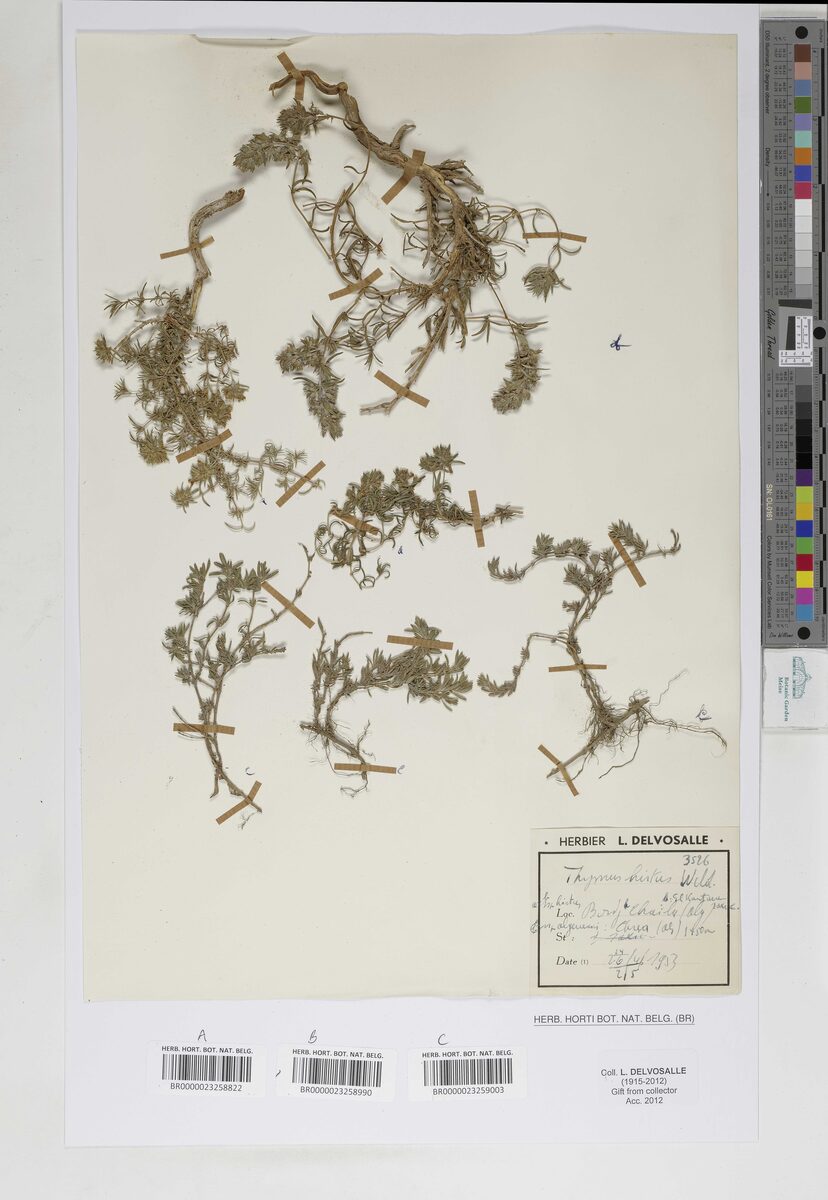
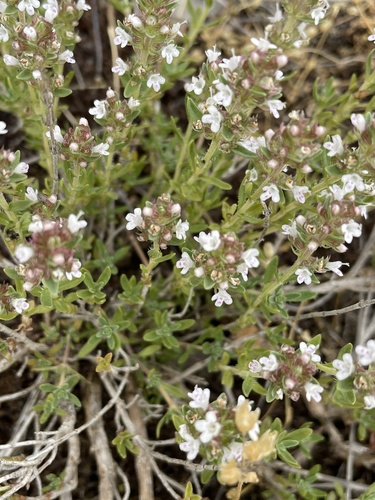
Salvia officinalis
L.
Sage
iNaturalist· cc-by-nc
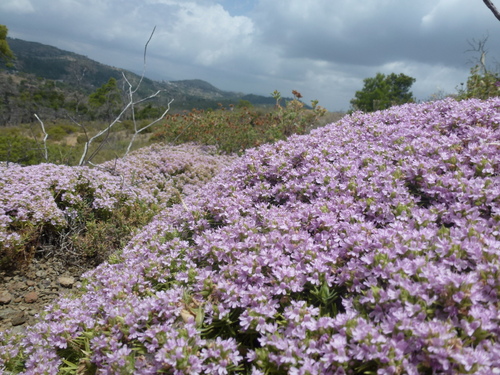
(c) dittant, some rights reserved (CC BY-NC), uploaded by dittant
iNaturalist· cc-by-nc
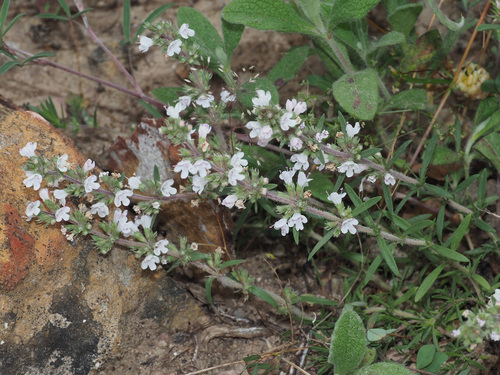
(c) Coby Meester, some rights reserved (CC BY-NC), uploaded by Coby Meester
iNaturalist· cc-by-nc
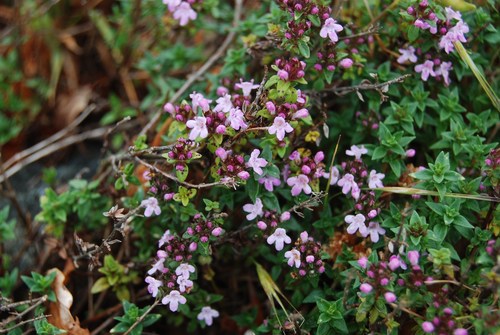
(c) Ángel Fernández Cancio, some rights reserved (CC BY-NC), uploaded by Ángel Fernández Cancio
Summary
Source: WikipediaSalvia officinalis, common sage or sage, is a perennial, evergreen subshrub, with woody stems, grayish leaves, and blue to purplish flowers. It is a member of the mint family (Lamiaceae) and native to the Mediterranean region, though it has been naturalized in many places throughout the world. It has a long history of culinary use, and in modern times it has been used as an ornamental garden plant. The common name "sage" is also used for closely related species and cultivars.
Description
A low shrub up to 60-75 cm high and spreading 60-90 cm wide. It keeps growing from year to year. The stems are woody. The stems are wiry and green or purple. It can have fine white hairs. The leaves can be up to 12 cm long and 12 mm wide and are grey green and hairy. The leaves have a wrinkled surface and irregular edges along the side of the leaf. The flowers have purple lips. The nutlets are dark brown and about 2.5 mm across. There are many varieties of sage.
Edible Uses
Both the leaves and flowers are edible raw or cooked. The strongly aromatic leaves are widely used as a culinary herb, particularly with heavy or oily foods where they aid digestion and impart a sausage-like flavour to savoury dishes. Young leaves and flowers can be eaten raw, boiled, pickled, or used in sandwiches. Flowers can be sprinkled on salads for colour and fragrance. A herbal tea made from fresh or dried leaves is said to support digestion. An essential oil extracted from the plant is also used commercially to flavour ice cream, sweets, and baked goods.
Traditional Uses
The leaves are used as a flavouring. They are often used to flavour meat. They are used in omelettes, vegetables, salads, sauces and soups. They are also pickled. They are also used to flavour cheese. Young leaves and flowers are eaten raw or boiled, pickled or in sandwiches. The fresh or dried leaves are used for tea. Sage extract and oil are used to flavour ice cream, candy and baked goods. CAUTION: It could be poisonous in large amounts due to thujone a nerve toxin.
Medicinal Uses
Sage has a long and well-established history as a medicinal herb, particularly for digestive complaints. Its antiseptic properties make it effective as a gargle for sore throats and mouth ulcers, and pressing a leaf against an aching tooth can help relieve pain. The whole herb is antihydrotic, antiseptic, antispasmodic, astringent, carminative, cholagogue, galactofuge, stimulant, tonic, and vasodilator. Internally it is used to treat excessive lactation, night sweats, excessive salivation (as in Parkinson's disease), profuse perspiration (as in tuberculosis), anxiety, depression, female sterility, and menopausal problems. Many herbalists consider the purple-leafed forms to be medicinally more potent. This remedy should not be given to pregnant women or people with epilepsy. The plant is toxic in excess or when taken over extended periods, though the toxic dose is very large. Externally it treats insect bites, skin, throat, mouth, and gum infections, and vaginal discharge. Leaves are best harvested before flowering and dried for later use. The essential oil, in small doses, helps clear mucus from the respiratory tract and is used in embrocations for rheumatism; in larger doses it can cause epileptic fits and giddiness. The essential oil is also used in aromatherapy, where its keyword is 'Tonic'. The German Commission E has approved Salvia officinalis for loss of appetite, inflammation of the mouth, and excessive perspiration.
Known Hazards
Should not be prescribed to pregnant women or people with epileptic fits. Plant is toxic in excess or when taken for extended periods, though toxic dose is very large. Essential oil in larger doses can cause epileptic fits and giddiness.
Distribution
It is a temperate plant. It grows in the tropical highlands and up to 2600 m altitude. It does best in alkaline or lime rich soils. In Argentina it grows below 500 m above sea level. It suits hardiness zones 5-10. In Hobart Botanical gardens.
Where It Grows
Africa, Albania*, Algeria, Andorra, Argentina, Asia, Australia, Austria, Balkans, Bosnia, Brazil, Britain, Bulgaria, Canada, Canary Is., Caucasus, Central America, Central Asia, China, Congo DR, Cook Islands, Croatia, Cuba, Cyprus, Czech Republic, Dalmatian Islands, East Africa, Europe, France, Germany, Greece*, Hawaii, Himalayas, India, Italy, Korea, Latvia, Lebanon, Lithuania, Macedonia, Malta, Mediterranean, Middle East, Montenegro, Morocco, Myanmar, Nepal, Netherlands, North Africa, North America, Norway, Pacific, Papua New Guinea, PNG, Portugal, Romania, Scandinavia, SE Asia, Serbia, Sicily, Slovenia, South Africa, Southern Africa, South America, Spain, Sweden, Switzerland, Tasmania, Tunisia, Turkey, Türkiye, Ukraine, Uruguay, USA, West Indies, Worldwide, Yugoslavia, Zimbabwe,
Cultivation
Requires a very well-drained light sandy soil in a sunny position. Prefers a calcareous soil. Dislikes heavy or acid soils. Succeeds in dry soils, tolerating drought once it is established. Sage can be killed by excessive winter wet and winter-planted bushes often die. A very ornamental plant, sage is commonly grown in the herb garden for culinary and medicinal purposes. There are some named varieties. 'Albiflora' is said to be the best culinary sage. 'Purpurea' has tougher leaves than the type and makes a better tooth cleaner. Plants need to be trimmed in late spring in order to keep them compact. They tend to degenerate after a few years and are best replaced after about 4 years. The leaves emit a unique pungent aroma when pressed. A good companion for many plants, including rosemary, cabbages and carrots, the growing plant is said to repel insects. It is inhibited by wormwood growing nearby and dislikes growing with basil, rue or the cucumber and squash family. An evergreen. Sage leaves can be harvested throughout the growing season, with the best flavor typically from spring to early summer, just before flowering. Sage usually flowers in late spring to early summer, generally between May and June (Northern Hemisphere), depending on the specific species and growing conditions. Sage is a moderately fast-growing herb, often reaching maturity in about 1 to 2 years under optimal conditions.
Propagation
Sow seed in March/April in a greenhouse; germination typically occurs within 2 weeks. Prick seedlings into individual pots when large enough and plant out in early summer. In marginal areas, overwinter young plants under glass and plant out in late spring the following year. Heeled shoot cuttings taken from the stem in May can be planted directly into the garden. Half-ripe wood cuttings of 5–10cm with a heel can be taken June to August in a frame. Mature wood cuttings of 7–10cm with a heel can be taken in November/December in a cold frame. Layering is possible in spring or autumn by mounding soil up into the plant; branches will root into the mound and can be separated and planted out 6–12 months later.
Other Uses
The leaves make an effective tooth cleaner — simply rub the upper side of a leaf over the teeth and gums. The purple-leafed form has tougher leaves and is particularly suited to this. The leaves have antiseptic properties that can help heal diseased gums. An essential oil from the leaves is used in perfumery, hair shampoos (especially for dark hair), food flavouring, toothpastes, and bio-activating cosmetics, where it also acts as a very effective fixative in perfumes. The plant is an alternative ingredient in 'QR' herbal compost activator, a dried and powdered herbal blend added to compost heaps to accelerate bacterial activity and shorten composting time. The growing or dried plant is said to repel insects and is especially useful planted among cabbages and carrots. It was formerly used as a strewing herb and was burned indoors to fumigate rooms. As a ground cover plant for sunny positions, plants are best spaced around 60cm apart; some weeding is needed in the first year or two. The flowers are rich in nectar and pollen, attracting bees, butterflies, and hummingbirds. Dense foliage provides some shelter for small animals and invertebrates, and the woody stems and leaf litter offer overwintering sites for beneficial insects. The strong aromatic scent also acts as a pest confuser, deterring insects and herbivores.
Production
The leaves can be used whole or dried and crumbled.
Other Information
It is cultivated.
Notes
There are about 900 Salvia species.
Nutrition
| Part | Moisture | kJ | kcal | Protein | Vit A | Vit C | Iron | Zinc |
|---|---|---|---|---|---|---|---|---|
| Leaves - dried | 8 | 1317 | 315 | 10.6 | 590 | 32.4 | 28.1 | 4.7 |
Also Known As
Adacayi, Broadleaf sage, Ching-chieh, Common sage, Echter salbei, Kadulja, Mariyamiya, Pelin, Sa er wei ya, Salbei, Salie, Salva, Salvia, Sarvia, Sauge commune, Sauge officinale, Sauge, Shalfey, Sherbela, Tesalvie, True sage, žajbelj
References (53)
- Ambasta, S.P. (Ed.), 2000, The Useful Plants of India. CSIR India. p 544
- Bianchini, F., Corbetta, F., and Pistoia, M., 1975, Fruits of the Earth. Cassell. p 200
- Blamey, M and Grey-Wilson, C., 2005, Wild flowers of the Mediterranean. A & C Black London. p 401
- Bodkin, F., 1991, Encyclopedia Botanica. Cornstalk publishing, p 905
- Bremness, L., 1994, Herbs. Collins Eyewitness Handbooks. Harper Collins. p 127
Show all 53 references Hide references
- Brickell, C. (Ed.), 1999, The Royal Horticultural Society A-Z Encyclopedia of Garden Plants. Convent Garden Books. p 929
- Burnie, G & Fenton-Smith, J., 1999, A Grower's Guide to Herbs. Murdoch Books. p 61
- Cerne, M., 1992, Wild Plants from Slovenia used as Vegetables. Acta Horticulturae 318
- Cheifetz, A., (ed), 1999, 500 popular vegetables, herbs, fruits and nuts for Australian Gardeners. Random House p 154
- Cundall, P., (ed.), 2004, Gardening Australia: flora: the gardener's bible. ABC Books. p 1304
- Dolina, K. & Luczaj, L., 2014, Wild food plants used on the Dubrovnik coast (south-eastern Croatia) Acta Soc Bot Pol 83(3):175–181
- Dogan, Y., et al, 2004, The Use of Wild Edible Plants in Western and Central Anatolia (Turkey). Economic Botany 58(4) pp. 684-690
- Esperanca, M. J., 1988. Surviving in the wild. A glance at the wild plants and their uses. Vol. 2. p 191
- Facciola, S., 1998, Cornucopia 2: a Source Book of Edible Plants. Kampong Publications, p 135
- French, B.R., 1986, Food Plants of Papua New Guinea, A Compendium. Asia Pacific Science Foundation p 382
- Geraci, A., et al, 2018, The wild taxa utilized as vegetables in Sicily (Italy): a traditional component of the Mediterranean diet. Journal of Ethnobiology and Ethnomedicine (2018) 14:14
- Girard, N. J., 2020, Sustainable Foraging of Wild Edible Plants in Norway. A Biocultural Approach. M. Sc. thesis Norwegian University. p 132
- Hadfield, J., 2001, The A-Z of Vegetable Gardening in South Africa. Struik p 135
- Hedrick, U.P., 1919, (Ed.), Sturtevant's edible plants of the world. p 592
- Hemphill, I, 2002, Spice Notes. Macmillan. p 347
- Hibbert, M., 2002, The Aussie Plant Finder 2002, Florilegium. p 285
- http://www.botanic-gardens-ljubljana.com/en/plants
- Jackes, D. A., 2007, Edible Forest Gardens
- Joyce, D., 1998, The Garden Plant Selector. Ryland, Peters and Small. p 159
- Kew Plants of the World On line
- Kiple, K.F. & Ornelas, K.C., (eds), 2000, The Cambridge World History of Food. CUP p 434, 1847
- Kremer, B.P., 1995, Shrubs in the Wild and in Gardens. Barrons. p 88.
- Kybal, J., 1980, Herbs and Spices, A Hamlyn Colour Guide, Hamlyn Sydney p 174
- Lawton, B.P., 2002, Mints. A Family of Herbs and Ornamentals. Timber Press, Portland, Oregon. p 78, 187
- Li Hai-wen, Hedge, I.C., Lamiaceae. Flora of China. p 277
- Lazarides, M. & Hince, B., 1993, Handbook of Economic Plants of Australia, CSIRO. p 210
- Lentini, F. and Venza, F., 2007, Wild food plants of popular use in Sicily. J Ethnobiol Ethnomedicine. 3: 15
- Lord, E.E., & Willis, J.H., 1999, Shrubs and Trees for Australian gardens. Lothian. p 261
- Manandhar, N.P., 2002, Plants and People of Nepal. Timber Press. Portland, Oregon. p 409
- Martin, F.W. & Ruberte, R.M., 1979, Edible Leaves of the Tropics. Antillian College Press, Mayaguez, Puerto Rico. p 105, 196
- Michael, P., 2007, Edible Wild Plants and Herbs. Grub Street. London. p 197
- Mulherin, J., 1994, Spices and natural flavourings. Tiger Books, London. p 99
- Pieroni, A. & Soukand, R., 2017, The disappearing wild food and medicinal plant knowledge in a few mountain villages of North-Eastern Albania. Journal of Applied Botany and Food Quality 90, 58 - 67
- Plants for a Future database, The Field, Penpol, Lostwithiel, Cornwall, PL22 0NG, UK. http://www.scs.leeds.ac.uk/pfaf/
- Polat, R., et al, 2015, Survey of wild food plants for human consumption in Elazig (Turkey). Indian Journal of Traditional Knowledge. Vol. 1(1): 69-75
- Pruse, B., et al, 2021, Active Wild Food Practices among Culturally Diverse Groups in the 21st Century across Latgale, Latvia. Biology 2021, 10, 551.
- Purseglove, J.W., 1968, Tropical Crops Dicotyledons, Longmans. p 636
- Redzic, S. J., 2006, Wild Edible Plants and their Traditional Use in the Human Nutrition in Bosnia-Herzegovina. Ecology of Food and Nutrition, 45:189-232
- Schunko, C., et al, 2012, Intracultural variation of knowledge about wild plant uses in the Biosphere Reserve Grosses Walsertal (Austria). Journal or Ethnobiology and Ethnomedicine, 8:23
- Sp. pl. 1:23. 1753
- Staples, G.W. and Herbst, D.R., 2005, A tropical Garden Flora. Bishop Museum Press, Honolulu, Hawaii. p 362
- Tronickova, E. & Krejcova, Z., 1987, Ortaggi, Instituto Geografico de Agostini, Cecoslovacchia. p 200
- Tyagi, R. K., et al, 2004, Conservation of Spices Germplasm in India. Indian J. Plant Genet. Resour. 17(3): 163-174
- van Wyk, B., 2005, Food Plants of the World. An illustrated guide. Timber press. p 335
- Wiersema, J. H. & Leon, B., 2013, World Economic Plants. A Standard Reference CRC Press. 2nd Ed. p 610
- Wild Edible Plants in Lebanon. Promoting dietary diversity in poor communities in Lebanon. http://www.wildedibleplants.org/
- World Checklist of Useful Plant Species 2020. Royal Botanic Gardens, Kew
- Zeven, A. C. & de West, J. M. J., 1982, Dictionary of cultivated plants and their regions of diversity. Wageningen. p 113