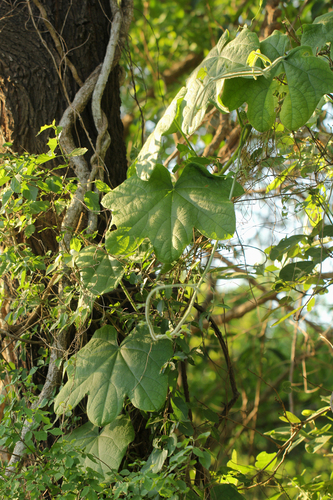
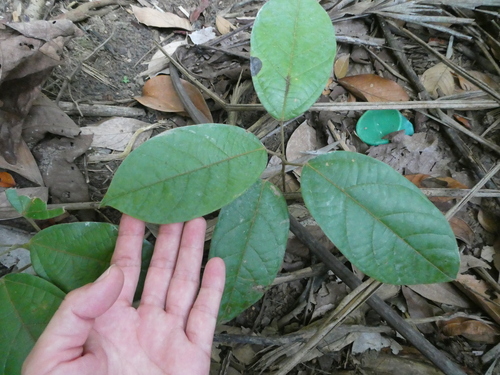
Sphenocentrum jollyanum
Pierre
iNaturalist· cc-by-nc-nd
(c) mathias_dezetter, some rights reserved (CC BY-NC-ND), uploaded by mathias_dezetter
iNaturalist· cc-by-nc
(c) fredesahgui, some rights reserved (CC BY-NC)
Description
An erect shrub. It grows 1.4 m high. The fruit is made up of 3-12 fleshy fruit each oval and 26 mm long by 16 mm wide. They are yellow to orange when ripe.
Edible Uses
Both the fruit and roots are eaten. The roots are acid and bitter when first eaten but cause subsequently consumed foods to taste sweet.
Traditional Uses
The roots are acid and bitter when first eaten but make foods eaten next to taste sweet. The fruit are eaten.
This uses section is brief — help expand it
Medicinal Uses
The roots have traditional use as a taste modifier for foods.
Distribution
It is a tropical plant. It grows in the undergrowth in dense forest in West Africa. It grows from sea level to 400 m above sea level. It grows in areas with an average temperature between 20°-29°C. The average rainfall is 1,800 mm or more.
Where It Grows
Africa, Benin, Côte d'Ivoire, Ghana, Ivory Coast, Nigeria, Togo, West Africa,
Cultivation
The plant grows in regions with a mean minimum temperature of 20°c and a mean maximum of 29°c. The mean annual rainfall is 1,800mm or more.
Other Uses
The roots are used as chewing sticks.
Also Known As
Atoa-ngle, Atuangre, Beague, Buguilago, Sinpa
References (9)
- Burkill, H. M., 1985, The useful plants of west tropical Africa, Vol. 4. Kew.
- Busson, 1965,
- Dalziel, J. M., 1937, The Useful plants of west tropical Africa. Crown Agents for the Colonies London.
- Facciola, S., 1998, Cornucopia 2: a Source Book of Edible Plants. Kampong Publications, p 150
- Fern, K., 2012, Tropical Species Database http://theferns.info/tropical/
Show all 9 references Hide references
- Jardin, C., 1970, List of Foods Used In Africa, FAO Nutrition Information Document Series No 2.p 22, 162
- Peters, C. R., O'Brien, E. M., and Drummond, R.B., 1992, Edible Wild plants of Sub-saharan Africa. Kew. p 147
- Uphof,
- World Checklist of Useful Plant Species 2020. Royal Botanic Gardens, Kew