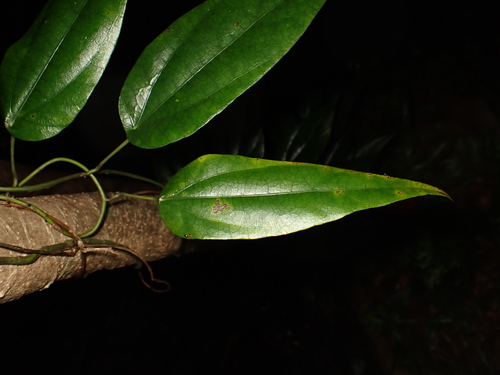
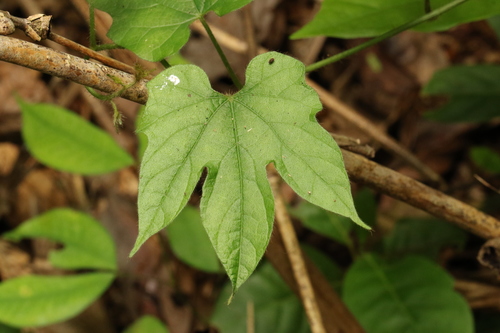
Tinospora crispa
(L.) Miers ex Hook. f. & Thomson
iNaturalist· cc0
no rights reserved, uploaded by 葉子
iNaturalist· cc0
no rights reserved, uploaded by 葉子
iNaturalist· cc0
no rights reserved, uploaded by 葉子
Summary
Source: WikipediaA fast-growing deciduous climber reaching 10 m tall with 0.3 m spread. Thrives in light, medium, or heavy soils with good drainage; tolerates mildly acid to basic pH. Requires full sun and can handle dry or moist conditions. Hardy to UK zone 10.
Description
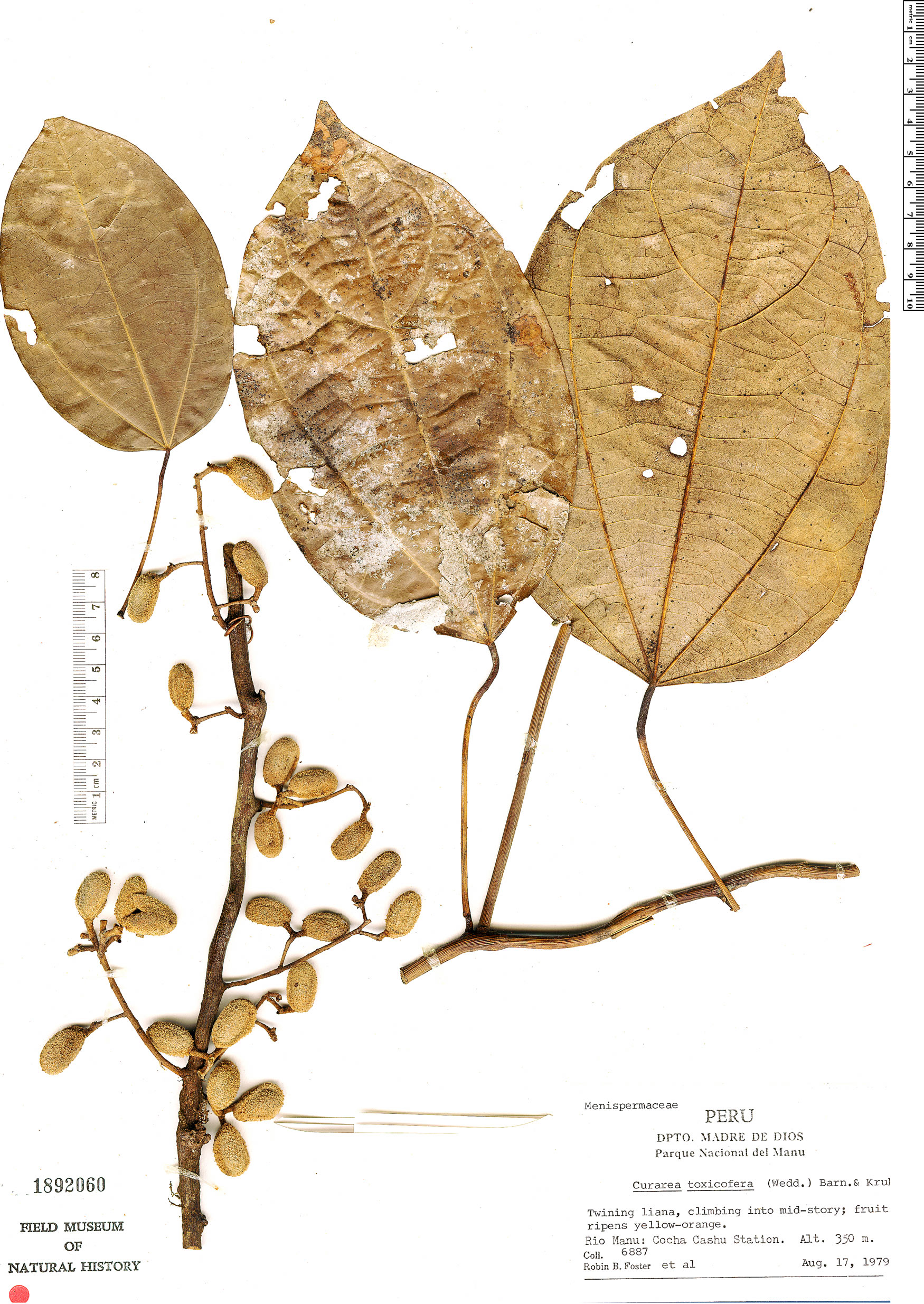
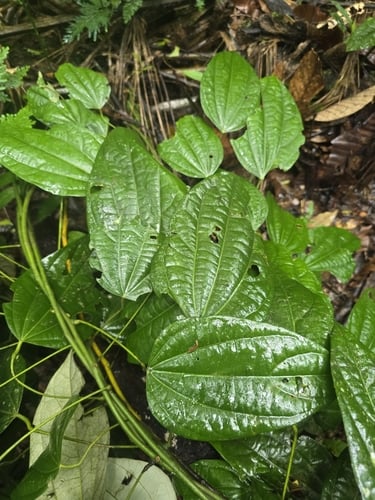
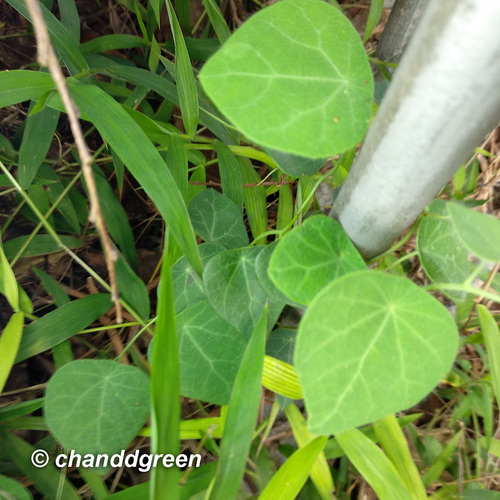
A woody climber. It grows 4-10 m long. It loses its leaves during the year. It can have long aerial roots. Old stems are fleshy. The leaf stalk is 5-15 cm long and the leaves are broadly oval to heart shaped and 6-13 cm long by 6-13 cm wide.
Edible Uses
A preparation made from the stem is used as the basis of a popular cordial, taken as a tonic or used as an ingredient in cocktails.
Medicinal Uses
Local people in the Philippines consider this a universal medicine, calling it 'makabuhai' meaning 'to give life'. It is commonly prescribed as a decoction or in powder form for fevers, stomach trouble, indigestion, and diarrhoea. A preparation made with coconut oil is used to treat rheumatism and flatulence in children. This preparation is made by chopping the stem into pieces 2–5cm long, placing them in a jar with coconut oil, leaving the jar in a sunny position to cook, then storing it for 12 months before use. The stem is antimalarial, parasiticide, tonic, and vulnerary. Internally it treats fevers; externally, a decoction used as a wash is considered effective against tropical ulcers, external parasites, itches, and ordinary and cancerous wounds. In Malaysia and Indonesia, an infusion of the stem is drunk as a vermifuge and an infusion of the whole plant is used to treat cholera and diabetes mellitus; externally it is applied against scabies and to heal wounds. In Brunei, the plant treats high blood pressure, diabetes, and abdominal pains. In Indo-China, an infusion of the stem is drunk to treat fever (including malarial fever) and jaundice. In Thailand, an infusion from the stem treats jaundice, cholera, malaria, and worms in children. Powdered stems are used to stimulate the appetite and fatten horses and cattle.
Distribution
A tropical plant. In XTBG Yunnan.
Where It Grows
Asia, Cambodia, China, India, Indochina, Indonesia, Laos, Malaysia, Myanmar, Northeastern India, Philippines, SE Asia, Sri Lanka, Thailand, Vietnam,
Cultivation
Plants can be grown from stem cuttings.
Propagation
Propagate from seed, or from cuttings — easy, as the stems naturally produce aerial roots.
Other Uses
Some species in this genus are larval hosts of fruit-piercing noctuid moths that cause significant damage to Citrus crops (particularly Mandarins) and Dimocarpus longan (Longan) in Thailand. The stem also has parasiticide properties noted under medicinal uses.
Notes
It is used in medicine. There are 32 Tinospora species.
Synonyms
Also Known As
Bora phet, Boraped
References (4)
- Ambasta, S.P. (Ed.), 2000, The Useful Plants of India. CSIR India. p 640
- Fl ind. 1183. 1855
- PROSEA handbook Volume 9 Plants yielding non-seed carbohydrates. p 190
- World Checklist of Useful Plant Species 2020. Royal Botanic Gardens, Kew