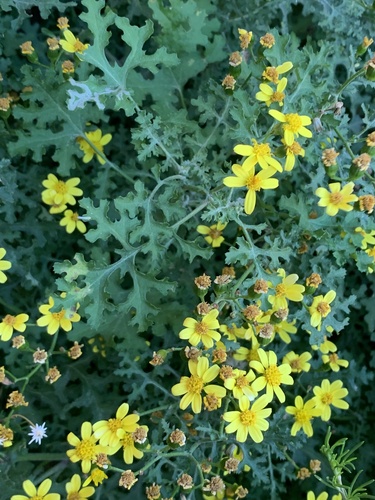
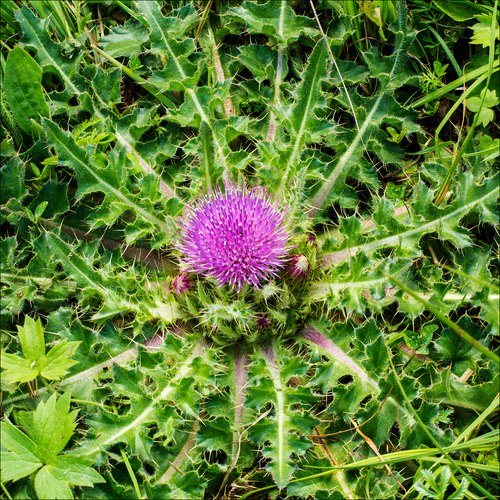
Sonchus tenerrimus
Linn.
Clammy Sowthistle
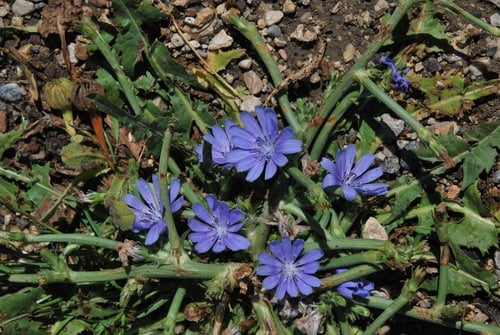
iNaturalist· cc0
no rights reserved, uploaded by Thomas M
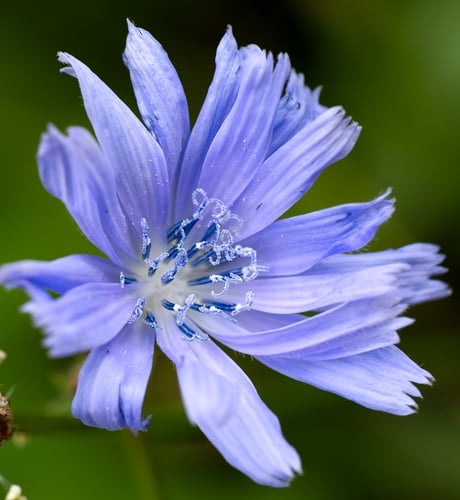
iNaturalist· cc-by-nc
(c) Massimo Tabone, some rights reserved (CC BY-NC)
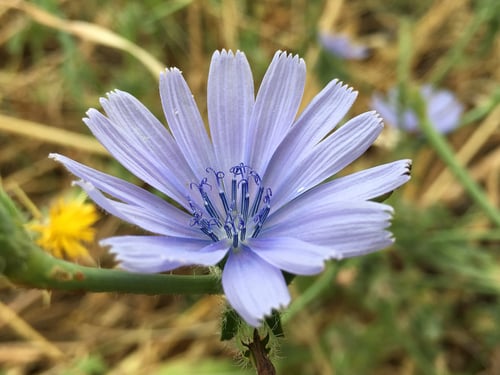
iNaturalist· cc-by
(c) Drepanostoma, some rights reserved (CC BY), uploaded by Drepanostoma
Summary
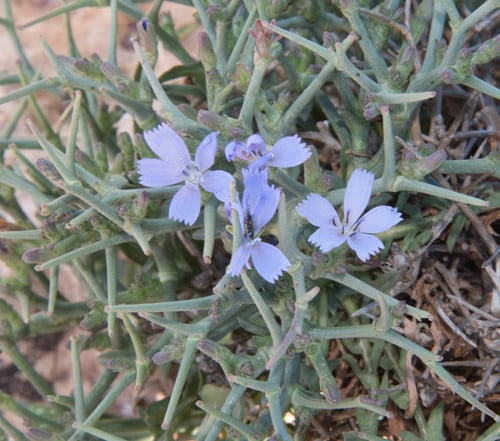
Source: WikipediaSonchus tenerrimus is a species of flowering plant in the family Asteraceae known by the common name slender sowthistle. It is native to the Mediterranean region of southern Europe, northern Africa, and the Middle East. It has been found as well in several other locations around the world, historically in association with ship ballast in coastal regions. It has become naturalized in a few places, such as California in the United States and Baja California in Mexico. Sonchus tenerrimus is an annual or perennial herb producing a slender, branching stem up to about 80 centimeters (32 inches) tall. The leaves are deeply divided into many variously shaped lobes which may have toothed edges or smaller lobes. The inflorescence bears flower heads lined with glandular, hairy to woolly phyllaries. They are filled with numerous yellow ray florets but no disc florets. The fruit is an achene up to a centimeter long including its pappus.
Description
A herb. It can take 1 or 2 years to complete its life cycle of keep growing from several years. The stems are usually branched and hairless. The leaves are oblong in outline. They are divided into leaflets along the stalk. The leaflet lobes narrow near the base. They are narrow and may or may not have teeth. The upper leaves clasp the stem and often have white hairs. The flower heads are 20-30 mm across. There are 27-35 flower bracts.
Edible Uses
The leaves can be eaten raw and work well in salads.
Traditional Uses
The leaves are eaten in soups and raw in salads.
This uses section is brief — help expand it
Medicinal Uses
None known
Distribution
It grows on waste and grassy land. It grows in warm temperate places. In Argentina it grows below 500 m above sea level.
Where It Grows
Africa, Algeria, Argentina, Australia, Balkans, Chile, Croatia, Europe, France, Greece, Italy, Mediterranean, Morocco, North Africa, Portugal, Saudi Arabia, Sicily, South America, Spain, St Helena, Turkey, Türkiye,
Cultivation
We have very little information on this species and do not know if it will succeed in Britain, though judging by its native range it could succeed outdoors at least in the milder parts of the country. The following notes are based on the general needs of the genus. Succeeds in most soils in a sunny position.
Propagation
Sow seed in spring directly in situ.
Other Uses
None known
Notes
There are about 60 Sonchus species.
Also Known As
Cardedda di muru, Cerraja, Gardu minzone, Sevaune, Sow-thistle-of-the-wall, Tifaf, Zicoria burda
References (20)
- Al-Sodany, Y. M., et al, 2013, Medicinal Plants in Saudi Arabia: I. Sarrwat Mountains at Taif, KSA. Academic Journal of Plant Sciences 6 (4): 134-145
- Biscotti, N. et al, 2018, The traditional food use of wild vegetables in Apulia (Italy) in the light of Italian ethnobotanical literature. Italian Botanist 5:1-24
- Blamey, M and Grey-Wilson, C., 2005, Wild flowers of the Mediterranean. A & C Black London. p 466
- Blanco-Salas, J., et al, 2019, Wild Plants Potentially Used in Human Food in the Protected Area “Sierra Grande de Hornachos” of Extremadura (Spain). Sustainability 2019, 11, 456
- Bonet, M. A. & Valles, J., 2002, Use of non-crop food vascular plants in Montseny biosphere reserve (Catalonia, Iberian Peninsula). International Journal of Food Sciences and Nutrition (2002) 53, 225–248
Show all 20 references Hide references
- Geraci, A., et al, 2018, The wild taxa utilized as vegetables in Sicily (Italy): a traditional component of the Mediterranean diet. Journal of Ethnobiology and Ethnomedicine (2018) 14:14
- Guil, J. L., et al, 1996, Oxalic Acid and calcium Determination in Wild Edible Plants. Journal of Agricultural and Food Chemistry. 44: 1821-1823
- Hedrick, U.P., 1919, (Ed.), Sturtevant's edible plants of the world. p 627
- Hussey, B.M.J., Keighery, G.J., Cousens, R.D., Dodd, J., Lloyd, S.G., 1997, Western Weeds. A guide to the weeds of Western Australia. Plant Protection Society of Western Australia. p 106
- Jardin, C., 1970, List of Foods Used In Africa, FAO Nutrition Information Document Series No 2.p 104
- Lazarides, M. & Hince, B., 1993, Handbook of Economic Plants of Australia, CSIRO. p 224
- Lentini, F. and Venza, F., 2007, Wild food plants of popular use in Sicily. J Ethnobiol Ethnomedicine. 3: 15
- Luczaj et al, 2013, Wild vegetable mixes sold in the markets of Dalmatia (southern Croatia). Journal of Ethnobiology and Ethnomedicine. 8:2
- Nassif, F., & Tanji, A., 2013, Gathered food plants in Morocco: The long forgotten species in Ethnobotanical Research. Life Science Leaflets 3:17-54
- Paczkowska, G. & Chapman, A.R., 2000, The Western Australian Flora. A Descriptive Catalogue. Western Australian Herbarium. p 176
- Pasta, S., et al, 2020, An Updated Checklist of the Sicilian Native Edible Plants: Preserving the Traditional Ecological Knowledge of Century-Old Agro-Pastoral Landscapes. Frontiers in Plant Science. Volume 11|Article 388
- Plants for a Future database, The Field, Penpol, Lostwithiel, Cornwall, PL22 0NG, UK. http://www.scs.leeds.ac.uk/pfaf/
- Rivera, D. et al, 2006, Gathered Mediterranean Food Plants - Ethnobotanical Investigations and Historical Development, in Heinrich M, Müller WE, Galli C (eds): Local Mediterranean Food Plants and Nutraceuticals. Forum Nutr. Basel, Karger, 2006, vol 59, pp 18–74
- Signorini, M. A., et al, 2009, Plants and traditional knowledge: An ethnobotanical investigation on Monte Ortobene (Nuoro, Sardinia). Journal or Ethnobiology and Ethnomedicine, 5:6
- Tardio, J., et al, Ethnobotanical review of wild edible plants in Spain. Botanical J. Linnean Soc. 152 (2006), 27-71