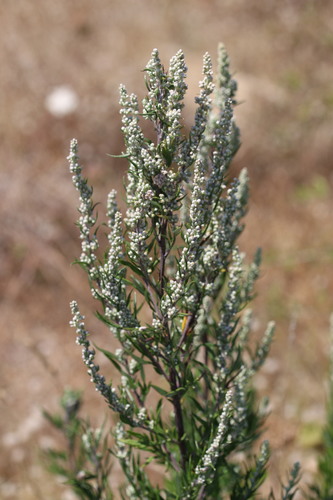
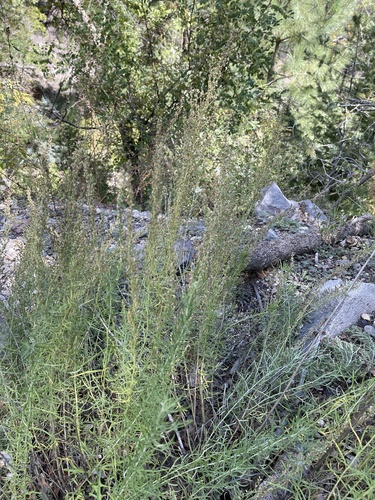
Artemisia sieversiana
(Ehrh.) Willd.
Erme
iNaturalist· cc-by-nc
(c) Наталья Фомина, some rights reserved (CC BY-NC), uploaded by Наталья Фомина
iNaturalist· cc-by-nc
(c) Petr Kosachev, some rights reserved (CC BY-NC), uploaded by Petr Kosachev
iNaturalist· cc-by-nc
(c) alopecurus, some rights reserved (CC BY-NC), uploaded by alopecurus
Summary
Source: WikipediaWith the common name of Sievers wormwood, Artemisia sieversiana is a species of flowering plant belonging to the family Asteraceae. Its native range is from Siberia to Afghanistan and Japan. The National Institute for Environmental Studies (NIES) of Japan, classifies Artemisia sieversiana as an invasive species.
Description
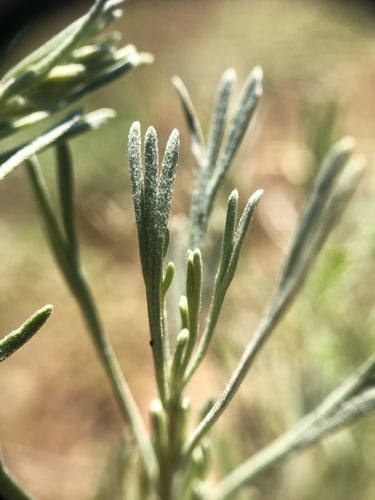
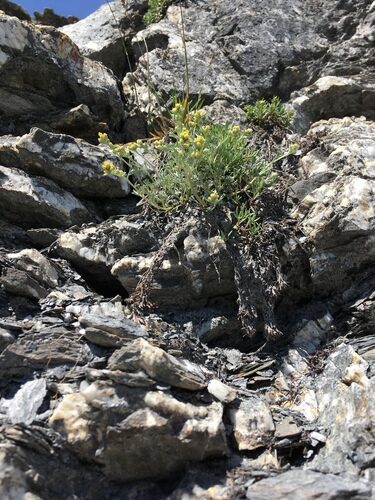
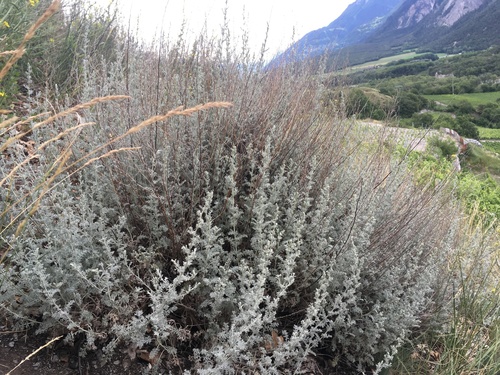
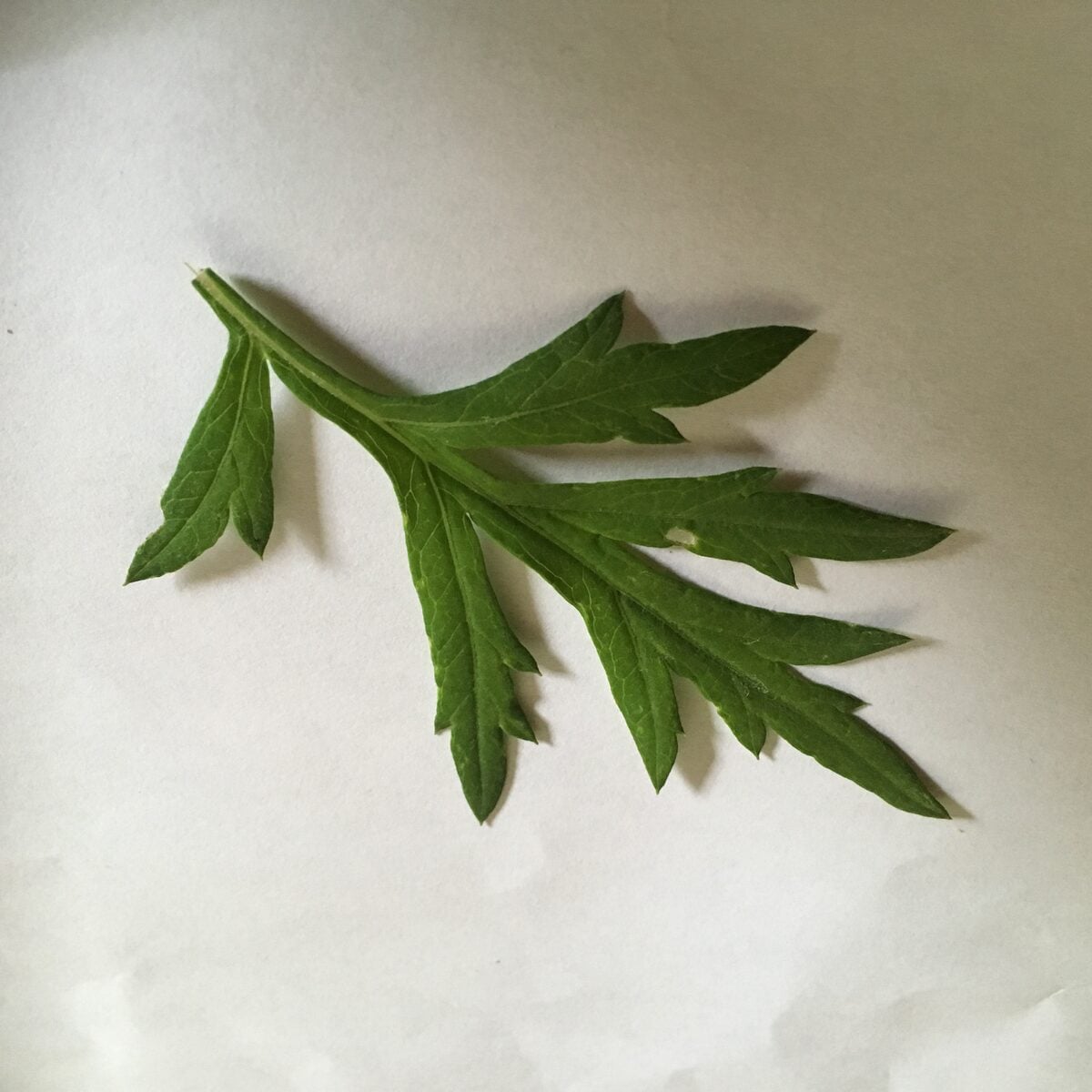
A herb. It grows over one or two years. It grows 30-100 cm high. It usually has a single stem. The leaves are hairy on both sides. The leaves are triangle oval shape and 3-10 cm long by 2-6 cm wide. They are often divided into 3 segments
Edible Uses
Edible Parts: Leaves Edible Uses: One report says that the plant is edible but does not say what part of the plant.
Traditional Uses
The seeds are eaten as a grain. The whole plant is boiled in water. The leaves are also eaten raw.
This uses section is brief — help expand it
Medicinal Uses
Anthelmintic Antirheumatic Antiseptic Deobstruent Emmenagogue Febrifuge Skin Tonic The leaves and flowering stems are anthelmintic, deobstruent, emmenagogue, febrifuge and tonic. Externally, they are used as an antiseptic and discutient. A decoction of the plant, combined with Ajuga lupulina and Ephedra gerardiana, is used as a wash to relieve painful joints. A paste of the roots is applied to boils.
Distribution
It is a temperate plant. It grows on roadsides, waste places, steppe, hillsides and forest margins from sea level to 4200 m altitude in China. In Sichuan and Yunnan.
Where It Grows
Afghanistan, Asia, Central Asia, China, E Europe, Himalayas, India, Japan, Kazakhstan, Korea, Kyrgyzstan, Mongolia, Nepal, Pakistan, Russia, Siberia, Tajikistan, Tibet, Turkmenistan, Uzbekistan,
Propagation
Seed - surface sow from late winter to early summer in a greenhouse, making sure that the compost does not dry out. When large enough to handle, prick the seedlings out into individual pots and grow them on in the greenhouse for their first winter. Plant out in late spring or early summer. Division in spring or autumn. Basal cuttings in late spring. Harvest the young shoots when about10 - 15cm long, pot up in a lightly shaded position in a greenhouse or cold frame and plant them out when well rooted. Very easy.
Other Uses
None known Special Uses
Notes
The oils are used in medicine. There are about 300 Artemisia species. It is used in medicine in Nepal.
Synonyms
Also Known As
Charmara
References (8)
- Ambasta S.P. (Ed.), 2000, The Useful Plants of India. CSIR India. p 56
- Geng, Y., et al, 2016, Traditional knowledge and its transmission of wild edibles used by the Naxi in Baidi Village, northwest Yunnan province. Journal of Ethnobiology and Ethnomedicine. 12:10
- Khasbagan, Hu-Yin Huai, and Sheng-Ji pei, 2000, Wild Plants in the Diet of Athorchin Mongol Herdsmen in Inner Mongolia. Economic Botany 54(4): 528-536
- Ling Yuou-ruen & C. J. Humphries, ASTERACEAE (Draft), Tribe ANTHEMIDEAE Cassini, in Flora of China.
- Manandhar, N.P., 2002, Plants and People of Nepal. Timber Press. Portland, Oregon. p 97
Show all 8 references Hide references
- Plants for a Future database, The Field, Penpol, Lostwithiel, Cornwall, PL22 0NG, UK. http://www.scs.leeds.ac.uk/pfaf/
- Urgamal, M., Oyuntsetseg, B., Nyambayar, D. & Dulamsuren, Ch. 2014. Conspectus of the vascular plants of Mongolia. (Editors: Sanchir, Ch. & Jamsran, Ts.). Ulaanbaatar, Mongolia. “Admon“ Press. 334pp. (p. 199-230).
- Wild edible plants of Himachal Pradesh