Acacia melanoxylon
R. Br.
Australian blackwood
iNaturalist· cc-by-nc-sa
(c) Tony Rodd, some rights reserved (CC BY-NC-SA)
iNaturalist· cc0
no rights reserved
iNaturalist· cc-by-nc
(c) ClimateWatch_Australia, some rights reserved (CC BY-NC), uploaded by ClimateWatch_Australia
Summary
Source: WikipediaAcacia melanoxylon, commonly known as the Australian blackwood, is an Acacia species native to south-eastern Australia. The species is also known as blackwood, hickory, mudgerabah, Tasmanian blackwood, or blackwood acacia. The tree belongs to the Plurinerves section of Acacia and is one of the most wide-ranging tree species in eastern Australia and is quite variable mostly in the size and shape of the phyllodes.
Description
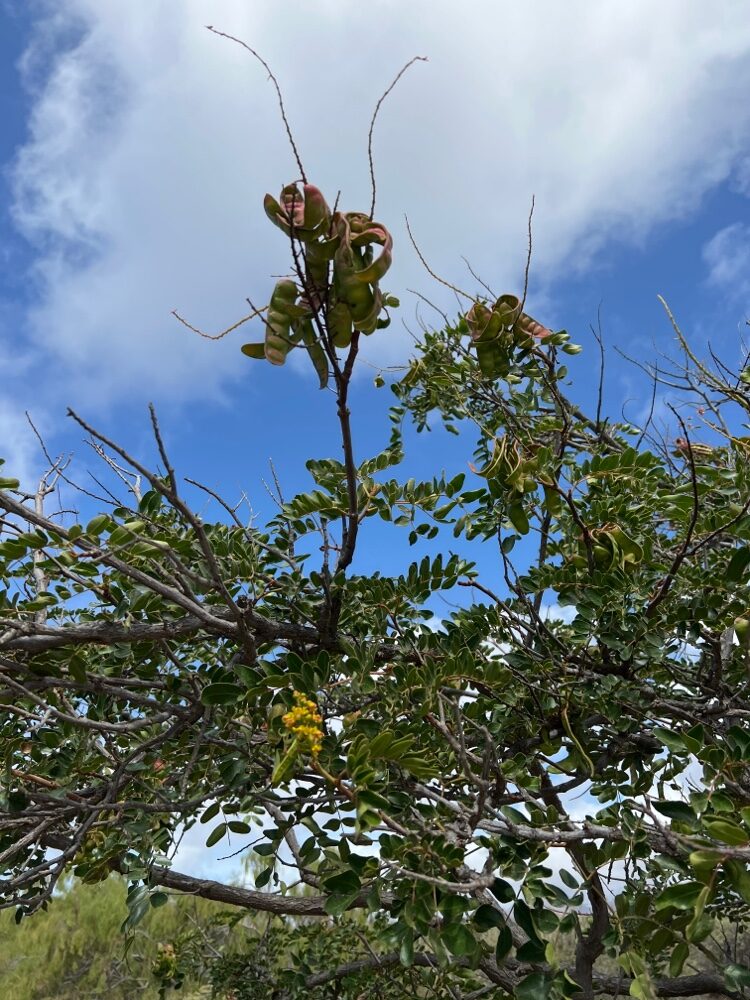
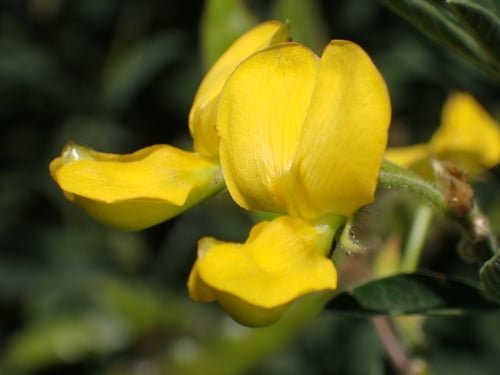
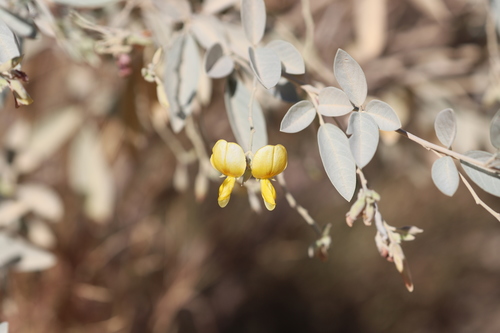
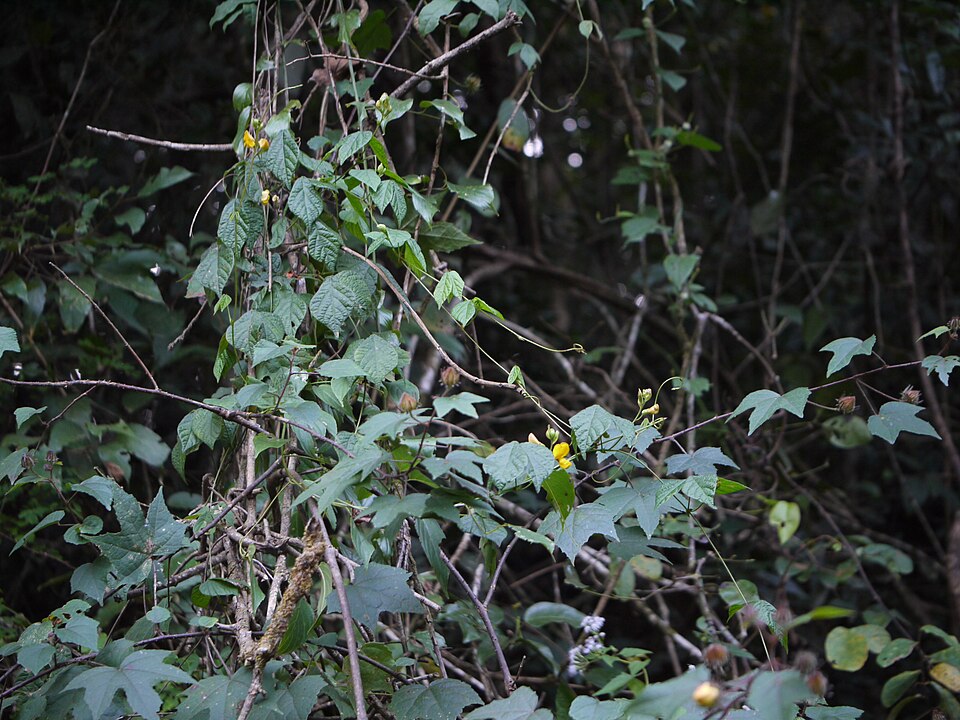
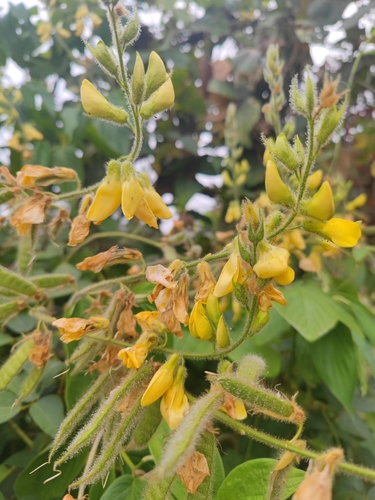
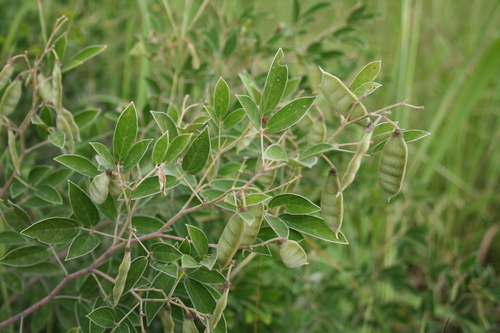
A shrub or small tree. It grows 5 m tall. There are prickles along the stem. The leaves are twice divided and there are 8-18 pairs of pinnae. There are up to 50 pairs of pinnules on each pinnae. The flowers are yellow. They are in large clusters at the ends of branches. The pods are flattened.
Edible Uses
The flowers are the edible part. Rich in pollen, they are cooked and often used in fritters. The flowers have a penetrating scent.
Traditional Uses
The gum is eaten. The seed are edible.
This uses section is brief — help expand it
Medicinal Uses
Antirheumatic.
Known Hazards
Indigenous Australians use many parts of A. melanoxylon for a variety of purposes. Seeds are harvested and consumed as a common bush tucker food, and leaves can be used as a soap or fishing poison. The bark is either harvested to make string or prepared as a traditional analgesic, while wood is often used to make clap sticks, spear-throwers and shields. The live plant is also employed as a fire barrier in rural settings when grown amongst other fire-resistant species. Blackwood timber is commercially milled for wood paneling, furniture, joinery and cabinetry, tool handles, boat-building, inlaid boxes and wooden kegs. It is often qualitatively compared to walnut hardwood, and its physical properties are well-suited for shaping with steam. The bark contains a tannin content of about 20%, and is often engineered to produce decorative wood veneer. Plain and figured Australian blackwood is used for musical instruments; in particular, guitars, drums, Hawaiian ukuleles, violin bows and organ pipes. More recently, blackwood has seen an increasing value as a substitute for koa wood.
Distribution
A temperate plant. It occurs naturally in the cooler parts of Australia. It prefers rich loamy soils. It needs a protected position. It cannot tolerate drought. It is resistant to frost. It can stand light shade. In Indonesia it grows between 1,500-2,300 m above sea level. It suits hardiness zones 8-11. Arboretum Tasmania.
Where It Grows
Africa, Algeria, Angola, Argentina, Asia, Australia*, Belgium, Bhutan, Bolivia, Brazil, Britain, Canary Is., Caucasus, Chile, China, Colombia, Congo DR, East Africa, Easter Island, Ecuador, Eritrea, Eswatini, Ethiopia, Europe, France, Greece, Hawaii, Himalayas, India, Indonesia, Italy, Kenya, Lesotho, Mauritius, Mediterranean, Morocco, Mozambique, Nepal, New Zealand, North America, Northeastern India, Pacific, Pakistan, Palestine, Peru, Portugal, Puerto Rico, Reunion, SE Asia, South Africa, Southern Africa, South America, Spain, Sri Lanka, St Helena, Swaziland, Tanzania, Tasmania*, Ukraine, Uruguay, USA, Venezuela, Zimbabwe,
Cultivation
Prefers a sandy loam and a very sunny position. Prefers a deep moist soil. Succeeds in a hot dry position. Succeeds in any good garden soil that is not excessively limey. Most members of this genus become chlorotic on limey soils. This is one of the hardier members of the genus, tolerating temperatures down to about -10°c. It succeeds outdoors in Britain from Dorset westwards, also in south-western Scotland and in Ireland. However, even in the mildest areas of the country it is liable to be cut back to the ground in excessively cold winters though it can resprout from the base. It is planted for timber in south-west Europe. This species produces both phyllodes (basically a flattened stem that looks and acts like a leaf) and true leaves. The roots are very vigorous and extensive - they often produce suckers and can damage the foundations of buildings. This species has a symbiotic relationship with certain soil bacteria, these bacteria form nodules on the roots and fix atmospheric nitrogen. Some of this nitrogen is utilized by the growing plant but some can also be used by other plants growing nearby.
Propagation
Seed is best sown as soon as it is ripe in a sunny position in a warm greenhouse. Stored seed should be scarified, pre-soaked for 12 hours in warm water, then sown in a warm greenhouse in March; germination takes 3–4 weeks at 25°C. Once seedlings are large enough to handle, prick them out into individual pots and grow on in a sunny greenhouse position through their first winter. Plant out in late spring or early summer after the last expected frosts, with some cold protection recommended for the first winter outdoors. Cuttings of half-ripe wood with a heel can be taken in July or August, potted individually in a frame, overwintered in a greenhouse, and planted out in late spring or early summer. A fair percentage take successfully.
Other Uses
A yellow dye is obtained from the flowers and a green dye from the seedpods. The plant's extensive root system helps prevent soil erosion. The bark is rich in tannin. The wood is hard, dark, close-grained, and high quality, taking a high polish; it is used for furniture and fittings.
Notes
There are about 1,350 Acacia species. Over 1,000 occur in Australia. This one can become invasive. Also as Mimosaceae.
Synonyms
Also Known As
Pohon kayuitem
References (52)
- W. T. Aiton, Hortus kew. ed. 2, 5:462. 1813
- Blamey, M and Grey-Wilson, C., 2005, Wild flowers of the Mediterranean. A & C Black London. p 79
- Bodkin, F., 1991, Encyclopedia Botanica. Cornstalk publishing, p 25
- Bonney, N., 1997, Economic Native Trees and Shrubs for South Australia. Greening Australia (SA) inc. Campbelltown SA 5074 p 11
- Boomsma, C.D., 1972, Native Tree of South Australia. Woods & Forests Department South Australia, Bulletin No.19. p 40
Show all 52 references Hide references
- Brickell, C. (Ed.), 1999, The Royal Horticultural Society A-Z Encyclopedia of Garden Plants. Convent Garden Books. p 61
- Bushfoods Magazine No. 4
- Cameron, M., (Ed.) 1981, A Guide to Flowers & Plants of Tasmania. Reed p 52
- Cherikoff V. & Isaacs, J., The Bush Food Handbook. How to gather, grow, process and cook Australian Wild Foods. Ti Tree Press, Australia p 47
- Collier, P., 1992, Rainforest Plants of Tasmania. Plant Identikit. Society for growing Australian Plants. Tasmania. p 41
- Collier, P., 1995, Alpine Wildflowers of Tasmania. Plant Identikit. Society for growing Australian Plants. Tasmania. p 41
- Coombes, A.J., 2000, Trees. Dorling Kindersley Handbooks. p 191
- Cooper, W. and Cooper, W., 2004, Fruits of the Australian Tropical Rainforest. Nokomis Editions, Victoria, Australia. p 303
- Cronin, L., 1989, The Concise Australian Flora. Reed. p 140
- Cundall, P., (ed.), 2004, Gardening Australia: flora: the gardener's bible. ABC Books. p 77
- Curtis, W.M., 1956, The Students Flora of Tasmania Vol 1 p 124
- Dashorst, G.R.M., and Jessop, J.P., 1998, Plants of the Adelaide Plains & Hills. Botanic Gardens of Adelaide and State Herbarium. p 78
- Doran, J.C., & Turnbull, J.W. (Eds), 1997, Australian Trees and Shrubs: species for land rehabilitation and farm plantings in the tropics. ACIAR Monograph No 24. p 186
- Elliot, W.R., & Jones, D.L., 1982, Encyclopedia of Australian Plants suitable for cultivation. Vol 2. Lothian. p 82
- Gilfedder, L et al, 2003, The Nature of the Midlands. Midlands Bushweb. PO Box 156 Longford, Tasmania. p 94
- Greig, D., 1996, Flowering Natives for Home Gardens. Angus & Robertson. p 36
- Grieg, D., 2002, A photographic guide to Wildflowers of South-eastern Australia. New Holland. p 65
- Hall, N. et al, 1972, The Use of Trees and Shrubs in the Dry Country of Australia, AGPS, Canberra. p 342
- Harris, S., Buchanan, A., Connolly, A., 2001, One Hundred Islands: The Flora of the Outer Furneaux. Tas Govt. p 96
- Haslam, S., 2004, Noosa's Native Plants. Noosa Integrated Catchment Assn. Inc. p 279
- Hastings Advance Community College, 2017, Uses for Native Plants of the Mornington Peninsula. 86pp. p 8
- Holliday, I., 1989, A Field Guide to Australian Trees. Hamlyn. p 22
- Hussey, B.M.J., Keighery, G.J., Cousens, R.D., Dodd, J., Lloyd, S.G., 1997, Western Weeds. A guide to the weeds of Western Australia. Plant Protection Society of Western Australia. p 180
- ILDIS Legumes of the World http:www;ildis.org/Legume/Web
- Jackes, B.R., 2001, Plants of the Tropics. Rainforest to Heath. An Identification Guide. James Cook University. p 64
- Kew Plants of the World Online
- Kirkpatrick, J.B. & Backhouse, S., 1985, Native Trees of Tasmania. p 43
- Lazarides, M. & Hince, B., 1993, Handbook of Economic Plants of Australia, CSIRO. p 5
- Lord, E.E., & Willis, J.H., 1999, Shrubs and Trees for Australian gardens. Lothian. p 40
- Marinelli, J. (Ed), 2004, Plant. DK. p 442
- Mbuya, L.P., Msanga, H.P., Ruffo, C.K., Birnie, A & Tengnas, B., 1994, Useful Trees and Shrubs for Tanzania. Regional Soil Conservation Unit. Technical Handbook No 6. p 56
- Morley, B.D., & Toelken, H.R., (Eds), 1983, Flowering Plants in Australia. Rigby. p 147
- Nicholson, N & H., 1996, Australian Rainforest Plants 3, Terania Rainforest Publishing. NSW. p 5
- Paczkowska, G . & Chapman, A.R., 2000, The Western Australian Flora. A Descriptive Catalogue. Western Australian Herbarium. p 315
- Palgrave, K.C., 1996, Trees of Southern Africa. Struik Publishers. p 244
- Sukarya, D. G., (Ed.) 2013, 3,500 Plant Species of the Botanic Gardens of Indonesia. LIPI p 99
- Tasmanian Herbarium Vascular Plants list p 39
- Townsend, K., 1994, Across the Top. Gardening with Australian Plants in the tropics. Society for Growing Australian Plants, Townsville Branch Inc. p 60
- van Wyk, B, van Wyk, P, and van Wyk B., 2000, Photographic guide to Trees of Southern Africa. Briza. p 35
- Whiting, J. et al, 2004, Tasmania's Natural Flora. Tasmania's Natural Flora Editorial Committee PO Box 194, Ulverstone, Tasmania, Australia 7315 p 211
- Williams, J.B., Harden, G.J., and McDonald, W.J.F., 1984, Trees and shrubs in rainforests of New South Wales and Southern Queensland. Univ. of New England, Armidale. p 87
- Williams, K.A.W., 1999, Native Plants of Queensland Volume 4. Keith A.W. Williams North Ipswich, Australia. p 28
- Williams A. & Sides, T., 2008, Wiradjuri Plant Use in the Murrumbidgee Catchment. Murrumbidgee Catchment Management Authority. Wagga Wagga, p 8
- Woolmore, E et al, 2002, King Island Flora: A Field Guide. p 57
- World Checklist of Useful Plant Species 2020. Royal Botanic Gardens, Kew
- www.ceres.org/au/bushfood catalogue
- Zizka, G., 1991, Flowering Plants of Easter Island. Palmarum Hortus Francofurtensis