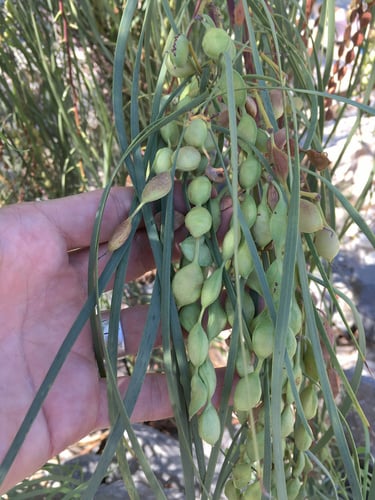
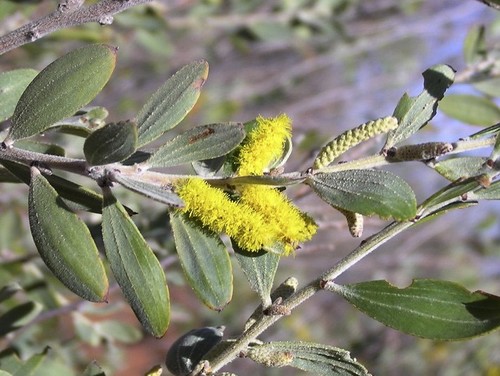
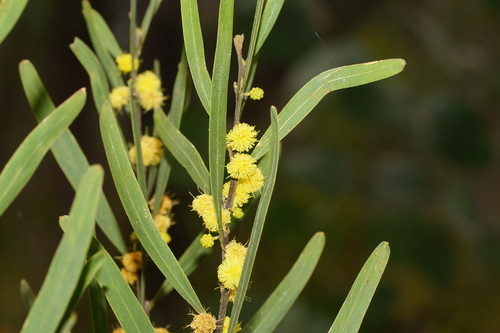
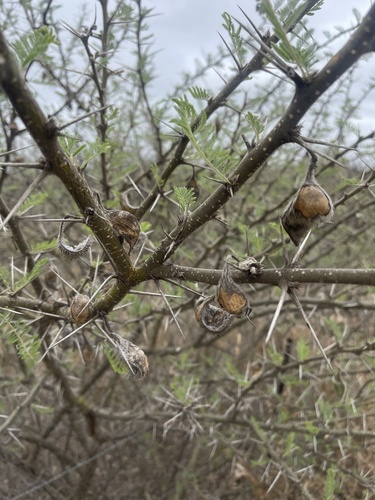
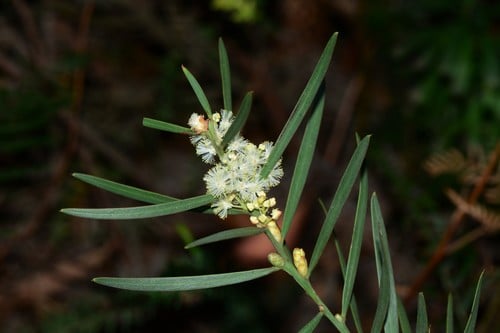
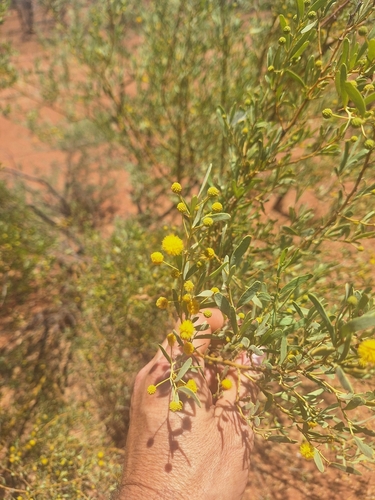
Erythrina rubrinervia
Kunth
Gallito, Coral bean
wikimedia· cc-by-sa
Wikimedia Commons - Ulf Eliasson
gbif· cc-by-sa
leonmateo040
Description
A tropical tree in the legume family native to regions where it is known as gallito or coral bean.
This description is brief — help expand it
Edible Uses
Flowers and buds - cooked. Eaten like string beans, which they resemble in flavour. There is a belief that eating the flowers results in great drowsiness, a supposition that may be well based, since the seeds of some species of Erythrina are known to have narcotic and even poisonous properties. Young leaves - cooked as a vegetable. Added to soups.
Traditional Uses
Caution: Causes sleep if eaten in large amounts. The flowers are flower buds are eaten cooked. The young leaves are used in soup.
This uses section is brief — help expand it
Known Hazards
All Erythrina species contain greater or lesser amounts of toxic alkaloids - these can be found in all parts of the plant but are usually most concentrated in the seeds. Concentrations vary from species to species, in some it is low enough that the plant is safely used as a food. In many, the alkaloids are utilized for their medicinal effects. We have no specific information on the concentration of the alkaloids in this species, but care should be exercised in any use of the plant that involves ingestion. These alkaloids have a curare-like action (obtained from Strychnos species) and can cause paralysis and even death by respiratory failure.
Distribution
A tropical plant.
Where It Grows
Bolivia, Caribbean, Central America, Colombia, Ecuador, El Salvador, Honduras, Mexico, Panama, Peru, South America*, Sri Lanka, Venezuela,
Cultivation
Erythrina species are tolerant of a range of soils, often tolerating poor fertility, but generally grow best in a sunny position in a moderately fertile, well-drained soil. All species in this genus are believed to be self-compatible. Their flowers are adapted to pollination by birds, though various insects can also cause fertilization. The various species of Erythrina can all, as far as is known, be intercrossed to produce fertile hybrids. Those species most closely related to each other cross fairly readily, but even species that are quite distant can hybridize. This species has a symbiotic relationship with certain soil bacteria, these bacteria form nodules on the roots and fix atmospheric nitrogen. Some of this nitrogen is utilized by the growing plant but some can also be used by other plants growing nearby.
Propagation
Fresh seeds, and those harvested within 3 - 6 months of maturity, can be sown without any special treatment. Germination rates are generally high and are often 100%. Seeds over 6 months old may take between 12 - 18 months to germinate due to their hard seed coat which becomes tougher with age. Soaking them in hot water, or abrading their seedcoat, can reduce this time considerably. They may be added to water which has just fallen below boiling point and left in the water as it cools for a minimum of one hour, but up to 12 hours for seed 3 years or more old, and then sown in the usual way. Alternatively, file the seeds with a slender triangular file. A groove can be made through the sides of the seed coat with care so as to avoid damaging the cotyledons or embryo, which usually results in the death of the seeds from fungal attack or in malformed and weakened seedlings. Seeds of most species produce strong seedlings from healthy seeds in almost any well-drained soil, with a minimum of trouble from damping-off disease.
Other Uses
The wood is very soft. The wood of Erythrina species is generally greyish-white in colour, light in weight but strong, with a spongy texture and not very durable. The wood from the various species is used for purposes such as sieve frames, surfboards, dugout canoes, outrigger canoe floats, boxes and small art carvings. The tree is used throughout much of Central America for forming live hedges and for living fence posts. Most Erythrina species are very easy to grow from cuttings, with even quite large branches striking well. In addition, they generally fix atmospheric nitrogen, have nutrient-rich leaves that make an excellent soil-enriching mulch, often have open crowns that do not overly restrict light, and are also often quite thorny and can provide impenetrable barriers to protect from unwelcome intrusions. Many species are therefore used as living fences to provide boundaries and livestock-proof hedges. The tree has been used to supply shade in coffee plantations, but is not very suitable because it sheds its leaves during the dry season, and the wood is so soft that it is easily broken by the wind
Notes
There are 108 Erythrina species.
Synonyms
References (6)
- Altschul, S.V.R., 1973, Drugs and Foods from Little-known Plants. Notes in Harvard University Herbaria. Harvard Univ. Press. Massachusetts. no. 1810
- Facciola, S., 1998, Cornucopia 2: a Source Book of Edible Plants. Kampong Publications, p 104
- Kew Plants of the World Online
- Kiple, K.F. & Ornelas, K.C., (eds), 2000, The Cambridge World History of Food. CUP p 1762
- F. W. H. A. von Humboldt et al., Nov. gen. sp. 6:340[folio]; 6:434[quarto]. 1824
Show all 6 references Hide references
- World Checklist of Useful Plant Species 2020. Royal Botanic Gardens, Kew