Sideroxylon inerme
L.
Milkweed, White milkwood
iNaturalist· cc-by-sa
(c) Nicola van Berkel, some rights reserved (CC BY-SA), uploaded by Nicola van Berkel
iNaturalist· cc-by
(c) linkie, some rights reserved (CC BY), uploaded by linkie
iNaturalist· cc-by-sa
(c) magriet b, some rights reserved (CC BY-SA), uploaded by magriet b
Summary
Source: WikipediaSideroxylon inerme (aMasethole or white milkwood, Afrikaans: wit-melkhout, Xhosa: Ximafana, Zulu: Umakhwelafingqane) is a southern and eastern African coastal tree, with dense foliage, black berries and small, foetid, greenish flowers. The tree's generic name means "Iron-wood" in Greek, referring to its very hard timber. It is one of South Africa's "Protected Trees" and several specimens are provincial heritage sites. This is the only member of the genus Sideroxylon in Southern Africa.
Description
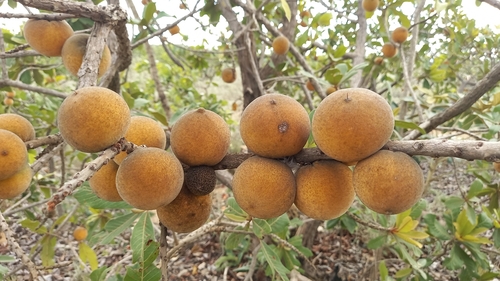
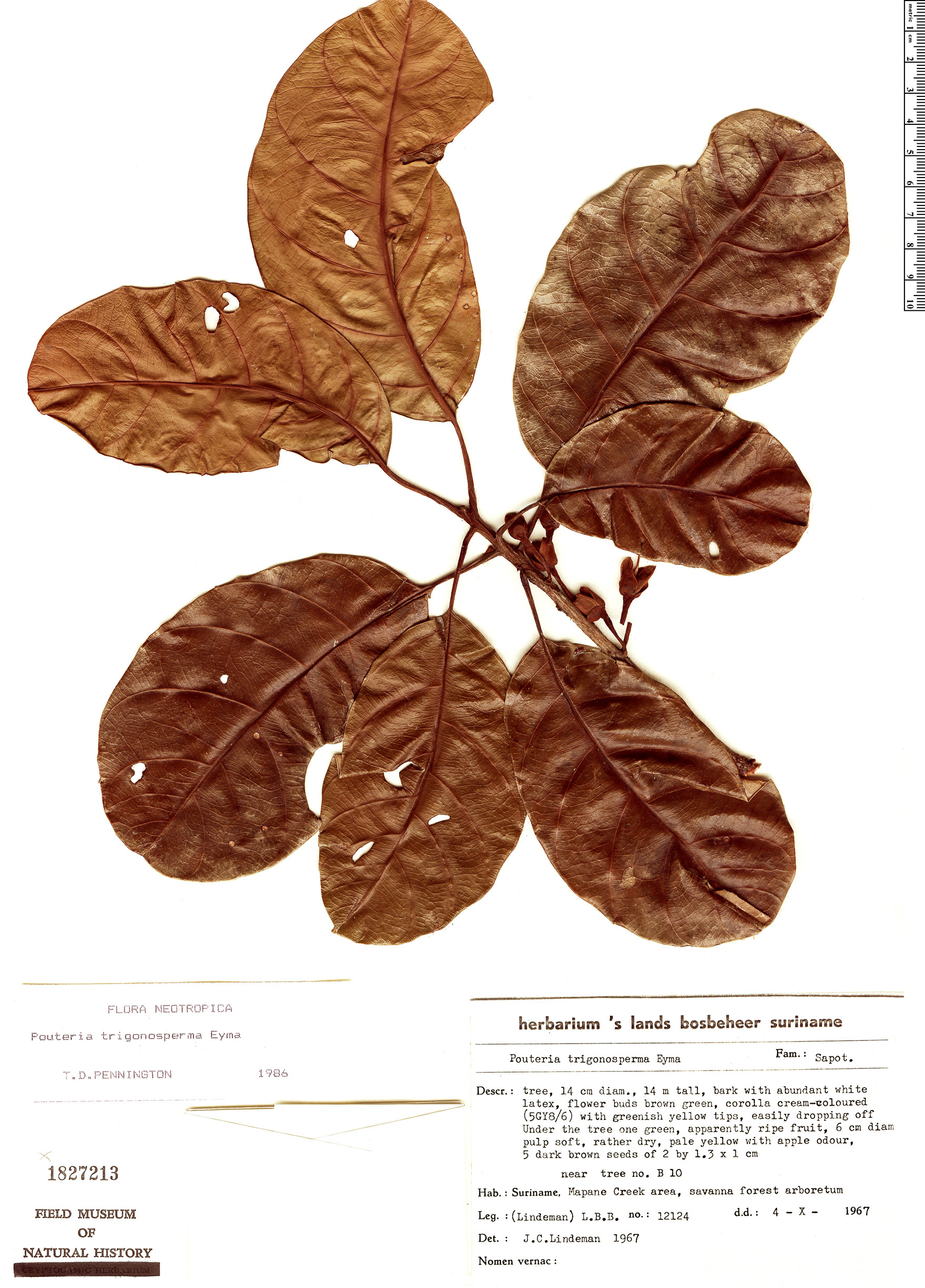
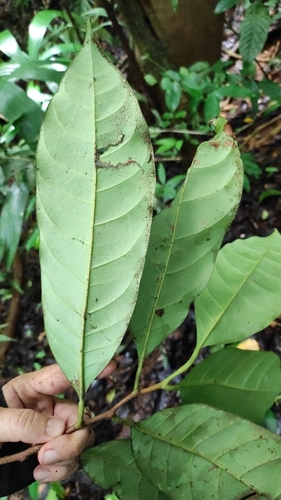
A small evergreen tree. It is often crooked and low but can be straight and up to 11 m tall. The bark becomes cracked with age. The leaves are tough and leathery and dark green above and paler beneath. They are 2.5-12 cm long by 1.5-5 cm wide. They are oval. The midrib is easy to see and raised underneath the leaf. The young leaf stalks are covered with rusty red hairs. The flowers are small and green. They occur singly or in clusters in the axils of leaves. The flowers have a strong unpleasant smell. The fruit are small and round. They can be 1.2 cm across. They are purplish black when mature. There is one seed inside.
Edible Uses
The ripe fruit are eaten raw. The flowers are also edible.
Traditional Uses
The ripe fruit are eaten raw.
This uses section is brief — help expand it
Medicinal Uses
Traditional uses include consumption of the ripe fruit.
Distribution
A tropical plant. It can grow up to 1200 m altitude in South Africa. It can grow in arid places. It grows in Miombo woodland in Africa. It grows in coastal woodlands and dune forests. It is widespread on mountains. In Brisbane Botanical Gardens.
Where It Grows
Africa, Asia, Australia, East Africa, Eswatini, Ethiopia, India, Kenya, Mozambique, Pakistan, Seychelles, Somalia, South Africa, Southern Africa, Swaziland, Tanzania, Zimbabwe,
Cultivation
Plants can be grown from seeds. They can be grown from semi-mature side shoot cuttings. They may need mist and bottom heat.
Propagation
Seed - easy, the seed sprouting within 4 - 6 weeks. Cuttings are also possible, but only semi-mature side shoots should be used - they normally root in 6 - 8 weeks.
Other Uses
The wood is yellowish brown with a fine texture. It is very heavy, very hard, strong, moderately elastic, and durable, even in damp circumstances. It is used for poles and for making spoons, and has been used for house construction and for building boats, bridges and mills. The wood is used for fuel and for making charcoal. Sideroxylon inerme does not easily catch fire and plantings could be useful as a firebreak.
Other Information
The fruit are not particularly attractive.
Nutrition
| Part | Moisture | kJ | kcal | Protein | Vit A | Vit C | Iron | Zinc |
|---|---|---|---|---|---|---|---|---|
| Fruit | 70.2 | 529 | 127 | 4.3 | — | 14.8 | 1.2 | 0.2 |
Synonyms
Also Known As
Melkbessie, Melkhoutboom, Sea oak, Tsenenze, Tsengende, Umqwashu, Witmelkhout
References (20)
- Ambasta, S.P. (Ed.), 2000, The Useful Plants of India. CSIR India. p 574
- De Vynk, J. C., et al, 2016, Indigenous edible plant use by contemporary Khoe-San descendants of South Africa's Cape South Coast. South African Journal of Botany. 102 (2016) 60-69
- Flora of Pakistan. www.eFloras.org
- Fox, F. W. & Young, M. E. N., 1982, Food from the Veld. Delta Books. p 339
- Jardin, C., 1970, List of Foods Used In Africa, FAO Nutrition Information Document Series No 2.p 161
Show all 20 references Hide references
- Long, C., 2005, Swaziland's Flora - siSwati names and Uses http://www.sntc.org.sz/flora/
- Mutie, F. M., et al, 2023, Important Medicinal and Food Taxa (Orders and Families) in Kenya, Based on Three Quantitative Approaches. Plants 2023, 12, 1145
- Pakia, M., 2000, Plant Ecology and Ethnobotany of two sacred forests (Kayas) at the Kenya Coast. M. Sc. Thesis.
- Palgrave, K.C., 1996, Trees of Southern Africa. Struik Publishers. p 722
- Palmer, E and Pitman, N., 1972, Trees of Southern Africa. Vol. 3. A.A. Balkema, Cape Town p 1735
- Peters, C. R., O'Brien, E. M., and Drummond, R.B., 1992, Edible Wild plants of Sub-saharan Africa. Kew. p 184
- Royal Botanic Gardens, Kew (1999). Survey of Economic Plants for Arid and Semi-Arid Lands (SEPASAL) database. Published on the Internet; http://www.rbgkew.org.uk/ceb/sepasal/internet [Accessed 11th June 2011]
- Ruiters-Welcome, A. K., 2019, Food plants of southern Africa. Ph.D. thesis. Univ. of Johannesburg p 101
- Schmidt, E., Lotter, M., & McCleland, W., 2007, Trees and shrubs of Mpumalanga and Kruger National Park. Jacana Media p 508
- Sp. pl. 1:192. 1753
- Swaziland's Flora Database http://www.sntc.org.sz/flora
- van Wyk, B, van Wyk, P, and van Wyk B., 2000, Photographic guide to Trees of Southern Africa. Briza. p 288
- von Breitenbach, F., 1985, Southern Cape Tree Guide. Department of Environment Affairs, Forestry Branch. Pamphlet 360 Pretoria p 25
- Wehmeyer, A. S, 1986, Edible Wild Plants of Southern Africa. Data on the Nutrient Contents of over 300 species
- Welcome, A. K. & Van Wyk, B.-E., 2019, An inventory and analysis of the food plants of southern Africa. South African Journal of Botany 122 (2019) 136–179