Sideroxylon occidentale
(Hemsley) Pennington
Bebelama
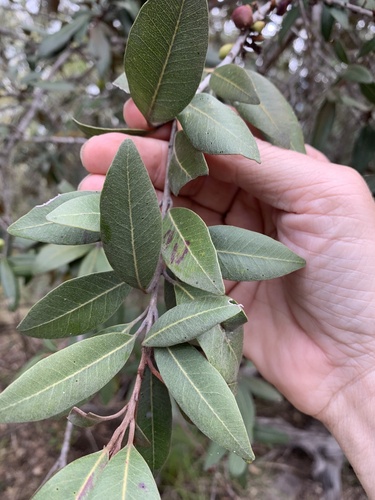
iNaturalist· cc-by
(c) Eric Knight, some rights reserved (CC BY)
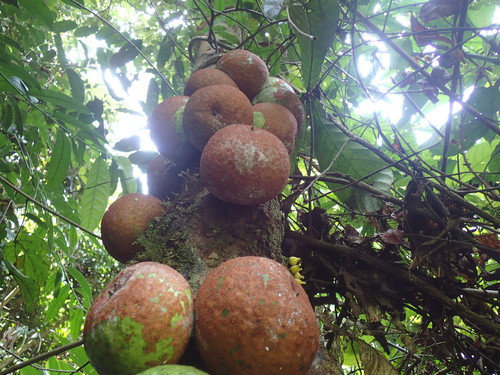
iNaturalist· cc-by
(c) Eric Knight, some rights reserved (CC BY)
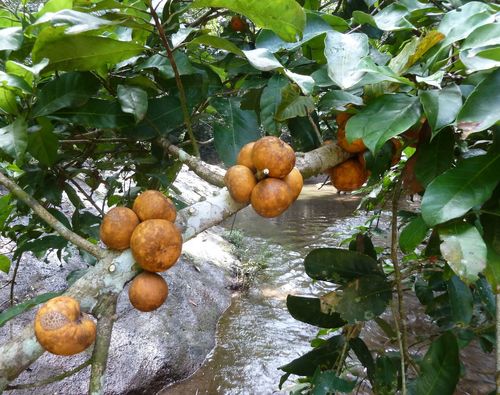
iNaturalist· cc-by-nc
(c) jrebman, some rights reserved (CC BY-NC), uploaded by jrebman
Description
A densely branched shrub or small tree. It grows 10 m high. The bark is grey and cracked. The young branches have soft white hairs. There are spines at the ends of branches or in the axils of leaves. These are 1-1.5 cm long. The leaves are spirally arranged at first. They then form tufts on short shoots in the axils of leaves. The leaves are 1-2.7 cm long by 0.5-2.1 cm wide. They are broadly sword shaped. The leaf stalk is 1.5-3 mm long. The flowers contain both sexes or male and female flowers can be separate. There are 2-10 flowers together in a tuft. The flowers are whitish. They have a scent. The fruit are 0.7-1.2 cm long. There is one seed. It is 0.6-1 cm long. It has a hard, shiny, mottled seed coat. The fruit are edible.
Edible Uses
Fruit - raw. Th fleshy fruit can be eaten fresh or dried for later use. The fruit, especially when immature, contains a white latex.The black to dark purpler, oblong-cylindrical fuit is 7 - 12mm long.
Traditional Uses
The ripe fruit are eaten fresh or dried.
This uses section is brief — help expand it
Distribution
A tropical plant.
Where It Grows
Central America, Mexico, North America,
Cultivation
Plants can flower all year round. The fragrant whitish flowers are attractive to bees. Some plants in this species have bisexual flowers, but other plants are dioecious (having flowers of one sex only).
Synonyms
References (2)
- Altschul, S.V.R., 1973, Drugs and Foods from Little-known Plants. Notes in Harvard University Herbaria. Harvard Univ. Press. Massachusetts. no. 3245 (As Bumelia occidentalis)
- Pennington, T.D., 1990, Sapotaceae in Flora Neotropica Monograph 52. New York Botanical Gardens. p 125