Sideroxylon obtusifolium subsp. buxifolium
(Roemer & Schultes) Pennington
Avalo, Cagalera, Caimito
gbif· cc-by
Alexis López Hernández
gbif· cc-by
Alexis López Hernández
gbif· cc-by
Alexis López Hernández
Description
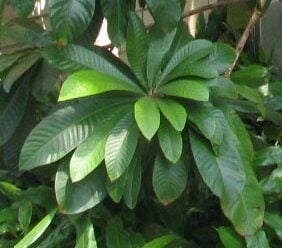
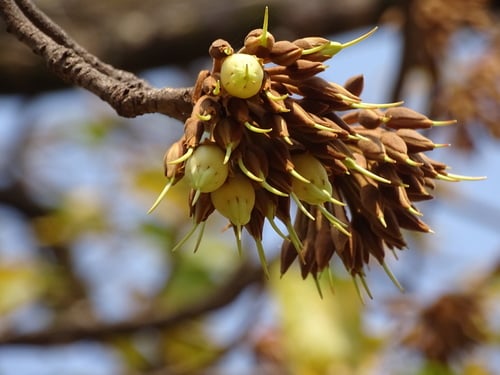
A spiny shrub or small tree. It grows 10 m high. The bark is grey and cracked. The leaves are opposite. They do not develop in tufts in older trees. The leaves are round of fattened and oval. They are usually 1.2-2 times as long as broad. The flowers occur as many together in dense clusters. They are cream coloured or greenish-white. They have a strong smell. The fruit become purple or black at maturity. The fruit are edible.
Edible Uses
The fruit are eaten.
Traditional Uses
The fruit are eaten.
This uses section is brief — help expand it
Distribution
A tropical plant. It is a plant of the coastal dunes and arid zones up to 1100 m altitude. It is often in tropical deciduous forest.
Where It Grows
Belize, Brazil, Central America, Colombia, Costa Rica, Guatemala, Honduras, Mexico, Nicagarua, North America, South America, Trinidad and Tobago, Venezuela,
Notes
Sideroxylon buxifolium in Somalia as "Shooy'
Synonyms
Also Known As
Cruseta, Hastoch, Naranjo, Pasito, Picurero, Picuyu, Sangre de toro, Uva negra, Xhas toch
References (3)
- Grandtner, M. M. & Chevrette, J., 2013, Dictionary of Trees, Volume 2: South America: Nomenclature, Taxonomy and Ecology. Academic Press p 604
- Pennington, T.D., 1990, Sapotaceae in Flora Neotropica Monograph 52. New York Botanical Gardens. p 116
- Fl. neotrop. 52:116. 1990