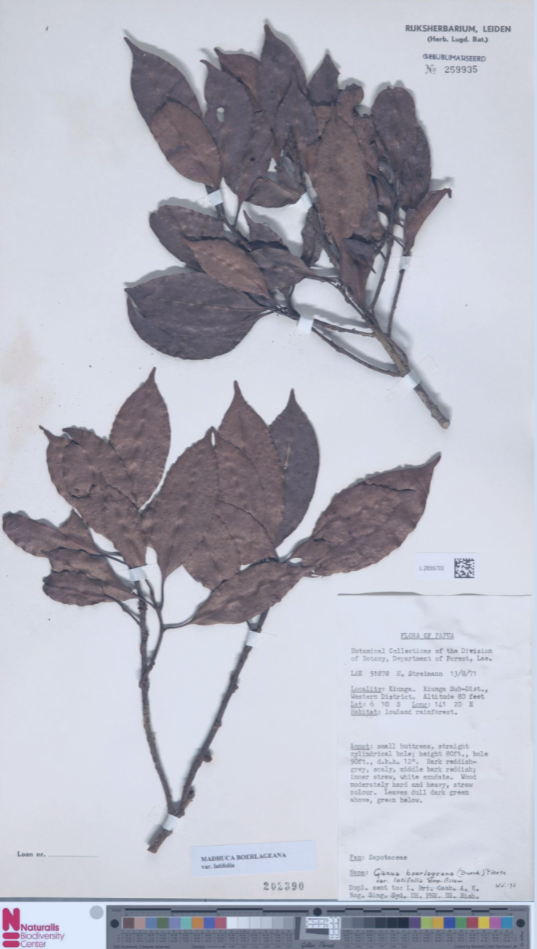
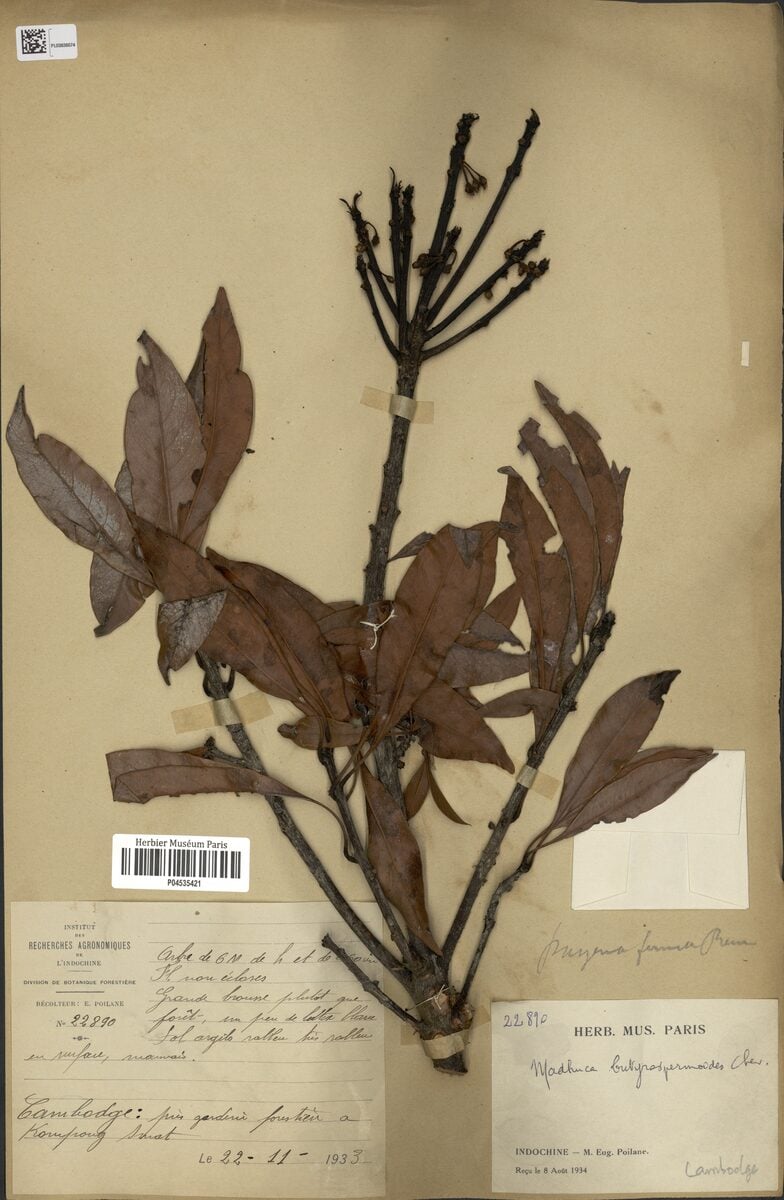
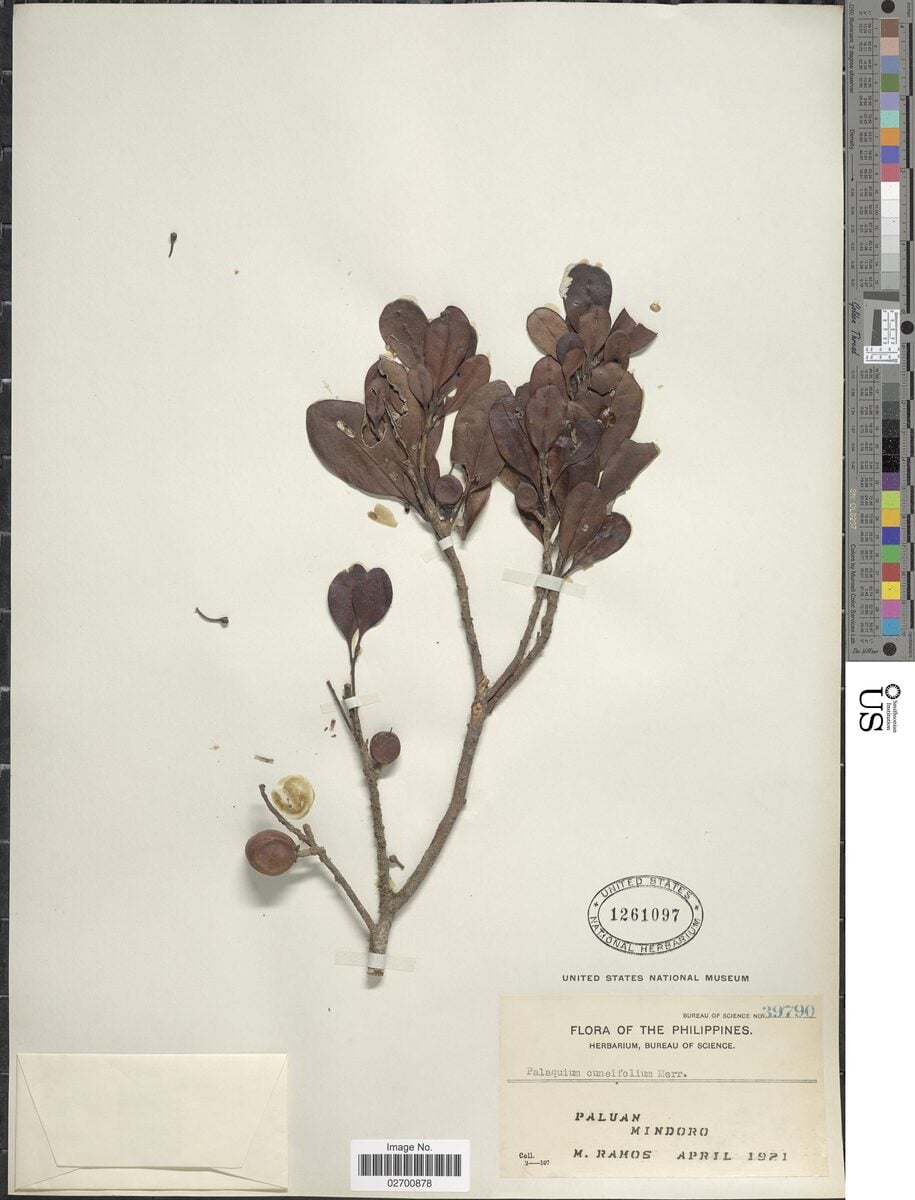
Sideroxylon obtusifolium
(Roemer & Schultes) Pennington
Obtuseleaf jungleplum
iNaturalist· cc-by-nc
(c) Lucas Lima (Lima, L.M.), some rights reserved (CC BY-NC), uploaded by Lucas Lima (Lima, L.M.)
iNaturalist· cc-by-nc
(c) Leandro Cardoso, some rights reserved (CC BY-NC), uploaded by Leandro Cardoso
iNaturalist· cc-by-nc
(c) Patricio Cattay, some rights reserved (CC BY-NC), uploaded by Patricio Cattay
Description
A shrub or tree. It is usually less than 10 m tall. It can be higher in forest. The trunk of larger plants can be 1 m across and fluted. The bark is greyish or blackish-brown. The crown can be dense and spiny. The leaves at first are arranged in spirals. They are later in tufts. The leaves are rounded sword shaped and 2-3.5 times as long as broad. The flowers occur in loose flowered clusters. There are only a few flowers in a group. The flowers are greenish yellow and have a scent. The fruit ripen to reddish-black. The fruit are edible.
Edible Uses
Fruit - raw. A succulent, sweet pulp. The reddish to black, ellipsoid, obovoid or subglobose fruits are around 10 - 20mm long, containing a single, large seed.
Traditional Uses
The sweet fruit are eaten raw. They are also used for cakes. They are also used to make an alcoholic drink.
This uses section is brief — help expand it
Medicinal Uses
The bark is used medicinally. No more details.
Distribution
A tropical plant. It grows in semi-deciduous forests and on rocky and sandy coasts. It grows up to 900 m altitude in Argentina. It grows above the flood level in Brazil.
Where It Grows
Argentina, Belize, Bolivia, Brazil*, Central America, Colombia, Ecuador, El Salvador, Guatemala, Honduras, Mexico, Nicaragua, North America, Panama, Paraguay, Peru, South America*, Uruguay, Venezuela,
Cultivation
Plants are grown from seed. Ripe fruit are collected and the seeds removed. Seeds will still grow 8 months after collecting. Fresh seed are planted and germinate in 30-50 days.
Propagation
Seed - best sown as soon as it is ripe in a seedbed in a sunny position. Seeds take 4 - 7 weeks to germinate, germination rates are normally low. Seeds can retain their viability for at least 8 months after collection.
Other Uses
The wood is heavy, hard but easy to work with, cross-grained and of fine texture. It has little durability when exposed. The wood is only used locally for internal work and carving. An excellent timber, it is used locally for making furniture and for general uses.
Production
Fruit can take 6-7 months to mature.
Other Information
The fruit are popular.
Nutrition
| Part | Moisture | kJ | kcal | Protein | Vit A | Vit C | Iron | Zinc |
|---|---|---|---|---|---|---|---|---|
| Fruit | 65.6 | 616 | 147 | 1.6 | — | 16.4 | — | — |
Synonyms
Also Known As
Cacho de venado, Caimito, Chirimolle, Coca, Coronilha, Coronilha-da-praia, Guajaivirai, Guaranina, Guayavi, Ibiranhira, Lanza colorada, Laranjunha-preta, Macaranduba-da-praia, Miri, Niwariro, Olorco molle, Picurero, Puts'mucuy, Quixaba, Quixabeira, Rompe-gibao, Sacutiaba, Sapotiaba, Yeyt, Yvyra hu
References (25)
- Arenas, P. and Scarpa, G. F., 2006, Edible wild plants of the Chorote Indians, Gran Chaco, Argentina. Botanical Journal of the Linnean Society. Vol. 153 (1): pp 73-85
- Bircher, A. G. & Bircher, W. H., 2000, Encyclopedia of Fruit Trees and Edible Flowering Plants in Egypt and the Subtropics. AUC Press. p 68 (As Bumelia obtusifolia)
- Bortolotto, I. M., et al, 2018, Lista preliminar das plantas alimenticias nativas de Mato Grosso do Sul, Brasil. Iheringia, Serie Botanica, Porto Alegre, 73 (supl.):101-116
- Brack, P., et al, 2020, Frutas nativas do Rio Grande do Sul, Brasil: riqueza e potencial alimentício. Native fruits of Rio Grande do Sul, Brazil: richness and potential as food. Rodriguésia 71: e03102018
- Bussmann, R. W., (Ed.), 2020, Biodiverse food plants in the semiarid region of Brazil have unknown potential: A systematic review. Plos ONE 15(5): e0230936
Show all 25 references Hide references
- Fouqué, A., 1972, Espèces fruitières d'Amérique tropicale. Institut français de recherches fruitierès outre-mer (As Bumelia obtusifolia)
- Freyre. M. R., et al, 2000, Suitability of wild underexploited vegetables from the Argentine Chaco as a food source. (In Spanish), Arch. Latinoam Nutr. Dec. 50(4):394-9 (As Brumelia obtusifolia)
- Grandtner, M. M., 2008, World Dictionary of Trees. Wood and Forest Science Department. Laval University, Quebec, Qc Canada. (Internet database http://www.wdt.qc.ca)
- Grandtner, M. M. & Chevrette, J., 2013, Dictionary of Trees, Volume 2: South America: Nomenclature, Taxonomy and Ecology. Academic Press p 604
- INFOODS:FAO/INFOODS Databases
- Kermath, B. M., et al, 2014, Food Plants in the Americas: A survey of the domesticated, cultivated and wild plants used for Human food in North, Central and South America and the Caribbean. On line draft. p 803
- Kinupp, V. F., 2007, Plantas alimenticias nao-convencionais da regiao metropolitana de Porto Alegre, RS, Brazil p 100
- Lopez-Diago, D. & Garcia, N., 2021, Wild edible fruits of Colombia. Biota ColomBiana 22 (2) p 52
- Lorenzi, H., 2002, Brazilian Trees. A Guide to the Identification and Cultivation of Brazilian Native Trees. Vol. 02 Nova Odessa, SP, Instituto Plantarum p 339
- Lorenzi, H., Bacher, L., Lacerda, M. & Sartori, S., 2006, Brazilian Fruits & Cultivated Exotics. Sao Paulo, Instituto Plantarum de Estuados da Flora Ltda. p 311
- Montani, M. C. & Scarpa, G. F., 2016, Recursos vegetales y prácticas alimentarias entre indígenas tapiete del noreste de la provincia de Salta, Argentina. Darwiniana, nueva serie vol.4 no.1 San Isidro jul. 2016
- Nascimento, V. T. D., et al, 2013, Knowledge and Use of Wild Food Plants in Areas of Dry Seasonal Forests in Brazil. Ecology of Food and Nutrition, 52:317–343
- Nunes, E. N., et al, 2018, Local botanical knowledge of native food plants in the semiarid region of Brazil. Journal of Ethnobiology and Ethnomedicine (2018) 14:49
- Pennington, T.D., 1990, Sapotaceae in Flora Neotropica Monograph 52. New York Botanical Gardens. p 114
- Polini, G., et al, Useful and edible plants of Paraguay Region of Chaco. p 122
- Roa, J. A. G. & Boada, D. S. G., 2018, Fundación para el Fortalecimiento de la Fruticultura y Plantas Alimenticias no Convencionales en Colombia.
- Scarpa, G. F., 2009, Wild food plants used by the indigenous peoples of South American Gran Chaco: A general synopsis and intercultural comparison. Journal of Applied Botany and Food Quality 83:90-101
- Schmedia-Hirschmann, G., 1994, Plants resources Used by the Ayoreo of the Paraguayan Chaco. Economic Botany Vol. 48. No. 3. pp. 252-258
- Segura, S., et al, 2018, The edible fruit species in Mexico. Genet Resour Crop Evol (2018) 65:1767–1793
- www.colecionandofrutas.org