Sesamum indicum
L.
Sesame, Oil-seed sesame
iNaturalist· cc0
no rights reserved, uploaded by 葉子
iNaturalist· cc-by-nc
(c) Юрий, some rights reserved (CC BY-NC)
iNaturalist· cc-by-nc
(c) Юрий, some rights reserved (CC BY-NC)
Summary
Source: WikipediaAn annual plant reaching 1 m tall by 0.5 m wide, hardy only to UK zone 10 and frost-tender. Flowers in July and is hermaphroditic. Tolerates light sandy, medium loamy, and heavy clay soils with mildly acid to basic pH, requiring full sun and moist, well-drained conditions.
Description
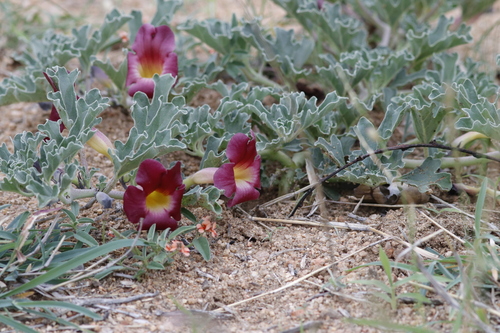
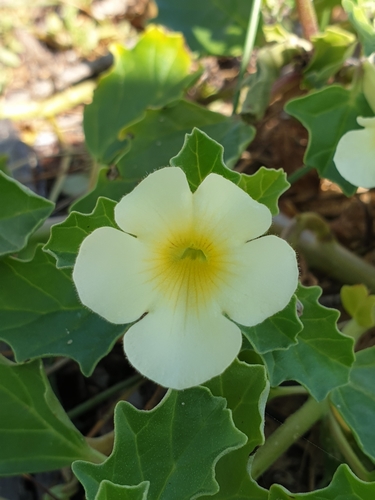
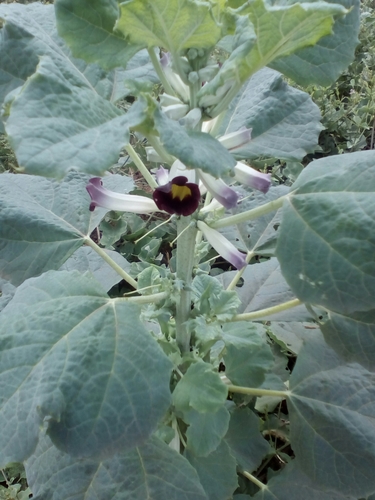
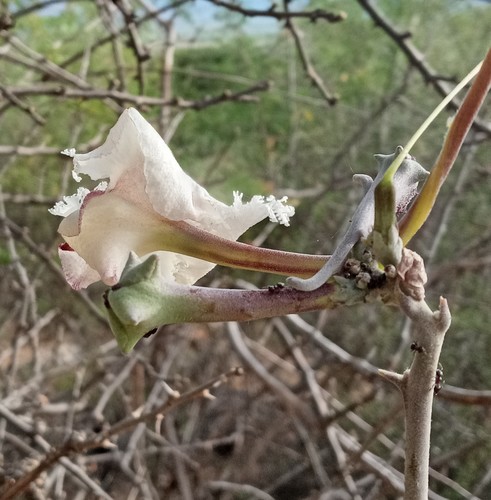
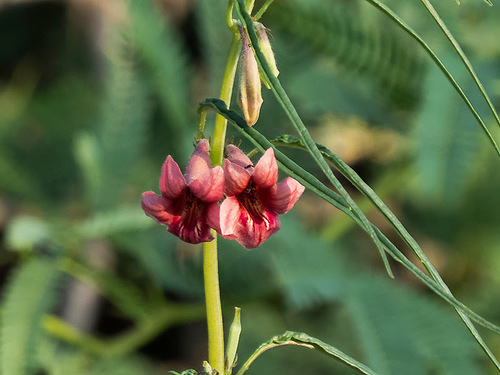
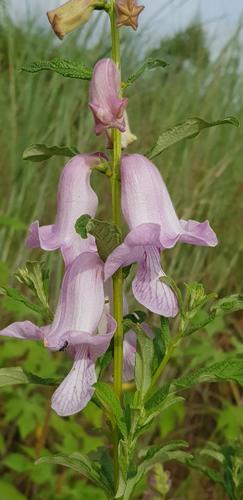
A small upright plant. It is an annual plant. It is erect and much branched. It grows 1-2 m tall. The stem is stout and 4 sided. It is furrowed along its length. It is densely covered with glandular hairs. The leaves are fine and downy. They vary in shape. The lower leaves have long stalks and are spear shaped often with lobes or a toothed edge. The leaf stalks are 3-11 cm long. The leaf blade is 4-20 cm long by 2-10 cm wide. Upper leaves are narrow and oblong. They are 0.5-2.5 cm wide. The flowers are pink and white. They occur in the axils of upper leaves. They occur either on their own or in groups or 2 or 3. They can be white, pink, purplish and with yellow spots and stripes. The fruit can be smooth or rough and there are 2 chambers in the capsule. The fruit are brown or purple. They are oblong and deeply grooved. The seeds are small and oval. They are 3 mm by 1.5 mm and vary in colour from white, yellow, grey, red, brown or black. The fully ripe pods burst open.
Edible Uses
The seeds are the primary edible part and can be cooked in various ways: roasted, stewed, ground into flour for use in breads and vegetables, made into sweetmeats, or crushed for use as a butter. They can be fermented into tempeh, ground and mixed with a sweetener to make halva, or made into the paste tahini. The seeds can also be sprouted and used in salads. Nutritionally, the seed contains approximately 21.5% protein, 60.8% fat, 8.9% carbohydrate and 3.4% ash. It is a rich source of unsaturated fatty acids, calcium and vitamins A, B and E, with the calcium being well absorbed by the body, making sesame an excellent dietary source. An edible oil pressed from the seed is used for cooking or in margarines; it is very stable and can keep for years without turning rancid. The leaves can be eaten raw or cooked as a potherb, or added to soups.
Traditional Uses
The seed are ground and eaten. They are used in soups or fried or boiled. They are used in tahini and hummus. Seeds are eaten in the form of sweetmeats. Roasted seeds are used in pickles. They are also put on bread. Oil from the seeds is used in cooking and on salads. The refuse from the seed after the oil has been extracted is boiled in water and made into soup. The seeds are used in chutney. The dried leaves are crushed and cooked with dried fish and eaten in curries.
Medicinal Uses
Both the leaves and seed are astringent. The leaves are rich in a gummy substance that, when mixed with water, forms a bland mucilage used to treat infant cholera, diarrhoea, dysentery, catarrh and bladder troubles. The seed is diuretic, emollient, galactogogue, lenitive and tonic, and acts as a tonic for the liver and kidneys. It is taken internally for premature hair loss and greying, convalescence, chronic dry constipation, dental caries, osteoporosis, stiff joints and dry cough. It has a marked ability to increase milk production in nursing mothers. Externally, the seed is used to treat haemorrhoids and ulcers. The seed is very high in calories and should be used with caution by people who are overweight. The oil is laxative and promotes menstruation, and is used to treat dry constipation in the elderly. Mixed with lime water, the oil is applied externally to treat burns, boils and ulcers. A decoction of the root is used in various traditions to treat asthma and coughs.
Distribution
A tropical plant. It suits the hot dry semi-arid tropics and subtropics. It can tolerate short periods of drought once established. It needs a temperature of 20-24°C in early growth then 27°C for ripening. It grows from sea level to about 1,200 m. It grows in areas with a rainfall from 400 to 1000 mm. Soils need to be well drained. It is very intolerant of water-logging. It cannot stand high humidity. It needs frost free conditions. It needs a dry period for seed drying. It does not like acid soils. In Nepal it grows up to about 2400 m altitude. It grows in open sunny places. It can grow in arid places. It suits hardiness zones 10-12.
Where It Grows
Afghanistan, Africa, Andaman Is., Andes, Angola, Armenia, Asia, Australia, Balkans, Bangladesh, Belize, Benin, Bhutan, Bolivia, Brazil, Bulgaria, Burkina Faso, Burundi, Cambodia, Caucasus, Central Africa, Central African Republic, CAR, Central America, Central Asia, Chad, China, Colombia, Comoros, Congo DR, Congo R, Costa Rica, Côte d'Ivoire, Cuba, Cyprus, Dominican Republic, East Africa, East Timor, Ecuador, Egypt, El Salvador, Eritrea, Eswatini, Europe, Ethiopia, Fiji, Gabon, Ghana, Greece, Guatemala, French Guiana, Guianas, Guinea, Guinea-Bissau, Guyana, Haiti, Hawaii, Himalayas, Honduras, India*, Indochina, Indonesia, Iran, Iraq, Italy, Ivory Coast, Japan, Kazakhstan, Kenya, Korea, Laos, Lebanon, Liberia, Libya, Macedonia, Madagascar, Malawi, Malaysia, Mali, Marianas, Marquesas, Mauritania, Mauritius, Mediterranean, Mexico, Middle East, Morocco, Mozambique, Myanmar, Nepal, Nicaragua, Niger, Nigeria, North Africa, North America, Northeastern India, Oman, Pacific, Pakistan, Peru, Philippines, Rwanda, Saudi Arabia, SE Asia, Senegal, Serbia, Sierra Leone, Slovenia, Somalia, South Korea, South Africa, South America, Southern Africa, South Sudan, Spain, Sri Lanka, Sudan, Suriname, Swaziland, Syria, Taiwan, Tajikistan, Tanzania, Thailand, Timor-Leste, Togo, Trinidad-Tobago, Turkey, Türkiye, Uganda, USA, Uzbekistan, Venezuela, Vietnam, West Africa, West Indies, Yemen, Zambia, Zimbabwe,
Cultivation
Sesame can be grown from the warm temperate zone to the tropics, so long as there is a growing season of at least 5 months. In the tropics, it can be grown at elevations up to 1,500 metres. It grows best in areas where annual daytime temperatures are within the range of 20 - 30°c, but can tolerate 10 - 40°c. It prefers a mean annual rainfall in the range 500 - 1,000mm, but tolerates 300 - 1,500mm. High relative humidity or heavy rains may increase the incidence of fungal diseases. Requires a well-drained porous soil and a warm sunny sheltered position. Succeeds in most well-drained soils of moderate fertility. Prefers a pH in the range 5.5 - 7.5, tolerating 4.5 - 8. A sheltered position is preferred, sesame is susceptible to wind damage after the main stem has elongated. Depending upon variety, a crop of sesame can be produced within 40 - 180 days from sowing the seed. The average yield of sesame seed in the world is about 350 kilos per hectare, but yields can be up to 3 tonnes. There are many named varieties. Sesame grows well with sweet corn but it grows badly with sorghum. The British climate is probably too cool in the summer to successfully grow this crop, though some people have reported success. Early sowing in the greenhouse and some protection when first planting it out will help. Sesame grows well with sweet corn but it grows badly with sorghum.
Propagation
Sow seed in early spring in a greenhouse. Prick out seedlings into individual pots when large enough to handle and plant out after the last expected frosts, giving protection under a cloche until they are growing away well. In warm temperate zones where frosts are very rare, light or non-existent, seed can be sown in situ in spring or autumn.
Other Uses
The seed contains up to 55% of a semi-drying oil, which is used in soap making, lighting, as a lubricant and as a source of pharmaceutical drugs. When added to the insecticide pyrethrum it acts as a synergist — a 10% content of the oil doubles the potency of the pyrethrum. The oil can also be used in barrier creams to protect the skin from harmful UV radiation.
Production
Yields of 340-500 kg/ha are average. Plants reach maturity in 80-180 days. Crops are harvested as the leaves begind to drop. Plants are cut and stooked or dried in racks. The hull is removed by soaking in water overnight, then partly dried and rubbed against a rough surface.
Other Information
It is a cultivated food plant.
Notes
The seeds can contain 55% oil. Recently the name Sesamum orientale L. has been accepted.
Nutrition
| Part | Moisture | kJ | kcal | Protein | Vit A | Vit C | Iron | Zinc |
|---|---|---|---|---|---|---|---|---|
| Oil | 0.1 | 3683 | 881 | 0.2 | — | 0 | — | — |
| Seed | 4.7 | 2397 | 573 | 17.7 | 1 | 0 | 14.6 | 7.8 |
| Leaves | 85.5 | 188 | 45 | 3.4 | — | — | — | — |
Synonyms
Also Known As
Ajonjoli, Beniseed, Benne, Benniseed, Bijan, Bukenyimu, Bulukutu, Bununya, Busosyi, Bwengo, Chamkkae, Chih mah, Chitowe, Ellu, Ewe ekutu, Geching, Gingelly, Gingli, Ginjili, Goma, Hnan-gyi, Hnan si, Hu ma, Ingo, Ininga, Karkashi, Karuthellu, Kattu yellu, Keh, Khasa, Lamti, Landi, Lena, Lenga, Letsoku, Lidonya, Linga, Matongwe, Mchesi, Me, Mkwiyu, Muki goma, Muwaadonmu, Namuhangwa, Nareer, Nempo, Nga dee la, Ngaa, Nuvvulu, Nyamoti, Rasi, Rininga, ruNinga, Saamu, Saari, Sesam, Sesamo, Sesamum, Sibing, Sii, Sim-sim, Sivar, Susam, Tal, Thala, Til, Tila, Til-dkar, Tili, Ubudonqa, Usambia, Wally, Wangila, Wanguila, Wijen, Yonmonti, Zhi ma, Zicil-puuz
References (106)
- Abbiw, D.K., 1990, Useful Plants of Ghana. West African uses of wild and cultivated plants. Intermediate Technology Publications and the Royal Botanic Gardens, Kew. p 40
- Achigan-Dako, E, et al (Eds), 2009, Catalogue of Traditional Vegetables in Benin. International Foundation for Science.
- Altschul, S.V.R., 1973, Drugs and Foods from Little-known Plants. Notes in Harvard University Herbaria. Harvard Univ. Press. Massachusetts. no. 4099
- Ambasta, S.P. (Ed.), 2000, The Useful Plants of India. CSIR India. p 568
- Anderson, E. F., 1993, Plants and people of the Golden Triangle. Dioscorides Press. p 221
Show all 106 references Hide references
- Arinathan, V., et al, 2007, Wild edibles used by Palliyars of the western Ghats, Tamil Nadu. Indian Journal of Traditional Knowledge. 6(1) pp 163-168
- Bernholt, H. et al, 2009, Plant species richness and diversity in urban and peri-urban gardens of Niamey, Niger. Agroforestry Systems 77:159-179
- BHANDARI,
- Bianchini, F., Corbetta, F., and Pistoia, M., 1975, Fruits of the Earth. Cassell. p 236
- Bodkin, F., 1991, Encyclopedia Botanica. Cornstalk publishing, p 928
- Bonou, A., et al, 2013, Valeur economique des Produits Forestiers Non Ligneux (PFNL) au Benin. Editions Universitaires Europeennes p 88
- Bremness, L., 1994, Herbs. Collins Eyewitness Handbooks. Harper Collins. p 269
- Burkill, H. M., 1985, The useful plants of west tropical Africa, Vol. 4. Kew.
- Burkill, I.H., 1966, A Dictionary of the Economic Products of the Malay Peninsula. Ministry of Agriculture and Cooperatives, Kuala Lumpur, Malaysia. Vol 2 (I-Z) p 2030
- Catarino, L. et al, 2019, Edible Leafy Vegetables from West Africa (Guinea-Bissau): Consumption, Trade and Food Potential. Foods 2019, 8, 493
- Codjia, J. T. C., et al, 2003, Diversity and local valorisation of vegetal edible products in Benin. Cahiers Agricultures 12:1-12
- Cheifetz, A., (ed), 1999, 500 popular vegetables, herbs, fruits and nuts for Australian Gardeners. Random House p 158 (As Sesamum orientale)
- Cobley, L.S. (rev. Steele, W.M.) 2nd Ed., 1976, An Introduction to the Botany of Tropical Crops. Longmans. p 299
- Creasy, R., 2000, The Edible Asian Garden. Periplus p 53
- Cundall, P., (ed.), 2004, Gardening Australia: flora: the gardener's bible. ABC Books. p 1338
- Dansi, A., et al, 2012, Diversity of the Neglected and Underutilized Crop Species of Importance in Benin. The Scientific World Journal. Volume 2012, Article ID 932947, 19 pages
- Dhyani, S.K., & Sharma, R.V., 1987, Exploration of Socio-economic plant resources of Vyasi Valley in Tehri Garwhal. J. Econ. Tax. Bot. Vol. 9 No. 2 pp 299-310
- Esperanca, M. J., 1988. Surviving in the wild. A glance at the wild plants and their uses. Vol. 2. p 217
- Ethnobotany of Karbis. Chapter 4 in p 100, 108
- Facciola, S., 1998, Cornucopia 2: a Source Book of Edible Plants. Kampong Publications, p 168
- FAO, 1988, Traditrtland, Oregon. p 424 (As Sesamum orientale)
- Fox, F. W. & Young, M. E. N., 1982, Food from the Veld. Delta Books. p 289
- Grubben, G. J. H. and Denton, O. A. (eds), 2004, Plant Resources of Tropical Africa 2. Vegetables. PROTA, Wageningen, Netherlands. p 564
- Guite, C., 2016, Study of wild edible plants associated with the Paite Tribe of Manipur, India. International Journal of Current Research. Vol. 8, Issue 11, pp. 40927-40932
- http://www.botanic-gardens-ljubljana.com/en/plants
- Kayabasi, N. P., et al, 2018, Wild edible plants and their traditional use in the human nutrition in Manyas (Turkey). Indian Journal of Traditional Knowledge. Vol. 17(2), April 2018, pp 299-306
- Kew Plants of the World On line
- Khanal, R., et al, 2014, Documenting abundance and use of underutilized plant species in the mid hill region of Nepal. ECOPRINT 21: 63-71, 2014
- Latham, P., 2004, Useful Plants of Bas-Congo province. Salvation Army & DFID p 255 (As Sesamum orientale)
- Lautenschläger, T., et al, 2018, First large-scale ethnobotanical survey in the province of Uíge, northern Angola. Journal of Ethnobiology and Ethnomedicine (2018) 14:51
- Malaisse, F., 1997, Se nourrir en floret claire africaine. Approche ecologique et nutritionnelle. CTA., p 69
- Martin, F.W. & Ruberte, R.M., 1979, Edible Leaves of the Tropics. Antillian College Press, Mayaguez, Puerto Rico. p 211 (As Sesamum orientale)
- Martin, F.W. & Ruberte, R.M., 1979, Edible Leaves of the Tropics. Antillian College Press, Mayaguez, Puerto Rico. p 48
- Maundu, P. et al, 1999, Traditional Food Plants of Kenya. National Museum of Kenya. 288p
- Medhi, P. & Borthakur, S. K., 2012, Phytoresources from North Cachur Hills of Assam -3: Edible plants sold at Hflong market. Indian Journal of Natural Products and Resources. 3(1) pp 84-109
- Melander, M., 2007, Endangered plants on the market in Havana City, Cuba. Uppsala University, Sweden p 19
- Menninger, E.A., 1977, Edible Nuts of the World. Horticultural Books. Florida p 84
- Mertz, O., Lykke, A. M., and Reenberg, A., 2001, Importance and Seasonality of Vegetable Consumption and Marketing in Burkina Faso. Economic Botany, 55(2):276-289
- Miguel, E., et al, 1989, A checklist of the cultivated plants of Cuba. Kulturpflanze 37. 1989, 211-357
- Molla, A., Ethiopian Plant Names. http://www.ethiopic.com/aplants.htm
- Morley, B.D., & Toelken, H.R., (Eds), 1983, Flowering Plants in Australia. Rigby. p 275 (As Sesamum orientale)
- Mulherin, J., 1994, Spices and natural flavourings. Tiger Books, London. p 82
- Mutie, F. M., et al, 2023, Important Medicinal and Food Taxa (Orders and Families) in Kenya, Based on Three Quantitative Approaches. Plants 2023, 12, 1145
- Nayar, N.M., 1979, Sesame, in Simmonds, N.W., (ed), Crop Plant Evolution. Longmans. London. p 231
- Ochse, J. J. et al, 1931, Vegetables of the Dutch East Indies. Asher reprint. p 583
- Peters, C. R., O'Brien, E. M., and Drummond, R.B., 1992, Edible Wild plants of Sub-saharan Africa. Kew. p 160
- Phon, P., 2000, Plants used in Cambodia. © Pauline Dy Phon, Phnom Penh, Cambodia. p 554
- Plants for a Future database, The Field, Penpol, Lostwithiel, Cornwall, PL22 0NG, UK. http://www.scs.leeds.ac.uk/pfaf/
- Plants of Haiti Smithsonian Institute http://botany.si.edu/antilles/West Indies
- Polunin, O., & Stainton, A., 2006, Flowers of the Himalaya, Oxford India Paperbacks. p 311 (As Sesamum orientale)
- PROSEA handbook Volume 13 Spices. p 279
- PROSEA handbook Volume 13 Spices. p 279 (As Sesamum orientale)
- Purseglove, J.W., 1968, Tropical Crops Dicotyledons, Longmans. p 430
- Rajapaksha, U., 1998, Traditional Food Plants in Sri Lanka. HARTI, Sri Lanka. p 376
- Rashid, H. E., 1977, Geography of Bangladesh. Westview. p 285
- Royal Botanic Gardens, Kew (1999). Survey of Economic Plants for Arid and Semi-Arid Lands (SEPASAL) database. Published on the Internet; http://www.rbgkew.org.uk/ceb/sepasal/internet [Accessed 5th May 2011]
- Rubaihayo, E. B., Conservation and use of traditional vegetables in Uganda. Bioversity International.
- Ruiters-Welcome, A. K., 2019, Food plants of southern Africa. Ph.D. thesis. Univ. of Johannesburg p 85
- Seegeler, C.J.P., 1989, Sesamum orientale L. (Pedaliaceae): sesame's correct name. Taxon 38:656-659
- Segnon, A. C. & Achigan-Dako, E. G., 2014, Comparative analysis of diversity and utilization of edible plants in arid and semi-arid areas in Benin. Journal of Ethnobiology and Ethnomedicine 2014, 10:80
- Shava, S., et al, 2009, Traditional food crops as a source of community resilience in Zimbabwe. International Journal of the African Renaissance 4(1)
- Small, E., 2009, Top 100 Food Plants. The world's most important culinary crops. NRC Research Press. p 491
- Smith, A.C., 1991, Flora Vitiensis Nova, Lawaii, Kuai, Hawaii, Volume 5 p 139
- Smith, N., Mori, S.A., et al, 2004, Flowering Plants of the Neotropics. Princeton. p 288 (Drawing), Plate 36 (Photo)
- Solomon, C., 2001, Encyclopedia of Asian Food. New Holland. p 337
- Song, M., et al, 2013, Traditional knowledge of wild edible plants in Jeju Island, Korea. Indian Journal of Traditional Knowledge. 12(2) pp 177-194
- Sp. pl. 2:634. 1753 - first united with S. orientale by DC., Pl. rar. jard. Geneve 16-19. 1825, effectively satisfying ICBN Art. 11.5, despite arguments in Taxon 38:656-659. 1989
- Srivastava, R. C., 2010, Traditional knowledge of Nyishi (Daffla) tribe of Arunachal Pradesh. Indian Journal of Traditional Knowledge. 9(1):26-37
- Staples, G.W. and Herbst, D.R., 2005, A tropical Garden Flora. Bishop Museum Press, Honolulu, Hawaii. p 452
- Steggerda, M., Some Ethnological Data Concerning One Hundred Yucatan Plants. Smithsonian Institution Anthropological Papers, No. 29
- Swaziland's Flora Database http://www.sntc.org.sz/flora
- Terra, G.J.A., 1973, Tropical Vegetables. Communication 54e Royal Tropical Institute, Amsterdam, p 71 (As Sesamum orientale)
- Thothathri, K., & Pal, G.D., 1987, Further Contribution to the Ethnobotany of Subansiri District, Aranchal Pradesh. J. Econ. Tax. Bot. Vol. 10 No. 1 pp 149-157
- Torre, de la, L., et al, 2008, Enciclopedia de las Plantas Útiles del Ecuador. Herbario QCA. Pontificia Universidad Católica del Ecuador. p 488
- USDA, ARS, National Genetic Resources Program. Germplasm Resources Information Network - (GRIN). [Online Database] National Germplasm Resources Laboratory, Beltsville, Maryland. Available: www.ars-grin.gov/cgi-bin/npgs/html/econ.pl (10 April 2000)
- van Wyk, B., 2005, Food Plants of the World. An illustrated guide. Timber press. p 344
- van Wyk, Be, & Gericke, N., 2007, People's plants. A Guide to Useful Plants of Southern Africa. Briza. p 24
- Vickery, M.L. and Vickery, B., 1979, Plant Products of Tropical Africa, Macmillan. p 31
- Williamson, J., 2005, Useful Plants of Malawi. 3rd. Edition. Mdadzi Book Trust. p 225
- Zon, A.P.M. van der, Grubben, G.J.H., 1976, Les legumes-feuilles spontanes et cultives du Sud-Dahomey, Communication 65, Royal Tropical Institute, Amsterdam, p 88, 892004, Flowering Plants of the Neotropics. Princeton. p 288 (Drawing), Plate 36 (Photo)
- Solomon, C., 2001, Encyclopedia of Asian Food. New Holland. p 337
- Sp. pl. 2:634. 1753 - first united with S. orientale by DC., Pl. rar. jard. Geneve 16-19. 1825, effectively satisfying ICBN Art. 11.5, despite arguments in Taxon 38:656-659. 1989
- Staples, G.W. and Herbst, D.R., 2005, A tropical Garden Flora. Bishop Museum Press, Honolulu, Hawaii. p 452
- Sukenti, K., et al, 2016, Ethnobotanical study on local cuisine of the Sasak tribe in Lombok Island, Indonesia. Journal of Ethnic Foods. 3 (2016) 189-200 p 198
- Swaziland's Flora Database http://www.sntc.org.sz/flora
- Teron, R. & Borthakur, S. K., 2016, Edible Medicines: An Exploration of Medicinal Plants in Dietary Practices of Karbi Tribal Population of Assam, Northeast India. In Mondal, N. & Sen, J.(Ed.) Nutrition and Health among tribal populations of India. p 154 (As Sesamum orientale)
- Terra, G.J.A., 1973, Tropical Vegetables. Communication 54e Royal Tropical Institute, Amsterdam, p 71 (As Sesamum orientale)
- Thothathri, K., & Pal, G.D., 1987, Further Contribution to the Ethnobotany of Subansiri District, Aranchal Pradesh. J. Econ. Tax. Bot. Vol. 10 No. 1 pp 149-157
- USDA, ARS, National Genetic Resources Program. Germplasm Resources Information Network - (GRIN). [Online Database] National Germplasm Resources Laboratory, Beltsville, Maryland. Available: www.ars-grin.gov/cgi-bin/npgs/html/econ.pl (10 April 2000)
- Vanderjagt, F. J., et al, 2000, The trypsin inhibitor content of 61 wild edible plant foods of Niger. Plant Foods for Human Nutrition 55: 335–346, 2000.
- van Wyk, B., 2005, Food Plants of the World. An illustrated guide. Timber press. p 344
- van Wyk, Be, & Gericke, N., 2007, People's plants. A Guide to Useful Plants of Southern Africa. Briza. p 24
- Vickery, M.L. and Vickery, B., 1979, Plant Products of Tropical Africa, Macmillan. p 31
- Welcome, A. K. & Van Wyk, B.-E., 2019, An inventory and analysis of the food plants of southern Africa. South African Journal of Botany 122 (2019) 136–179
- Wiersema, J. H. & Leon, B., 2013, World Economic Plants. A Standard Reference CRC Press. 2nd Ed. p 631
- Williamson, J., 2005, Useful Plants of Malawi. 3rd. Edition. Mdadzi Book Trust. p 225
- World Checklist of Useful Plant Species 2020. Royal Botanic Gardens, Kew
- Yaradua, S. S. & El-Ghani, M. A., 2015, Ethnobotanical Survey of Edible Plants Sold in Katsina Metropolis Markets.International Journal of Science and Research (IJSR). 4(12)
- Yeshi, K. et al, 2017, Taxonomical Identification of Himalayan Edible Medicinal Plants in Bhutan and the Phenolic Contents and Antioxidant Activity of Selected Plants. TBAP 7 (2) 2017 pp 89 - 106
- Zeven, A. C. & de West, J. M. J., 1982, Dictionary of cultivated plants and their regions of diversity. Wageningen. p 78
- Zon, A.P.M. van der, Grubben, G.J.H., 1976, Les legumes-feuilles spontanes et cultives du Sud-Dahomey, Communication 65, Royal Tropical Institute, Amsterdam, p 88, 89