Sesamum capense
Burm. f.
Wild foxglove
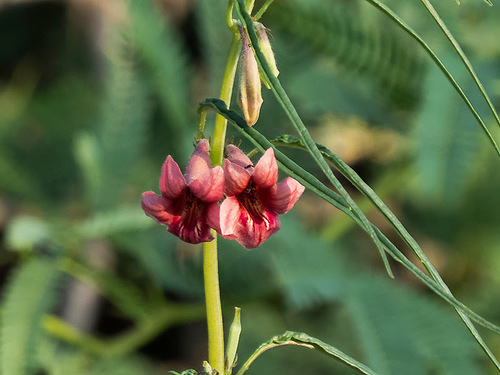
iNaturalist· cc-by-nc
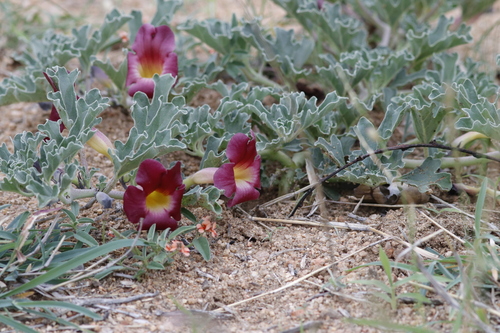
(c) Sylvain Piry, some rights reserved (CC BY-NC), uploaded by Sylvain Piry
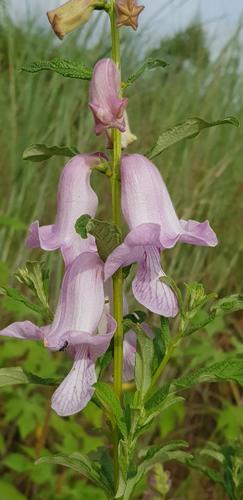
iNaturalist· cc-by-nc
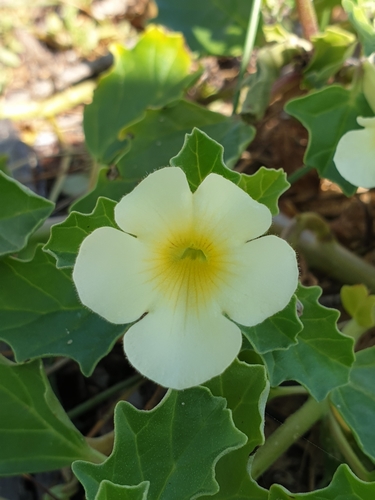
(c) Nick Helme, some rights reserved (CC BY-NC), uploaded by Nick Helme
iNaturalist· cc-by-sa
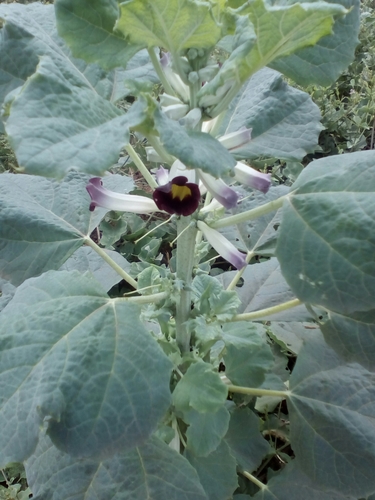
(c) Eric Hunt, some rights reserved (CC BY-SA)
Description
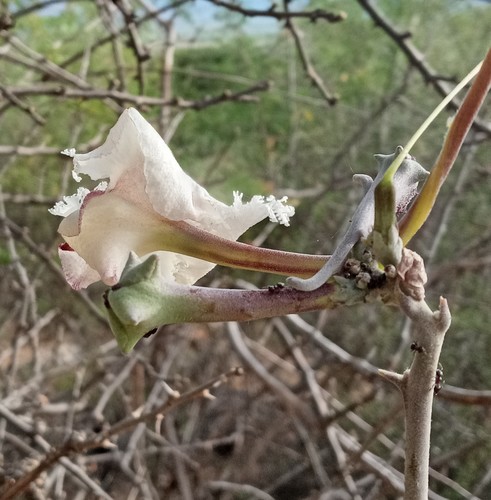
A shrub. It is an annual plant with a taproot. It grows 2 m tall. The stems have 4 angles. The lowest leaves have 5-7 lobes. The higher leaves have 3 lobes. The flowers are large and have a tube 2-4 cm long. They occur singly in the axils of leaves. The flowers are purple. The seeds are small and light brown and have wings.
Edible Uses
The seeds are eaten with boiled maize and also yield an edible oil.
Traditional Uses
The seeds are eaten with boiled maize. The seeds also yield an edible oil.
This uses section is brief — help expand it
Distribution
It is a subtropical plant. It grows in well-drained sandy or stony soil. It is often over limestone material. It grows between 500-1,500 m above sea level. It is rare in Swaziland. It can grow in arid places.
Where It Grows
Africa, Botswana, East Africa, Eswatini, Lesotho, Mozambique, Namibia, South Africa, Southern Africa, Swaziland,
Cultivation
A plant of the drier areas of the subtropics, just entering the tropics in southern Africa. It is found at elevations from 500 - 1,500 metres.
Other Information
It is a cultivated food plant.
Also Known As
Aprilbaadjie, Chinhonhoane, Lenonya, Molokelela
References (9)
- Facciola, S., 1998, Cornucopia 2: a Source Book of Edible Plants. Kampong Publications, p 168
- Fox, F. W. & Young, M. E. N., 1982, Food from the Veld. Delta Books. p 289
- Long, C., 2005, Swaziland's Flora - siSwati names and Uses http://www.sntc.org.sz/flora/
- Prodr. fl. cap. 17. 1768
- Royal Botanic Gardens, Kew (1999). Survey of Economic Plants for Arid and Semi-Arid Lands (SEPASAL) database. Published on the Internet; http://www.rbgkew.org.uk/ceb/sepasal/internet [Accessed 5th May 2011]
Show all 9 references Hide references
- Ruiters-Welcome, A. K., 2019, Food plants of southern Africa. Ph.D. thesis. Univ. of Johannesburg p 85
- Swaziland's Flora Database http://www.sntc.org.sz/flora
- Welcome, A. K. & Van Wyk, B.-E., 2019, An inventory and analysis of the food plants of southern Africa. South African Journal of Botany 122 (2019) 136–179
- World Checklist of Useful Plant Species 2020. Royal Botanic Gardens, Kew